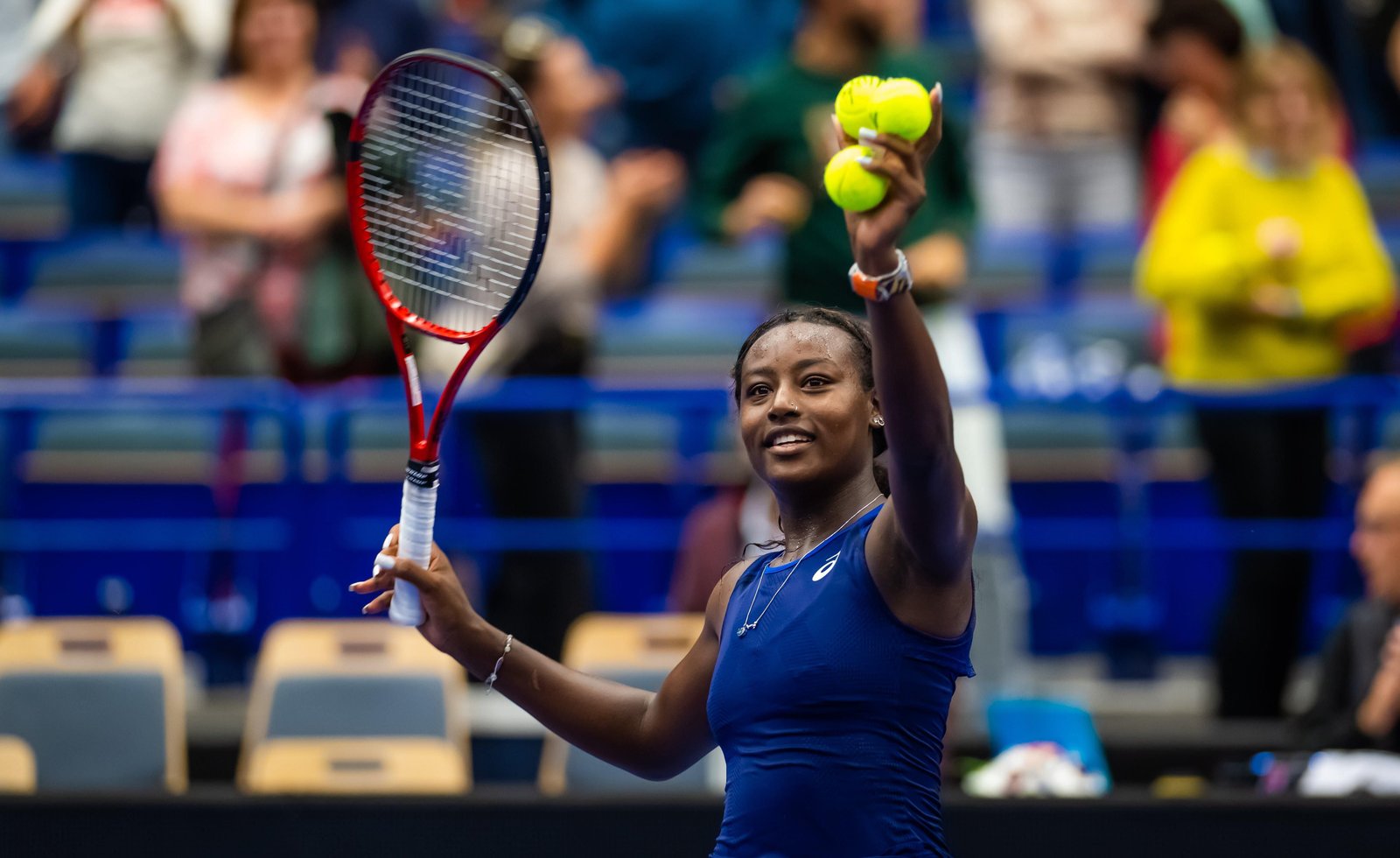
Introduction to the Power Game of Alycia Parks
In the evolving landscape of professional women's tennis, few players have generated as much technical interest as Alycia Parks. Known for a game built on raw power and aggressive court positioning, Parks represents a new generation of American athletes who prioritize high-velocity serves and first-strike tactics. Understanding her rise requires a deep dive into the mechanics that make her one of the most formidable servers on the WTA Tour. Analysts observe that, the shift toward baseline aggression has become a defining characteristic of modern tennis, and Parks stands at the forefront of this trend.
Her presence on the court is defined by a combination of physical stature and technical precision. Standing at 6 feet 1 inch, she utilizes her height to create steep angles on her serve, a weapon that has drawn comparisons to some of the greatest servers in the history of the sport. This article breaks down of her playing style, her technical development, and the strategic elements that define her professional career.

The Mechanics of a Record-Breaking Serve
The centerpiece of the Alycia Parks technical arsenal is undoubtedly her serve. Recent data shows that, Parks has recorded serve speeds that rival the all-time records in women's tennis, including a verified 129 mph delivery. This speed is not merely a product of strength but a result of a highly efficient kinetic chain. This indicates that her ability to maintain a high toss and full extension allows for maximum racket head speed at the point of contact.
Analyzing her service motion reveals several key components:
- Toss Consistency: Parks utilizes a high, consistent ball toss that allows her to reach the ball at its apex, maximizing the downward angle into the service box.
- Leg Drive: Her service motion incorporates a significant knee bend, which translates ground force through her torso and into her hitting arm.
- Pronation: At the moment of impact, her wrist pronation is exceptionally fast, allowing her to generate both flat power and heavy kick on second serves.
By mastering these mechanics, she forces opponents into defensive positions from the very first point of the match. For those looking to improve their own game, studying the fluidity of her motion offers valuable lessons in tennis serve biomechanics and technique breakdown.

Groundstroke Strategy and Baseline Aggression
While the serve is her primary weapon, her groundstrokes are designed to complement a high-risk, high-reward philosophy. Parks typically employs flat, penetrating shots from both the forehand and backhand wings. This works especially well on fast surfaces, such as indoor hard courts, where the low bounce and quick pace reward players who can take time away from their opponents.
Scouts often note that, her forehand is her most dangerous groundstroke. She tends to take the ball early, often inside the baseline, to dictate the direction of the rally. This aggressive positioning requires exceptional hand-eye coordination and footwork. However, this style also demands a high level of precision, as hitting the ball with such a flat trajectory leaves a smaller margin for error over the net.
In terms of defensive play, Parks relies on her reach and athletic ability to stay in points. While her primary goal is to remain on the offensive, her development has shown an increased focus on counter-punching when forced wide. Understanding how to transition from defense to offense is a core concept in professional tennis tactics and court positioning in tennis.

Technical Development and Training Focus
The professional development of an elite athlete like Alycia Parks involves more than just on-court practice. Her training regimen, often overseen by her father and dedicated coaching staff, emphasizes a holistic approach to the sport. Official specifications regarding her training schedule are not fully confirmed, but industry insiders point to a heavy emphasis on explosive plyometrics and core stability.
A typical training focus for a power-oriented player includes:
- Strength and Conditioning: Building the shoulder and core strength necessary to sustain high-velocity serves over a three-set match.
- Movement Drills: Improving lateral quickness to ensure she can set her feet properly before unloading on a groundstroke.
- Mental Fortitude: Developing the psychological resilience needed to maintain an aggressive style even when unforced errors occur.
This indicates that for players with such high-ceiling potential, the challenge often lies in finding the balance between power and consistency. This involves fine-tuning the racket tension and string choice to provide the right blend of control and pop. For more on equipment, see tennis racket setup and customization for power players.
Common Challenges in the Power Game
Despite the clear advantages of her physical tools, the style of play adopted by Alycia Parks comes with inherent challenges. One of the primary difficulties is maintaining a high first-serve percentage. When the first serve is not landing, power players can become vulnerable to aggressive returns on their second serve. Additionally, the flat nature of her groundstrokes can lead to periods of inconsistency, especially in windy outdoor conditions or on slower clay courts.
Another common mistake for aggressive players is over-hitting during neutral rallies. Instead of waiting for a short ball to attack, there is a temptation to go for winners from deep behind the baseline. Industry analysts note that the most successful power players are those who learn to incorporate more topspin when necessary to increase their margins. Learning to manage these risks is essential for any player aspiring to reach the top tiers of the WTA or ATP rankings.
Pro Tips for Aspiring Tennis Players
Drawing inspiration from the game of Alycia Parks, here are several professional tips for players looking to enhance their power and court presence:
- Focus on the Kinetic Chain: Do not try to muscle the ball with just your arm. Power starts in the legs and moves through the hips and core.
- Shorten Your Backswing: When facing fast opponents, a shorter, more compact backswing allows you to meet the ball in front of your body more consistently.
- Practice the Toss: Spend dedicated time practicing your ball toss without actually hitting a serve. A consistent toss is the foundation of a high-speed serve.
- Use the Middle of the Court: When in doubt, hit big through the center of the court. This reduces the angle for your opponent and keeps you in the point without taking excessive risks.
Frequently Asked Questions
What is Alycia Parks' fastest recorded serve?
Alycia Parks has been recorded hitting a serve at 129 mph (207.6 km/h). This speed ties her for one of the fastest serves ever recorded in women's professional tennis, matching the mark set by Venus Williams.
What surface best suits her playing style?
Parks generally performs best on fast surfaces. Indoor hard courts are particularly well-suited to her game because the controlled environment allows her serve and flat groundstrokes to be most effective without the interference of wind or high humidity.
Who coaches Alycia Parks?
Throughout much of her career, Alycia Parks has been coached by her father, Michael Parks. This family-centered coaching dynamic is common in professional tennis and focuses on long-term technical development and a tailored training environment.
How tall is Alycia Parks and how does it help her game?
She is 6 feet 1 inch tall. Her height provides a significant advantage on the serve, as she can strike the ball from a higher point, creating a steeper downward angle that makes the ball bounce higher and faster, making it harder for opponents to return.
Conclusion
Alycia Parks represents a compelling case study in the power-dominant era of professional tennis. By leveraging her physical advantages and a technically sound service motion, she has established herself as one of the most dangerous players on the tour. While the challenges of consistency and tactical variety remain part of her ongoing development, her ability to dictate play through sheer velocity makes her a player that both fans and analysts watch closely. As she continues to refine her game, her influence on the sport serves as a blueprint for the next generation of high-performance athletes.
Takeaway: Success in modern tennis often hinges on the ability to master a high-velocity serve and maintain aggressive court positioning to dictate the tempo of the match.
Lottery and gambling activities involve financial risk. This content is for informational purposes only. Please participate responsibly.




Comments 0
Leave a Reply
Your email address will not be published. Required fields are marked *
Be the first to share your thoughts!