
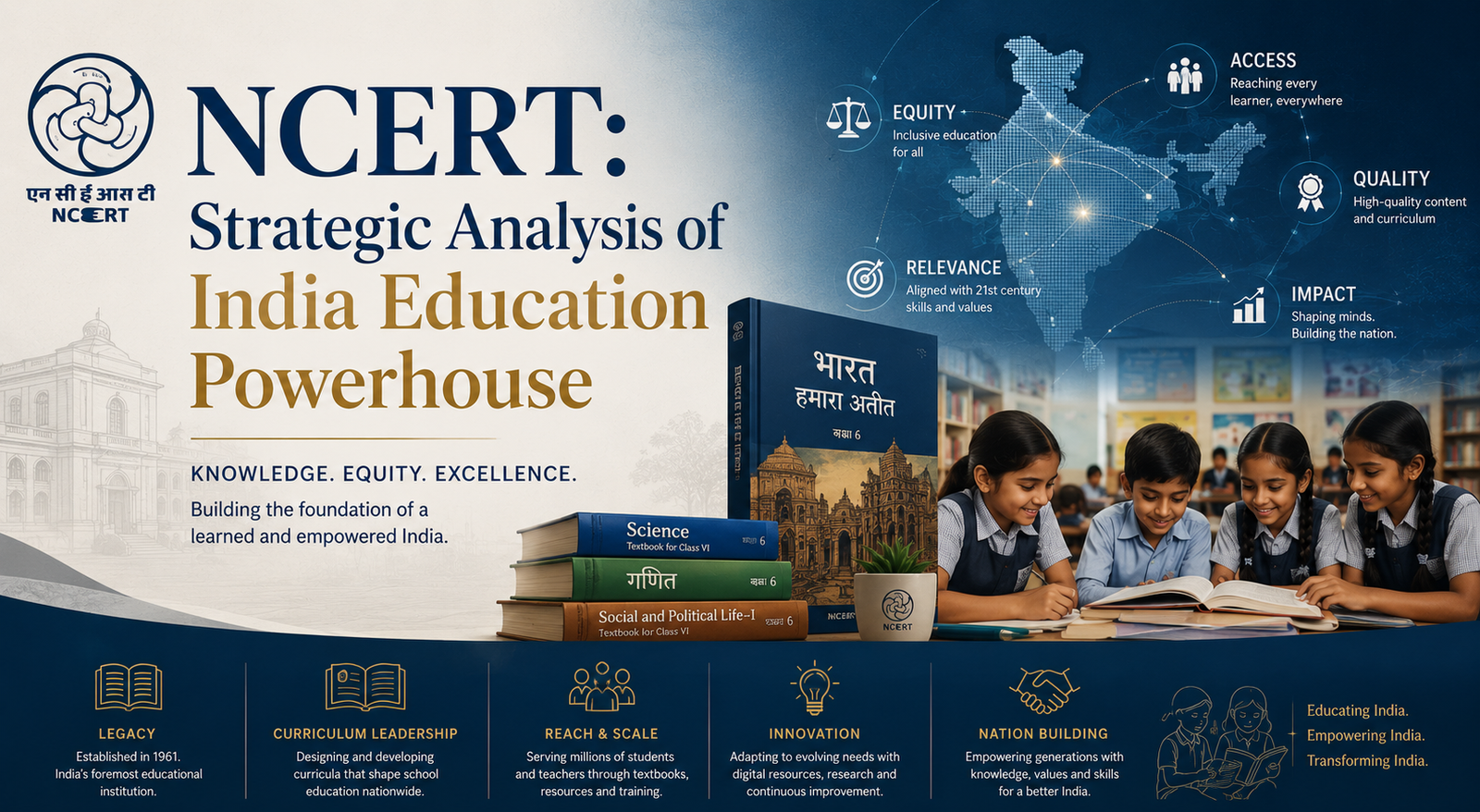
💡 NCERT: Strategic Analysis of India Education Powerhouse
An in-depth authority analysis of the National Council of Educational Research and Training (NCERT), its role in the NEP 2020 rollout, and the future of Indian education.
Executive Summary
The National Council of Educational Research and Training (NCERT) serves as the intellectual and strategic backbone of India school education system. Established in 1961, this autonomous organization provides the technical framework for the National Education Policy (NEP) 2020. Current data indicates that NCERT is responsible for the curriculum standards of over 260 million students across 1.5 million schools in India. The recent introduction of the National Curriculum Framework (NCF) 2023 marks a historic shift from the 10+2 model to a 5+3+3+4 pedagogical structure. Key findings highlight a massive push toward digital integration via the DIKSHA platform, which facilitates over 500 million learning sessions annually, and the establishment of PARAKH, a national assessment center designed to standardize evaluation across 60 educational boards.
Introduction
In the landscape of global education, few institutions command as much influence as the National Council of Educational Research and Training. As the primary advisory body to the Government of India on school education, NCERT is the architect of the textbooks, teaching materials, and training programs that shape the nation future workforce. The council role has become increasingly critical as India seeks to align its educational outcomes with 21st-century requirements. This strategic analysis examines the structural reforms, digital transitions, and the pedagogical shifts led by NCERT to ensure India remains competitive on the global stage. Understanding NCERT is not merely about reviewing textbooks; it is about analyzing the blueprint of a nation human capital development.
The Deep Dive: Strategic Pillars of NCERT
The operational efficiency of NCERT is built upon three primary pillars: Curriculum Development, Digital Transformation, and Standardized Assessment. Each pillar is currently undergoing a radical overhaul to meet the objectives of the NEP 2020.
1. The National Curriculum Framework (NCF) 2023
The NCF 2023 is the most significant pedagogical shift in decades. It replaces the rote learning culture with a competency-based approach. The new 5+3+3+4 structure divides education into Foundational (ages 3 to 8), Preparatory (8 to 11), Middle (11 to 14), and Secondary (14 to 18) stages. This restructuring is designed to provide a more holistic and flexible learning environment. For instance, the secondary stage now allows students to choose subjects across streams, breaking the rigid silos of Science, Commerce, and Arts. Such institutional reform requires high-level coordination, much like the precision found in a Military Officer: Strategic Analysis of Modern Leadership, where clear objectives and hierarchical execution are paramount.
2. Digital Infrastructure and Sovereign AI Integration
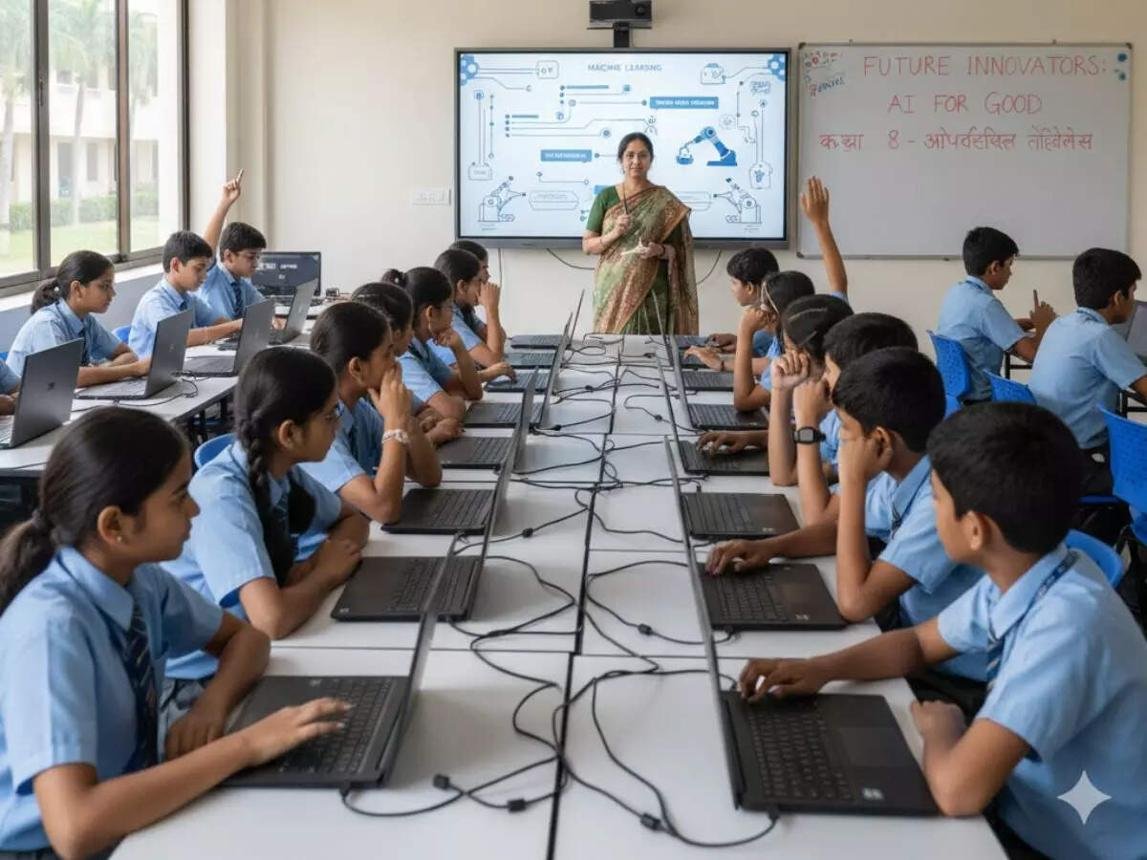
NCERT has successfully transitioned into the digital era through the PM e-VIDYA program. The DIKSHA (Digital Infrastructure for Knowledge Sharing) portal has become a global case study in educational technology. It provides QR-coded textbooks and interactive content in 36 Indian languages. The council is also exploring the integration of Artificial Intelligence to personalize learning paths. This move toward technological sovereignty mirrors the broader national strategy seen in projects like Sarvam AI: Strategic Analysis of India's Sovereign AI Powerhouse, where local data and linguistic diversity are leveraged to create robust digital ecosystems. By digitizing the curriculum, NCERT ensures that quality education reaches the most remote corners of the country, reducing the urban-rural divide.
3. PARAKH: Standardizing the Assessment Landscape
One of the most ambitious projects under the NCERT umbrella is PARAKH (Performance Assessment, Review, and Analysis of Knowledge for Holistic Development). India faces a unique challenge with over 60 different state and central examination boards, each with varying standards of difficulty and evaluation. PARAKH aims to bring equivalence to these boards. According to the National Achievement Survey (NAS) 2021, there is a significant variance in learning outcomes across different states. PARAKH is the strategic response to this data, setting common norms and standards for student assessment. This focus on long-term institutional stability and standardized welfare for the youth can be compared to the structural goals of the SSA Strategic Analysis: The Future of Federal Social Security, which seeks to provide a consistent safety net for a massive population.
The Economic Impact of NCERT Reforms
The economic implications of NCERT work are profound. By shifting toward vocational education from Grade 6 onwards, the council is directly addressing the employability gap in India. Industry reports suggest that only 45 percent of Indian graduates are currently employable. NCERT inclusion of coding, financial literacy, and local crafts in the Middle Stage curriculum is a direct attempt to increase this percentage. Furthermore, the council international wing is now collaborating with countries in the Global South to export the NCERT model of low-cost, high-impact educational materials, positioning India as a global knowledge hub.
What This Means For You
For parents, students, and educators, the NCERT transition represents a fundamental change in how success is measured. The move away from high-stakes board exams toward continuous and comprehensive evaluation means that students are encouraged to develop critical thinking rather than memorization skills. Parents should prepare for a more integrated curriculum where extracurricular activities like sports and arts carry equal weightage as mathematics or science. For educators, this necessitates a massive upskilling effort, as the demand for digital literacy and multidisciplinary teaching increases.
Expert Verdict and Future Outlook
The strategic trajectory of NCERT is ambitious yet necessary. The primary challenge remains the implementation at the state level, as education is a concurrent subject in the Indian Constitution. While the central guidelines are robust, the speed of adoption varies by region. However, the data-driven approach of the NAS and the technological backbone provided by DIKSHA suggest that the foundation for a modernized education system is solid. In the next decade, we expect NCERT to lead the transition toward a hybrid learning model where AI-driven tutors complement classroom teaching, and the curriculum is updated in real-time to reflect global industry trends.
FAQ
- What is the main role of NCERT in the Indian education system?
NCERT is an autonomous body that advises the Ministry of Education on school education policies, designs the National Curriculum Framework, and publishes standardized textbooks used by CBSE and many state boards. - How does the NCF 2023 change school education?
It introduces a 5+3+3+4 structure, removes the rigid boundaries between Science and Arts, and emphasizes competency-based learning over rote memorization. - Are NCERT textbooks mandatory for all boards in India?
While not mandatory for all state boards, NCERT textbooks are the primary material for the CBSE and are used as a benchmark by most state boards for their own curriculum design. - What is the PARAKH initiative under NCERT?
PARAKH is a national assessment center established to set standards, norms, and guidelines for student assessment across all recognized school boards in India. - How is NCERT integrating technology into the curriculum?
Through the DIKSHA portal and PM e-VIDYA, NCERT provides digital textbooks, TV channels for education, and interactive online content to ensure multi-mode access to learning.
Conclusion
The National Council of Educational Research and Training is no longer just a textbook publisher; it is a strategic architect of India future. By aligning the National Curriculum Framework with the digital and economic realities of the 21st century, NCERT is ensuring that the Indian education system evolves from a legacy of colonial instruction to a modern, sovereign, and skill-oriented powerhouse. The success of these reforms will ultimately determine India ability to leverage its demographic dividend and lead as a global knowledge economy.





Comments 0
Leave a Reply
Your email address will not be published. Required fields are marked *
Be the first to share your thoughts!