
💡 Silver MCX: Strategic Analysis of Industrial and Market Trends
A comprehensive analysis of Silver MCX trading, industrial demand drivers, and macroeconomic factors influencing silver prices in the Indian market.
Executive Summary
Silver trading on the Multi Commodity Exchange (MCX) of India represents one of the most liquid and volatile segments of the domestic commodities market. This analysis highlights that silver is no longer just a precious metal but a critical industrial commodity. Key findings indicate that global industrial demand, particularly from the solar photovoltaic (PV) and electric vehicle (EV) sectors, now accounts for over 50 percent of total silver consumption. Data from the Silver Institute suggests a persistent global silver deficit, which reached approximately 184 million ounces in 2023 and is projected to continue through 2024. For the Indian trader, MCX Silver prices are a function of international COMEX prices, the USD/INR exchange rate, and domestic import duties. This report provides a strategic framework for understanding price movements and managing risk in the silver market.
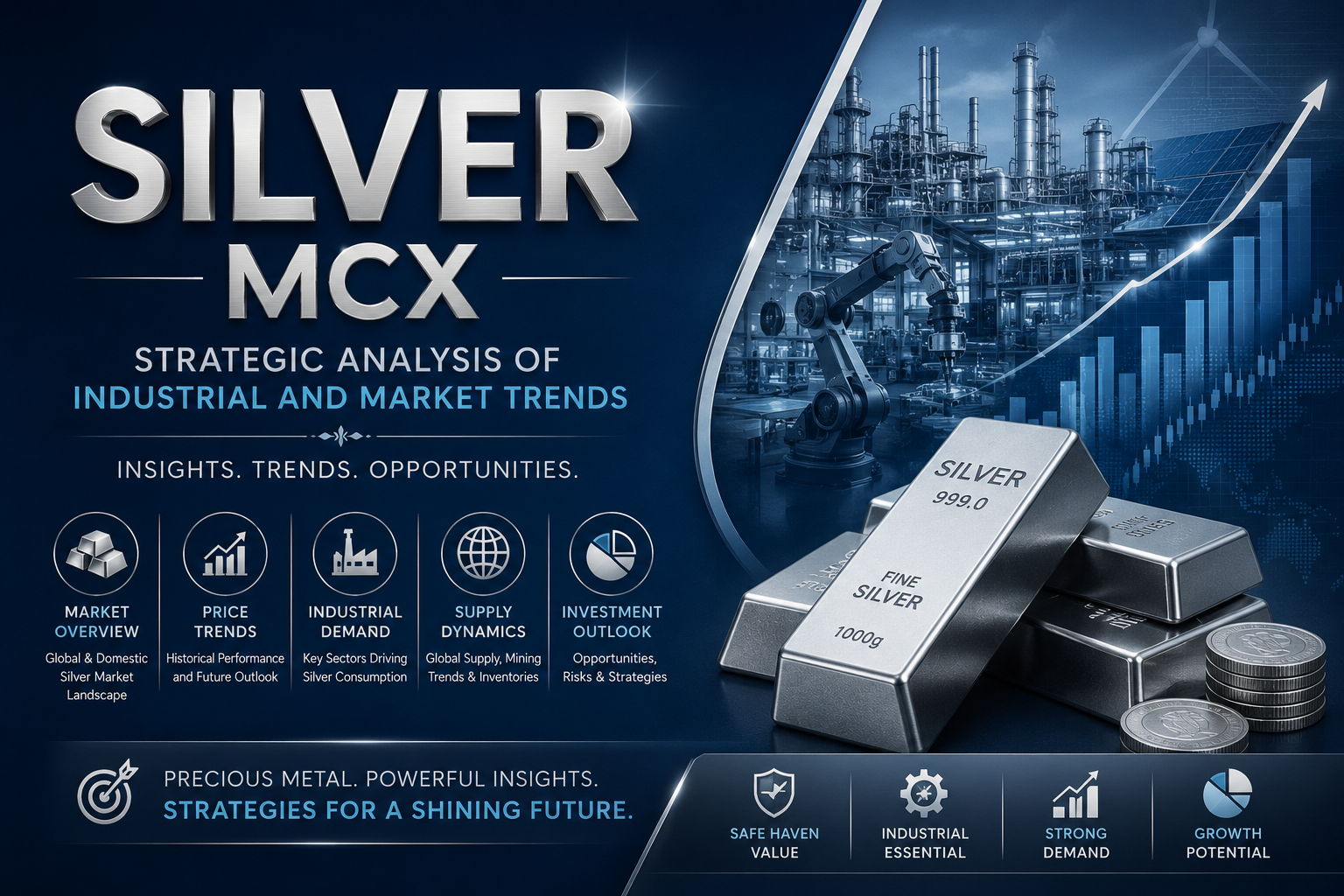
Introduction: The Dual Nature of Silver
Silver occupies a unique position in the global financial ecosystem. It functions as both a safe-haven asset, similar to gold, and a vital industrial raw material. On the Multi Commodity Exchange (MCX), silver is traded in various contract sizes, providing accessibility to institutional hedgers and retail speculators alike. Unlike gold, which is primarily driven by central bank activity and investment demand, silver price action is heavily influenced by manufacturing cycles and technological advancements. As global markets navigate shifting interest rate environments and geopolitical tensions, silver has emerged as a high-beta alternative to gold, often outperforming its yellow counterpart during bullish cycles but exhibiting higher downside volatility during corrections.
The Deep Dive: Strategic Drivers of Silver MCX
To understand the price trajectory of Silver MCX, one must analyze the convergence of international supply-demand dynamics and domestic economic factors. The Indian market does not operate in a vacuum; it is part of a complex global network where energy costs and industrial output play major roles.
Industrial Demand and the Green Energy Transition
The most significant shift in the silver market over the last decade is the massive increase in industrial applications. Silver has the highest electrical and thermal conductivity of any metal, making it indispensable for the green energy transition. The solar industry alone consumed approximately 193.5 million ounces of silver in 2023, a 64 percent increase from the previous year. As countries accelerate their net-zero targets, the demand for silver in solar panels and EV electronics is expected to remain robust. This industrial backbone provides a price floor that was less prominent in previous decades. Investors should consider how these trends mirror the shifts seen in Oil Prices: Strategic Analysis of Global Energy Markets, where energy policy dictates commodity valuation.

Macroeconomic Influences and the Gold-Silver Ratio
The Gold-Silver Ratio (GSR) is a critical metric for MCX traders. It represents the number of ounces of silver required to purchase one ounce of gold. Historically, a high GSR (above 80) suggests that silver is undervalued relative to gold, often preceding a silver rally. Conversely, a low ratio may indicate that silver is overextended. Furthermore, the monetary policy of the US Federal Reserve remains a primary driver. Because silver is priced in US Dollars globally, a weakening dollar typically leads to higher MCX prices. Traders must also monitor the Strategic Analysis of Global Lending and Debt Markets to gauge liquidity levels that flow into speculative commodity positions.
Domestic Factors: The Indian Context
While global spot prices set the trend, domestic factors determine the final MCX price. These include:
- USD/INR Exchange Rate: Since India is a major importer of silver, a depreciating Rupee makes silver more expensive for Indian buyers, even if global prices remain stagnant.
- Import Duties: Changes in the Union Budget regarding customs duties on silver can cause immediate price gaps of 5 to 10 percent in MCX contracts.
- Physical Demand: Festive seasons like Diwali and the wedding season (typically November to May) create a surge in physical demand, which can tighten local premiums.
Contract Specifications on MCX
MCX offers three primary silver contracts to cater to different risk appetites:
- Silver (Big): 30 kg lot size, which is the benchmark for institutional players.
- Silver Mini: 5 kg lot size, popular among mid-sized traders.
- Silver Micro: 1 kg lot size, allowing retail participation with lower margin requirements.
Understanding these specifications is as vital as fundamental analysis. Proper capital allocation in these contracts is essential, much like the precision required in a Pidilite Share: Strategic Analysis and Market Outlook for equity portfolios.

What This Means For You: Actionable Insights
For the average participant, Silver MCX offers a way to hedge against inflation and diversify away from traditional equities. However, the high volatility of silver requires a disciplined approach. Retail investors should focus on the long-term industrial narrative rather than short-term price noise. If you are a jewelry manufacturer, using MCX futures to hedge your physical inventory can protect your margins against sudden price spikes. If you are a speculative trader, monitoring the technical levels on the COMEX (US) market during the evening session (when Indian markets are most active due to US data releases) is a mandatory practice. Risk management, including the use of stop-loss orders, is non-negotiable given that silver can move 3 to 5 percent in a single trading session.
Expert Verdict and Future Outlook
The outlook for Silver MCX remains cautiously bullish over a 12 to 24-month horizon. The combination of a structural supply deficit and the increasing electrification of the global economy creates a favorable environment for price appreciation. While high interest rates in the US have historically acted as a headwind for non-yielding assets like silver, the eventual pivot toward rate cuts is expected to be a major catalyst for the next leg up. Experts suggest that as long as silver maintains its support levels above the 70,000 to 72,000 INR per kg mark on MCX, the long-term trend remains intact. However, traders should be prepared for sharp corrections driven by fluctuations in the Chinese manufacturing sector, which remains the largest consumer of industrial silver.
FAQ: Authoritative Answers on Silver MCX
1. What is the best time to trade Silver on MCX?
The most liquid and volatile period for Silver MCX is during the evening session, specifically between 6:30 PM and 9:30 PM IST. This coincides with the opening of the US markets and the release of critical economic data such as Non-Farm Payrolls (NFP) and CPI inflation figures.
2. How does the margin system work for Silver MCX?
MCX requires a percentage of the total contract value as an initial margin. For silver, this typically ranges from 10 to 15 percent, though it can increase during periods of extreme volatility. Traders must also maintain a mark-to-market (MTM) balance to cover daily price fluctuations.
3. Is silver a better investment than gold?
Silver typically offers higher percentage returns than gold during bull markets due to its smaller market cap and higher volatility. However, it also carries significantly higher risk. It is often viewed as a tactical addition to a portfolio rather than a replacement for the stability of gold.
4. How do solar energy trends affect my MCX trade?
Increased solar panel production leads to higher demand for silver paste. When major economies like China or the US announce massive renewable energy subsidies, it often leads to a bullish sentiment in the silver market, which reflects on the MCX prices within minutes.
5. Can I take physical delivery of silver from MCX?
Yes, MCX silver contracts are compulsory delivery contracts. If a trader holds a position into the tender period and does not square it off, they are required to take or give physical delivery of the silver in the form of 30 kg bars (for the main contract) that meet London Bullion Market Association (LBMA) standards.
Important Note: Financial Disclaimer: This content is for educational purposes only and does not constitute professional financial advice. Always consult with a certified financial planner before making investment decisions.
Conclusion
Silver MCX is a sophisticated financial instrument that requires a deep understanding of both global industrial trends and domestic macroeconomic shifts. By monitoring the supply deficit, the green energy transition, and the USD/INR exchange rate, participants can navigate this volatile market with greater strategic clarity. While the risks are high, the fundamental case for silver as a cornerstone of the modern industrial economy remains stronger than ever.





Comments 0
Leave a Reply
Your email address will not be published. Required fields are marked *
Be the first to share your thoughts!