
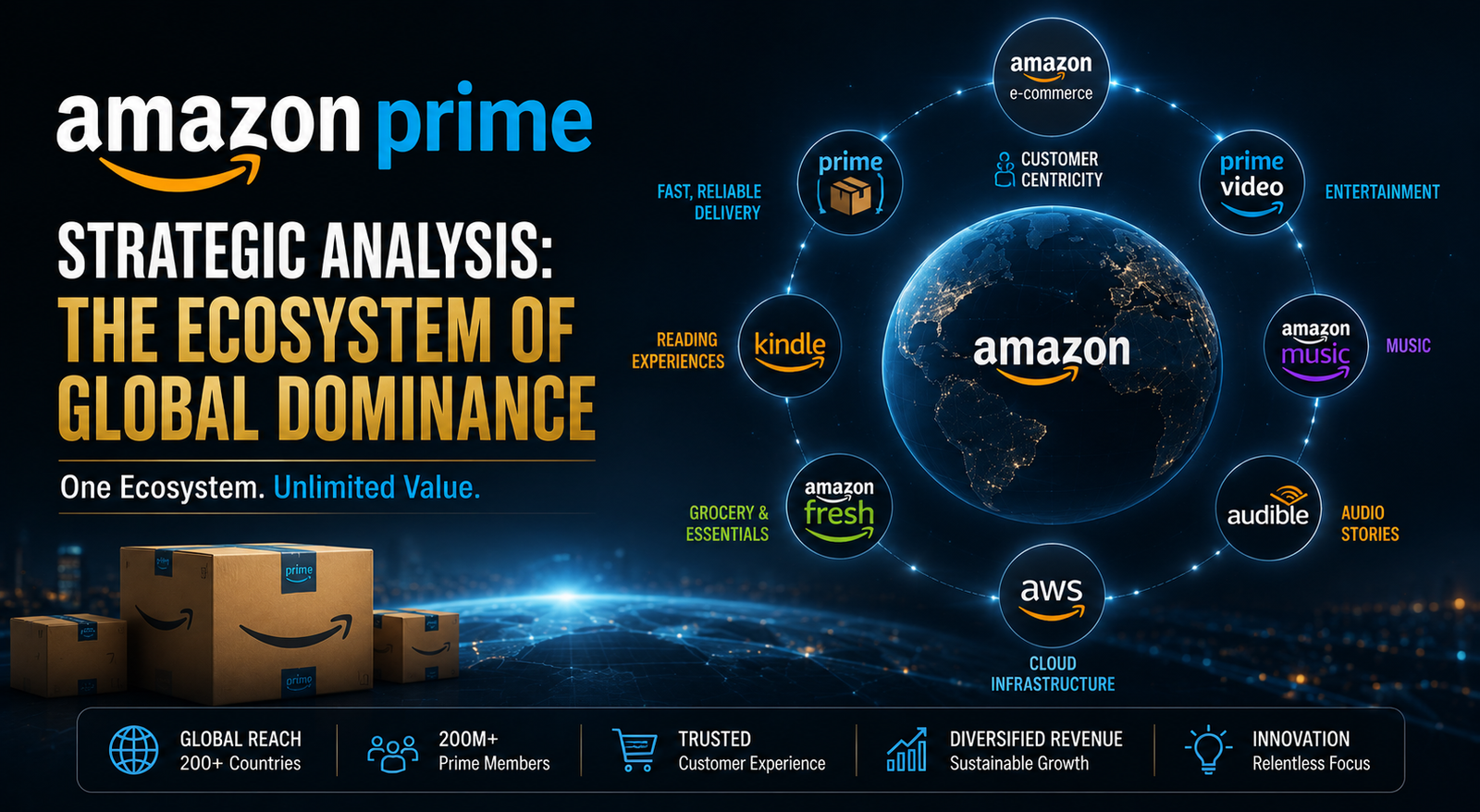
💡 Amazon Prime Strategic Analysis: The Ecosystem of Global Dominance
An authoritative deep dive into the Amazon Prime ecosystem, analyzing subscriber growth, logistics infrastructure, and the financial impact of the world's most successful membership program.
Executive Summary
Amazon Prime remains the gold standard for subscription-based loyalty programs, boasting over 230 million members globally as of 2024. This strategic analysis identifies the core drivers of Prime's success: a self-reinforcing flywheel of logistics, content, and consumer psychology. Key data highlights include a 91 percent renewal rate for first-year members and a staggering 98 percent for those who stay for two years. In 2023, Amazon's subscription services revenue reached 40.2 billion dollars, a significant increase from 35.2 billion dollars in 2022. This report examines how Amazon leverages Prime to increase customer lifetime value, with Prime members spending an average of 1,400 dollars annually compared to 600 dollars for non-members.
Introduction
The evolution of Amazon Prime from a simple free-shipping service in 2005 to a comprehensive digital and physical ecosystem represents one of the most significant shifts in modern retail history. Originally launched as a 79 dollar annual experiment to reduce friction in the purchasing process, Prime has transformed into a mandatory utility for millions of households. The strategic brilliance of Prime lies in its ability to solve the primary pain point of e-commerce: delivery speed and cost. By removing these barriers, Amazon has successfully gamified the shopping experience, encouraging users to maximize their membership value through frequent, smaller purchases. This analysis explores the logistical, financial, and competitive landscape that defines Amazon Prime today.
THE DEEP DIVE: The Prime Flywheel and Economic Impact
The success of Amazon Prime is built upon the concept of the virtuous cycle. When Amazon improves the Prime experience, it attracts more members. More members lead to more sellers on the platform, which increases selection and drives down prices through competition. This cycle is supported by three primary pillars: logistics, digital content, and data-driven personalization.
1. Logistics and the Regionalization Strategy
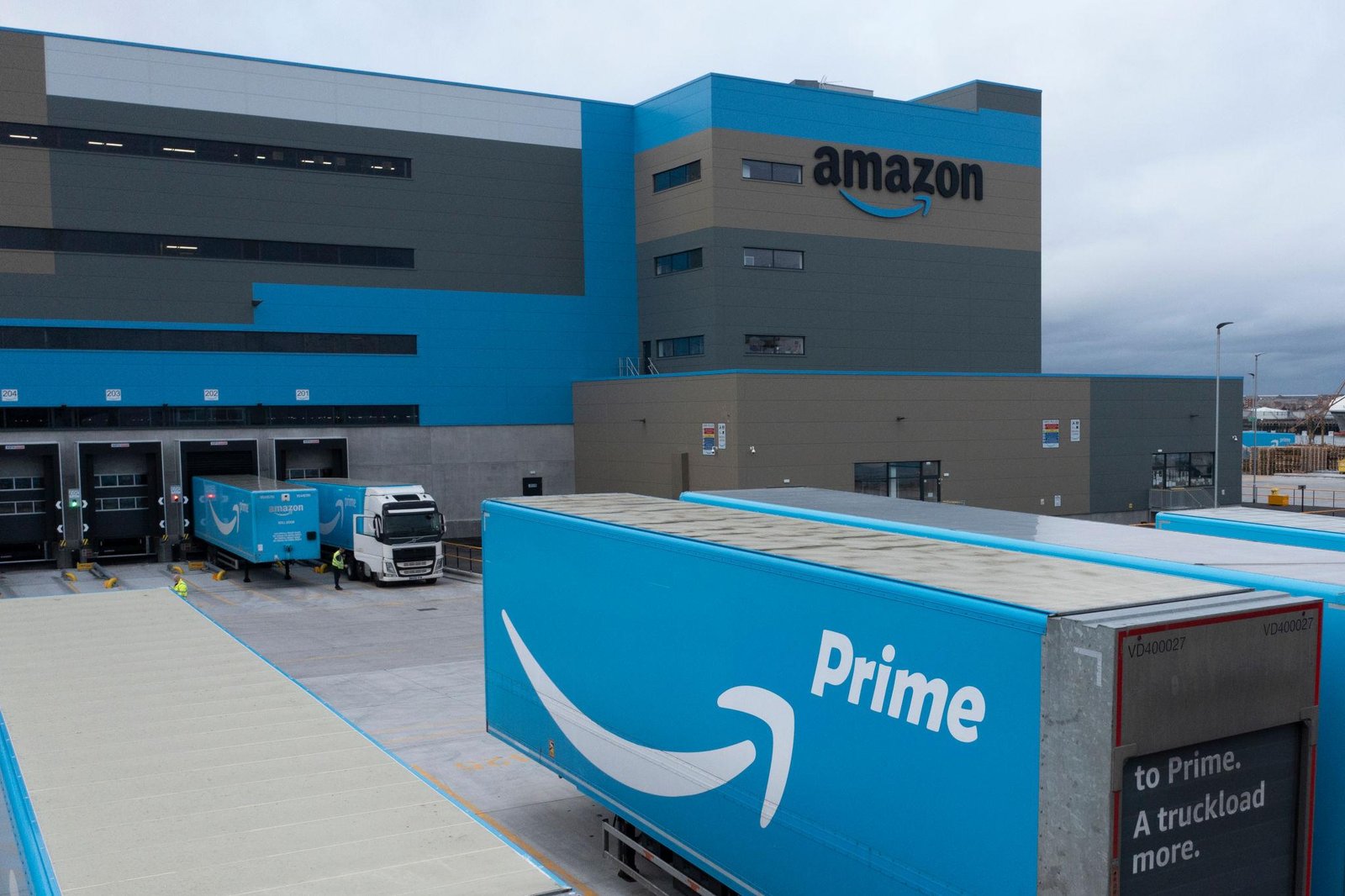
Amazon has invested billions into its fulfillment network to maintain the Prime promise of one-day and same-day delivery. In recent years, the company shifted from a national hub-and-spoke model to a regionalized fulfillment network. By placing inventory closer to the end consumer, Amazon reduced the distance traveled per package by 15 percent and decreased the number of touches per package by 12 percent. This operational efficiency is critical for maintaining margins as shipping costs continue to rise. Unlike traditional retail models, Amazon uses its logistics arm as a competitive moat that is nearly impossible for smaller retailers to replicate. This focus on operational excellence is a trait shared by other industry leaders, such as the approach detailed in the Nithin Kamath: Strategic Analysis of Zerodha Leadership, where efficiency and technology drive market share.
2. Content as a Retention Tool
Amazon spent approximately 19 billion dollars on video and music content in 2023 alone. While Prime Video is a standalone competitor in the streaming wars, its primary strategic function is to reduce churn for the retail side of the business. Data suggests that Prime members who engage with video content are more likely to renew their subscriptions and have higher overall spend on the retail platform. This strategy places Amazon in direct competition with traditional media giants. For a broader context on how media companies manage global leadership, one might compare this to the Disney Strategic Analysis: Global Entertainment Powerhouse. By integrating live sports, such as Thursday Night Football, Amazon has secured a recurring weekly touchpoint with a demographic that might not otherwise engage with the platform regularly.

3. Financial Valuation and Capital Allocation
From a financial perspective, Amazon Prime provides a massive stream of predictable, recurring revenue. This high-margin income allows Amazon to aggressively reinvest in new technologies like artificial intelligence and automated robotics. While many investors look for immediate returns through dividends, Amazon historically prioritizes long-term growth and infrastructure. This approach is a stark contrast to companies that follow traditional Dividend Yield Strategies: A Strategic Financial Analysis. By focusing on the free cash flow generated by the Prime ecosystem, Amazon can weather economic downturns more effectively than its competitors.
4. The Ad-Supported Pivot
In 2024, Amazon introduced advertisements to Prime Video by default, requiring an additional fee for an ad-free experience. This move is a strategic play to capture a larger share of the digital advertising market, which is currently dominated by Google and Meta. Industry analysts estimate that this change could generate an additional 3 billion to 5 billion dollars in high-margin revenue annually. This transition demonstrates Amazon's power to monetize its existing user base without significantly impacting retention rates, thanks to the high perceived value of the overall Prime package.
WHAT THIS MEANS FOR YOU
- Value Maximization: To get the most out of a Prime membership, consumers should utilize secondary benefits like Amazon Photos (unlimited storage), Prime Reading, and pharmacy discounts, which are often overlooked.
- Price Awareness: While the convenience is unparalleled, the 139 dollar annual fee (in the US) requires a minimum level of usage to be cost-effective. Users should audit their order frequency to ensure the shipping savings exceed the membership cost.
- Data Privacy: As a Prime member, your purchasing and viewing habits are tracked extensively to fuel Amazon's recommendation engine. Users should be aware of how their data influences the prices and products they see.
- Alternative Options: For those primarily interested in shipping, competitors like Walmart+ or Target Circle 360 may offer better value depending on local grocery needs and physical store proximity.
Expert Verdict and Future Outlook
The future of Amazon Prime lies in the integration of health care and artificial intelligence. With the acquisition of One Medical and the launch of RxPass, Amazon is positioning Prime as a lifestyle management tool rather than just a shopping club. We expect to see more personalized, AI-driven shopping assistants integrated into the Prime experience, further reducing the time from intent to purchase. The primary risk to Prime is regulatory scrutiny. Antitrust investigations in the United States and Europe are increasingly focused on whether Amazon's bundling of services creates an unfair advantage that stifles competition. However, given the high consumer satisfaction ratings, any forced decoupling of Prime services would likely face significant public pushback.
FAQ
How many people have Amazon Prime?
As of the latest industry estimates, Amazon Prime has over 230 million subscribers worldwide, with approximately 175 million of those located in the United States. This represents a significant portion of the addressable market in developed economies.
Is Amazon Prime still worth it after the price increase?
For frequent shoppers who place more than 25 orders per year, the shipping savings alone usually justify the 139 dollar cost. When you add the value of Prime Video, which is comparable to a 10 dollar per month streaming service, the math remains favorable for most households.
What is the renewal rate for Amazon Prime?
Amazon Prime boasts some of the highest retention rates in the subscription industry. Approximately 91 percent of members renew after the first year, and that number climbs to nearly 98 percent for those who have been members for two years or more.
How much does Amazon spend on Prime Video content?
In 2023, Amazon's total spend on video and music content was 19 billion dollars. This includes original programming, licensed content, and live sports broadcasting rights.
Does Amazon Prime include grocery delivery?
Yes, Prime members in many regions have access to grocery delivery through Amazon Fresh and Whole Foods Market, though some locations may require a minimum order threshold or a small delivery fee for faster time slots.
Conclusion
Amazon Prime has successfully transitioned from a retail perk to a foundational element of global commerce. Its ability to combine physical logistics with digital entertainment creates a moat that few competitors can cross. By continuously adding value and leveraging massive data sets, Amazon ensures that the cost of leaving the ecosystem is higher than the annual membership fee. For businesses and consumers alike, understanding the strategic mechanics of Prime is essential for navigating the modern economic landscape. The program is no longer just about shipping; it is about the total capture of consumer attention and spending power.
Important Note: Financial Disclaimer: This content is for educational purposes only and does not constitute professional financial advice. Always consult with a certified financial planner before making investment decisions.





Comments 0
Leave a Reply
Your email address will not be published. Required fields are marked *
Be the first to share your thoughts!