

💡 Are Banks Open Today? A Comprehensive Guide to Holiday Schedules and Operating Hours
Wondering if your local bank branch is open today? Learn how the RBI holiday calendar, state-specific festivals, and weekend rules affect banking hours in India.
Whether banks are open today depends on your specific location and the current date. In India, banks are generally open from Monday to Friday, as well as on the first, third, and fifth Saturdays of the month. They remain closed on all Sundays, the second and fourth Saturdays, and on national or regional holidays mandated by the Reserve Bank of India (RBI). If today is a standard weekday and does not coincide with a gazetted holiday in your state, your local branch is likely open for business.
Navigating the Complexities of Modern Banking Schedules
Planning a visit to a bank branch in India is no longer as straightforward as checking the clock. While digital banking has made many physical visits unnecessary, certain tasks—like accessing a locker, submitting KYC documents, or dealing with complex foreign exchange matters—still require a trip to the branch. Understanding the rhythm of banking hours requires looking at a combination of national mandates and local cultural observances.
The banking schedule in India is governed by the Negotiable Instruments Act. This means that even if a bank is a private entity like HDFC or ICICI, it must follow the holiday list prescribed by the RBI for the specific state in which it operates. This leads to situations where a bank might be closed in Bengaluru for a regional festival but remain fully operational in Mumbai or Delhi.
The RBI Influence: Understanding the Standard Holiday Calendar
While the United States looks to the Federal Reserve for schedule standards, the Indian banking system revolves around the Reserve Bank of India (RBI). The RBI categorizes holidays into three distinct brackets: Holidays under the Negotiable Instruments Act, Holidays under the Negotiable Instruments Act and Real-Time Gross Settlement (RTGS) Holidays, and Banks' Closing of Accounts.
National holidays such as Republic Day (January 26), Independence Day (August 15), and Gandhi Jayanti (October 2) are non-negotiable; every bank across the country remains closed. However, other holidays like Eid, Diwali, or Christmas are subject to state-wise notifications. If the RBI declares a holiday in a specific circle, all public and private sector banks in that region will shut their physical doors.
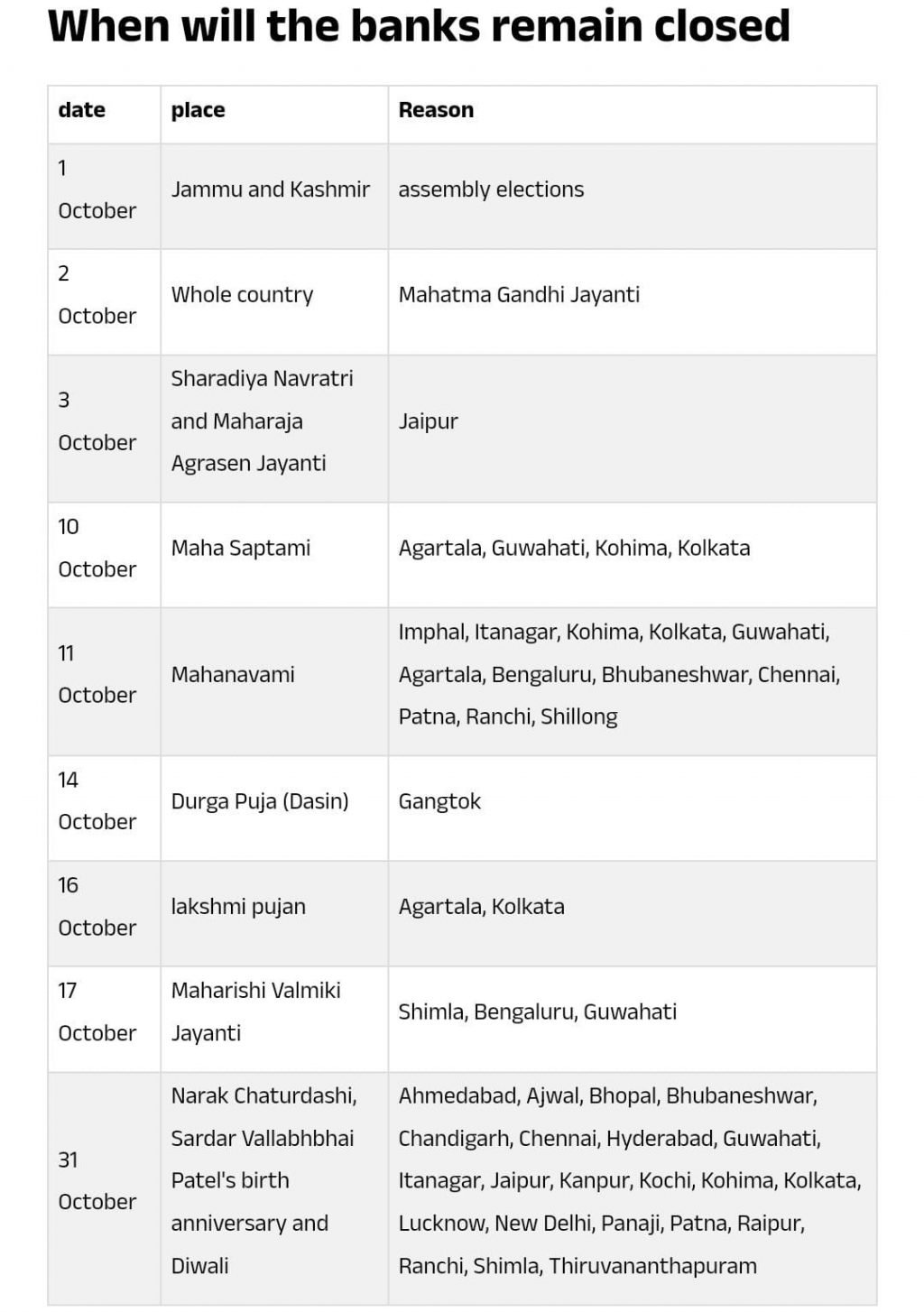
Standard Weekly Operating Hours: What to Expect on Weekdays and Weekends
For most commercial banks in India, standard operating hours for public dealing typically range from 10:00 AM to 4:00 PM. Some branches may open earlier at 9:30 AM or stay open until 4:30 PM, depending on their location and customer volume. It is important to note that while the staff stays later to complete back-end processing, the counters for cash deposits and withdrawals usually close by late afternoon.
The "Saturday Rule" is the most common source of confusion. Since 2015, all scheduled primary banks in India observe a holiday on the second and fourth Saturdays of every month. If a month happens to have five Saturdays, the fifth Saturday is a full working day. Sundays are universal holidays for all brick-and-mortar banking institutions.
Exceptions to the Rule: Why Some Private Banks and Credit Unions Stay Open
While the RBI sets the baseline, there are minor variations. Some private sector banks or specific "high-traffic" branches in metropolitan areas may offer extended banking hours (e.g., 8:00 AM to 8:00 PM) for non-cash transactions. Additionally, certain cooperative banks or local credit societies might follow slightly different internal timings, though they still adhere to the major holiday list for clearing purposes.
Digital-only banks or "Neobanks" are the ultimate exception. Since they do not have physical branches, they are technically "open" 24/7. However, even these platforms may face delays in transaction processing if the underlying clearing houses (like NEFT or RTGS systems) are closed due to a national holiday.
Banking Beyond the Physical Branch: Utilizing Digital Tools and ATMs During Closures
A closed branch does not mean your financial life comes to a halt. Modern banking infrastructure ensures that essential services remain active 365 days a year. ATMs are the most reliable resource for cash withdrawals and, in many cases, cash deposits via Cash Deposit Machines (CDMs).
Mobile banking apps and NetBanking portals allow for immediate fund transfers via IMPS (Immediate Payment Service) and UPI (Unified Payments Interface), both of which operate 24/7, even on bank holidays. However, services like NEFT (National Electronic Funds Transfer) and RTGS (Real-Time Gross Settlement), while now largely available 24/7, may occasionally experience settlement delays during the bank's annual closing of accounts on April 1st.

The Impact of Regional and State Holidays on Local Banking Access
Regional diversity is a significant factor in India. For instance, in the month of May, banks in Maharashtra might be closed for Maharashtra Day, while those in other states remain open. Similarly, festivals like Bihu in Assam, Pongal in Tamil Nadu, or Chhath Puja in Bihar will only affect bank operations in those specific regions.
When planning transactions around these dates, it is vital to check the specific holiday list for your state. For example, if you are in Karnataka, Basava Jayanti would be a holiday for you, but your business partner in West Bengal would find their banks open as usual. This regional variance can sometimes delay the clearing of physical cheques if the drawer and the payee are in different states with different holiday schedules.
How to Verify Your Specific Branch Status in Real-Time
To avoid a wasted trip, there are several ways to verify if your branch is open. The most authoritative source is the RBI’s official website, which publishes a month-by-month, state-by-state holiday list. Most major banks like SBI, PNB, ICICI, and HDFC also send SMS alerts or email notifications to customers regarding upcoming long weekends or scheduled closures.
Another practical method is using the "Branch Locator" tool on your bank’s official website or mobile app. These tools often list the specific operating hours and any temporary closures for individual branches. Google Maps is also increasingly accurate with "Holiday Hours" warnings, though verifying with the bank's official app is always safer for financial matters.
Commonly Asked Questions Regarding Bank Closures
- Can I deposit a cheque on a bank holiday? You can drop a cheque in the 24/7 drop-box outside the branch, but it will not be processed until the next working day.
- Does UPI work on Sundays? Yes, UPI is a 24/7 service and is not affected by bank holidays or weekends.
- Are private banks open on the second Saturday? No, both public and private sector banks follow the 2nd and 4th Saturday holiday rule.
- What happens to an EMI due on a holiday? Usually, the auto-debit is processed on the next working day, or in some cases, it may be debited a day earlier depending on the bank's policy.
Important Note: Financial Disclaimer: This content is for educational purposes only and does not constitute professional financial advice. Always consult with a certified financial planner before making investment decisions.
Conclusion
Banking schedules in India are a blend of national regulations and regional traditions. While the physical doors of a branch may close on Sundays, the 2nd and 4th Saturdays, and state-specific holidays, the digital ecosystem ensures that you are never truly disconnected from your money. By keeping an eye on the RBI holiday calendar and leveraging mobile banking tools, you can easily plan your financial errands without the frustration of arriving at a locked gate.





Comments 0
Leave a Reply
Your email address will not be published. Required fields are marked *
Be the first to share your thoughts!