
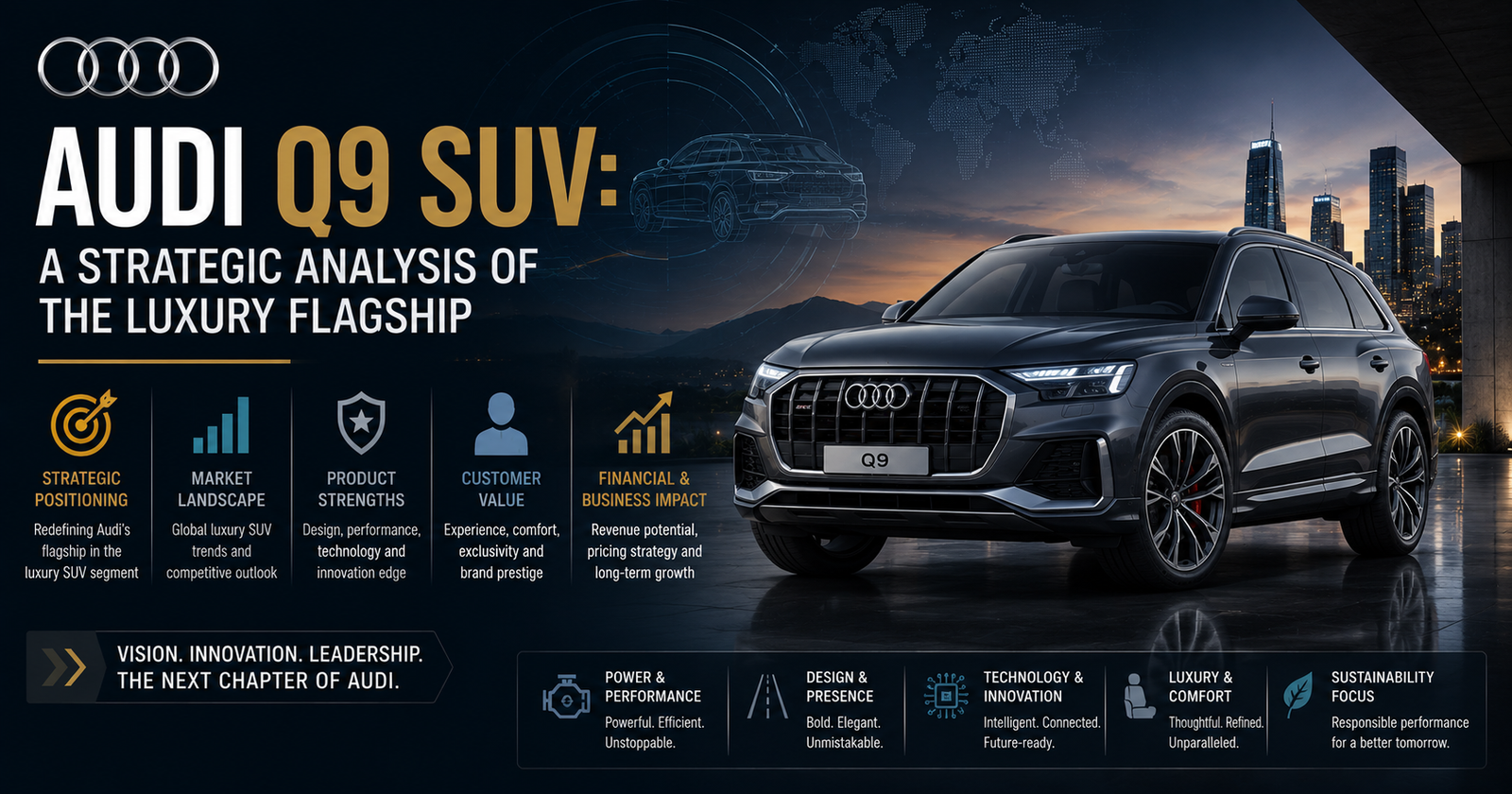
💡 Audi Q9 SUV: A Strategic Analysis of the Luxury Flagship
A comprehensive industry analysis of the upcoming Audi Q9 SUV, exploring its market positioning, technical specifications, and competitive landscape in the full-size luxury segment.
Executive Summary
The Audi Q9 SUV represents a pivotal strategic move by the Volkswagen Group to capture a larger share of the high-margin, full-size luxury SUV market. Historically, Audi has lacked a direct competitor to the BMW X7 and the Mercedes-Benz GLS, leaving a significant revenue gap in its global portfolio. Industry data indicates that the full-size luxury SUV segment has grown by approximately 12 percent annually since 2020, driven largely by demand in North America and China. The Q9 is expected to be the final internal combustion engine flagship launched by Audi before its transition to a fully electric lineup by 2033. Key findings suggest the Q9 will feature a wheelbase exceeding 3,100mm, advanced 48-volt mild-hybrid powertrains, and a sophisticated digital architecture designed to compete with the most advanced mobile ecosystems.
Introduction: Closing the Flagship Gap
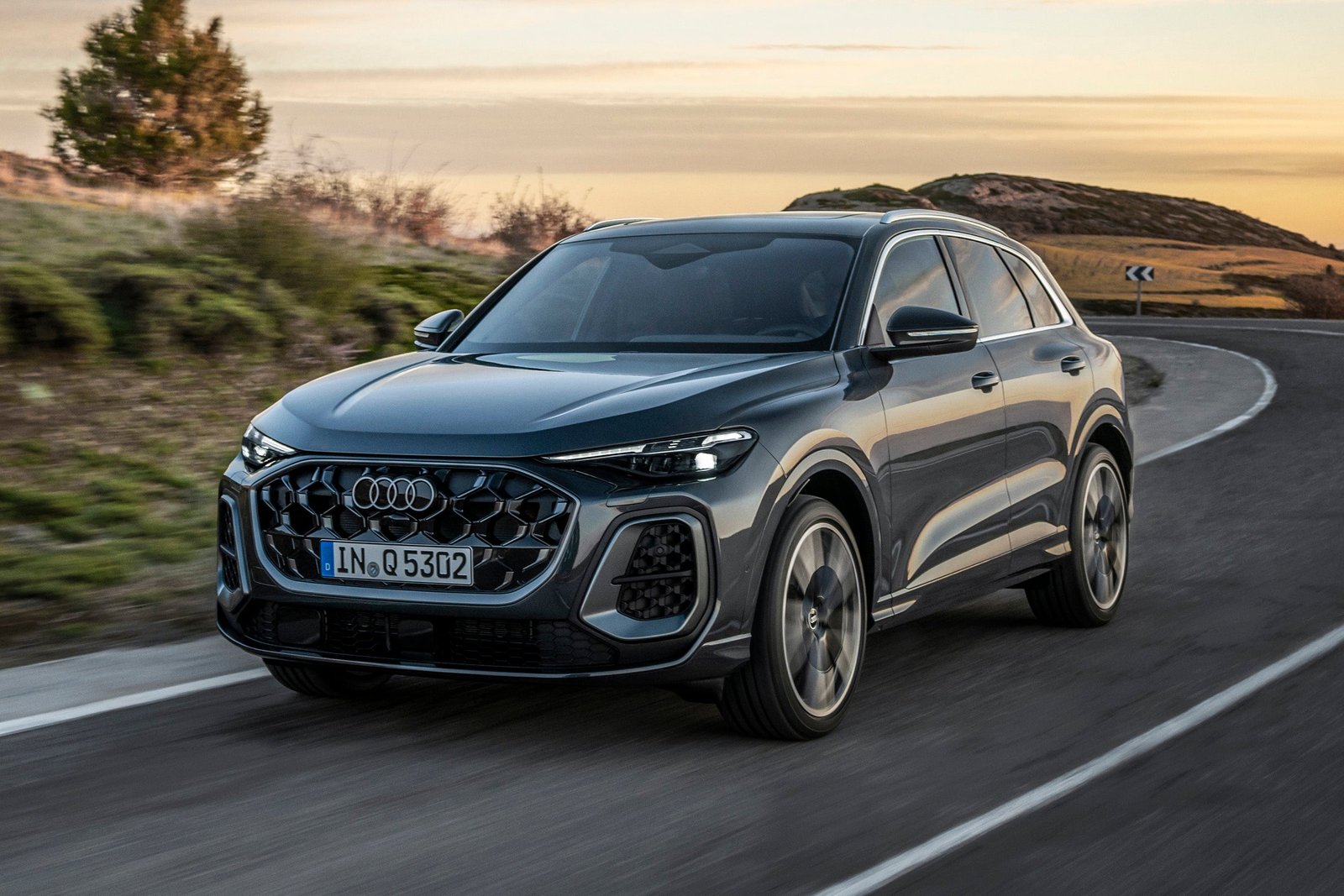
For over a decade, Audi has relied on the Q7 to serve as its primary three-row offering. However, as consumer preferences shifted toward more expansive, ultra-luxurious cabins, the Q7 found itself physically outmatched by larger competitors. The upcoming Audi Q9 SUV is the brand's definitive answer to this market imbalance. It is not merely an elongated Q7; it is a ground-up strategic effort to redefine Audi's presence at the top of the automotive hierarchy. This vehicle arrives at a critical juncture where oil prices and global energy markets continue to influence the development of efficient yet powerful internal combustion engines. By entering this segment now, Audi aims to capitalize on the remaining lifecycle of traditional luxury platforms while integrating the high-tech features expected by modern affluent buyers.
THE DEEP DIVE: Technical and Market Analysis
The Audi Q9 is built upon a modified version of the MLB Evo platform, which also underpins the Bentley Bentayga and the Lamborghini Urus. This shared architecture allows for high levels of structural rigidity and the integration of advanced suspension systems. Industry analysts expect the Q9 to measure approximately 5.2 meters in length, providing a legitimate third row that can comfortably accommodate adults, a feat the current Q7 struggles to achieve.
Market Positioning and Competitive Landscape
In the hierarchy of automotive market and cultural powerhouses, Audi has maintained a reputation for understated luxury and technological prowess. The Q9 must balance this identity with the overt presence required in the full-size segment. Market research from firms like J.D. Power suggests that buyers in this category prioritize "commanding presence" and "interior sanctuary" above all else. Consequently, the Q9 is expected to feature an upright grille, massive 23-inch wheel options, and a lighting signature that utilizes the latest Matrix LED and OLED technologies.
Powertrain Strategy and Performance
Audi is expected to offer a variety of powertrains to suit different regional demands. For the North American market, a 4.0-liter twin-turbo V8 with mild-hybrid assistance is the likely range-topper, producing upwards of 500 horsepower. In Europe and China, plug-in hybrid (PHEV) variants will be crucial for meeting stringent emission standards. These PHEV models are anticipated to offer an electric-only range of approximately 60 to 80 kilometers, making them viable for daily commutes without activating the gasoline engine. This dual-track strategy ensures the Q9 remains relevant in diverse regulatory environments.
Digital Architecture and Connectivity
The interior of the Q9 will serve as a showcase for Audi's next-generation digital cockpit. Following the strategic evolution of the mobile ecosystem, Audi is moving toward a more software-defined vehicle experience. This includes a triple-screen dashboard layout, augmented reality head-up displays, and high-speed 5G connectivity for over-the-air updates. The goal is to create a seamless transition between the user's digital life and their driving environment. Advanced driver assistance systems (ADAS) will likely reach Level 2+ autonomy, offering hands-off highway driving capabilities in specific jurisdictions.
Strategic Importance for the Chinese Market
China remains the most critical market for the Audi Q9. In the Chinese luxury sector, the rear-seat experience is paramount. Reports suggest that Audi may offer a bespoke four-seat executive version of the Q9 specifically for this region, featuring reclining rear seats, individual climate zones, and integrated infotainment tablets. This focus on the chauffeur-driven demographic is a strategic necessity to compete with the long-wheelbase variants of the Mercedes-Benz GLS.
WHAT THIS MEANS FOR YOU
If you are a consumer in the market for a high-end family vehicle, the Audi Q9 represents a new benchmark in the luxury SUV space. Here is a breakdown of what you can expect:
- Unmatched Cabin Space: The Q9 will offer significantly more legroom and cargo capacity than the current Q7, making it a true seven-passenger vehicle.
- Future-Proof Technology: With its advanced software architecture, the Q9 is designed to stay current through digital updates for years after purchase.
- Prestige and Resale Value: As one of the last major ICE flagships from a premium German brand, the Q9 is expected to hold its value well among enthusiasts and luxury buyers.
- Customization: Expect a high degree of personalization through the Audi Exclusive program, allowing for unique leather, wood, and color combinations.
Expert Verdict / Future Outlook
The Audi Q9 is a calculated risk. While the automotive world is rapidly shifting toward electrification, the demand for large, versatile, and prestigious internal combustion SUVs remains robust. By launching the Q9 now, Audi is ensuring it does not cede the top of the market to its rivals during the transition period. Our analysis suggests that the Q9 will be a commercial success, particularly in the United States and China, providing the necessary capital to fund Audi's ambitious e-tron roadmap. It is the final roar of a legendary era of German engineering, refined to its highest possible state.
FAQ: Frequently Asked Questions
1. When will the Audi Q9 be officially released?
While Audi has not set a specific date, industry insiders and prototype sightings suggest a global reveal in late 2025, with sales commencing as a 2026 model year vehicle.
2. How much will the Audi Q9 cost?
Estimates suggest a starting price of approximately $85,000 for the base trim, with high-performance SQ9 or executive versions easily exceeding $120,000.
3. Will there be an all-electric version of the Q9?
The Q9 is primarily designed for internal combustion and hybrid powertrains. However, an electric equivalent, likely named the Q9 e-tron, is expected to follow on a dedicated EV platform (PPE) later in the decade.
4. How does the Q9 compare to the Q7 in size?
The Q9 is expected to be roughly 15 to 20 centimeters longer than the Q7, with a significantly wider track and a taller roofline to maximize interior volume.
5. What are the main competitors for the Audi Q9?
The primary competitors are the BMW X7, Mercedes-Benz GLS, Range Rover LWB, and the Cadillac Escalade.
Conclusion
The Audi Q9 SUV is a strategic necessity for a brand that aims to dominate the luxury landscape. By addressing the previous lack of a full-size flagship, Audi is positioning itself to capture the highest echelon of SUV buyers. The vehicle combines traditional mechanical excellence with a forward-looking digital strategy, ensuring that Audi's final chapter in the internal combustion era is written with authority and prestige.





Comments 0
Leave a Reply
Your email address will not be published. Required fields are marked *
Be the first to share your thoughts!