

💡 BBC Weather: Strategic Analysis of Meteorological Authority
A comprehensive strategic analysis of BBC Weather’s forecasting infrastructure, digital transformation, and its role as a global meteorological authority.
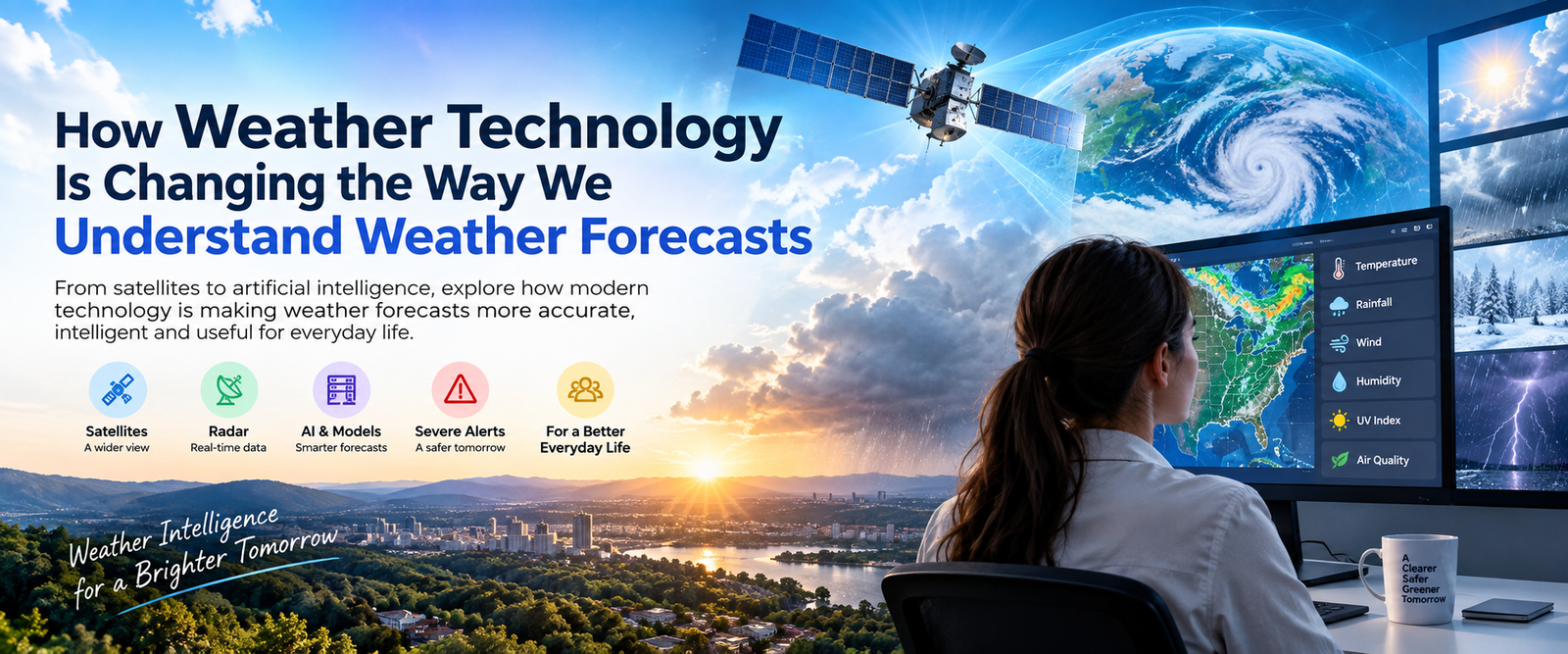
How Weather Technology Is Changing the Way We Understand Weather Forecasts
Introduction
Weather affects almost every part of daily life. From deciding what to wear in the morning to planning flights, outdoor events, agriculture, transportation and emergency operations, accurate weather information plays an important role in modern society.
Weather forecasting has changed dramatically over the past few decades. Traditional forecasts once depended heavily on observations from weather stations, radiosondes and human analysis. Today, meteorologists can combine information from satellites, radar systems, sensors, supercomputers and artificial intelligence to produce increasingly detailed forecasts.
The result is a new generation of weather intelligence that goes beyond simply predicting whether it will rain or remain sunny.
From Traditional Forecasting to Digital Weather Intelligence
Traditional weather forecasting relied on collecting observations from a relatively limited number of locations. Meteorologists studied temperature, atmospheric pressure, wind, humidity and other conditions before preparing forecasts.
Modern forecasting systems process enormous quantities of information from multiple sources.
These sources can include:
- Weather stations
- Weather satellites
- Radar networks
- Ocean sensors
- Aircraft observations
- Weather balloons
- Ground-based sensors
- Historical weather records
- Numerical weather prediction models
This information can then be processed by powerful computing systems to identify atmospheric patterns and generate forecasts.
Digital platforms have made these forecasts easier for the public to access. Instead of waiting for a scheduled television or radio forecast, people can now check weather conditions at almost any time using websites and mobile applications.
The Role of Weather Satellites
Weather satellites have transformed the way meteorologists observe the atmosphere.
Satellites can monitor large areas of the Earth and provide information about cloud formations, storms, atmospheric moisture and other weather patterns.
This information is particularly important for monitoring large weather systems that may develop over oceans or remote regions where ground-based observations are limited.
Satellite imagery also helps meteorologists track the movement and development of major storms.
For the public, satellite imagery can provide a visual explanation of weather conditions that may be difficult to understand from numbers alone.
Radar and Real-Time Weather Monitoring
Weather radar is another important technology used in modern forecasting.
Radar systems can detect precipitation and help meteorologists understand where rain or snow is occurring and how it is moving.
Real-time radar information can be especially useful during rapidly changing weather conditions. Instead of relying only on a forecast produced several hours earlier, users can observe how precipitation is developing in their area.
This makes radar valuable for:
- Storm monitoring
- Heavy-rain detection
- Flood awareness
- Short-term forecasting
- Aviation operations
- Emergency planning
The Importance of Numerical Weather Prediction
Modern weather forecasting depends heavily on numerical weather prediction.
These systems use mathematical equations to simulate how the atmosphere behaves. Large amounts of observational data are incorporated into computer models to estimate future atmospheric conditions.
Because the atmosphere is extremely complex, forecasting models cannot predict every event perfectly. Forecast accuracy can also vary depending on the forecast period and weather situation.
Nevertheless, improvements in computing power, observations and modelling have significantly expanded the capabilities of modern forecasting systems.
Artificial Intelligence and Weather Forecasting
Artificial intelligence is becoming an increasingly important part of weather technology.
AI systems can analyse large datasets and identify patterns that may be difficult to detect using traditional approaches alone.
Potential applications include:
- Improving short-term forecasts
- Detecting weather patterns
- Identifying severe-weather signals
- Processing satellite imagery
- Improving precipitation estimates
- Supporting forecasting workflows
- Communicating complex information more clearly
AI does not eliminate the need for meteorologists. Instead, it can become another tool that helps scientists process information and interpret atmospheric conditions.
The combination of human expertise, physical science and advanced computing is becoming an important part of modern weather intelligence.
Personalised Weather Information
Another major change is the move toward personalised weather information.
People do not always need the same type of forecast.
A farmer may be interested in rainfall and soil conditions. A pilot may need information about visibility, wind and storms. A commuter may want to know whether heavy rain is expected during the journey. Someone planning an outdoor event may be more interested in precipitation probability and temperature.
Digital weather services can present different information depending on the user's location and needs.
This makes weather information more useful because users can focus on the conditions that matter to them.
Severe Weather Alerts
Weather forecasting is not only about convenience. It can also play an important role in public safety.
Severe-weather warning systems can provide information about potentially dangerous conditions such as:
- Heavy rainfall
- Strong winds
- Thunderstorms
- Flooding
- Extreme temperatures
- Snow and ice
- Tropical storms
Timely warnings can help individuals, businesses and public authorities prepare for potentially hazardous conditions.
However, an alert is most effective when the information is clear. Users need to understand what is happening, when it may happen and what actions may be appropriate.
Weather Information and Everyday Decisions
Modern weather services have become decision-support tools.
People use forecasts when making decisions about:
Travel:
Weather information can help travellers understand potential delays and difficult conditions.
Outdoor activities:
Forecasts help people plan sports, events, hiking and recreational activities.
Agriculture:
Farmers can use weather information when planning irrigation, planting and harvesting activities.
Business:
Weather can influence customer activity, logistics, construction and many other industries.
Energy:
Temperature, wind and solar conditions can influence energy demand and renewable energy production.
This demonstrates how weather information has evolved from simple daily updates into a broader information service.
The Challenge of Communicating Forecasts
Having accurate data is only part of the challenge.
Weather information can become difficult to understand when it contains too many technical terms, numbers or competing indicators.
A good weather service therefore needs to balance scientific detail with clear communication.
For example, saying that there is a particular probability of precipitation may provide useful information, but users may still want to know what that means for their plans.
Effective weather communication should therefore answer practical questions such as:
- What is expected?
- When will it happen?
- How significant could it be?
- Which areas may be affected?
- What should people pay attention to?
Clear communication can make complex meteorological information more useful to a general audience.

The Future of Weather Forecasting
The future of weather forecasting is likely to involve greater integration between traditional meteorology, high-performance computing, artificial intelligence and real-time observations.
Forecast systems may become increasingly detailed and personalised. Users could receive information tailored to their location, activities and specific weather concerns.
At the same time, improvements in sensors, satellites and computational models may provide more detailed information about rapidly changing weather conditions.
The challenge will remain the same: turning complex atmospheric data into information that people can understand and use.
Conclusion
Weather forecasting has evolved from scheduled radio announcements into a sophisticated digital information ecosystem.
Satellites provide a broader view of the atmosphere. Radar provides valuable real-time information. Numerical models help simulate future conditions. Artificial intelligence can assist with analysing increasingly large datasets. Digital platforms then bring this information directly to users.
The future of weather services will not simply depend on producing more data. It will depend on transforming that data into accurate, understandable and useful weather intelligence.
As technology continues to develop, weather forecasting will increasingly become a tool for helping people make better-informed decisions in an environment where weather can change quickly and affect almost every aspect of modern life.





Comments 0
Leave a Reply
Your email address will not be published. Required fields are marked *
Be the first to share your thoughts!