
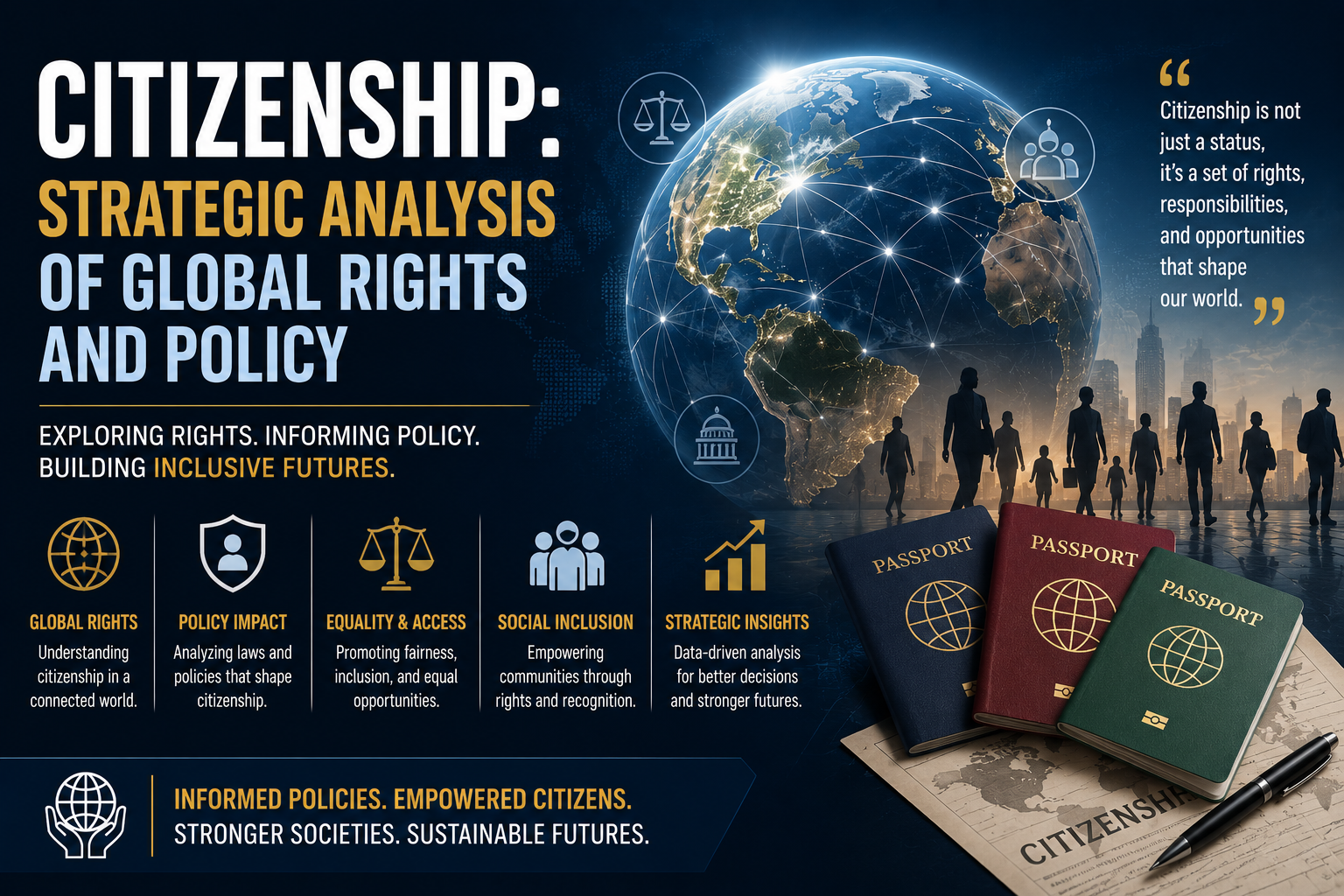
💡 Citizenship: Strategic Analysis of Global Rights and Policy
An authoritative analysis of global citizenship trends, passport power, investment programs, and the legal frameworks governing international mobility.
Executive Summary
Citizenship has transitioned from a static marker of national identity into a dynamic strategic asset. In the current geopolitical landscape, the value of a passport is measured by global mobility, economic opportunity, and legal security. Key findings from 2024 industry reports indicate that the Citizenship by Investment (CBI) market is now valued at over 21 billion dollars annually, driven by a 15 percent year-over-year increase in high-net-worth individuals seeking alternative residencies. Data from the Henley Passport Index reveals a growing gap between the most and least powerful passports, with top-tier nations providing visa-free access to over 190 destinations. This analysis examines the legal foundations of citizenship, the economic implications of dual nationality, and the shifting policies regarding naturalization and revocation.
Introduction
The concept of citizenship represents the formal legal relationship between an individual and a state. It encompasses a bundle of rights, including the right to vote, the right to work, and the right to protection under the law. However, the definition is expanding. As global borders become more permeable for capital but more restrictive for people, citizenship has become a tool for risk management. For the modern professional, citizenship is no longer just about where one was born; it is about where one can go and what one can build. This strategic shift is influenced by international relations and bilateral agreements, such as those seen in the Germany Paraguay: Strategic Analysis of Transatlantic Relations, where diplomatic ties directly impact the ease of movement and residency for citizens of both nations.
THE DEEP DIVE: Legal Frameworks and Global Trends
Citizenship is primarily governed by two legal principles: Jus Soli (right of the soil) and Jus Sanguinis (right of blood). Approximately 30 countries, including the United States and Canada, practice unrestricted Jus Soli, granting citizenship to almost anyone born on their territory. In contrast, the majority of European and Asian nations rely on Jus Sanguinis, where citizenship is inherited through parents regardless of the place of birth. These frameworks create a complex web of eligibility that determines global mobility.
The rise of the Global Citizen has led to an increase in dual and multiple citizenship. According to the United Nations, over 75 percent of countries now allow their citizens to hold another nationality without losing their original status. This is a significant increase from the mid-20th century, when dual nationality was often viewed as a conflict of interest. Today, it is a mechanism for economic diversification. For instance, individuals holding dual citizenship can navigate different tax jurisdictions more effectively, though they must remain vigilant about compliance. Understanding the July 2026 Tax Deadlines: Strategic Compliance and Analysis is essential for citizens managing global assets to avoid legal pitfalls.

Economic citizenship, or Citizenship by Investment (CBI), has become a critical revenue stream for smaller nations, particularly in the Caribbean. Countries like St. Kitts and Nevis or Grenada offer citizenship in exchange for significant financial contributions to national development funds or real estate. For the investor, the primary motivation is often a 'Plan B', a secondary home in a stable jurisdiction. However, these programs face increasing scrutiny from the European Union and the United States, who cite concerns over security and money laundering. In 2023, the OECD identified several CBI programs as potentially high-risk for tax evasion, leading to a push for stricter due diligence and higher investment thresholds.
Conversely, the loss of citizenship or residency status is a growing area of legal focus. The administrative process of removing a person's legal right to remain in a country is a powerful tool of state sovereignty. A detailed look at Deportation: Strategic Analysis of Global Policy Trends shows that changes in national security laws have made it easier for states to revoke the status of naturalized citizens involved in criminal or extremist activities. This highlights the reality that while citizenship is a right, for naturalized individuals, it can sometimes be conditional.
WHAT THIS MEANS FOR YOU
For the average individual, citizenship policy affects everything from travel convenience to retirement planning. If you are considering seeking a second nationality or moving abroad, you should consider the following actionable points:
- Assess Passport Power: Use tools like the Henley Passport Index to understand the visa-free travel limitations of your current nationality.
- Evaluate Tax Obligations: Many countries, most notably the United States, tax based on citizenship rather than residency. Ensure you understand the global tax reach of any new citizenship you acquire.
- Understand Naturalization Timelines: Most countries require 5 to 10 years of legal residency before applying for citizenship. Research the specific language and integration requirements of your target nation.
- Monitor Diplomatic Shifts: Citizenship rights are not static. Changes in government or international treaties can expand or restrict your rights overnight.

Expert Verdict / Future Outlook
The future of citizenship is increasingly digital and decoupled from physical territory. We are seeing the emergence of 'E-Residency' programs, pioneered by Estonia, which allow entrepreneurs to start and manage EU-based businesses without ever stepping foot in the country. While this does not grant full citizenship, it represents the first step toward a functional global identity. Experts predict that within the next decade, we may see the rise of sovereign digital identities backed by blockchain technology, providing a layer of rights that exists independently of traditional nation-states. However, for the foreseeable future, the traditional passport remains the ultimate arbiter of global freedom. The strategic value of citizenship will continue to rise as geopolitical volatility increases, making nationality a key component of any comprehensive wealth and safety strategy.
FAQ
What is the difference between residency and citizenship?
Residency allows you to live and often work in a country for a specific period, but it does not grant a passport or voting rights. Citizenship is a permanent status that include a passport, the right to vote, and the inability to be deported under normal circumstances.
Can I lose my citizenship if I live abroad for too long?
Most countries do not revoke citizenship for living abroad. However, some nations, like the Netherlands or Germany, have specific rules where you might lose your original citizenship if you voluntarily acquire another one without prior permission.
How much does it cost to buy citizenship?
Prices vary significantly. Caribbean programs typically start at 100,000 to 200,000 dollars in the form of a donation. European residency-by-investment programs (Golden Visas) that lead to citizenship often require 500,000 dollars or more in real estate or capital investment.
Does dual citizenship mean I have to pay double taxes?
Not necessarily. Most countries have Double Taxation Agreements (DTAs) to prevent this. However, the US is unique in that it taxes based on citizenship, meaning US citizens abroad must file tax returns regardless of where they live.
Which country has the easiest citizenship to obtain?
This depends on your ancestry and financial status. For those with specific heritage, countries like Ireland or Italy offer citizenship by descent which is relatively straightforward. For others, countries with low residency requirements like Paraguay or certain Caribbean nations are considered the most accessible.
Conclusion
Citizenship is the ultimate strategic tool in a world defined by mobility and risk. Whether through birth, descent, or investment, the legal framework of your nationality dictates your access to the global economy and your personal security. As nations continue to adjust their policies in response to migration and economic shifts, staying informed about the legal requirements and diplomatic trends is essential for maintaining your global standing. The strategic acquisition and management of citizenship rights will remain a top priority for those seeking to navigate the complexities of the 21st century.





Comments 0
Leave a Reply
Your email address will not be published. Required fields are marked *
Be the first to share your thoughts!