💡 The Blueprint of American Soccer: A Comprehensive Guide to MLS History and League Structure
Explore the history, unique single-entity structure, and evolution of Major League Soccer (MLS), from its 1994 World Cup origins to the modern Apple TV era.
Major League Soccer (MLS) is the premier professional soccer league in the United States and Canada, operating as a single-entity structure where the league owns all player contracts and team brands rather than individual clubs being independent businesses. Established in 1993 as a condition for the U.S. hosting the 1994 FIFA World Cup, the league began play in 1996 with 10 teams. Today, it has grown into a 29-team circuit (expanding to 30 with San Diego FC) that utilizes a closed-franchise system without promotion or relegation, prioritizing financial stability and parity through strict salary caps and roster regulations.
The Unique Identity of Major League Soccer in the Global Landscape
For fans in India accustomed to the European pyramid or the Indian Super League (ISL), MLS can feel like a different sport entirely—at least in how it is managed. While the Premier League or La Liga operate on a system of independent clubs that can be promoted or relegated based on merit, MLS functions as a single legal entity. This means that when a player signs a contract, they aren't signing with a specific team like the LA Galaxy or Inter Miami; they are signing with Major League Soccer itself.
This structure was designed to prevent the financial collapses that plagued previous American soccer leagues. It ensures that no single team can outspend the others to the point of bankruptcy for the whole league. This focus on "parity" means that on any given weekend, the team at the bottom of the table has a genuine chance of beating the team at the top.
The Genesis of a League: How the 1994 World Cup Birthed the MLS Era
The story of MLS begins with a promise. When the United States bid to host the 1994 FIFA World Cup, soccer was largely a niche sport in North America. FIFA made it a condition of the bid: if the U.S. wanted the World Cup, they had to create a viable professional outdoor league. Major League Soccer was officially formed in December 1993, but the first ball wasn't kicked until 1996. The initial league featured iconic names like Carlos Valderrama and Jorge Campos, but the early years were a struggle for relevance in a crowded American sports market.
Survival and Transformation: Navigating the Contraction Years and the 'Beckham Rule' Pivot
By the early 2000s, MLS faced an existential crisis. The league was losing money, and in 2002, it had to "contract" (dissolve) two teams: the Miami Fusion and the Tampa Bay Mutiny. However, the 2002 World Cup success of the U.S. Men’s National Team provided a spark of hope. The real turning point came in 2007 with the arrival of David Beckham.
To facilitate Beckham's move to the LA Galaxy, MLS created the "Designated Player Rule." This allowed teams to sign up to three players whose salaries would mostly sit outside the league-mandated salary cap. This "Beckham Rule" transformed MLS from a developmental league into a destination for global stars, paving the way for the likes of Thierry Henry, Zlatan Ibrahimović, and eventually, Lionel Messi.
The Single-Entity Model: Understanding the Financial and Legal Foundation
The single-entity model is the bedrock of MLS. Investors in the league do not "own" a team; they are "investor-operators" who own a share in the league and are granted the right to operate a specific market. This structure provides several advantages and limitations:
- Advantage: Financial Stability. It prevents the "arms race" of spending that often leads to club insolvency in Europe.
- Advantage: Cost Control. By centrally negotiating player contracts, the league avoids bidding against itself for talent.
- Limitation: Lack of Autonomy. Individual owners cannot make independent decisions on many financial matters, which can sometimes frustrate high-spending investors.
- Limitation: Anti-Trust Scrutiny. The model has been challenged in court by players seeking more freedom of movement, though the league has largely maintained its legal standing.
Competition Format: Decoding the Regular Season, Supporters’ Shield, and MLS Cup Playoffs
Unlike most world leagues where the team with the most points at the end of the season is the champion, MLS follows the American tradition of a post-season tournament. The season is divided into three distinct honors:
- The Regular Season: Teams are split into the Eastern and Western Conferences. They play a 34-game schedule focused heavily on intra-conference play to reduce travel across the massive North American continent.
- The Supporters’ Shield: This trophy is awarded to the team with the best overall record (most points) during the regular season. While prestigious, it is often viewed as secondary to the championship.
- The MLS Cup Playoffs: This is the pinnacle. The top teams from each conference enter a knockout tournament, culminating in the MLS Cup Final. The winner of this game is the official league champion.

Roster Construction and Salary Caps: Complexity of DPs and Allocation Money
Building an MLS roster is often compared to solving a high-level math equation. Every team must adhere to a salary cap, but there are numerous ways to "buy down" a player's impact on that cap. The most common terms you will hear are:
- Designated Players (DPs): Players whose salary exceeds the maximum budget charge. Only a small portion of their multi-million dollar salary counts against the team's cap.
- General Allocation Money (GAM): Money that can be used to sign players or trade between teams to reduce a player's cap hit.
- Targeted Allocation Money (TAM): Specifically used to sign or retain high-quality players who earn more than the maximum salary but aren't quite at the "Designated Player" level.
The Absence of Promotion and Relegation: Why the System Diverges
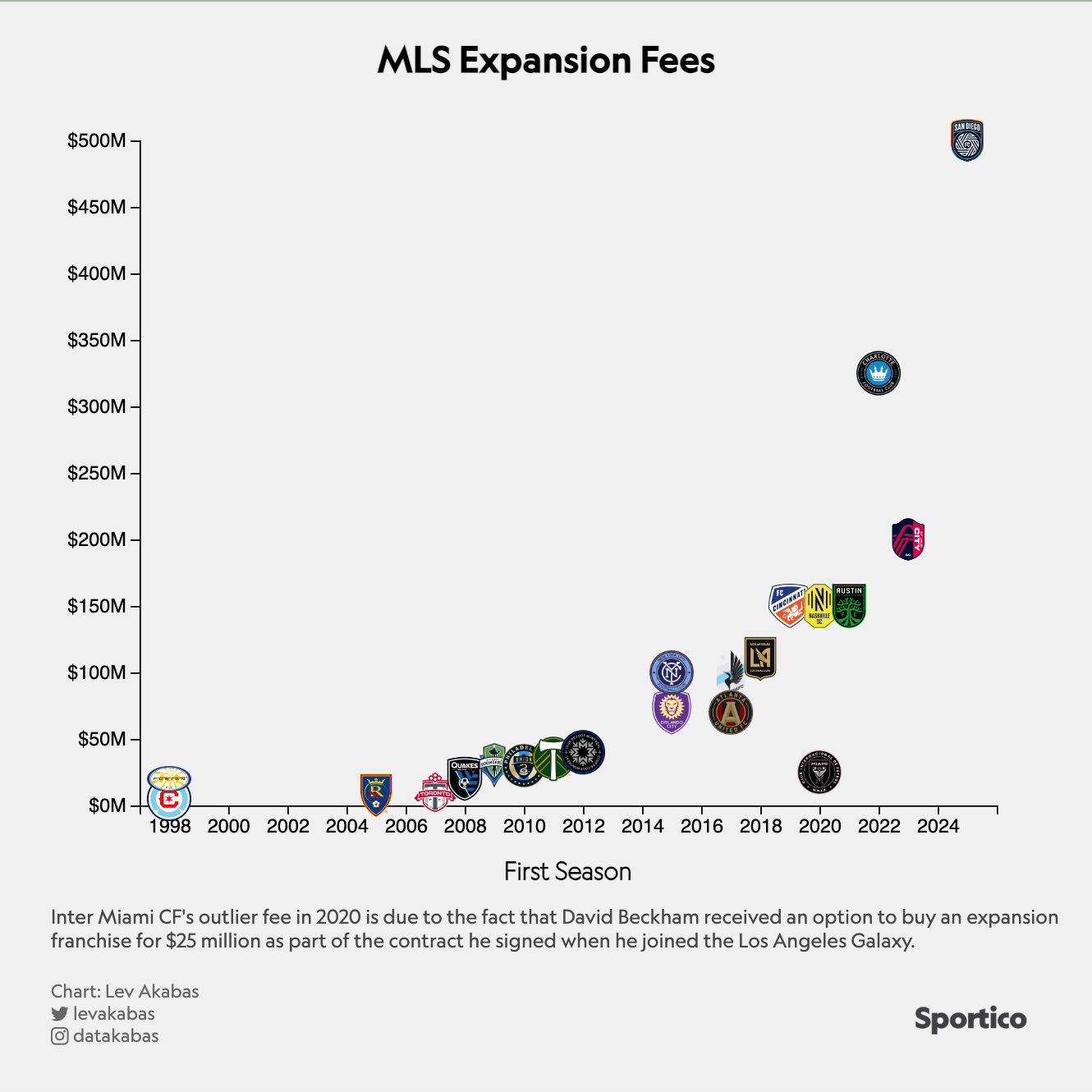
The biggest point of contention for global soccer purists is the lack of promotion and relegation. In the U.S., sports are viewed as franchises. Owners pay "expansion fees"—which have recently skyrocketed to $500 million—to join the league. Because of this massive buy-in, the league guarantees that their investment won't be devalued by a bad season that results in relegation to a lower division. While this lacks the "drama of the drop," it provides the financial security necessary to build world-class stadiums and academies.

The Modern Era: Strategic Expansion and the Landmark Apple TV Partnership
MLS is currently in its "4.0" era. This period is defined by soccer-specific stadiums (moving away from cavernous American football stadiums) and a massive shift in media consumption. In 2023, MLS entered a 10-year, $2.5 billion partnership with Apple to broadcast every single match globally via the MLS Season Pass. This eliminated local blackouts and made the league easily accessible to fans in India and elsewhere, coinciding perfectly with the arrival of Lionel Messi at Inter Miami.
Frequently Asked Questions Regarding MLS Rules and History
1. Why are there two trophies (Supporters' Shield and MLS Cup)?
The Supporters' Shield rewards consistency over 34 games, while the MLS Cup follows the American tradition of crowning a champion through a high-stakes playoff tournament.
2. How many teams are in MLS?
As of 2024, there are 29 teams. San Diego FC is scheduled to join as the 30th team in 2025.
3. Can an MLS team play in the UEFA Champions League?
No. Because the U.S. and Canada are in the CONCACAF region, MLS teams compete in the CONCACAF Champions Cup for the right to play in the FIFA Club World Cup.
4. What is the "SuperDraft"?
The SuperDraft is an annual event where MLS teams select the best players from the American university (college) soccer system. While less prominent now due to youth academies, it remains a unique part of the league's player acquisition path.
Conclusion
Major League Soccer has evolved from a fragile experiment in 1996 to a robust, expanding league that now commands global attention. By blending traditional American sports business models with the global game of soccer, it has created a stable environment for growth. While the lack of promotion and relegation remains a point of debate, the league's financial health, modern infrastructure, and landmark global broadcasting deals suggest that the blueprint of American soccer is successfully positioning MLS as one of the top leagues in the world for the next generation of fans.



Comments 0
Leave a Reply
Your email address will not be published. Required fields are marked *
Be the first to share your thoughts!