
💡 Navigating the Indian Passport Ecosystem: A Comprehensive Guide to Fresh Applications and Renewals
A detailed, step-by-step guide to applying for a fresh Indian passport or renewing an existing one, covering documentation, PSK procedures, and the Tatkaal scheme.
Getting an Indian passport is now much easier than before thanks to the Passport Seva system. The entire process-from application to delivery-is mostly online and usually takes a few days to a few weeks depending on verification. However, many applicants still get stuck due to document mistakes or police verification delays.
The Evolution of the Passport Seva Project
The Passport Seva Project has simplified passport services by moving everything online. Earlier, applicants had to visit offices multiple times, but now most steps like form filling, payment, and appointment booking can be done digitally.
Determining Your Application Category: Fresh Passport vs. Re-issue
Before you begin your application, you must identify which category you fall into. A Fresh Passport application is for those who have never held an Indian passport before. Conversely, a Re-issue is required if you already possess a passport but need a new booklet because of:
- Expiry of validity (or upcoming expiry within one year).
- Exhaustion of pages.
- Lost or stolen passport.
- Damaged passport.
- Change in personal particulars (e.g., change of name, marital status, or address).
Step-by-Step Digital Registration on the Passport Seva Portal
First, create an account on the Passport Seva website. After that, fill in your details carefully-make sure your name and DOB match your Aadhaar card exactly. Then pay the fee and book an appointment at your nearest Passport Seva Kendra.
- Register: Create a user ID and password on the portal.
- Fill the Form: You can either fill the form online or download it to fill offline and upload it later. Ensure all details match your supporting documents exactly.
- Pay and Schedule: Payment is mandatory for booking an appointment. You can pay via credit/debit card, net banking, or SBI challan.
- Print Receipt: Although an SMS is usually sufficient, carrying a printout of the appointment confirmation is recommended.
Essential Documentation Checklist for Proof of Address and Date of Birth
Most passport rejections happen due to document mismatches. Always ensure your Aadhaar, address proof, and birth certificate have the same spelling of your name. Even a small difference can delay approval.
- Proof of Address: Aadhaar card, utility bills (electricity, water, gas) in your name, rent agreement, or a passbook of a running bank account in a scheduled public/private sector bank.
- Proof of Date of Birth: Birth certificate issued by a municipal authority, school leaving certificate, or PAN card.
Pro Tip: Always carry original documents along with two sets of self-attested photocopies to your appointment.
Understanding ECR vs. Non-ECR Categories and Eligibility
If you have passed 10th class or above, you usually fall under Non-ECR, which means you don’t need extra clearance for foreign travel. ECR category mainly applies to people with lower education qualification for job-related travel abroad.
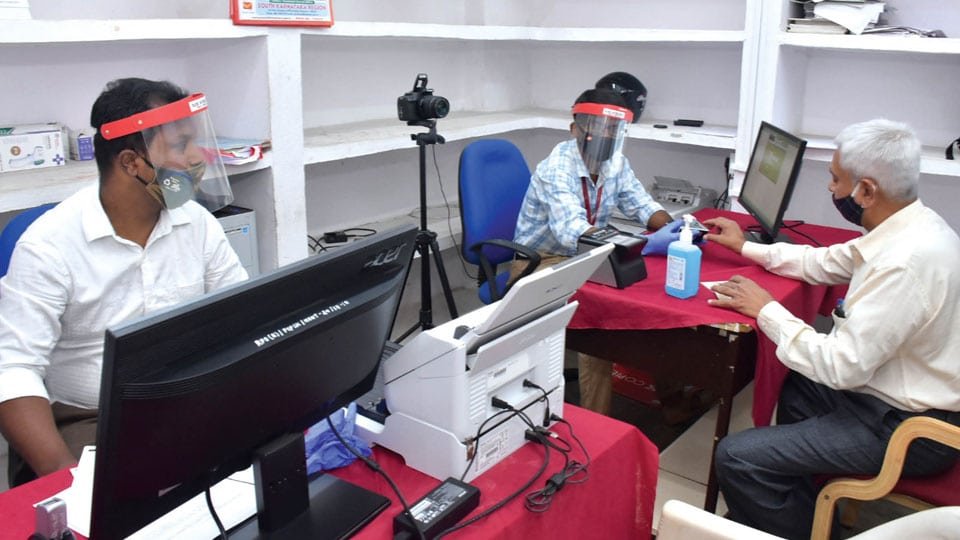
The Appointment Experience: What to Expect at the Passport Seva Kendra (PSK)
On the day of your appointment, arrive 15 minutes early.Many applicants face delays if they forget documents or arrive late, so reaching at least 15–20 minutes early is strongly recommended.The PSK operates through three counters:
- Counter A: A TCS official checks your documents, takes your photograph, and records your fingerprints.
- Counter B: A verification officer (Government official) scrutinizes the original documents.
- Counter C: A granting officer decides whether to grant, review, or reject the application.
The process is generally transparent and efficient, though waiting times can vary depending on the daily footfall at your specific location.
Navigating the Passport Renewal Process: Validity and Changes
Renewing a passport is often faster than a fresh application. If your passport is nearing its 10-year expiry, you can apply for a re-issue up to one year before the expiry date. If you need to change your address or add a spouse's name, you must provide supporting evidence (like a marriage certificate or a new utility bill). The old passport will be cancelled and returned to you along with the new one.
The Critical Role of Police Verification in the Issuance Cycle
Police verification is the final security check. Depending on your application type and history, it can be:
- Pre-Verification: Conducted before the passport is printed.
- Post-Verification: The passport is issued first, and verification happens later (common for Tatkaal or specific categories).
- No Verification: Usually for renewals where data hasn't changed.
If you are not available during verification, your application may get delayed or even rejected, so make sure someone is present at your home.
Tatkaal Scheme: Accelerating the Application for Urgent Travel
If you have an emergency, the Tatkaal scheme allows for expedited processing. By paying an additional fee (usually ₹2,000 extra), the passport is often dispatched within 1-3 working days, provided the documents are in order. However, not everyone is eligible for Tatkaal-cases involving major changes in name, lost passports, or complex verification requirements may be excluded.
Tracking Your Application Status and Final Document Delivery
Once you leave the PSK, you can track your application using the 15-digit File Number on the Passport Seva website or the 'mPassport Seva' mobile app. You will receive SMS updates at every stage: "Police Verification Initiated," "Passport Printed," and "Passport Dispatched." The document is always sent via India Post Speed Post to ensure secure delivery to the applicant only.Tatkaal is helpful for urgent travel, but approval is not guaranteed. If documents are unclear or verification is required, it may still take longer.
Frequently Asked Questions Regarding Minor Passports and Lost Documents
1. How do I apply for a passport for a minor?
For minors (under 18), the consent of both parents is required. Parents must provide their own passports or valid ID proofs. Minor passports are usually valid for 5 years or until the child turns 18.
2. What should I do if I lose my passport?
Immediately file an FIR (First Information Report) at the nearest police station and apply for a 'Re-issue' under the 'Lost Passport' category at the PSK. You will need to explain the circumstances of the loss.
Conclusion: Streamlining Your Global Mobility
The passport process in India is now much faster and more transparent, but small mistakes in documents or verification can still delay approval. Carefully following each step ensures a smooth experience without unnecessary delays.




Comments 0
Leave a Reply
Your email address will not be published. Required fields are marked *
Be the first to share your thoughts!