

💡 US Open Strategic Analysis: Commercial and Athletic Growth
An authoritative analysis of the US Open's economic impact, technological evolution, and its role as a global leader in professional sports management.
Executive Summary
The US Open has solidified its position as a premier financial and cultural powerhouse of the Grand Slam circuit. In 2024, the tournament established a record-breaking total prize pool of 75 million USD, representing a 15 percent increase from the previous year. This growth was mirrored in its physical attendance, which surpassed 1 million spectators over the three-week period for the first time in its history. Key findings indicate that the United States Tennis Association (USTA) is successfully pivoting toward a younger, more digitally engaged demographic while maintaining its status as a high-value hospitality platform for corporate partners. The integration of advanced data analytics and a fully electronic line-calling system has further strengthened officiating accuracy and enhanced the overall broadcast and fan experience.

Introduction
The US Open is more than a tennis tournament: it is a massive commercial engine and a barometer for the health of global professional sports. Held annually at the USTA Billie Jean King National Tennis Center in Flushing Meadows, New York, the event serves as the final Grand Slam of the calendar year. Its strategic importance lies in its ability to blend high-stakes athletic performance with significant media rights valuations and urban economic impact. As the sport moves beyond the era dominated by the Big Three (Federer, Nadal, and Djokovic), the US Open has become an important stage for the emergence of a new generation of stars who command significant market influence. This analysis examines the structural, economic, and technological factors that define the US Open today.
THE DEEP DIVE: Strategic Pillars of the US Open
1. Economic Architecture and Prize Money Evolution
The financial scale of the US Open is among the largest in professional tennis. The 2024 prize money distribution highlights a strategic focus on supporting players throughout the draw, with first-round main-draw losers receiving 100,000 USD. This contributes to the financial sustainability of the professional player pool. To understand how these figures compare to other global markets, one can look at Salary and Remuneration Trends: A Strategic Global Analysis, which details how high-level performance incentives are scaling across industries. The tournament generates revenue through a diverse mix of domestic and international broadcast rights, supported by a long-term agreement with ESPN. Sponsorships from blue-chip brands like JPMorgan Chase, American Express, and Emirates further bolster the tournament's commercial strength and support continued infrastructure investment.
2. Technological Infrastructure and Officiating
The US Open was an early adopter of Hawk-Eye technology and has transitioned to electronic line calling for line-calling decisions. This reduces the potential for human error in line calling and provides greater consistency in officiating. Beyond officiating, the tournament utilizes IBM's AI and data technologies to provide real-time data insights and AI-powered content and highlights. This technological prowess mirrors the digital transformations seen in other sectors, such as the developments discussed in the Cricket: Strategic Analysis of Global Commercial Authority, where data-driven fan engagement is becoming an important driver of growth.

3. Demographic Pivot and Fan Experience
The USTA has aggressively marketed the tournament to a younger audience. Fan Week, which precedes the main draw, attracted over 200,000 people in 2024, many of whom are new to the sport. By integrating music, food, and celebrity culture, the US Open has transformed from a traditional sporting event into a lifestyle festival. This strategy supports long-term viability by building brand loyalty among Gen Z and Millennial consumers who value experience over passive consumption. The mental and physical resilience required to compete at this level is comparable to other elite disciplines, such as those highlighted in the analysis of Ezra Frech: Strategic Analysis of Paralympic Excellence, where the focus is on peak human performance under extreme pressure.
4. Media and Global Reach
The global footprint of the US Open is expanding, with broadcasts reaching over 200 countries and territories. The tournament's social media strategy focuses on short-form content and behind-the-scenes access, supporting greater digital engagement and fan interaction. This reach is vital for maintaining the tournament's status as a global authority in sports entertainment. The strategic management of the US Open brand ensures it remains a top-tier destination for international tourists, contributing more than 1.2 billion USD in annual economic impact to New York City during the tournament period.
WHAT THIS MEANS FOR YOU
- For Fans: Expect higher ticket prices but also significantly enhanced grounds access and digital tools to track match statistics in real-time.
- For Amateur Athletes: The US Open serves as a showcase for the latest in equipment technology and training methodologies that eventually trickle down to the club level.
- For Investors and Brands: The tournament remains an attractive opportunity for high-visibility sponsorship, given its record-breaking attendance and strong media presence.
- For the Sports Industry: The US Open's model of combining sport with lifestyle entertainment provides a blueprint for other leagues looking to modernize.
Expert Verdict / Future Outlook
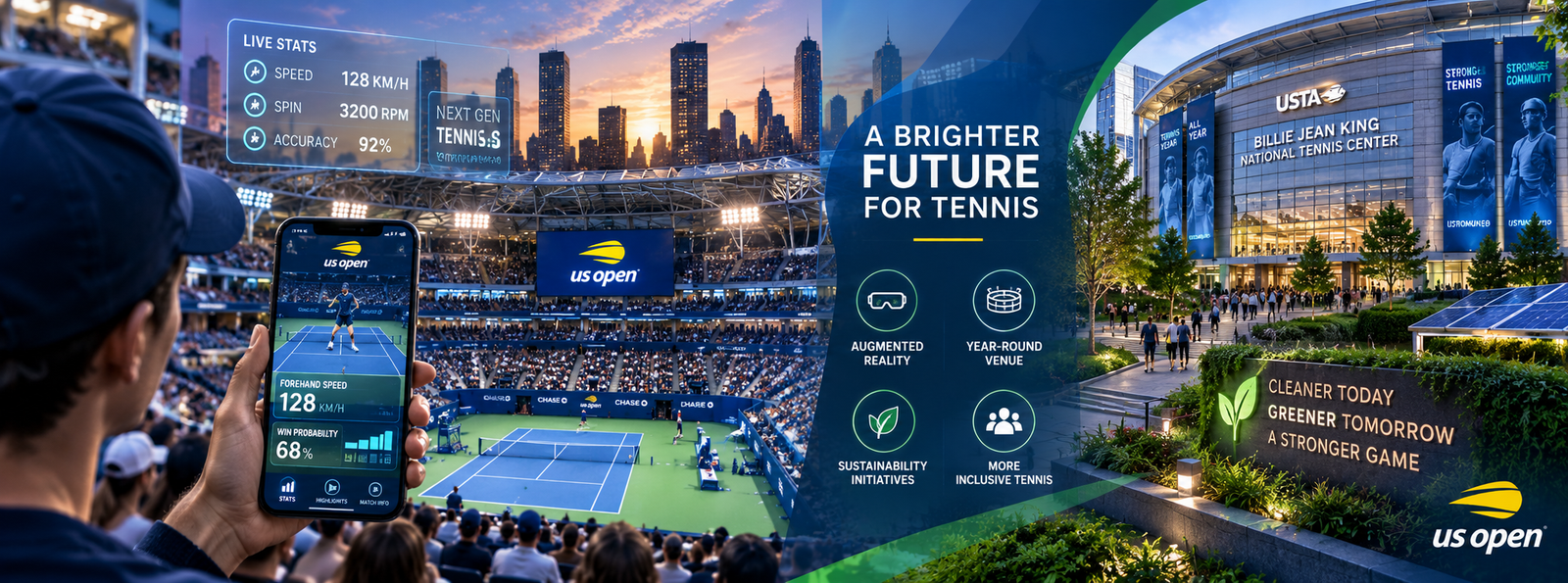
The future of the US Open is intrinsically linked to its ability to maintain its lead in technological innovation and inclusive marketing. We anticipate the further integration of augmented reality (AR) within the stadium experience, allowing fans to see player stats overlaid on the court via their mobile devices. Furthermore, as the USTA continues to invest in the Billie Jean King National Tennis Center, we expect the facility to become an increasingly year-round hub for sports excellence rather than a seasonal venue. The strategic focus will also continue to include sustainability, with ongoing initiatives focused on reducing the tournament's environmental impact, improving waste diversion, energy efficiency, sustainable food practices, and transportation-related emissions.
FAQ
What is the total prize money for the US Open today?
The 2026 US Open offers a record $108 million in total player compensation, with the men's and women's singles champions each receiving $5.5 million.
How many people attend the US Open annually?
In recent years, the tournament has surpassed 1 million total attendees when including Fan Week and the main draw matches. In 2025, total three-week attendance reached 1,144,562.
Is the US Open played on grass or hard courts?
The US Open is played on hard courts, which are known for their consistent bounce and medium-fast playing conditions, providing a suitable surface for a wide range of playing styles.
Who manages the US Open?
The tournament is owned and operated by the United States Tennis Association (USTA), a non-profit organization that reinvests proceeds into the growth and development of tennis.
How has technology changed the US Open?
The introduction of Hawk-Eye Live and electronic line-calling technology has replaced traditional human line judges for line-calling decisions, while AI-driven analytics and digital tools provide fans and players with increasingly detailed match data and insights.
Conclusion
The US Open stands as a testament to the power of strategic sports management. By balancing the traditions of a Grand Slam with the demands of a modern, tech-savvy audience, the USTA has created a resilient and commercially successful model. The tournament's ability to generate record-breaking player compensation while fostering the next generation of athletic talent supports its continued importance in the global sporting landscape. As it evolves, the US Open will remain a leading example of how a premier athletic event can contribute to economic growth, technological progress, and cultural relevance simultaneously.





Comments 0
Leave a Reply
Your email address will not be published. Required fields are marked *
Be the first to share your thoughts!