
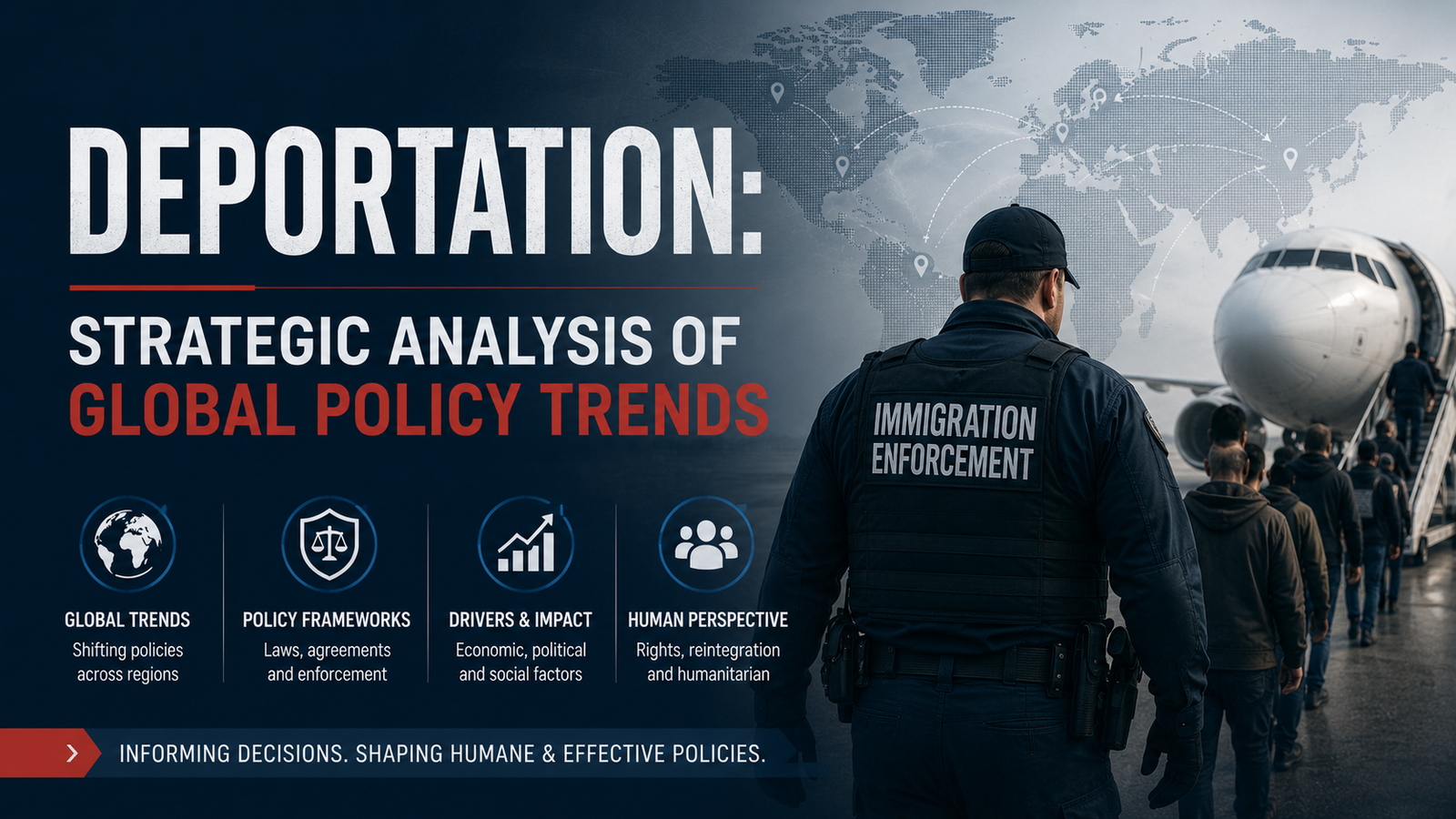
💡 Deportation: Strategic Analysis of Global Policy Trends
An authoritative analysis of deportation trends, legal frameworks, and economic impacts in the current global landscape.
Executive Summary
Deportation remains one of the most complex and high-stakes instruments of national sovereignty. In fiscal year 2023, United States Immigration and Customs Enforcement (ICE) conducted 142,580 removals, representing a significant increase over the previous year. Simultaneously, the European Union reported a 15 percent increase in the number of non-EU citizens ordered to leave member states. This strategic analysis examines the intersection of administrative law, national security, and economic labor demands. Key findings indicate a shift toward expedited removal processes and an increased reliance on bilateral readmission agreements. High-trust data from the Department of Homeland Security (DHS) and Eurostat suggest that while enforcement is scaling, legal challenges regarding due process and human rights remain central to the discourse.

Introduction
The term deportation refers to the formal removal of a foreign national from a country for violating immigration laws or criminal statutes. While often viewed through a political lens, the mechanics of deportation are rooted in administrative law and international treaties. Globally, the landscape of migration management is shifting. Governments are balancing the need for secure borders with the economic realities of aging populations and labor shortages. Understanding the strategic implications of these policies requires a look at the data driving enforcement and the legal frameworks that govern the rights of the individual. This report provides a comprehensive examination of the current state of removal operations and the long-term outlook for global migration policy.
The Deep Dive: Data, Law, and Enforcement
The operational scale of deportation is governed by specific legislative mandates. In the United States, the Immigration and Nationality Act (INA) provides the legal basis for removal. Following the expiration of Title 42 in May 2023, the DHS transitioned back to Title 8 authorities, which carry stricter legal consequences for unauthorized reentry. According to ICE’s 2023 Annual Report, the agency conducted 62,545 removals under Title 8 in the latter half of the year alone. This surge highlights a strategic pivot toward formalizing removals to deter future illegal migration.
In Europe, the strategic focus has shifted toward the New Pact on Migration and Asylum. Eurostat data reveals that in 2023, approximately 384,245 people were ordered to leave an EU country, but only about 18 percent were effectively returned to a third country. This gap between orders and actual removals underscores the administrative hurdles and the necessity for robust diplomatic negotiations with countries of origin. Large-scale logistics for these operations often require sophisticated administrative tools, much like how corporations utilize Microsoft Outlook: Strategic Analysis of Enterprise Dominance to manage high-volume communications and scheduling across global departments.
Economic Implications of Mass Removal
The economic consequences of deportation extend beyond the direct costs of enforcement, which run into the billions of dollars annually. For instance, the agricultural and construction sectors in many developed nations rely heavily on foreign labor. A sudden increase in removals can lead to labor volatility and increased costs for consumers. Conversely, proponents of strict enforcement argue that it protects the integrity of the domestic labor market and ensures that wage growth is not suppressed by an oversupply of unauthorized workers.
From a financial perspective, the stability of the global economy is also influenced by migration patterns. Investors looking at Dividend Yield Strategies: A Strategic Financial Analysis often consider the geopolitical stability of regions. High rates of deportation in a specific corridor can signal social unrest or shifting regulatory environments that impact long-term market confidence. Furthermore, the banking sector plays a critical role in monitoring the financial flows associated with migration and legal compliance, a task often overseen by high-level executives like those profiled in our study of Marianne Lake: Strategic Analysis of Banking Leadership.

Legal Grounds and Due Process
Deportation is not a singular event but a process that typically involves several stages: apprehension, detention, a hearing before an immigration judge, and the final execution of the removal order. Grounds for deportation generally fall into two categories: administrative violations (such as overstaying a visa) and criminal convictions. Under the 1996 Illegal Immigration Reform and Immigrant Responsibility Act (IIRIRA), the list of deportable offenses was expanded significantly, including many non-violent crimes classified as aggravated felonies.
- Administrative Removal: Often used for individuals with no legal basis to remain and who do not claim asylum.
- Judicial Removal: Involves a full hearing where the individual can present defenses, such as cancellation of removal or asylum claims based on a well-founded fear of persecution.
- Expedited Removal: Allows for the swift removal of individuals at the border without a hearing, provided they cannot establish a legal basis for entry.
The principle of non-refoulement, a core tenet of international law, prohibits states from returning individuals to a country where they would face torture or other serious human rights violations. Balancing this principle with national security priorities remains the primary challenge for modern immigration systems.
What This Means for You
For the general public, understanding deportation is essential for navigating the complexities of modern citizenship and employment. If you are an employer, ensuring I-9 compliance and verifying the work authorization of all employees is critical to avoiding heavy fines and legal scrutiny. For families and individuals, staying informed about changes in immigration policy is the best way to ensure legal status is maintained. It is important to remember that individuals facing removal have certain rights, including the right to legal representation (though not at government expense in many jurisdictions) and the right to a fair hearing in many circumstances.

Expert Verdict and Future Outlook
The future of deportation policy will likely be defined by two major trends: increased automation and the expansion of third-country agreements. Governments are increasingly using biometric data and artificial intelligence to track visa overstays and identify individuals for removal. We also expect to see more countries adopting the Rwanda Model or similar externalization strategies, where asylum seekers are processed in third countries. This shift represents a move toward a more transactional form of migration management. However, the success of these strategies depends on their ability to withstand legal challenges in international courts and their alignment with global human rights standards.
FAQ: Authoritative Answers on Deportation
1. What is the difference between deportation and removal?
While used interchangeably in common language, removal is the current legal term in the U.S. that encompasses both the act of deportation and what was formerly known as exclusion. It signifies a formal legal process ending in the person's exit from the country.
2. Can a permanent resident be deported?
Yes. Lawful Permanent Residents (Green Card holders) can lose their status and be removed if they commit certain crimes, such as crimes of moral turpitude or aggravated felonies, or if they engage in activities that threaten national security.
3. How long does a deportation ban last?
Depending on the reason for removal, an individual may be barred from re-entering the country for 5, 10, or 20 years. In some cases, such as an aggravated felony conviction, the bar may be permanent.
4. What is voluntary departure?
Voluntary departure allows an individual to leave the country at their own expense within a specified timeframe. This avoids a formal order of removal on their record, which can make future legal entry easier compared to a forced deportation.
5. Do children have different protections in deportation cases?
Yes, many legal systems provide additional safeguards for minors, particularly unaccompanied children. These may include specialized hearings, access to social services, and a higher priority for humanitarian relief.
Conclusion
Deportation is a high-stakes mechanism of state power that balances legal mandates with humanitarian obligations. As global migration continues to scale, the strategic use of removal as a policy tool will require greater transparency and efficiency. The integration of data-driven enforcement and international cooperation remains the most viable path forward for maintaining the integrity of national borders while respecting the fundamental rights of the individual. Stakeholders must remain vigilant as these policies evolve in response to changing geopolitical and economic pressures.





Comments 0
Leave a Reply
Your email address will not be published. Required fields are marked *
Be the first to share your thoughts!