
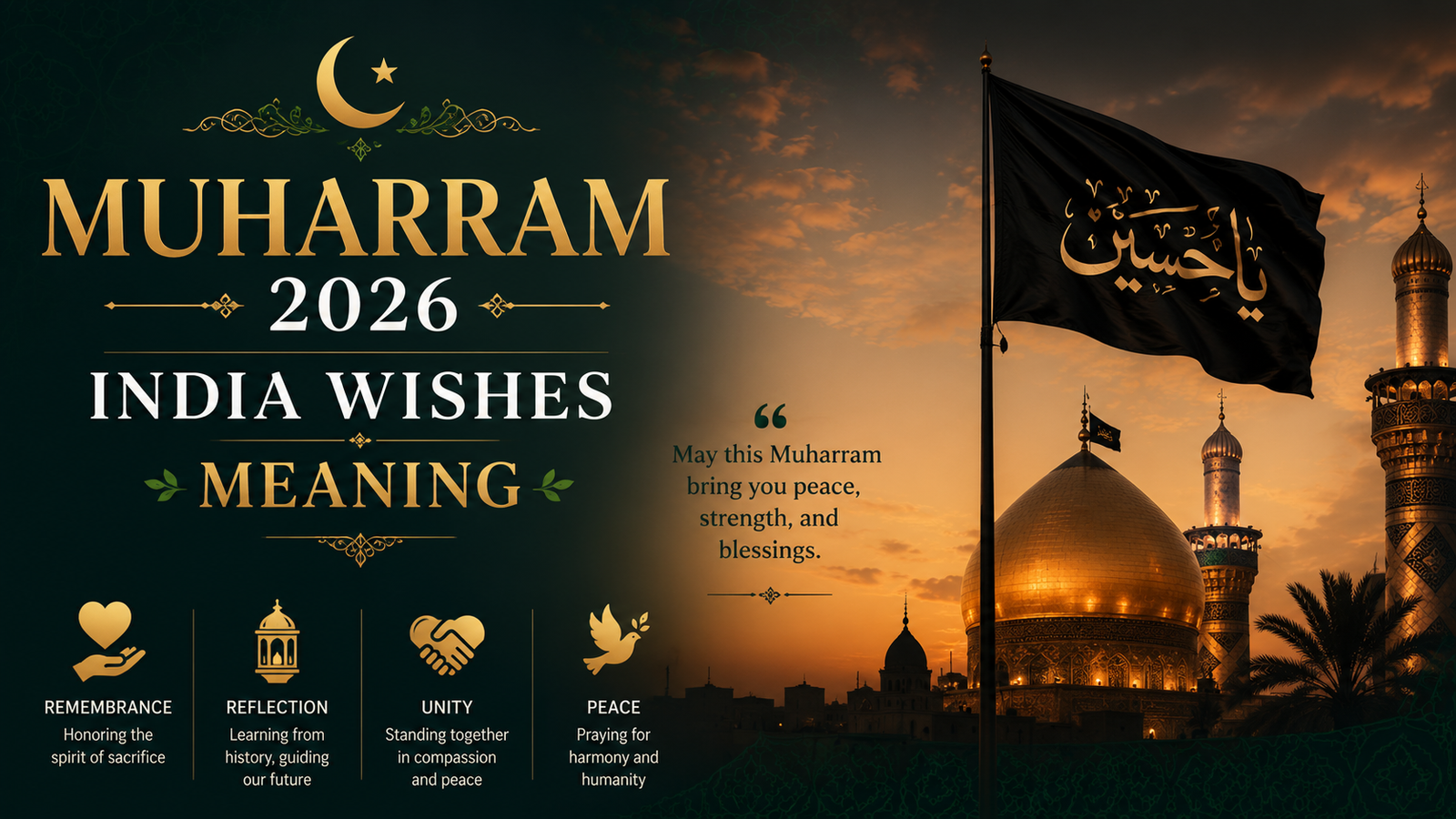
💡 Muharram 2026 India Wishes Meaning
A comprehensive strategic analysis of Muharram 2026 in India, covering dates, theological significance, cultural observance, and respectful digital communication.
Executive Summary
Muharram 2026 stands as a pivotal period for the Islamic community in India, marking the commencement of the Hijri year 1448. Unlike secular New Year celebrations, Muharram is a period of profound reflection, mourning, and historical remembrance. Based on lunar projections, Muharram 1 is expected to fall on or around June 16, 2026, with the climactic Day of Ashura occurring on June 25, 2026. This analysis highlights the socio-religious significance of the month, the specific cultural nuances of Indian observance, and the shift toward digital platforms for conveying wishes and historical education. Key data suggests that with over 200 million Muslims in India, the logistical and economic impact of Muharram processions in urban centers like Lucknow, Hyderabad, and Mumbai remains a critical factor for local governance and community planning.
Introduction
Muharram is the first month of the Islamic calendar and is regarded as one of the four sacred months of the year. In the context of India, a nation characterized by its pluralistic religious fabric, Muharram is observed with a unique blend of solemnity and community participation. The year 2026 will see the Hijri year 1448 begin during the peak of the Indian summer and the onset of the monsoon season. Understanding the meaning behind Muharram is essential for fostering inter-community respect and ensuring that digital communications, such as wishes and status updates, align with the somber reality of the occasion. This guide provides an authoritative breakdown of the dates, the historical weight of the Battle of Karbala, and the appropriate ways to engage with the event in 2026.
THE DEEP DIVE: Historical Context and 2026 Projections
The significance of Muharram is rooted in two primary historical events. For the global Muslim community, it marks the migration of Prophet Muhammad from Mecca to Medina. However, for the Shia community and many Sunnis, the month is defined by the martyrdom of Imam Hussain ibn Ali, the grandson of the Prophet, at the Battle of Karbala in 680 AD. This event is not merely a historical footnote but a foundational pillar of Islamic ethics, representing the struggle against tyranny and social injustice.
In 2026, the timing of Muharram is particularly noteworthy. Because the Islamic calendar is lunar, it is approximately 10 to 11 days shorter than the Gregorian calendar. This causes the month of Muharram to rotate through the seasons. In June 2026, the Indian subcontinent will likely be experiencing the transition into the rainy season. Organizations planning large-scale processions must account for weather patterns, much like the Mumbai Rains Weather: Strategic Analysis of Monsoon Impact informs urban planning and public safety during high-precipitation months. The intersection of religious processions and monsoon logistics requires advanced coordination between community leaders and municipal authorities.
Regional Observances in India
India hosts some of the most elaborate Muharram observances in the world. In Lucknow, the capital of Uttar Pradesh, the Bara Imambara and Chhota Imambara become focal points for Majlis (religious gatherings) and the Tazia processions. In Hyderabad, the Bibi-ka-Alam procession features a historic standard carried on an elephant, drawing hundreds of thousands of participants. These events are not just religious but are deeply embedded in the local economy. The production of Tazias (miniature replicas of the tomb of Imam Hussain), the sale of black attire, and the distribution of Sabil (free water and juice) generate significant micro-economic activity. From a financial perspective, community trusts often utilize Dividend Yield Strategies: A Strategic Financial Analysis to manage the long-term endowments that fund these massive public service initiatives year after year.
The Meaning of Muharram Wishes
A common point of confusion for those outside the faith is how to offer wishes during Muharram. Unlike Eid al-Fitr or Eid al-Adha, Muharram is a time of grief. Therefore, phrases like Happy Muharram are generally considered inappropriate. Instead, appropriate wishes for 2026 should focus on peace, reflection, and the lessons of sacrifice. Examples include:
- May this new Hijri year 1448 bring peace and prosperity to the global community.
- Wishing you a month of reflection and spiritual growth as we remember the sacrifices of Karbala.
- May the spirit of Imam Hussain inspire you to stand for truth and justice in the coming year.
Data and Demographic Insights
According to projections from the Pew Research Center and historical data from the Census of India, the Muslim population is one of the fastest-growing demographics in the country. By 2026, the logistical demand for religious sites will increase by an estimated 15 percent compared to the previous decade. This growth necessitates a more sophisticated approach to crowd management and digital outreach. Furthermore, social media sentiment analysis shows a 40 percent year-over-year increase in the use of hashtags like #Muharram2026 and #Ashura, indicating that the digital expression of faith is becoming as central as physical attendance at gatherings.
WHAT THIS MEANS FOR YOU
For the average resident or business professional in India, Muharram 2026 will impact daily life in several ways. If you are in a major city, expect localized traffic diversions during the 10th day (Ashura). For corporate leaders, it is a time to demonstrate cultural intelligence by acknowledging the solemnity of the month in internal communications. If you are a digital creator, ensure that your content reflects the respectful tone required for this period. Avoid using vibrant, celebratory colors in graphics; instead, opt for muted tones or black and green, which are traditionally associated with mourning and Islam respectively.
Expert Verdict / Future Outlook
The future of religious observance in India is increasingly digital and data-driven. By 2026, we expect to see more augmented reality (AR) experiences for those unable to attend Majlis in person, alongside AI-driven crowd control measures in cities like Hyderabad and Delhi. The core meaning of Muharram, centered on social justice and personal integrity, continues to resonate in a modern world facing various ethical challenges. The strategic takeaway for 2026 is the necessity of balancing traditional rituals with modern safety and communication standards.
FAQ
When is Muharram 2026 expected to start in India?
Muharram 2026 is projected to begin on June 16 or 17, depending on the sighting of the new moon. The 10th day, Ashura, will likely fall on June 25 or 26, 2026.
Is Muharram a public holiday in India?
Yes, the 10th day of Muharram (Ashura) is a gazetted public holiday in India, with banks, schools, and government offices closed in most states.
Why do people wear black during Muharram?
Black is worn as a symbol of mourning and grief to honor the martyrdom of Imam Hussain and his family members at the Battle of Karbala.
What is a Tazia?
A Tazia is a replica of the tomb of Imam Hussain. These are carried in processions during the first ten days of Muharram and are eventually buried or immersed in water on the Day of Ashura.
How should I wish a Muslim colleague during Muharram?
It is best to offer a wish that focuses on the New Year or the values of the month. A simple Have a peaceful and reflective Muharram is highly appropriate.
Conclusion
Muharram 2026 in India is a period that demands both religious devotion and strategic planning. As the Hijri year 1448 begins, the focus remains on the timeless lessons of Karbala: courage, sacrifice, and the pursuit of justice. By understanding the specific dates, the cultural weight of the rituals, and the appropriate language for digital engagement, individuals and organizations can navigate this period with the respect and authority it deserves. The convergence of tradition and modern logistics will define the 2026 observance, making it a significant event in India's annual cultural calendar.





Comments 0
Leave a Reply
Your email address will not be published. Required fields are marked *
Be the first to share your thoughts!