
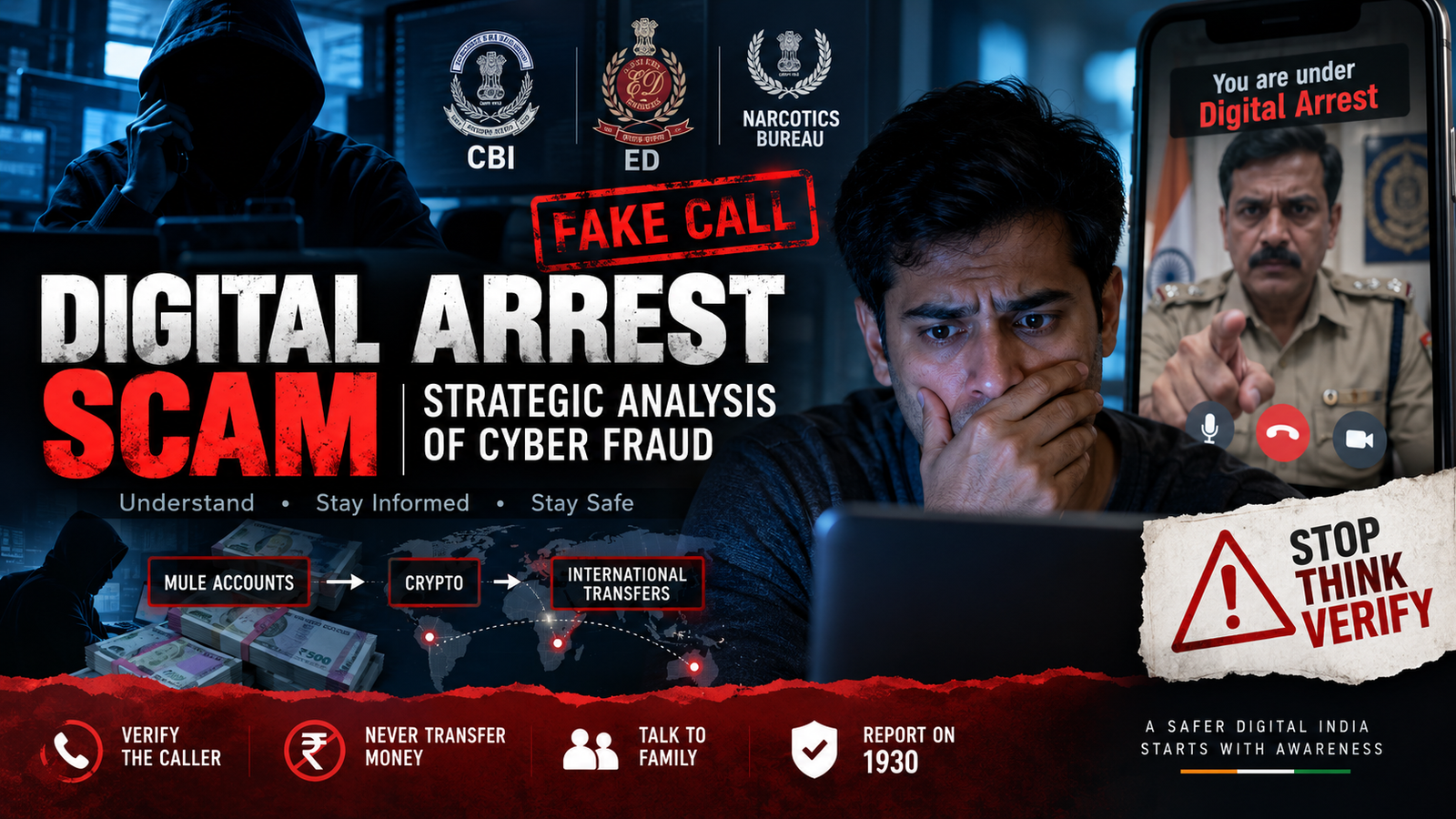
💡 Digital Arrest Scam: Strategic Analysis of Cyber Fraud
A comprehensive strategic analysis of the digital arrest scam, exploring its psychological mechanics, financial impact, and expert-led prevention strategies.
Data and Statistical Impact
Data reported by the Ministry of Home Affairs (MHA) and the Indian Cyber Crime Coordination Centre (I4C) highlights the significant financial impact of digital-arrest scams in India. In 2024, reported losses linked to digital-arrest fraud were estimated at approximately ₹1,918 crore, demonstrating the scale of the threat.
Indian authorities have also taken measures to disrupt the digital infrastructure used by these fraud networks. By March 2025, authorities had blocked thousands of digital identifiers and communication channels associated with cyber-fraud operations, including 3,962 Skype IDs, 83,668 WhatsApp accounts, 7.81 lakh SIM cards, and 2,08,469 IMEIs.
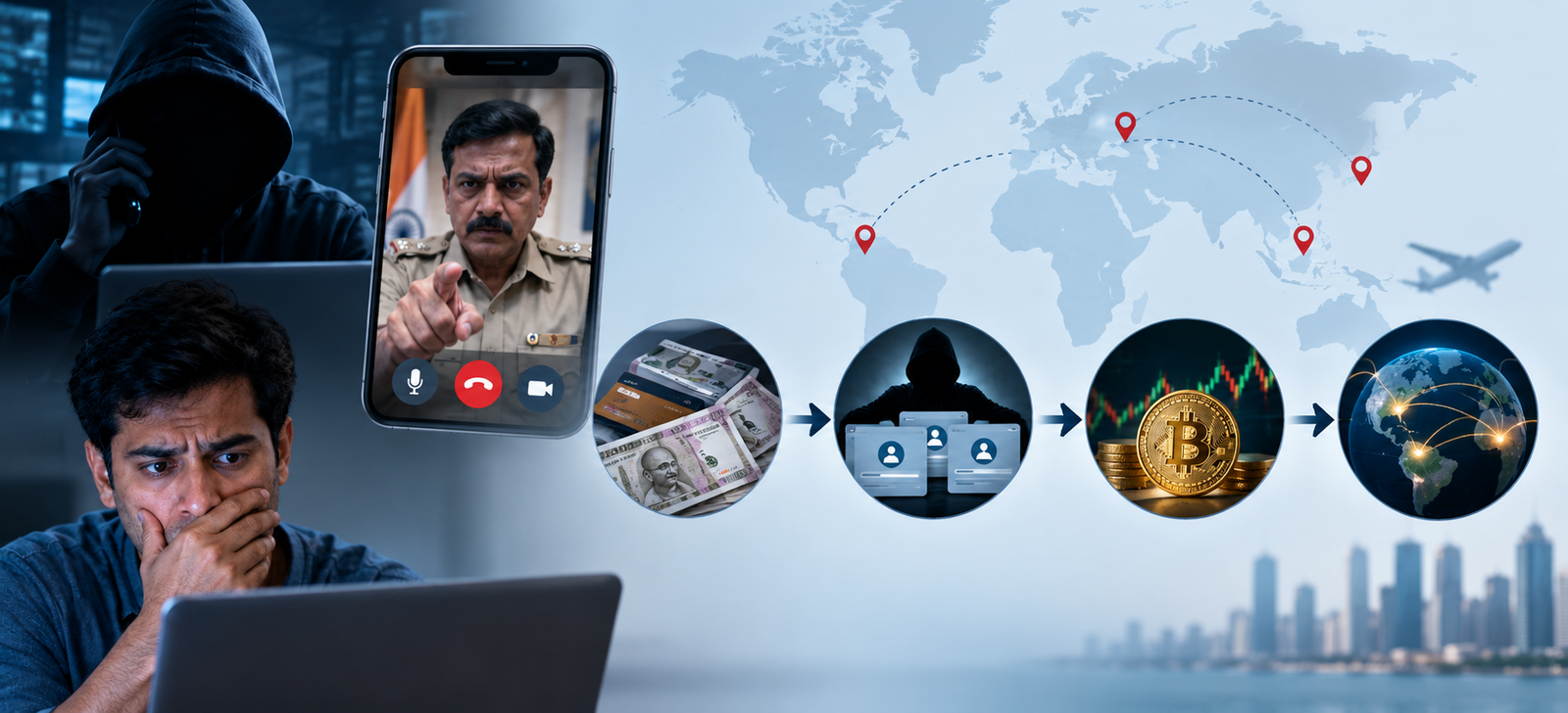
Investigations have further revealed the use of mule bank accounts, layered financial transactions, cryptocurrency and overseas transfers to move and conceal fraud proceeds. These networks can involve multiple intermediaries, making the recovery and tracing of stolen funds increasingly difficult.
The scale and complexity of these operations demonstrate that digital-arrest scams are not isolated incidents but part of organized cyber-fraud networks. Continued coordination between law-enforcement agencies, banks, telecommunications providers and international authorities remains essential to disrupt these operations and protect victims.
What This Means For You
Understanding the warning signs is the first step toward protecting yourself from digital-arrest scams. Remember that “digital arrest” is not a recognized legal procedure in India. Scammers use fake identities, video calls, threats and financial demands to create panic and pressure victims into following their instructions.
Here are some important steps you can take:
-
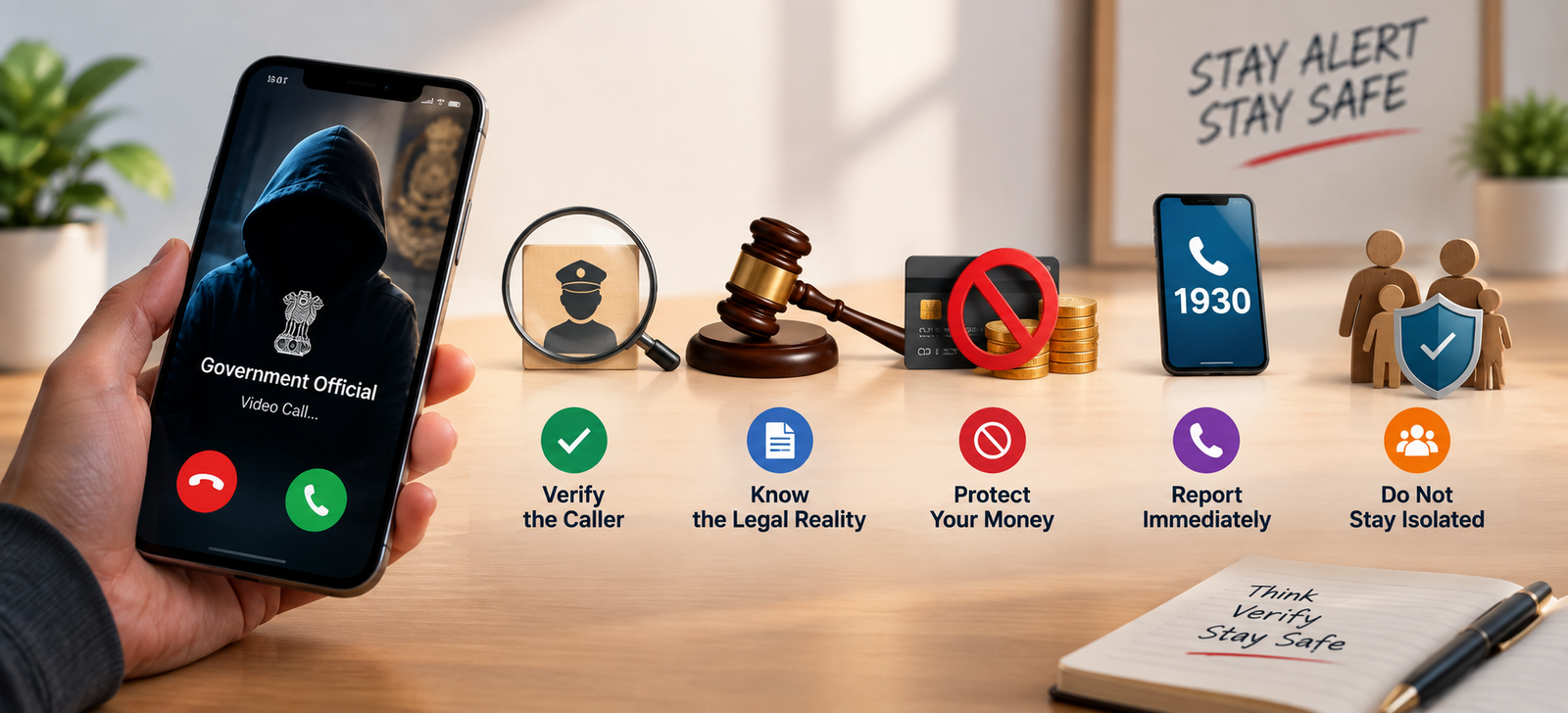
Verify the Caller: If someone contacts you claiming to be a police officer, CBI, ED, court or other government official, do not rely on the caller ID, video call or documents they provide. End the call and independently contact the relevant government agency or local police through its official contact details.
-
Know the Legal Reality: There is no legal procedure in India called a “digital arrest.” Genuine law-enforcement action is governed by applicable law and cannot be replaced by keeping a person under surveillance through WhatsApp, Skype or another video-calling platform.
-
Protect Your Money: Never transfer money to a bank account, UPI ID, wallet or cryptocurrency address because someone claims it is required for “verification,” “security,” “investigation” or to prevent your arrest. Do not share your OTP, PIN, password, banking credentials or other sensitive financial information.
-
Report Immediately: If you have transferred money or shared sensitive information with a suspected scammer, act immediately. Call 1930, the National Cyber Crime Helpline, and file a complaint through the National Cyber Crime Reporting Portal at cybercrime.gov.in. Quick reporting can give banks and law-enforcement authorities a better opportunity to trace or stop the movement of fraudulent funds.
-
Do Not Stay Isolated: Scammers may instruct you not to speak to family members, friends or lawyers. Treat this as a major warning sign. Take a moment to verify the situation independently and seek help from someone you trust.
Expert Verdict and Future Outlook
Industry experts agree that the digital arrest scam is evolving. The increasing availability of deepfake technology is an emerging concern. Scammers may use AI-generated voices and faces of known high-ranking officials to make their impersonations appear highly convincing. The future of cyber defense will rely increasingly on AI-driven detection systems that can identify spoofed numbers and synthetic media in real time. Furthermore, international cooperation between law-enforcement agencies is essential, as the infrastructure supporting these scams can operate across multiple jurisdictions. The strategic takeaway is that vigilance must be paired with technological literacy.
Frequently Asked Questions
-
What is a digital arrest? Digital arrest is a fraudulent term used by scammers to describe a situation where they keep a victim under constant video surveillance to extort money. It has no legal validity.
-
Can the police actually arrest someone over Skype? No. A person cannot be placed under a legal “digital arrest” through Skype or another video-calling platform. Law-enforcement agencies do not use video calls to place someone under “digital arrest.”
-
How do scammers get my personal information? Scammers often obtain data from third-party breaches, social media profiles, compromised accounts, or illegal data sources. They use this information to build trust and make their impersonation appear legitimate.
-
What should I do if I am currently on a scam call? Immediately disconnect the call. Do not provide any personal or financial information. Block the number and report the incident to the authorities. If money has been transferred, report the incident immediately through the appropriate cybercrime reporting channels.
-
Why do people fall for this scam? The scam uses high-pressure tactics, institutional fear, and professional-looking environments to overwhelm the victim’s critical thinking and encourage quick compliance.

Conclusion
The digital arrest scam is a sophisticated threat that weaponizes the very institutions meant to protect us. By analyzing the psychological and operational strategies used by these criminals, we can build a more resilient society. Authority, when used correctly, provides safety and order; when mimicked by criminals, it becomes a tool for exploitation. Staying informed, maintaining healthy skepticism toward unsolicited digital communications, and using official reporting channels are among the most effective strategies for combating this growing menace. The battle against cyber fraud is not just a technological one, but a strategic effort focused on awareness and institutional integrity.
Important Note: Financial Disclaimer: This content is for educational purposes only and does not constitute professional financial advice. Always consult with a certified financial planner before making investment decisions.





Comments 0
Leave a Reply
Your email address will not be published. Required fields are marked *
Be the first to share your thoughts!