
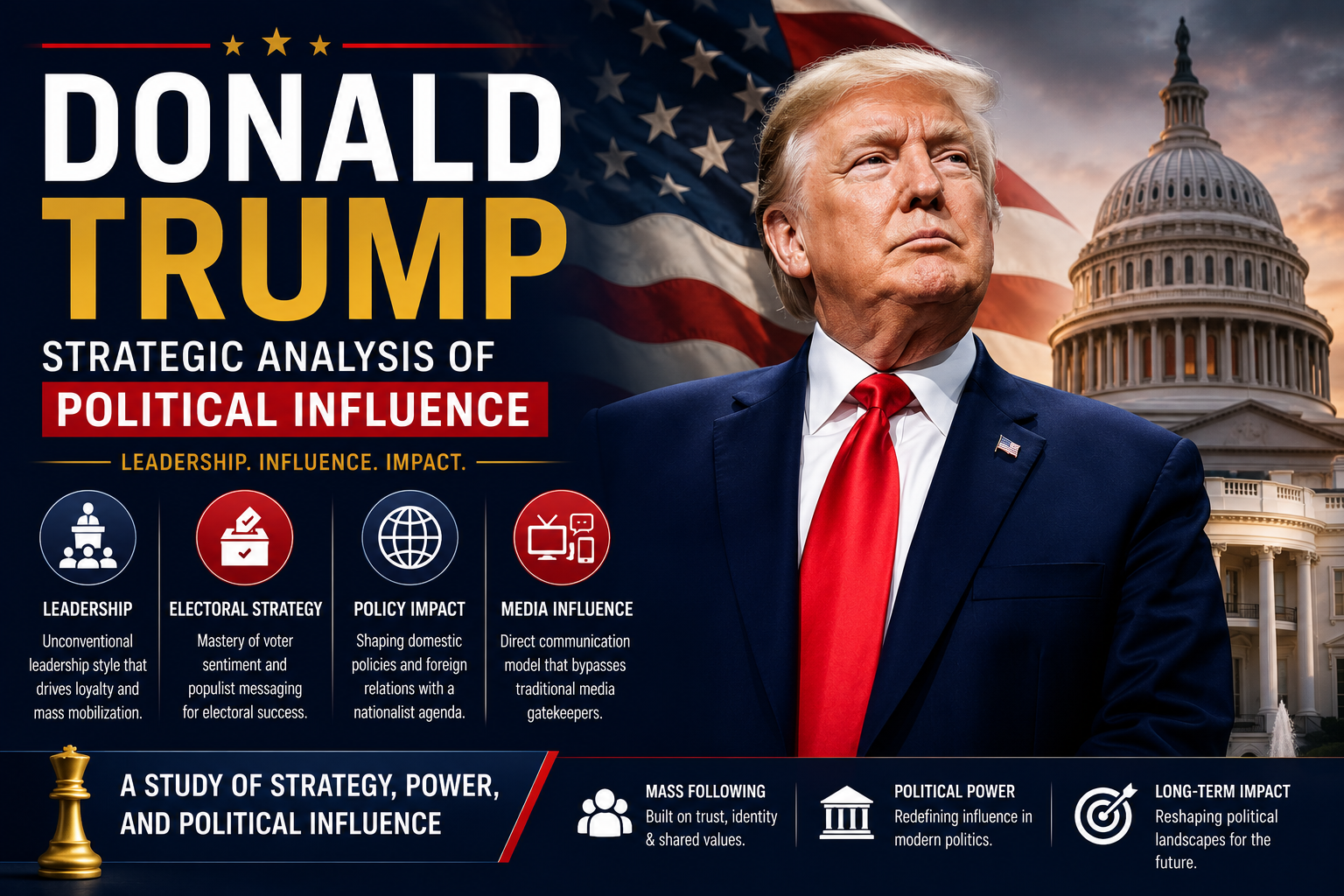
💡 Donald Trump: Strategic Analysis of Political Influence
A comprehensive strategic analysis of Donald Trump's economic policies, judicial legacy, and impact on global political structures.
Executive Summary
Donald Trump remains one of the most influential and polarizing figures in modern political history. This analysis examines his strategic impact through three primary lenses: economic policy, judicial restructuring, and media disruption. Key data points include the implementation of the Tax Cuts and Jobs Act of 2017, which reduced the corporate tax rate from 35 percent to 21 percent, and the appointment of over 200 federal judges, including three Supreme Court justices. These actions have fundamentally reshaped the American legal and economic landscape. Furthermore, his ability to leverage digital platforms has altered the traditional media hierarchy, creating a direct-to-consumer political brand that bypasses conventional gatekeepers. This report provides an authoritative look at the mechanisms of his influence and the long-term implications for global governance and market dynamics.
Introduction
The political career of Donald Trump represents a significant departure from established norms in the United States. As the 45th President and a dominant force in the Republican Party, his approach to leadership combines populist rhetoric with a disruptive administrative strategy. To understand his impact, one must look beyond the headlines and analyze the structural changes enacted during his tenure. From trade protectionism to the total overhaul of the federal judiciary, the strategic shifts initiated between 2017 and 2021 continue to resonate in current policy debates. This article explores the data-driven reality of his legacy, providing an objective analysis of his economic, legal, and social contributions to the global political discourse.
THE DEEP DIVE: Economic Policy and Trumpomics
The cornerstone of Donald Trump's economic strategy was the Tax Cuts and Jobs Act (TCJA) of 2017. This legislation represented the most significant overhaul of the U.S. tax code in thirty years. By lowering the corporate tax rate to 21 percent, the administration aimed to incentivize domestic investment and discourage the shifting of profits to offshore tax havens. According to Treasury Department reports, the TCJA led to a temporary surge in capital expenditures and a repatriation of nearly 1 trillion dollars in foreign earnings by 2019. While critics pointed to the increase in the federal deficit, proponents highlighted the 3.5 percent unemployment rate achieved in early 2020, a fifty-year low.
In addition to tax reform, the administration prioritized deregulation. Through executive orders, the government targeted a two-for-one rule, requiring the elimination of two existing regulations for every new one introduced. The American Action Forum estimated that these efforts saved businesses billions in compliance costs, particularly in the energy and financial sectors. This regulatory environment fostered a climate of business optimism that fueled stock market growth for much of his term. Much like the institutional shifts discussed in our BBC: Strategic Analysis of Global Media Authority, the Trump administration sought to redefine the relationship between the state and private enterprise through direct intervention and messaging.
The Judicial Transformation
Perhaps the most enduring aspect of Donald Trump's presidency is the transformation of the federal judiciary. In a single term, he appointed 54 appellate court judges and three Supreme Court justices: Neil Gorsuch, Brett Kavanaugh, and Amy Coney Barrett. This rapid pace of appointments was facilitated by a strategic partnership with Senate leadership and organizations like the Federalist Society. The resulting conservative majority on the Supreme Court has already led to landmark rulings on reproductive rights, administrative law, and environmental regulation. For a deeper understanding of how these legal shifts affect public perception and media coverage, readers may consult the SCOTUSblog: Strategic Analysis of Legal Media Authority.
The impact of these appointments extends beyond individual cases. They represent a fundamental shift toward originalism and textualism in legal interpretation. This judicial philosophy emphasizes the original public meaning of the Constitution, often leading to a reduction in the power of federal agencies. The long-term consequence is a legal environment where legislative intent is scrutinized more closely, and the "administrative state" faces increased judicial oversight. This restructuring ensures that the Trump legacy will persist for decades, regardless of future election outcomes.
Media Disruption and Brand Power
Donald Trump utilized a unique communication strategy that prioritized social media over traditional press briefings. By utilizing platforms like Twitter and later Truth Social, he established a direct line to his constituency, effectively neutralizing unfavorable media narratives. This strategy transformed his political movement into a high-value brand. The financial implications of this brand are significant, as seen in the public listing of Trump Media and Technology Group. While his net worth has fluctuated based on real estate valuations and legal liabilities, his ability to monetize his persona is comparable to major entertainment icons. In fact, a similar phenomenon of brand-driven financial power is explored in our analysis of Taylor Swift Net Worth: Strategic Financial Analysis, where personal brand equity dictates market influence.
Geopolitical Shifts and Trade
On the global stage, the "America First" policy led to a reassessment of long-standing alliances and trade agreements. The replacement of NAFTA with the United States-Mexico-Canada Agreement (USMCA) signaled a shift toward bilateralism and protectionism. The administration also initiated a trade confrontation with China, implementing tariffs on hundreds of billions of dollars worth of goods. These moves were designed to protect American manufacturing and address intellectual property theft. While these policies disrupted global supply chains, they also forced a conversation about the risks of over-reliance on single-source manufacturing in hostile or competitive jurisdictions.
WHAT THIS MEANS FOR YOU
- Tax Implications: The provisions of the 2017 tax bill continue to affect individual and corporate tax filings, with several key components set to expire or change in 2025.
- Market Volatility: Political developments surrounding the Trump campaign often correlate with shifts in specific sectors, such as traditional energy, defense, and domestic manufacturing.
- Legal Environment: The conservative shift in federal courts means that business regulations are more likely to be challenged and overturned, potentially reducing compliance burdens for small and large enterprises.
- Political Landscape: The Republican Party has shifted its platform to focus more on trade protectionism and immigration control, altering the options available to voters in upcoming cycles.
Expert Verdict / Future Outlook
The strategic influence of Donald Trump is not confined to his time in office. He has successfully realigned the Republican Party, moving it away from its traditional neo-conservative and free-trade roots toward a more populist and nationalist stance. Experts suggest that the "Trump effect" will dominate American politics for the foreseeable future, as candidates across the spectrum adapt to his communication style and policy priorities. The future outlook suggests a continued emphasis on deglobalization and a more assertive use of executive power. Whether in or out of office, his ability to mobilize a dedicated base ensures that he remains a central figure in any discussion regarding the future of the United States and its role in the world.
FAQ
What was the most significant economic achievement of the Trump administration?
The 2017 Tax Cuts and Jobs Act is widely considered the most significant achievement, as it fundamentally altered the corporate tax structure and incentivized domestic investment.
How did Donald Trump change the Supreme Court?
He appointed three conservative justices, creating a 6-3 conservative majority that has significantly shifted the court's ideological direction on major social and administrative issues.
What is the status of the USMCA?
The USMCA is currently in effect, having replaced NAFTA. It includes updated provisions for digital trade, labor standards, and automotive manufacturing requirements.
How has his media strategy influenced other politicians?
His direct-to-consumer approach via social media has become a blueprint for politicians globally, allowing them to bypass traditional media and speak directly to their supporters.
What are the primary legal challenges he currently faces?
He faces a variety of civil and criminal cases involving election interference, the handling of classified documents, and business fraud, all of which have significant implications for his political future.
Conclusion
Donald Trump has fundamentally altered the trajectory of American politics through a combination of aggressive economic reform, a historic judicial overhaul, and a disruptive media strategy. His legacy is defined by a shift toward populism and a reevaluation of global trade and alliances. As the political landscape continues to evolve, the structural changes he implemented will remain a focal point for policy makers and citizens alike, marking a definitive era in 21st-century governance.





Comments 0
Leave a Reply
Your email address will not be published. Required fields are marked *
Be the first to share your thoughts!