
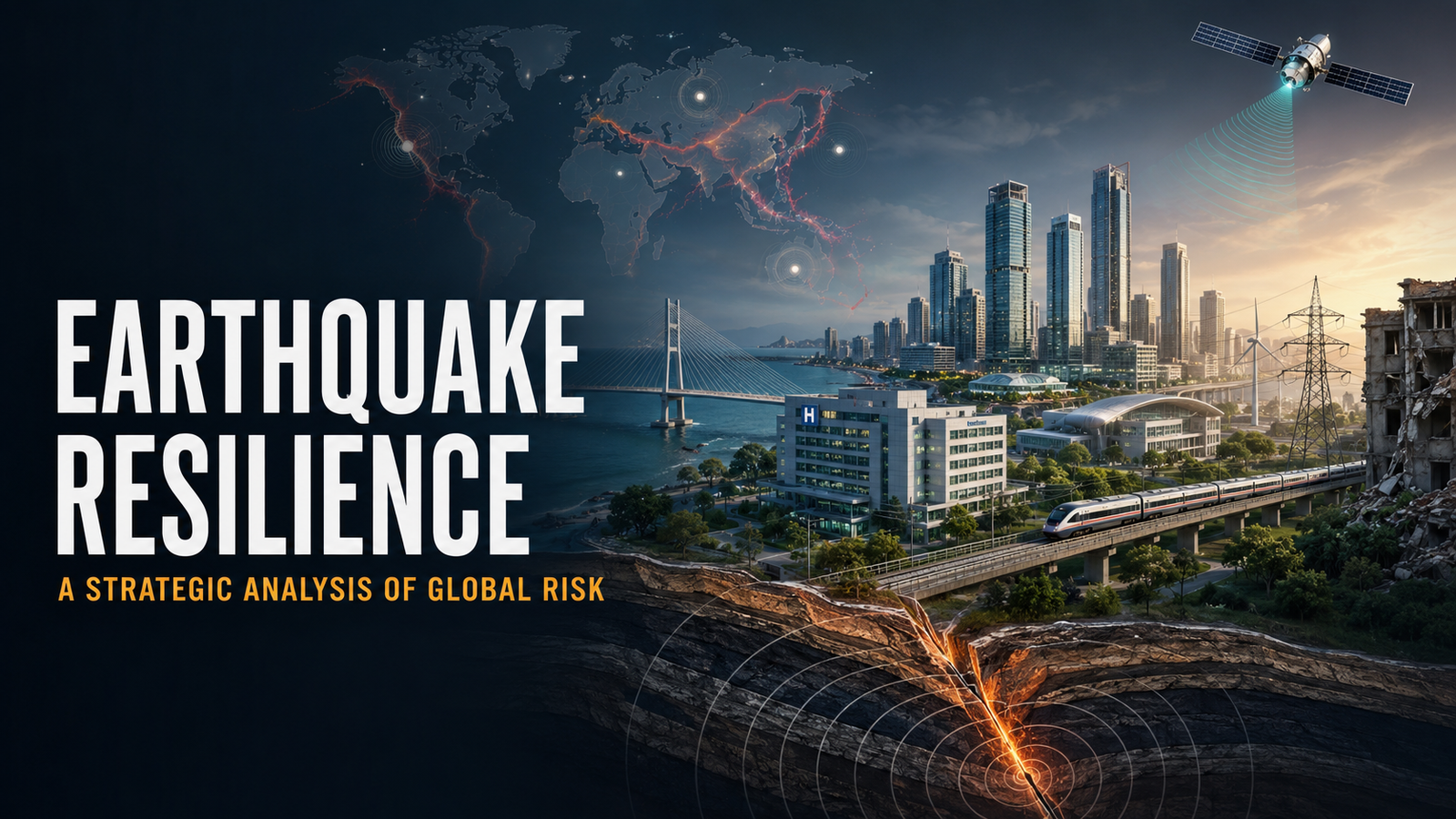
💡 Earthquake Resilience: A Strategic Analysis of Global Risk
A comprehensive strategic analysis of seismic risks, economic impacts, and the technological advancements driving global earthquake resilience and recovery.
Executive Summary
Earthquakes represent one of the most volatile and destructive natural phenomena, posing significant threats to human life, infrastructure, and global economic stability. This strategic analysis examines the current state of seismology, the financial implications of high-magnitude events, and the technological innovations aimed at mitigation. Key data points highlight that the United States Geological Survey (USGS) records approximately 20,000 earthquakes annually, with an average of 15 events reaching a magnitude of 7.0 or higher. The economic fallout from these events is staggering, as evidenced by the 2023 Turkey-Syria earthquake, which incurred over $100 billion in recovery costs. This report identifies a shift from reactive disaster management to proactive resilience, driven by AI-integrated early warning systems and advanced structural engineering.
Introduction
The unpredictability of seismic activity makes it a unique challenge for urban planners, governments, and the financial sector. Unlike atmospheric events that can often be tracked days in advance, earthquakes occur with little to no warning, demanding a framework of readiness that is built into the very fabric of society. The strategic importance of understanding earthquake risk has never been higher, especially as urban density increases in seismically active zones. By analyzing historical data and current technological trajectories, we can better understand how to minimize loss and ensure business continuity. This analysis explores the intersection of geology, economics, and technology to provide a clear picture of the modern seismic landscape.

THE DEEP DIVE: The Mechanics and Economics of Seismic Risk
To understand the strategic landscape of earthquakes, one must first look at the frequency and distribution of these events. The Pacific Ring of Fire remains the most active region, accounting for approximately 90 percent of the world's earthquakes. However, intraplate earthquakes, such as those in the New Madrid Seismic Zone, present a different set of challenges due to lower public awareness and less stringent building codes. The intensity of an earthquake is typically measured using the Moment Magnitude Scale (Mw), which provides a more accurate assessment of large earthquakes than the older Richter scale.
The financial impact of earthquakes is categorized into direct and indirect costs. Direct costs include the destruction of physical assets like buildings, bridges, and power grids. Indirect costs, which are often more difficult to quantify, involve supply chain disruptions, lost productivity, and long-term psychological impacts on the workforce. For instance, the 2011 Tohoku earthquake in Japan resulted in a total economic loss of roughly $235 billion, making it the costliest natural disaster in history. In the context of disaster management, safety and recovery protocols established for urban emergencies provide a baseline, but the scale of seismic events requires a much broader infrastructure response.
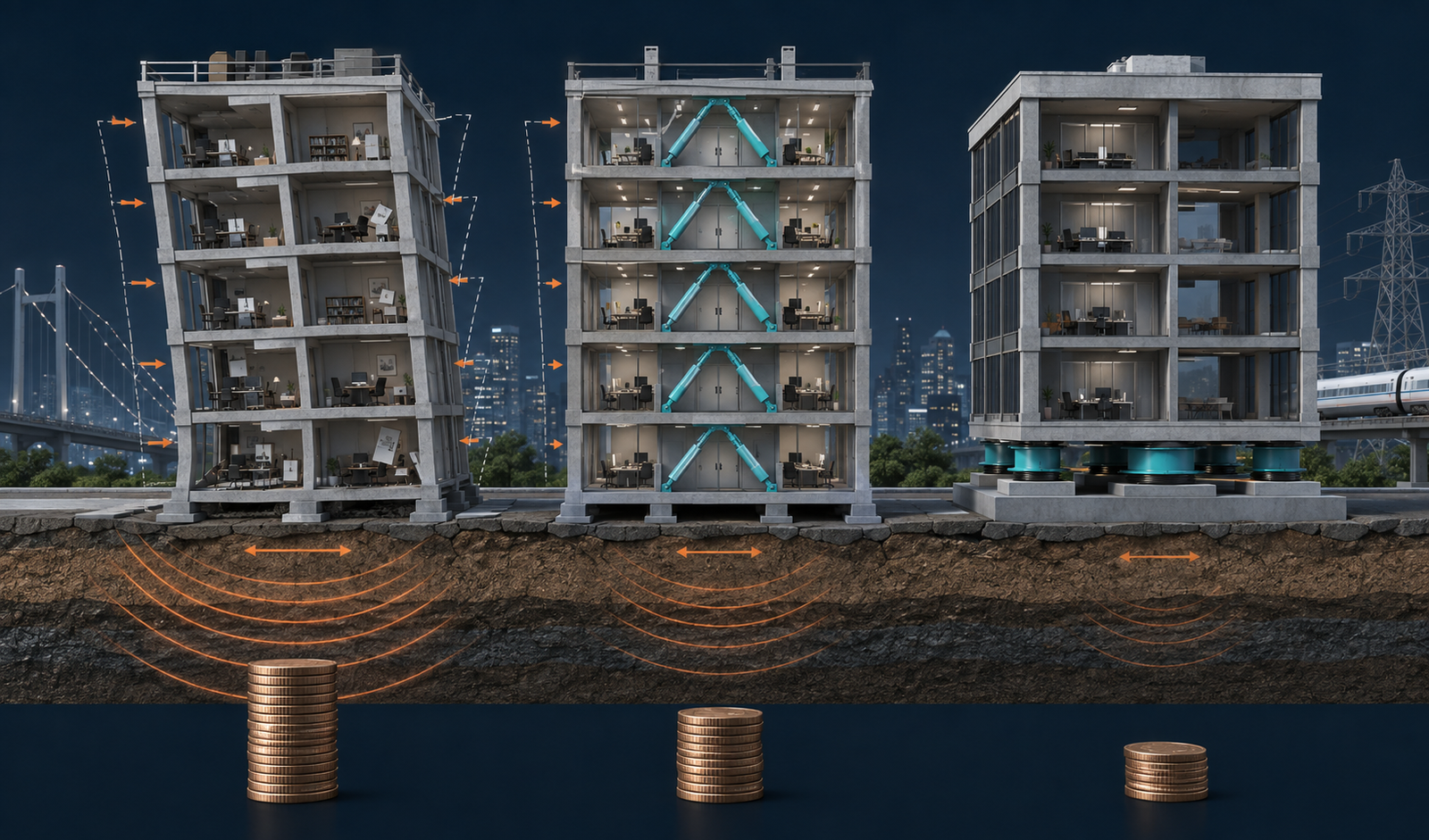
Engineering resilience has seen significant milestones with the adoption of base isolation and seismic dampers. Base isolation involves decoupling a building from its foundation using flexible bearings, allowing the structure to remain relatively still while the ground moves. This technology is now a standard requirement for critical infrastructure in regions like Tokyo and San Francisco. Furthermore, the integration of real-time data allows for automated shutdowns of high-speed trains and gas lines, preventing secondary disasters such as fires or derailments.
Technological Integration and Early Warning Systems
The evolution of Early Warning Systems (EEW) is perhaps the most significant advancement in seismic safety over the last decade. Systems like ShakeAlert on the U.S. West Coast utilize a network of sensors to detect the initial, faster-moving P-waves. This data is then used to transmit alerts before the more destructive S-waves arrive. While the lead time is often only a few seconds to a minute, it is sufficient for individuals to drop, cover, and hold on, and for automated systems to initiate safety sequences.
Data visualization plays a crucial role in post-event analysis and pre-event planning. Utilizing advanced tools, such as Windy data visualization for environmental monitoring, researchers can overlay seismic data with other environmental factors to predict secondary risks like tsunamis or landslides. As we observe global shifts in technology, the use of machine learning to identify patterns in micro-seismic activity is becoming a primary focus for research institutions. These AI models are being trained on decades of seismic records to identify potential precursors to major events, though true prediction remains the holy grail of seismology.

WHAT THIS MEANS FOR YOU
For the average citizen and business owner, earthquake preparedness is an investment in survival and continuity. The following points provide an actionable breakdown of how to approach seismic risk:
- Structural Audits: If you live or operate in a known seismic zone, ensure your property meets the latest building codes. Retrofitting older structures with foundation bolts and shear walls can reduce damage by up to 70 percent.
- Digital Readiness: Enable emergency alerts on all mobile devices and maintain offline backups of critical digital assets. In the event of an earthquake, cellular networks may be congested or down.
- Business Continuity Planning: Companies should develop a comprehensive recovery strategy that includes remote work capabilities and diversified supply chains to mitigate the impact of localized infrastructure failure.
- Insurance Coverage: Standard homeowners or commercial insurance policies often exclude earthquake damage. Evaluate the cost-benefit of a dedicated earthquake policy or catastrophe bond investment.
- Emergency Kits: Maintain a minimum of 72 hours of supplies, including water, non-perishable food, and medical kits, as professional emergency response may be delayed during a mass-casualty event.
Expert Verdict / Future Outlook
The future of seismic management lies in the transition from mitigation to true resilience. We are moving toward a world where buildings are not just designed to prevent collapse, but to remain functional immediately after a major event. This concept, known as functional recovery, will likely become the new regulatory standard in the coming decade. From a strategic standpoint, the integration of satellite-based Interferometric Synthetic Aperture Radar (InSAR) will allow for even more precise monitoring of ground deformation, providing a clearer picture of tectonic stress accumulation. While we cannot yet predict the exact timing of an earthquake, our ability to withstand and recover from them is reaching unprecedented levels of sophistication.

FAQ
Can scientists predict exactly when an earthquake will happen?
No. Currently, no scientist or agency has ever predicted a major earthquake with exact timing and location. Research focuses on long-term probability and early warning systems that provide seconds of notice.
What is the difference between magnitude and intensity?
Magnitude measures the energy released at the source of the earthquake, while intensity measures the strength of shaking at a specific location and its impact on people and structures.
Are earthquakes becoming more frequent?
According to the USGS, the number of large earthquakes has remained relatively constant over the last century. However, better detection technology means we are recording more of the smaller events that previously went unnoticed.
Why do some small earthquakes cause more damage than large ones?
Damage depends on several factors, including the depth of the earthquake, the proximity to populated areas, the type of soil (soft soil can amplify shaking), and the quality of local building construction.
Is it possible for human activity to cause earthquakes?
Yes. Induced seismicity can occur due to activities such as wastewater injection from oil and gas operations, reservoir-induced changes from large dams, and geothermal energy extraction.
Conclusion
The strategic landscape of earthquake management is shifting toward a high-tech, resilience-first approach. By combining advanced engineering, AI-driven early warning systems, and robust economic planning, societies can significantly reduce the catastrophic impact of seismic events. The key to future stability lies in the proactive adoption of these technologies and the rigorous enforcement of modern building standards.





Comments 0
Leave a Reply
Your email address will not be published. Required fields are marked *
Be the first to share your thoughts!