💡 What is Plane crash nyc?
Explore the complex world of urban aviation safety, emergency water landings in NYC, and how flight instructors train students to survive engine failures over the Hudson River.
Emergency Aviation Safety in New York City: Understanding Hudson River Water Landings
The airspace above New York City is among the most congested and complex in the world. With three major international airports and dozens of smaller flight schools operating in the vicinity, the safety protocols governing these skies are rigorous. When a mechanical failure occurs over a densely populated urban center, pilots are faced with one of the most challenging scenarios in aviation: finding a safe place to land when no runway is in sight. The Hudson River has historically served as a vital emergency corridor for pilots in distress, providing a flat, albeit unforgiving, surface for emergency ditching.
Successfully executing an emergency water landing depends on proper pilot training, quick decision-making, and the design capabilities of the aircraft. For flight instructors and their students, practicing for these rare but critical moments is a fundamental part of the curriculum. Understanding how these professionals manage such high-pressure situations provides deep insight into the layers of safety that protect both the people in the air and those on the ground.
Real-Life Context: Why the Hudson River Matters
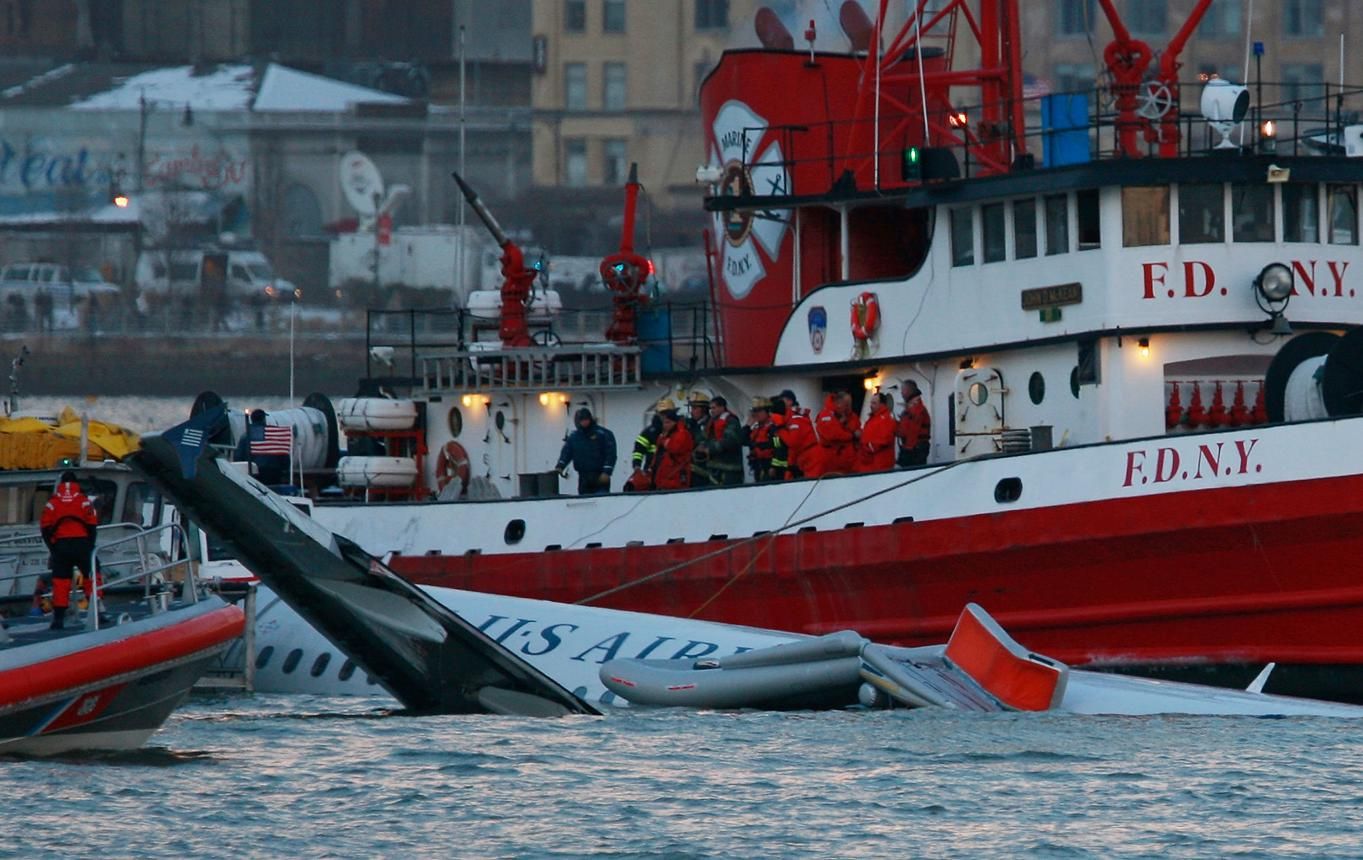
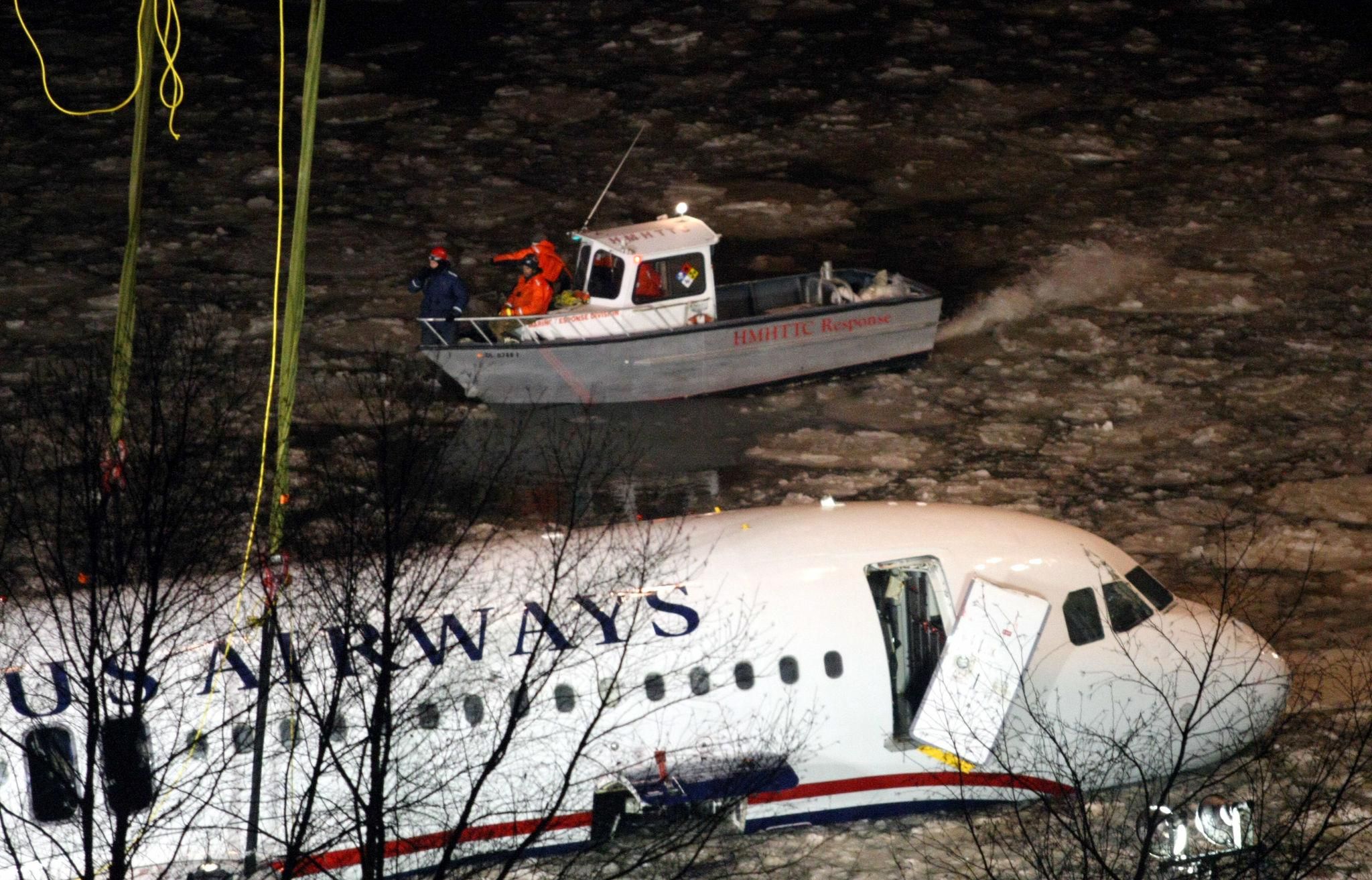
The Hudson River became globally recognized for emergency landings after the successful ditching of US Airways Flight 1549 in 2009. This incident demonstrated how proper training and rapid decision-making can save lives, making the river a critical emergency option for pilots over NYC.
What is an emergency water landing?
In aviation terminology, an emergency water landing is often referred to as ditching. This occurs when a pilot is forced to land an aircraft on water because a return to a traditional runway is no longer possible. Unlike a crash, a ditching is a controlled maneuver where the pilot maintains command of the aircraft until the moment of impact. The goal is to set the plane down at the slowest possible speed and at an angle that prevents the nose from digging into the water, which could cause the aircraft to flip.
The Hudson River provides a unique environment for emergency water landings, offering a long, flat surface but also requiring careful navigation around bridges and river traffic. While it offers a long, unobstructed path, it is also subject to heavy maritime traffic, strong currents, and varying water temperatures. Pilots flying in the New York City corridor must be constantly aware of their glide distance, which is the distance an airplane can travel without engine power. If an engine fails, the pilot must immediately identify if they can reach an airport like Teterboro or LaGuardia, or if the river is their only viable option.
How do pilots prepare for engine failure?
Preparation for an emergency begins long before a pilot ever leaves the ground. For flight students, the relationship with their instructor is the most critical safety net. Training involves a repetitive process of simulated engine failures where the instructor pulls the throttle to idle, forcing the student to go through the emergency checklist. This muscle memory is what allows a pilot to react instinctively when a real emergency occurs.
The standard emergency procedure for a small aircraft engine failure follows a simple ABC sequence:
- Airspeed: Establish the best glide speed for the aircraft to maximize the time in the air.
- Best Field: Scan the area for a suitable landing spot. In NYC, this often means the Hudson or East River.
- Checklist: Attempt to restart the engine while communicating the emergency to Air Traffic Control.
The presence of a flight instructor during these incidents is invaluable. Instructors are trained to take control of the aircraft if the student becomes overwhelmed, ensuring that the aircraft remains stable during the descent. Their experience allows them to judge the height and distance more accurately than a novice, which is crucial when aiming for a narrow body of water surrounded by skyscrapers.

What are the technical challenges of landing on water?
Landing a plane on water is significantly different from landing on a paved runway. Water is non-compressible, meaning that at high speeds, hitting the surface can feel like hitting concrete. One of the primary technical challenges is managing the aircraft pitch. If the nose is too low, the plane may dive underwater. If the nose is too high, the tail may strike first and break off, or the plane may stall and fall abruptly.
Furthermore, the landing gear configuration plays a major role. For aircraft with fixed wheels, there is a high risk that the wheels will catch the water and flip the plane forward. Pilots are taught to land with the wings level to ensure the impact is distributed evenly. During a water landing, the aircraft’s structural integrity is heavily tested, as it must absorb sudden deceleration while allowing passengers enough time to evacuate safely.
Where are the safest zones for emergency landings in NYC?
New York City presents a literal concrete jungle, making the waterways the primary safety zones. The Hudson River is preferred over the East River because it is wider and has fewer bridges to navigate. Pilots are instructed to stay within a certain distance of these waterways when transitioning through the city. This is known as staying within the glide cone. If a pilot stays high enough and close enough to the river, they ensure they always have a landing strip available, even if the engine stops completely.
In addition to the rivers, pilots look for large parks or coastal areas, though these are often populated and present higher risks to civilians. The choice of the Hudson River in many NYC emergency scenarios is a calculated decision based on minimizing ground casualties while maximizing the chance of a successful rescue by the numerous ferries and emergency vessels that patrol the harbor.
How does the rescue process work in the Hudson River?
Once an aircraft successfully touches down on the water, the focus shifts entirely to evacuation and rescue. In New York City, the response time is often remarkably fast due to the high density of maritime traffic. The NYPD Harbor Unit, FDNY Marine units, and commercial ferry operators like NY Waterway are all part of a coordinated response network.
The first few minutes after a water landing are critical, as small aircraft may only float for a short time depending on the damage. Small aircraft do not float indefinitely. Depending on the damage to the airframe, a plane might stay buoyant for only five to ten minutes. Pilots and students are trained to exit the aircraft immediately and stand on the wings if possible. In cold weather, the risk of hypothermia is an immediate threat, making the speed of the local ferry captains essential to survival. This synergy between aviation and maritime professionals is a hallmark of NYC safety infrastructure.
Common mistakes during emergency landings
Even with extensive training, the stress of a real-world emergency can lead to errors. One common mistake is the failure to maintain airspeed, leading to an aerodynamic stall. When a pilot becomes fixated on the landing spot, they may inadvertently pull back on the yoke too hard, causing the plane to lose lift and fall out of the sky before reaching the water.
Another issue is delayed decision-making. Pilots may spend too much time trying to restart a dead engine instead of committing to the landing. Aviation experts stress the principle: “Fly the airplane first,” meaning pilots must maintain control before attempting other emergency actions. This means that regardless of the mechanical failure, the pilot must prioritize maintaining control of the flight path over everything else. In the context of NYC, waiting an extra thirty seconds to decide to land in the river could mean the difference between reaching the water and hitting a building.
Pro tips for general aviation safety
For those interested in aviation or currently undergoing flight training, safety is a mindset rather than just a set of rules. Here are several pro tips from veteran flight instructors:
- Always have an out: Never fly over a congested area without knowing exactly where you would land if the engine quit at that moment.
- Practice the impossible turn: Understand the altitude required to turn back to a runway versus the altitude needed to glide forward.
- Communication is key: Declare an emergency early. Do not wait until the situation is dire to alert Air Traffic Control.
- Trust the training: In high-stress situations, your brain will revert to its lowest level of training. Ensure that level is high through constant practice.
Frequently Asked Questions
How common are emergency water landings in NYC?
While extremely rare compared to the thousands of successful flights daily, they occur occasionally due to the high volume of general aviation traffic. The systems in place ensure that most result in successful rescues.
Can a small plane float on water?
Yes, but only for a limited time. Most small aircraft have enough trapped air in the wings and fuselage to stay afloat for several minutes, though this depends on how smoothly the landing was executed.
What should a passenger do during a water landing?
Passengers should follow the pilot instructions exactly, tighten their seatbelts, and locate the exits. It is vital not to inflate life vests until outside the aircraft to avoid being trapped if the cabin fills with water.
How does the Hudson River current affect a landing?
The current can make the water surface choppy and can move the aircraft quickly after landing. Pilots try to land into the wind rather than with the current to reduce ground speed upon impact.
Is flight training in NYC more dangerous than elsewhere?
No, but it is more demanding. The strict regulations and complex airspace require students to be more precise and aware of their surroundings, which often makes them more skilled pilots.
Practical Safety Insight
For aviation enthusiasts and flight students, emergency procedures are more than theory. Regular practice, situational awareness, and remaining calm under pressure are essential skills that can make the difference in life-threatening situations.
Conclusion
Emergency landings in the Hudson River serve as a powerful reminder of the importance of aviation training and the resilience of safety protocols in urban environments. When a flight instructor and student manage to walk away from a water landing, it is not merely a matter of luck; it is the result of thousands of hours of preparation, engineering excellence, and the rapid response of New York City maritime services. By understanding the mechanics of these events, we gain a deeper appreciation for the professionals who navigate our skies and the systems that keep us safe every day.
Related Media
Quick View: Emergency Aviation Safety in New York City: Understanding Hudson River Water Landings





Comments 0
Leave a Reply
Your email address will not be published. Required fields are marked *
Be the first to share your thoughts!