
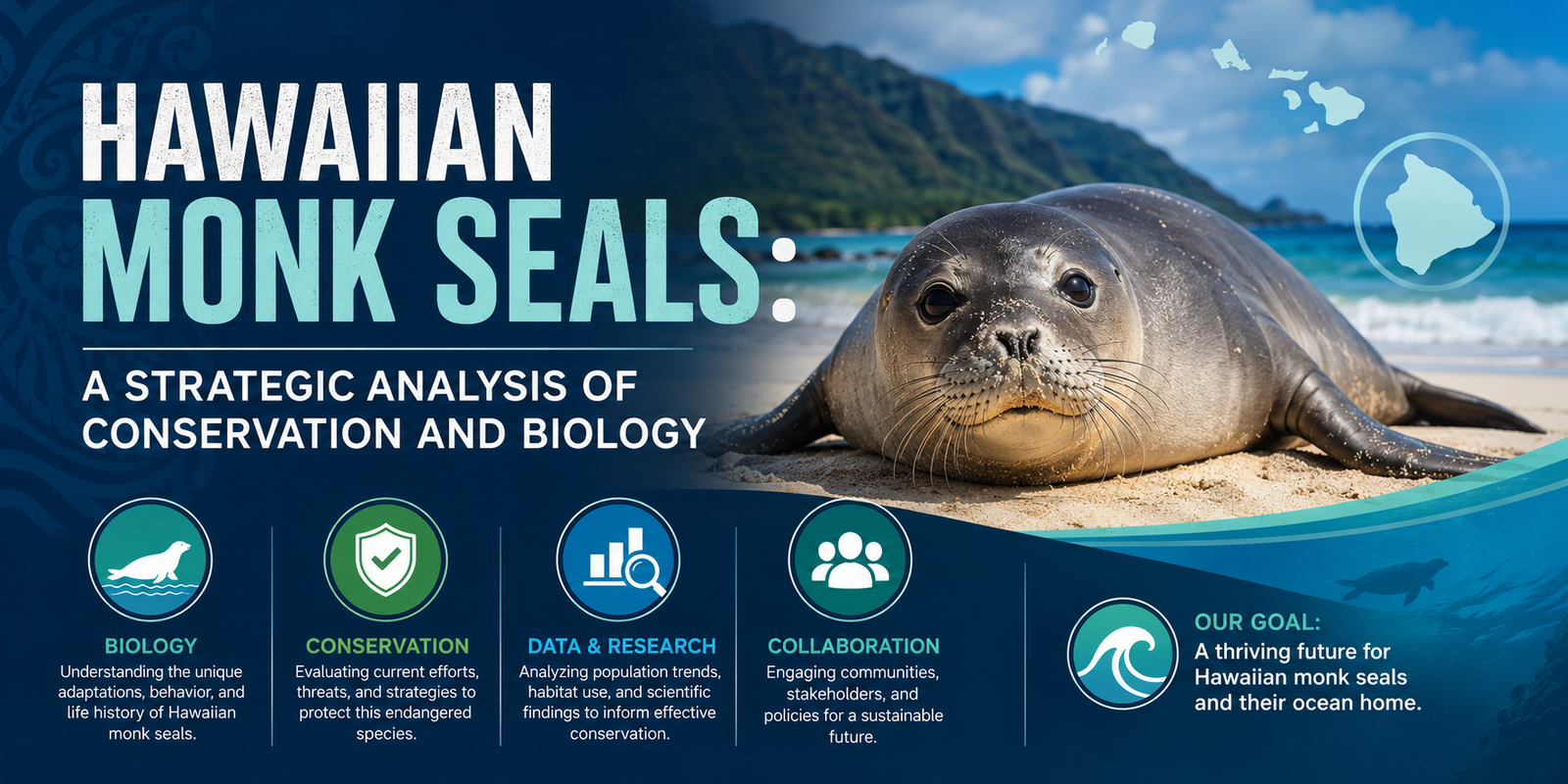
💡 Hawaiian Monk Seals: A Strategic Analysis of Conservation and Biology
An authoritative guide to the Hawaiian monk seal, exploring population recovery data, ecological significance, and the strategic roadmap for saving an endangered species.
Executive Summary
The Hawaiian monk seal (Neomonachus schauinslandi) represents one of the most critical conservation priorities in the North Pacific. As of 2024, the total population is estimated at approximately 1,600 individuals, reflecting a modest but steady annual growth rate of about 2 percent over the last decade. This recovery is the result of intensive management by the National Oceanic and Atmospheric Administration (NOAA) and local partners. Key findings indicate that while the population in the Northwestern Hawaiian Islands (NWHI) faces challenges from shark predation and habitat loss, the sub-population in the Main Hawaiian Islands (MHI) is expanding. This analysis highlights the intersection of biological resilience, climate impacts, and the economic necessity of marine biodiversity.
Introduction
The Hawaiian monk seal is a biological rarity, often described as a living fossil because it has remained largely unchanged for millions of years. Unlike most seals that thrive in frigid waters, this species is endemic to the tropical waters of the Hawaiian archipelago. It is one of only two remaining monk seal species, following the extinction of the Caribbean monk seal in the 20th century. Understanding the survival of this species requires more than a casual observation of its habits. It demands a rigorous analysis of the ecological pressures and the strategic interventions required to prevent its disappearance. This report examines the current state of the species through the lens of data driven conservation and environmental science.

The Deep Dive: Biological and Ecological Dynamics
The Hawaiian monk seal is a generalist consumer, meaning it feeds on a wide variety of prey including fish, cephalopods, and crustaceans. An adult can weigh between 400 and 600 pounds, with females generally being larger than males. Their life cycle is characterized by a high degree of site fidelity, particularly for pupping. However, their survival is currently dictated by two distinct geographic realities.
In the Northwestern Hawaiian Islands, which house about 75 percent of the population, the seals face significant environmental stressors. Rising sea levels have led to the erosion of low lying atolls, reducing the available land for pupping and resting. This loss of habitat is closely linked to broader global trends. For instance, the study of Temperature: The Science of Thermal Energy and Global Impact reveals how thermal expansion and ice melt directly contribute to the disappearance of these critical terrestrial habitats. Furthermore, juvenile survival in the NWHI is hampered by intense predation from Galapagos sharks and competition for food with larger predatory fish.
Conversely, the Main Hawaiian Islands have seen a population increase. This shift has brought the seals into closer contact with human populations, leading to new challenges such as entanglement in fishing gear and the spread of diseases like Toxoplasmosis. Toxoplasmosis, a parasite found in cat feces, has become a leading cause of death for monk seals in the MHI, highlighting the complex link between land based animal management and marine health.
The Economics of Conservation
Conservation is not merely a biological endeavor but a financial one. The funding for the Hawaiian Monk Seal Recovery Plan involves millions of dollars in federal and private investment. Strategic allocation of these resources is essential for maintaining the infrastructure of the Papahanaumokuakea Marine National Monument. Just as investors look at a Strategic Analysis of Global Lending and Debt Markets to determine risk and return, conservationists must evaluate the return on investment for different intervention strategies, such as the translocation of weaned pups or the administration of vaccinations.
Governmental support also mirrors large scale human development programs. For example, the structured approach to training conservationists and field researchers can be compared to the NATS (National Apprenticeship Training Scheme) in terms of building a skilled workforce to manage complex systems. These professionals are the frontline defense against the extinction of the species, performing critical tasks like de hooking seals and monitoring population health during the breeding season.

What This Means For You
For the general public and stakeholders in the Hawaiian tourism and fishing industries, the presence of monk seals is a marker of ecosystem health. Here is a breakdown of how to interact with this reality:
- Maintain Distance: Federal law requires a minimum distance of 50 feet from monk seals on land and in the water. For mothers with pups, this distance increases to 150 feet.
- Report Sightings: Public data collection helps NOAA track seal movements and health. Reporting a seal on a busy beach allows officials to cordoned off the area for the animal's safety.
- Support Sustainability: Reducing plastic waste and supporting sustainable fishing practices directly impacts the survival of the seals by preserving their food sources and reducing entanglement risks.
- Disease Prevention: Pet owners can contribute by keeping cats indoors and disposing of waste properly to prevent the spread of Toxoplasmosis.
Expert Verdict and Future Outlook
The trajectory of the Hawaiian monk seal is cautiously optimistic. The recovery from a low of roughly 1,100 individuals in the early 2000s to today's 1,600 is a testament to the effectiveness of active management. However, the species remains in a precarious position. The long term outlook depends heavily on our ability to mitigate the effects of climate change on the NWHI atolls. Experts agree that if the current growth rate in the MHI continues, it may serve as a critical buffer against the habitat losses expected in the northwestern parts of the range. The focus for the next decade will likely shift toward managing human wildlife conflict and addressing the threat of infectious diseases.
FAQ
How many Hawaiian monk seals are left?
There are approximately 1,600 Hawaiian monk seals remaining in the wild as of the latest census data. The population has been increasing at about 2 percent annually over the past several years.
Why are Hawaiian monk seals endangered?
They face multiple threats including habitat loss due to sea level rise, predation by sharks, entanglement in marine debris, and diseases such as Toxoplasmosis. Food limitation in certain areas also impacts juvenile survival rates.
Where can you find Hawaiian monk seals?
They are found exclusively in the Hawaiian archipelago. Most live in the Northwestern Hawaiian Islands, but a growing number are found on the beaches of the Main Hawaiian Islands like Kauai, Oahu, and Molokai.
What should I do if I see a monk seal on the beach?
Keep a respectful distance of at least 50 feet. Do not attempt to feed, touch, or harass the animal. If the seal appears injured or is a mother with a pup, maintain even more distance and call the NOAA stranding hotline.
Are Hawaiian monk seals aggressive?
Generally, they are not aggressive toward humans unless they feel threatened or are protecting their pups. However, they are large wild animals and can be dangerous if provoked or if they become habituated to human presence.
Conclusion
The Hawaiian monk seal is a symbol of both the fragility and the resilience of the natural world. While the species has faced a significant demographic bottleneck, strategic conservation efforts have successfully reversed a downward trend. The path forward requires a continued commitment to scientific monitoring, habitat protection, and public education. By treating the recovery of the monk seal as a high priority strategic goal, we ensure that this unique resident of the Pacific remains a part of the marine ecosystem for generations to come.





Comments 0
Leave a Reply
Your email address will not be published. Required fields are marked *
Be the first to share your thoughts!