
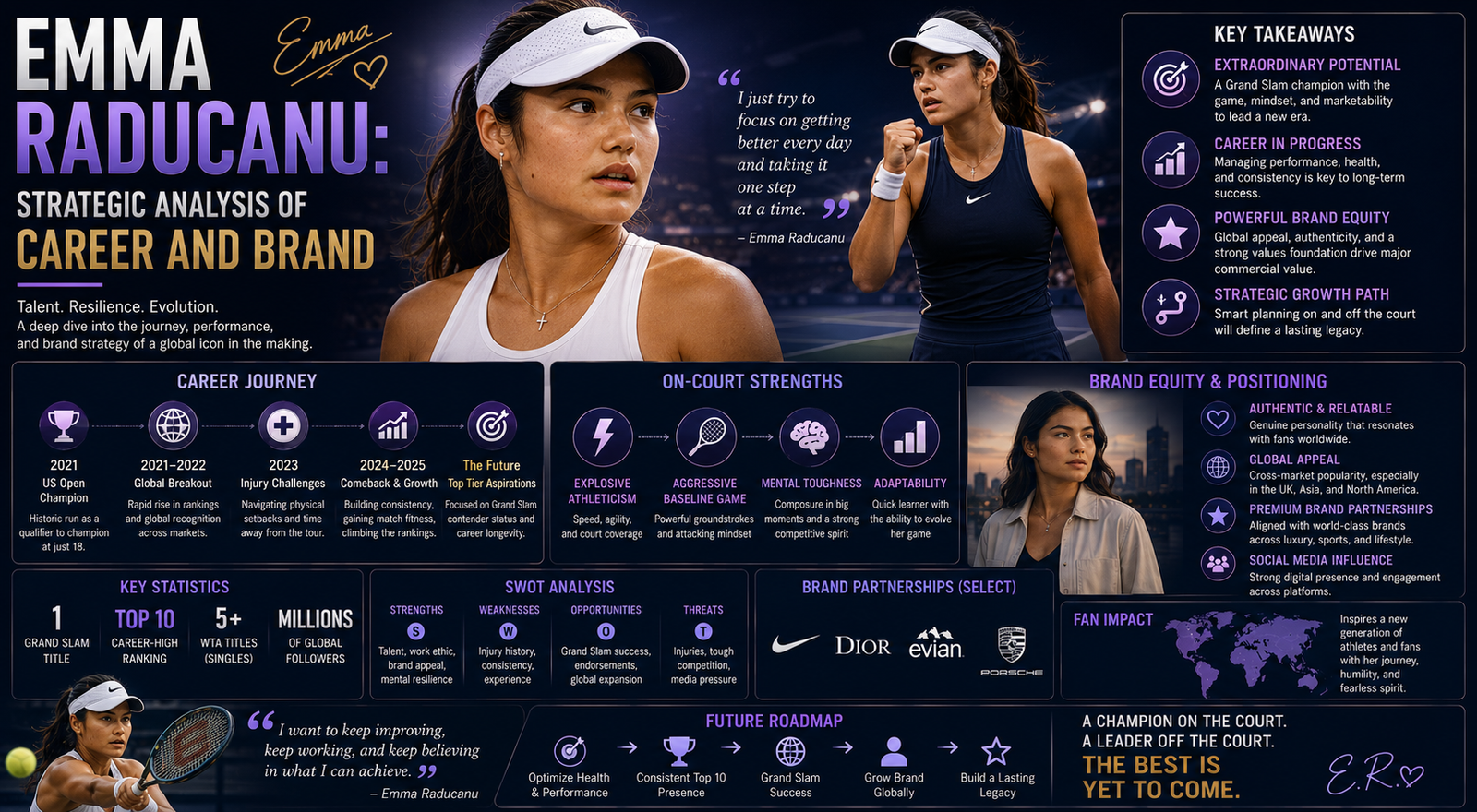
💡 Emma Raducanu: Strategic Analysis of Career and Brand
A comprehensive analysis of Emma Raducanu’s professional career, commercial impact, and strategic comeback in the competitive tennis landscape.
Executive Summary
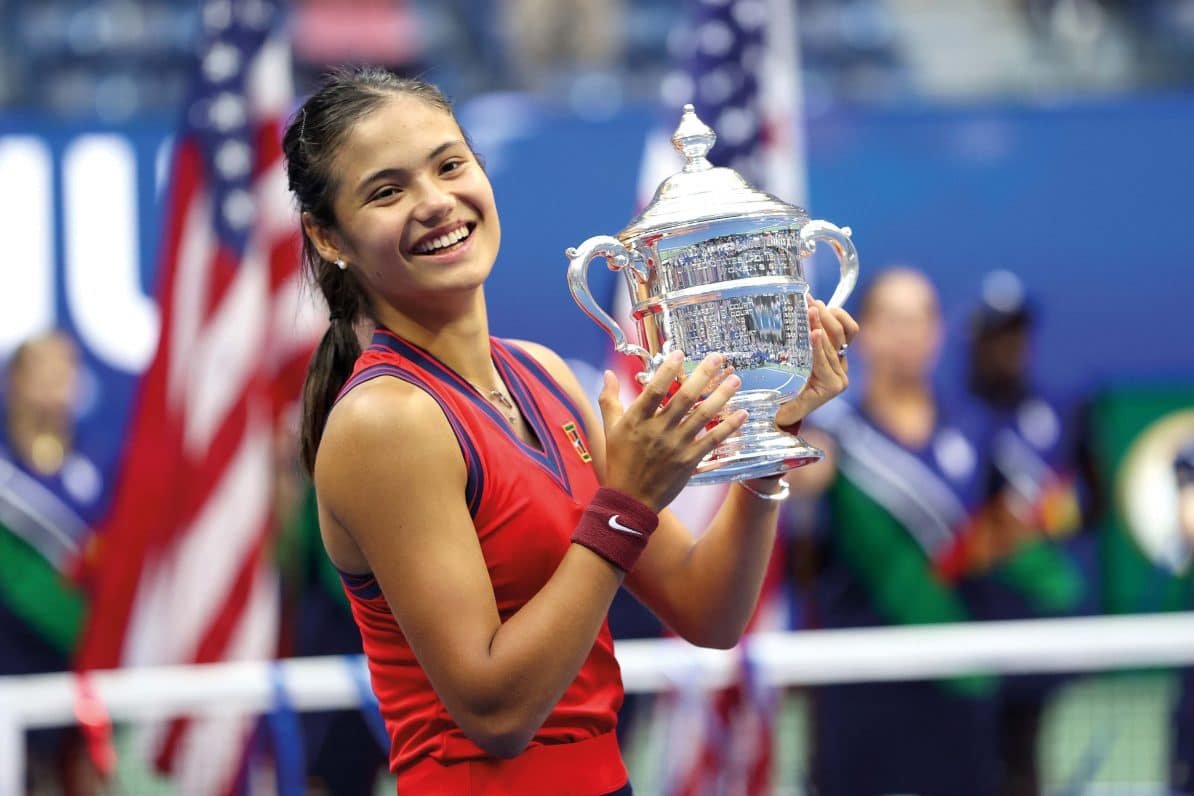
Emma Raducanu remains one of the most significant figures in modern sports, representing a unique intersection of elite athletic achievement and unprecedented commercial value. Since her historic 2021 US Open victory, where she became the first qualifier in the Open Era to win a Grand Slam, her career has been defined by rapid ascent, physical challenges, and a strategic rebuilding phase. Data from 2023 and 2024 indicates that while her ranking fluctuated due to injury-induced absences, her brand value remains at the top tier of the WTA (Women's Tennis Association). This analysis evaluates her technical progression, the economic impact of her endorsements, and the strategic roadmap for her long-term return to the top 20 rankings.
Introduction
The rise of Emma Raducanu is a case study in high-stakes professional sports management. Entering the 2021 US Open as world number 150, Raducanu secured ten consecutive matches without dropping a set, a feat that defied statistical probability and market expectations. This performance did not just change her career; it altered the commercial landscape for young female athletes globally. However, the subsequent years have presented a rigorous test of resilience, marked by three major surgeries in 2023 and a series of coaching transitions. To understand the current state of Raducanu’s career, one must look beyond the scores and analyze the underlying physical, tactical, and commercial variables that dictate her trajectory in an increasingly competitive field.
THE DEEP DIVE: Performance, Economics, and Strategy
1. Technical and Tactical Evolution
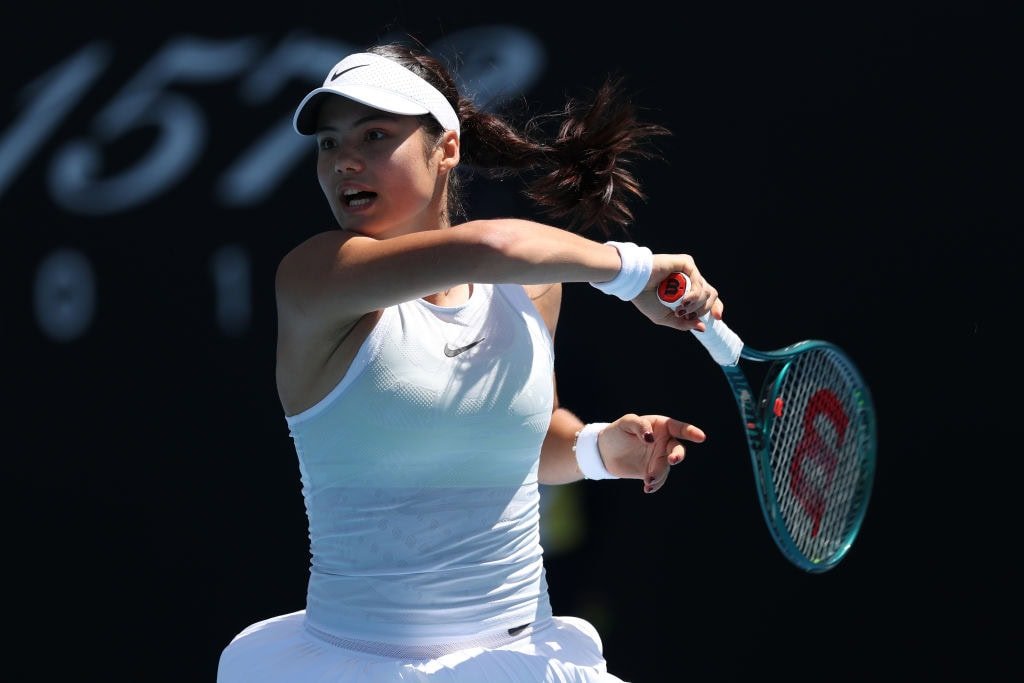
Raducanu’s game is built on aggressive baseline play and exceptional timing. Statistically, her return of serve during the 2021 US Open was ranked in the 95th percentile for depth and pace. However, maintaining this high-octane style requires peak physical conditioning, which has been her primary obstacle. Following her surgeries on both wrists and one ankle, her 2024 strategy has shifted toward a more measured approach to tournament scheduling. Unlike other young stars, such as those discussed in the Mirra Andreeva: Strategic Analysis of a Tennis Prodigy, Raducanu must balance the heavy expectations of a Grand Slam champion with the reality of a body still adapting to the rigors of the professional tour.
Her technical focus has recently centered on serve consistency and point construction. Data from early 2024 matches suggests an increase in first-serve percentage, a necessary adjustment to reduce the physical toll of long defensive rallies. This tactical shift is vital for success on demanding surfaces, a topic explored extensively in the Roland Garros Strategic Analysis: The Pinnacle of Clay Court Tennis, where endurance and slide mechanics are paramount.
2. The Commercial Powerhouse: The Raducanu Economy
Raducanu’s commercial portfolio is arguably the most robust in the history of women’s tennis for a player with a single major title. According to Forbes, her off-court earnings have consistently exceeded 15 million USD annually, driven by blue-chip partnerships with brands including Dior, Porsche, Tiffany & Co., and HSBC. This economic stability provides a strategic advantage, allowing her to invest in a premium support team comprising specialized physiotherapists and elite coaching staff.
- Global Brand Reach: Raducanu’s dual heritage (British-Romanian-Chinese) makes her a uniquely marketable asset in both Western and Asian markets.
- Longevity Strategy: Her team has focused on long-term contracts rather than short-term gains, ensuring financial security regardless of temporary ranking dips.
- Market Influence: Her presence in a tournament draw significantly boosts ticket sales and viewership metrics, a phenomenon similar to the impact of other elite players analyzed in the Alexander Zverev: Strategic Analysis of Elite Performance.
3. Injury Management and Physical Recovery
The 2023 season was a pivotal period of forced hiatus. Undergoing three surgeries in quick succession is a rare and difficult path for any athlete. The strategic decision to step away from the tour allowed for a total biological reset. Industry medical experts suggest that the primary challenge for Raducanu is not skill-based but physiological. Managing the transition from high-intensity training back to the 25-plus tournament schedule of the WTA requires a data-driven recovery protocol. Her 2024 return has been characterized by selective entry into events, prioritizing quality of performance over quantity of matches to prevent recurrence of stress injuries.

WHAT THIS MEANS FOR YOU
For fans and investors, the Emma Raducanu story offers several key takeaways regarding the nature of modern celebrity and professional sports:
- Resilience Over Instant Results: Success in high-pressure environments often involves periods of significant setback. Raducanu’s willingness to undergo surgery and rebuild her game demonstrates a long-term commitment to excellence.
- The Value of Personal Branding: Even during injury, her brand remained strong because it was built on a foundation of authenticity and high-level performance.
- Strategic Patience: For those following the sport or the business of tennis, Raducanu’s trajectory highlights that a career is a marathon, not a sprint. Her careful return serves as a model for managing high-value assets in the sports industry.
Expert Verdict / Future Outlook
The professional consensus among tennis analysts is that Emma Raducanu possesses the technical ceiling to return to the top 10. Her ball-striking remains among the cleanest on tour. The critical variable will be her physical durability over a full 10-month season. If she can remain injury-free for a continuous 18-month period, her ranking will likely normalize within the top 20. Strategically, her team must continue to prioritize physical conditioning over commercial obligations to ensure she reaches her peak athletic years, which typically occur between ages 23 and 27.
FAQ
What were Emma Raducanu’s surgeries for?
Raducanu underwent minor procedures on both hands (wrists) and one of her ankles in May 2023 to address recurring pain and prevent long-term structural damage.
How many Grand Slams has Emma Raducanu won?
She has won one Grand Slam title, the 2021 US Open, where she made history as the first qualifier to win the championship.
Who is Emma Raducanu’s current coach?
Raducanu has worked with several coaches since 2021, including Nick Cavaday in 2024. Her coaching strategy has often focused on finding a balance between technical expertise and personal comfort.
What is Raducanu’s highest career ranking?
Her career-high ranking is world number 10, achieved in July 2022 following her breakthrough season.
Does Emma Raducanu play for Great Britain?
Yes, she represents Great Britain in international competitions, including the Billie Jean King Cup and the Olympic Games.
Conclusion
Emma Raducanu represents the new era of the athlete-entrepreneur. While her on-court results have faced the inevitable volatility of injury and recovery, her strategic positioning remains elite. The next 24 months will be the most critical of her career as she seeks to harmonize her immense commercial influence with the physical demands of top-tier professional tennis. Her journey remains a significant indicator of the current state of the WTA and the global sports market.





Comments 0
Leave a Reply
Your email address will not be published. Required fields are marked *
Be the first to share your thoughts!