
💡 F1: Strategic Analysis of Global Motorsport Leadership
A comprehensive strategic analysis of Formula 1’s global expansion, financial restructuring, and technical evolution under Liberty Media.
Executive Summary
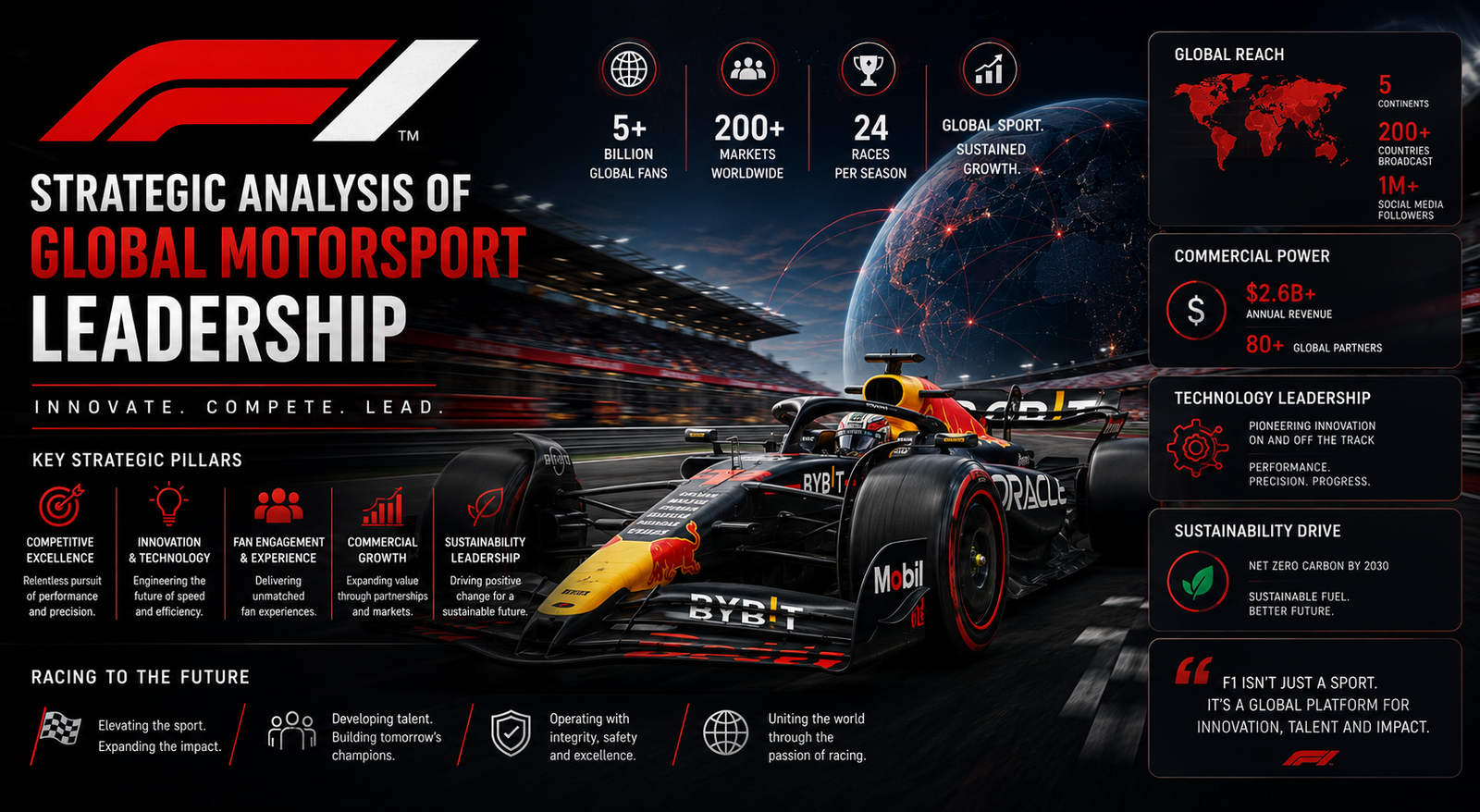
Formula 1 (F1) has undergone a radical transformation from a niche European racing series to a global entertainment juggernaut. Key findings in this analysis highlight a record-breaking 2023 revenue of $3.222 billion, a 25 percent increase from the previous year. The implementation of the $135 million budget cap has successfully leveled the playing field, shifting team dynamics from a spending war to an efficiency race. Furthermore, the strategic pivot toward the United States market has resulted in a 10 percent year-over-year increase in global viewership, cementing F1 as a leader in sports business innovation.
Introduction
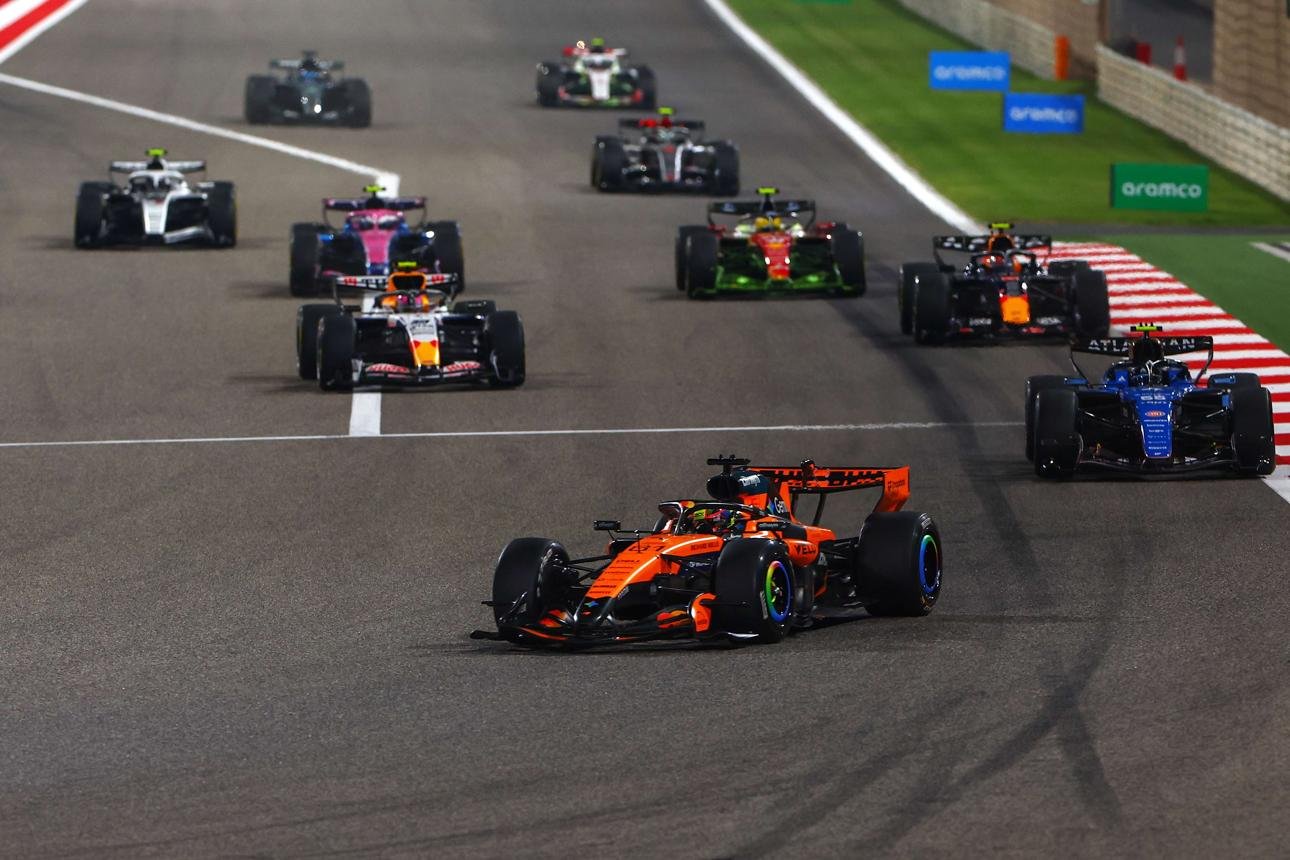
Formula 1 represents the pinnacle of automotive engineering and strategic commercial management. Since Liberty Media acquired the sport in 2017, the framework of F1 has moved beyond the asphalt. It is now a case study in brand revitalisation and market expansion. By integrating high-stakes data analytics with a sophisticated media strategy, F1 has captured a younger, more diverse audience. This analysis explores the fiscal, technical, and geopolitical factors that define the modern era of Grand Prix racing, providing a professional assessment of its current trajectory and future sustainability.
The Deep Dive: Financial Engineering and Market Dominance
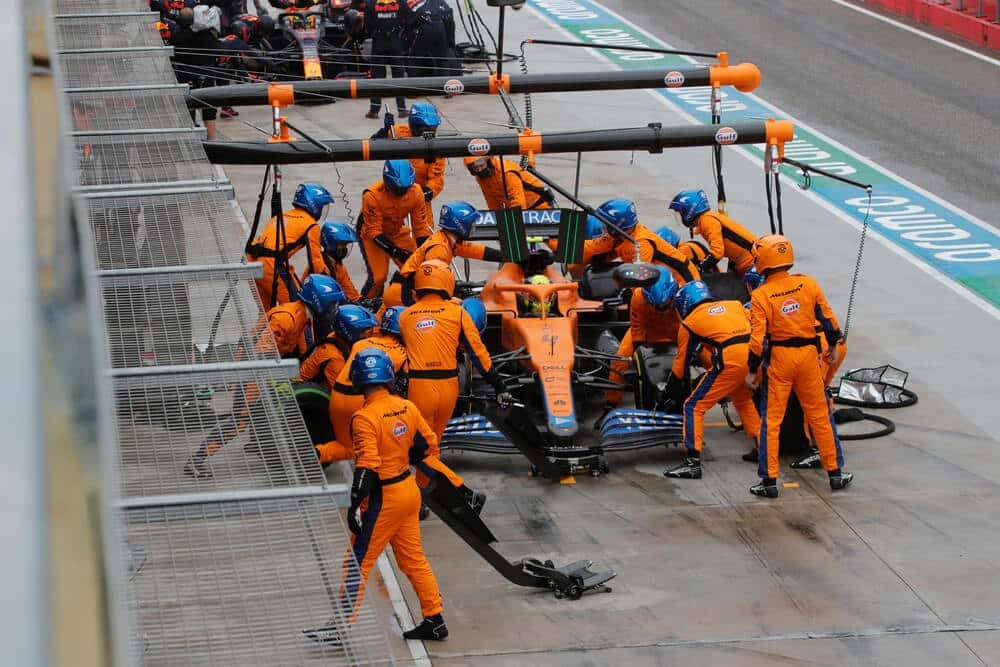
The most significant shift in F1 history is the transition from an uncapped spending model to a strict financial regulation framework. Prior to 2021, top-tier teams like Mercedes and Ferrari were spending upwards of $450 million annually. Today, the base cost cap sits at approximately $135 million. This regulation has not only stabilized the smaller teams but has also turned F1 teams into highly profitable assets. The average team valuation has skyrocketed to $1.88 billion, with Ferrari and Mercedes valued at $3.9 billion and $3.8 billion respectively.
The financial resilience of Formula 1 mirrors the Stock Market: A Strategic Analysis of Global Financial Dynamics, where consistent growth is driven by diversified revenue streams. F1 now generates income through three primary channels: race promotion fees (29 percent), media rights (36 percent), and sponsorship (18 percent). The entry of blue-chip sponsors like Oracle and Google signifies a shift toward technology-centric partnerships that provide more than just logo placement; they provide the cloud computing power necessary for real-time race simulations.
Geopolitical Expansion and the American Frontier
Strategic expansion into the United States has been the cornerstone of F1’s recent growth. The addition of races in Miami and Las Vegas, alongside the established Circuit of the Americas in Austin, reflects a calculated effort to capture the North American consumer. This expansion is supported by the success of the Netflix series Drive to Survive, which increased US awareness of the sport by over 40 percent among adults under the age of 35.
Similar to the Los Angeles Dodgers: Strategic Analysis of MLB Dominance, F1 teams are now leveraging data-driven decision-making to maintain competitive advantages in high-pressure environments. The sport is no longer just about the driver; it is about the infrastructure of the organization. This organizational excellence is attracting major automotive manufacturers. Audi’s confirmed entry for 2026 and Ford’s partnership with Red Bull Powertrains demonstrate that the sport remains the ultimate laboratory for automotive innovation.
Technical Evolution: The 2026 Regulations
The upcoming 2026 technical regulations represent the most significant engine overhaul in decades. The goal is to move toward 100 percent sustainable fuels and a nearly 50/50 split between internal combustion and electric power. This shift is critical for maintaining manufacturer relevance in a world transitioning to electric vehicles. The removal of the MGU-H (Motor Generator Unit - Heat) simplifies the power unit, lowering the barrier for new entrants and reducing costs.
From an engineering perspective, the lessons learned on the track continue to influence the consumer market. Much like the Hyundai Venue Market Strategy: A Comprehensive Analysis, F1 technology trickles down to enhance fuel efficiency and aerodynamic performance in everyday vehicles. The focus on thermal efficiency in F1 engines, which now exceeds 50 percent, is a feat of engineering that remains unmatched in the broader automotive industry.
What This Means For You
- Investment Opportunities: The profitability of F1 teams makes the parent companies (like Liberty Media or Mercedes-Benz) attractive options for sports-focused portfolios.
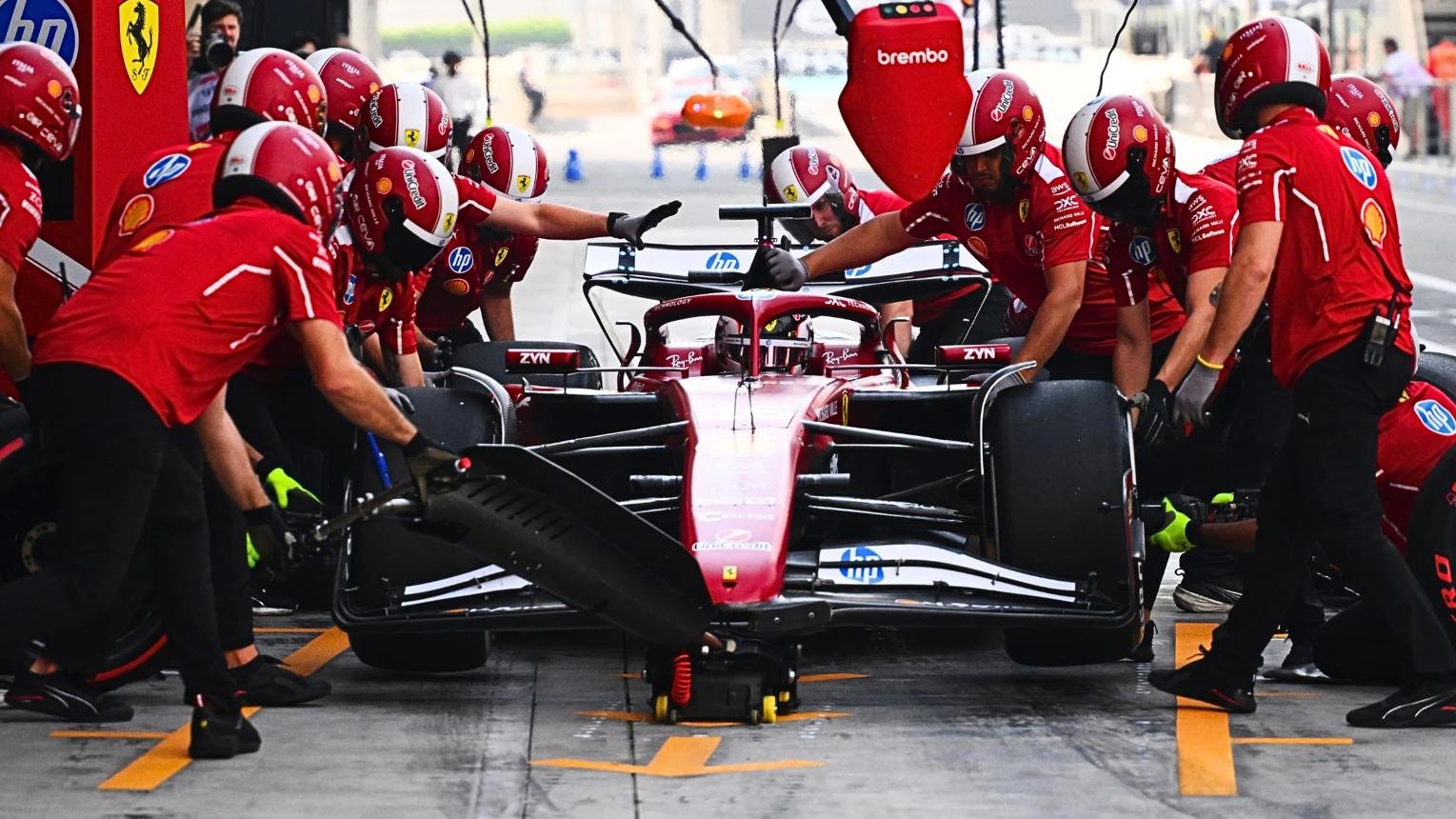
- Technological Integration: High-performance computing and real-time data analysis developed for F1 are increasingly being applied to logistics, healthcare, and city planning.
- Sustainability Standards: F1’s commitment to Net Zero by 2030 is setting a benchmark for global events, influencing how large-scale entertainment is managed.
- Consumer Tech: Advances in hybrid power and sustainable fuels in F1 will eventually dictate the performance and efficiency of future road cars.
Expert Verdict / Future Outlook
The future of Formula 1 is anchored in its ability to balance tradition with innovation. While the expansion into the US and Middle East has been lucrative, the sport must ensure it does not alienate its core European fan base. The 2026 regulations will be the ultimate test of the sport's technical vision. If F1 can successfully implement sustainable fuels while maintaining the spectacle of high-speed racing, it will remain the premier global platform for both automotive manufacturers and corporate sponsors. Expect to see a further increase in team valuations as the sport moves toward a closed-franchise model similar to major American sports leagues.
FAQ
What is the F1 budget cap and how does it work?
The budget cap is a limit on how much a team can spend on car performance. In 2024, it is set around $135 million, excluding driver salaries, marketing costs, and travel. It is designed to ensure financial sustainability and closer competition.
How does Formula 1 plan to achieve Net Zero by 2030?
F1 aims to reach Net Zero through a combination of 100 percent sustainable fuels, reducing logistical carbon footprints, and ensuring all race events are plastic-free and utilize renewable energy.
Why is the US market so important for F1?
The US represents the largest media and sponsorship market in the world. Success in the US provides F1 with massive growth potential in broadcasting rights and high-value corporate partnerships.
What are the major changes coming in 2026?
The 2026 season will introduce new power units with increased electrical output and the use of fully sustainable synthetic fuels, alongside redesigned chassis for better racing wheel-to-wheel.
How do teams make money in Formula 1?
Teams earn revenue through a share of the sport's commercial profits (distributed by FOM), title sponsorships, technical partnerships, and driver-related funding.
Conclusion
Formula 1 has successfully navigated the complexities of global expansion and financial restructuring to emerge as a dominant force in international sports. By prioritizing cost control, technical innovation, and digital engagement, the sport has created a sustainable model that appeals to both fans and investors. As it moves toward the 2026 regulatory shift, F1 is well-positioned to lead the conversation on the future of high-performance mobility and global entertainment.





Comments 0
Leave a Reply
Your email address will not be published. Required fields are marked *
Be the first to share your thoughts!