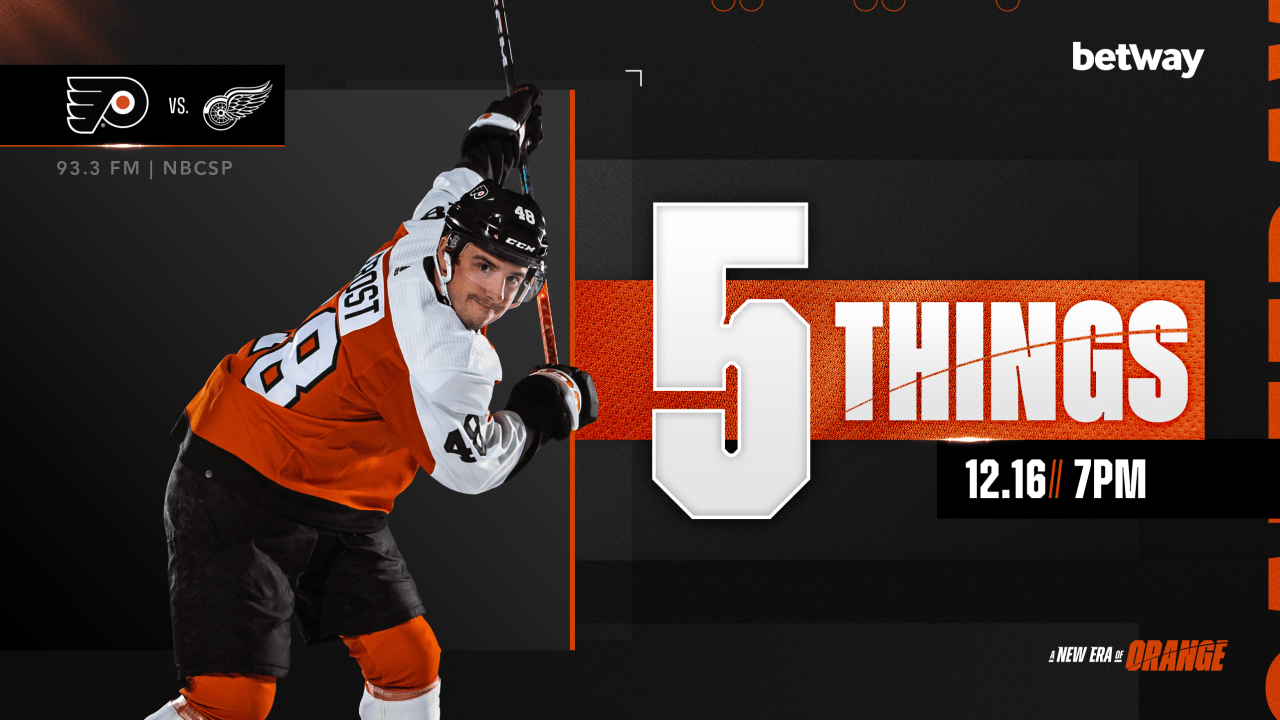
💡 The Ultimate Guide to the Philadelphia Flyers vs. Detroit Red Wings Rivalry: History, Stats, and Iconic Moments
Explore the historic rivalry between the Philadelphia Flyers and Detroit Red Wings, from the 1997 Stanley Cup Finals to the clash of Broad Street Bullies grit versus Hockeytown skill.
The rivalry between the Philadelphia Flyers and the Detroit Red Wings is a storied matchup defined by a fundamental clash of hockey philosophies: Philadelphia’s legendary physical, high-intensity style versus Detroit’s historic emphasis on elite skill and puck possession. While they played in different conferences for decades, their meetings have always carried the weight of heavyweight bouts, most notably culminating in the 1997 Stanley Cup Finals where Detroit secured a sweep to end a 42-year championship drought. Today, as Eastern Conference foes, every game between these two franchises serves as a reminder of their shared history as two of the NHL’s most successful non-Original Six and Original Six era giants.
Two Titans of the Eastern Conference
For much of the late 20th century, the Flyers and Red Wings were the gold standards of their respective conferences. Philadelphia, entering the league in the 1967 expansion, quickly established themselves as the "Broad Street Bullies," winning back-to-back cups in 1974 and 1975. Meanwhile, Detroit, one of the NHL's "Original Six," underwent a massive resurgence in the 1990s to become the powerhouse known as "Hockeytown."
The beauty of this matchup lies in the contrast. When these teams meet, it isn't just about two points in the standings; it’s a battle of identities. Philadelphia brings a blue-collar, aggressive forecheck that tests the patience of Detroit’s more structured, finesse-based systems. This cultural divide has fueled some of the most entertaining regular-season games in NHL history.
The 1997 Stanley Cup Finals: The Defining Chapter of the Rivalry
If you ask any fan of either team about this rivalry, their mind immediately goes to 1997. The Flyers entered the Finals as favorites, led by the terrifying "Legion of Doom" line featuring Eric Lindros, John LeClair, and Mikael Renberg. They were bigger, stronger, and seemed destined to bully their way to a title.
However, the Red Wings, coached by the legendary Scotty Bowman, executed a tactical masterclass. Detroit’s "Russian Five"—a unit consisting of Igor Larionov, Vyacheslav Fetisov, Vyacheslav Kozlov, Vladimir Konstantinov, and Sergei Fedorov—dazzled the Flyers with puck movement that rendered Philadelphia’s physicality moot. Detroit swept the series 4-0, punctuated by Darren McCarty’s iconic goal in Game 4. This series didn't just give Detroit a trophy; it changed the perception of how championship hockey could be played in the modern era.
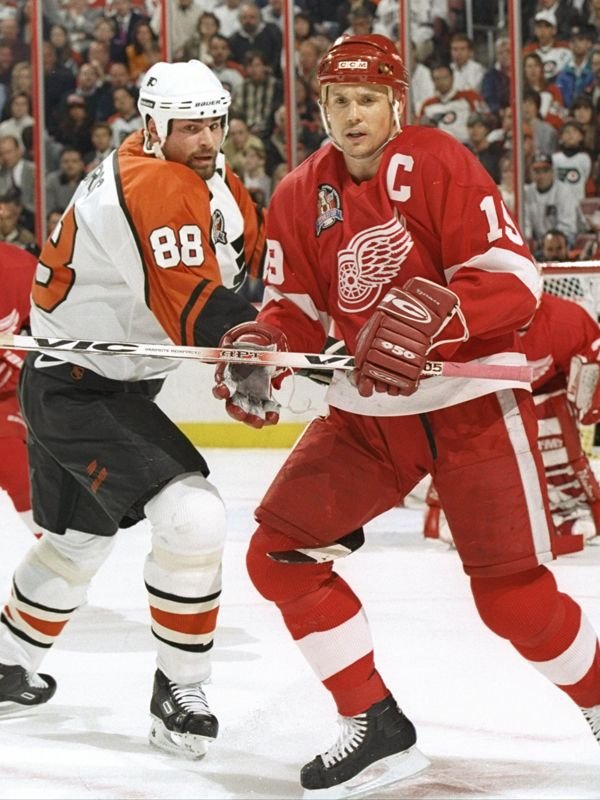
Contrasting Identities: The Broad Street Bullies vs. Detroit’s Skill-First Dynasty
The rivalry is best understood through the lens of team DNA. The Flyers built a brand on intimidation. From Dave "The Hammer" Schultz in the 70s to Rick Tocchet in the 80s and the Lindros era in the 90s, Philadelphia was the team no one wanted to play because of the physical toll it took. They focused on winning board battles, clearing the crease with force, and making the opposition look over their shoulder.
Detroit took a different path, especially during their 25-year playoff streak (1991–2016). Under owners Mike and Marian Ilitch, the Red Wings invested heavily in European scouting and puck-moving defensemen like Nicklas Lidstrom. They prioritized speed, intelligence, and a "keep-away" style of hockey. This creates a fascinating dynamic: Philadelphia tries to disrupt the rhythm, while Detroit tries to dictate it. While both styles have seen periods of immense success, Detroit’s four Stanley Cups between 1997 and 2008 gave their "skill-first" approach the historical edge in terms of hardware.
Legendary Figures: Comparing the Icons of Philadelphia and Detroit Hockey
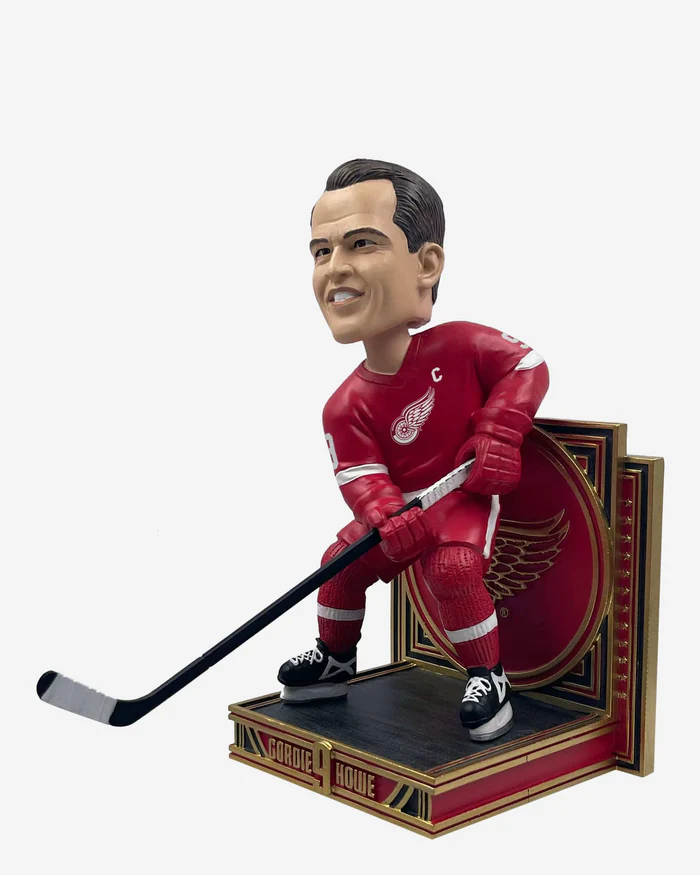
To understand the depth of this matchup, one must look at the players who wore the sweaters. In the 1970s, it was Bobby Clarke’s relentless work ethic versus the tail end of Gordie Howe’s legendary Detroit tenure. Clarke represented the heart of Philly—toothy-less, gritty, and incredibly smart. Howe, "Mr. Hockey," represented the complete package of toughness and scoring that Detroit fans still worship.
In the 1990s and 2000s, the focus shifted to Steve Yzerman and Eric Lindros. Yzerman transformed from a pure scorer into one of the greatest two-way leaders in sports history, sacrificing personal stats for team glory. Lindros was a physical marvel, a "Power Forward" in the truest sense, who could dominate a game through sheer strength. More recently, the torch was passed to players like Claude Giroux for the Flyers and Pavel Datsyuk or Henrik Zetterberg for the Wings—players who continued the tradition of high-level leadership and distinct playing styles.
Head-to-Head Statistics: Analyzing Decades of Regular Season and Playoff Data
Historically, the regular-season series between these two is remarkably close. Because they played in different conferences for decades (Flyers in the East, Wings in the West), they often only met twice a year. This scarcity made every game feel like an event.
- All-Time Record: As of the last few seasons, the Red Wings hold a slight edge in total wins, though Philadelphia has historically been very dominant on home ice at the Wells Fargo Center.
- Playoff Meetings: Their most significant meeting remains the 1997 Finals. Before that, they met in the 1966 playoffs (when the Flyers were not yet in the league) and have had few postseason encounters due to conference alignment.
- Home Ice Advantage: The Flyers famously went decades without losing a home game to the Red Wings in a streak that lasted from 1971 to 1988, one of the longest such streaks in NHL history.
The Modern Era: How Conference Realignment Intensified the Matchup
In 2013, the NHL underwent a massive realignment that moved the Detroit Red Wings from the Western Conference to the Eastern Conference. This was a turning point for the rivalry. No longer were they distant strangers meeting twice a year; they became direct competitors for playoff spots.
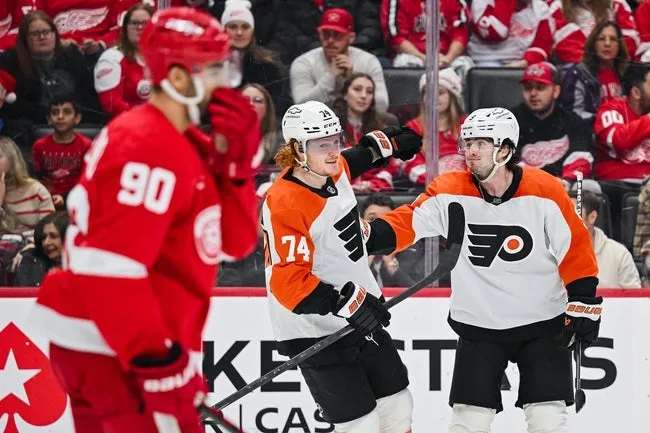
Now residing in the Atlantic (Detroit) and Metropolitan (Philadelphia) divisions, the teams meet frequently. The stakes have shifted from "inter-conference respect" to "divisional survival." Modern matchups often feature young stars trying to rebuild these historic franchises to their former glory, adding a layer of desperation to the games that wasn't always there during the mid-2000s.
Key Venues: From the Spectrum and Joe Louis Arena to the Modern Day
The environments where these battles took place are as iconic as the players. The Philadelphia Spectrum was known as one of the loudest and most intimidating buildings in the league, a place where the "Broad Street Bullies" persona was born. Across the border, Joe Louis Arena in Detroit was a temple of hockey, famous for its lively boards and the smell of the nearby river.
Today, the teams play in state-of-the-art facilities: the Wells Fargo Center in Philadelphia and Little Caesars Arena in Detroit. While the amenities have improved, the fans remain some of the most knowledgeable and demanding in the sport. A Flyers fan in South Philly and a Wings fan in Midtown Detroit share a common trait: they expect nothing less than maximum effort and playoff contention every single year.
Frequently Asked Questions
1. Who won the most recent playoff series between the Flyers and Red Wings?
The Detroit Red Wings won the most recent (and most famous) playoff series, sweeping the Philadelphia Flyers 4-0 in the 1997 Stanley Cup Finals.
2. Why are the Red Wings and Flyers in the same conference now?
In 2013, the NHL realigned its divisions to better align with time zones. Detroit moved from the Western Conference to the Eastern Conference, making them more frequent opponents of the Flyers.
3. What was the "Legion of Doom"?
The Legion of Doom was a famous Flyers forward line in the 1990s consisting of Eric Lindros, John LeClair, and Mikael Renberg. They were known for their massive size and scoring ability.
4. Which team has won more Stanley Cups?
The Detroit Red Wings have won 11 Stanley Cups, while the Philadelphia Flyers have won 2. However, the Flyers have one of the highest all-time points percentages in NHL history.
5. Is there a trophy awarded for this specific matchup?
No, there is no specific trophy for the regular-season series, but the games are often marketed as "Rivalry Night" matchups due to their intense history.
Conclusion: The Lasting Legacy of a Cross-Conference Classic
The Philadelphia Flyers vs. Detroit Red Wings rivalry is a testament to the diversity of hockey. It represents the collision of two different ways to win: through overwhelming force and through surgical precision. While the 1997 Finals remains the high-water mark of their shared history, the move to the Eastern Conference has ensured that this rivalry remains fresh and relevant for a new generation of fans. Whether it’s a physical battle in the corners or a highlight-reel goal, a game between the Orange and Black and the Winged Wheel is always a must-watch event on the NHL calendar.



Comments 0
Leave a Reply
Your email address will not be published. Required fields are marked *
Be the first to share your thoughts!