
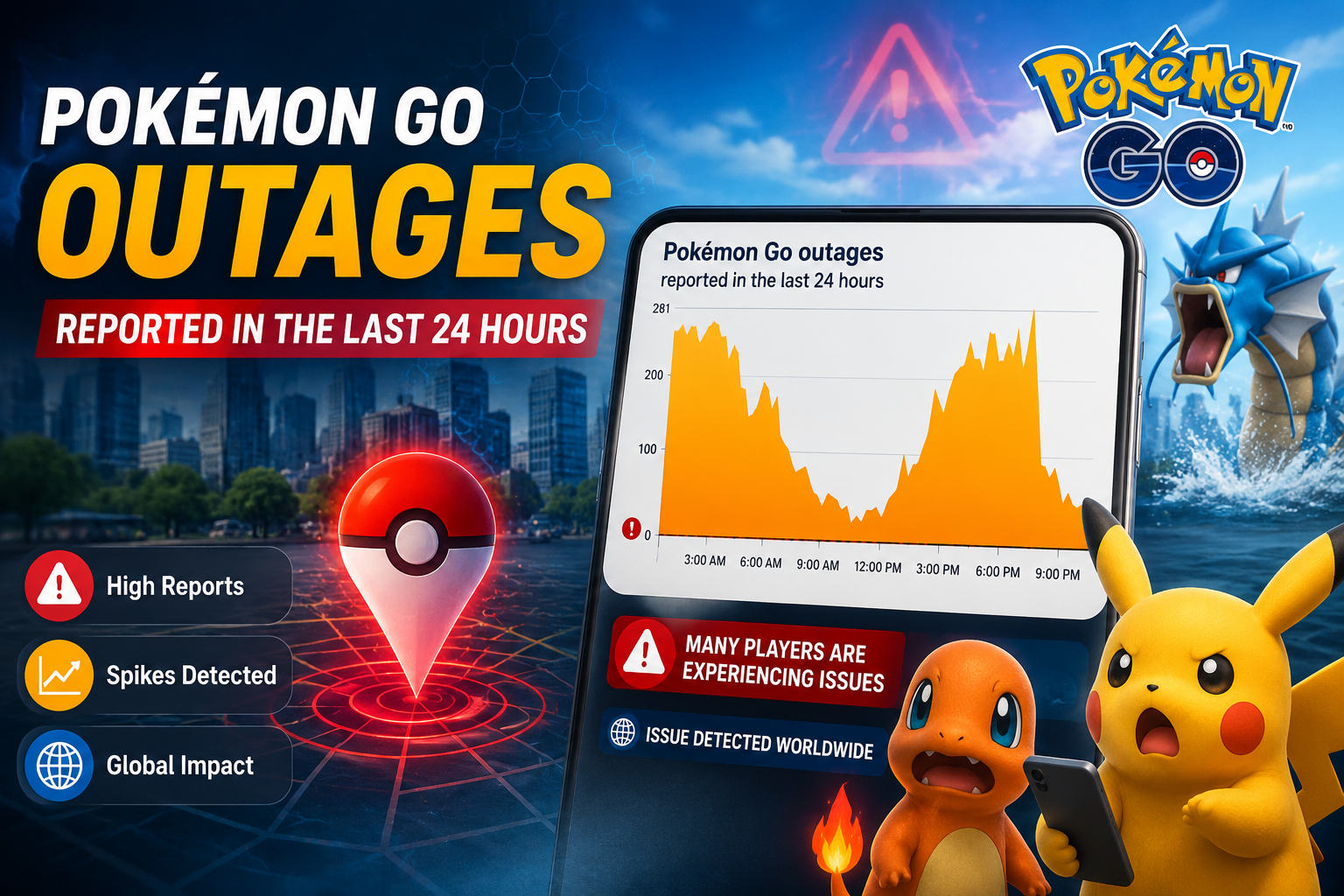
💡 Is Pokémon GO Down? A Strategic Analysis of Server Stability
A comprehensive analysis of Pokémon GO server status, technical infrastructure, and expert troubleshooting for Niantic's augmented reality platform.
Executive Summary
Pokémon GO remains a large-scale mobile application requiring real-time communication between millions of players and cloud-based backend services. This analysis examines Pokémon GO server stability, its underlying technical infrastructure, and the impact of service interruptions. Since its 2016 launch, the game has experienced traffic far beyond Niantic’s initial expectations, with Google Cloud reporting transaction volumes that can rise from around 400,000 to nearly 1 million per second during major events. Pokémon GO’s infrastructure has used technologies including Google Kubernetes Engine (GKE), Cloud Spanner, and global load balancing to handle these demands. This report explains why outages can occur, how to distinguish server-side problems from local device or network issues, and what players can do when Pokémon GO experiences connectivity or login problems.

Introduction: The Scale of Augmented Reality Infrastructure
When a user asks if Pokémon GO is down, they are often interacting with a complex combination of global cloud services, real-time game systems, and local network conditions. Since its historic launch in 2016, the game experienced traffic levels around 50 times higher than Niantic’s initial expectations, making Pokémon GO an important example of large-scale cloud infrastructure and rapid scaling. Pokémon GO must process player actions, location data, and game interactions in real time across a global player base. For Niantic, this creates a significant infrastructure challenge because the platform must coordinate large volumes of spatial and transactional data while maintaining a responsive experience.
Pokémon GO has used Google Cloud infrastructure, including Cloud Spanner, to support its large-scale backend requirements. Google Cloud has also documented how the game's infrastructure was designed to handle substantial increases in traffic during major events. Even with highly scalable infrastructure, temporary service disruptions can still occur. Understanding the difference between a widespread server-side incident and a localized device, network, or GPS problem is therefore essential for players and industry analysts alike.
THE DEEP DIVE: Analyzing Server Architecture and Outage Causes
The technical backbone of Pokémon GO has relied heavily on Google Kubernetes Engine (GKE), Google's managed Kubernetes platform, which allows backend services to scale as demand changes. Google Cloud has documented an architecture involving Kubernetes, Cloud Spanner, global load balancing, and specialized backend services. When Pokémon GO experiences downtime or degraded performance, the cause can vary and may include unexpected traffic spikes, infrastructure failures, software problems, authentication issues, network conditions, or problems associated with application updates.
Strategic analysis of large-scale technology platforms highlights the importance of infrastructure scalability. Just as AI systems require substantial computing resources, augmented-reality gaming requires significant data processing and network capacity. During major events, Google Cloud has reported Pokémon GO transaction volumes increasing from approximately 400,000 per second to nearly 1 million per second as additional regions come online. Under these conditions, problems in any critical service or communication layer can result in connection failures, loading issues, or the familiar spinning Pokéball.
Another important factor is the game's authentication system. Pokémon GO supports multiple login providers, including Google, Facebook, Pokémon Trainer Club, and Apple, and Niantic recommends linking an additional login provider so players have an alternative if one provider experiences an interruption. This means that an authentication problem with one provider does not necessarily indicate that the entire Pokémon GO service is offline. Players may therefore experience different login results depending on the authentication method they use, their region, network connection, or the specific service experiencing the problem.
What This Means For You: Troubleshooting and Verification
If you are unable to access Pokémon GO, follow a systematic troubleshooting process to determine whether the problem is widespread or limited to your device, account, or network. This approach helps avoid unnecessary troubleshooting when the issue is actually related to a server-side incident.
-
Check Official Channels: Start with the official Pokémon GO Help Center and Niantic support channels for known issues, maintenance information, and service-related announcements.
-
Monitor Community Reports: Services such as DownDetector can provide useful crowdsourced signals. A sudden increase in reports from multiple users and regions can indicate a broader service disruption, although report counts alone do not confirm an outage.
-
Differentiate Between App and Network: Switch between Wi-Fi and cellular data. If Pokémon GO works on one connection but not the other, the issue may be related to the local network, router, or Internet Service Provider.
-
Restart and Troubleshoot the App: Restart Pokémon GO and the device, check the app's permissions, and follow the official Android or iOS troubleshooting recommendations before considering a complete reinstall.
-
Check for Updates: Make sure Pokémon GO is running the latest version available through the official App Store or Google Play Store. Older app versions may eventually become incompatible with the current game services.
Expert Verdict and Future Outlook
The future reliability of Pokémon GO and other augmented-reality games will depend on continued improvements in cloud scalability, network performance, device capabilities, and distributed computing. Technologies such as 5G and edge computing could potentially reduce latency by bringing some processing closer to users, particularly in high-density locations and large live events. However, these technologies should be viewed as potential infrastructure improvements rather than guaranteed solutions to Pokémon GO outages.
Niantic's experience operating Pokémon GO demonstrates the importance of scalable cloud infrastructure for live-service games. During major events, sudden increases in player activity can place additional pressure on databases, application services, networking systems, and authentication providers. Maintaining reliable infrastructure therefore remains important not only for player experience but also for event participation, customer trust, and the commercial performance of the game. Rather than relying on unsupported estimates of financial losses, the strategic takeaway is that minimizing downtime during major events can help protect player engagement and in-game activity.

FAQ: Authoritative Answers to Common Questions
How do I know if Pokémon GO is down for everyone or just me?
Start by checking the official Pokémon GO Help Center and its Known Issues section. You can also compare reports from multiple players using crowdsourced services. If users across different regions are reporting similar problems at the same time, the issue is more likely to be widespread. If the problem affects only your device or connection, check your network, app version, GPS permissions, and login method first.
Why can Pokémon Trainer Club (PTC) login have problems when Google login still works?
Different authentication providers operate as separate services, so a problem affecting one login provider does not necessarily mean that Pokémon GO itself is completely offline. Niantic recommends linking an additional login provider to an account, which can provide an alternative way to sign in if one provider experiences an interruption.
Can a VPN cause Pokémon GO to stop working?
A VPN can sometimes affect network routing or location-related behavior, but it should not automatically be treated as proof that Pokémon GO has blocked the connection. Players should also distinguish normal connectivity problems from activities such as location spoofing or modified software, which can violate Niantic's gameplay policies.
What is Error 0 or Error 11 in Pokémon GO?
Error messages can have different causes depending on the game version and situation, so they should not automatically be interpreted as proof of a server outage. Connection-related errors can result from problems communicating with Pokémon GO's services, while GPS-related problems can originate from the device, location permissions, or network conditions. Players should check the current Known Issues and official troubleshooting information before assuming that a specific error means the servers are down.
Does Niantic compensate players for server downtime?
When significant technical problems affect events or paid features, Niantic may communicate resolutions, adjustments, or other forms of compensation depending on the circumstances. However, compensation is not guaranteed for every outage, and there is no universal fixed compensation policy that applies to every incident. Players should rely on official Pokémon GO announcements and the Help Center for incident-specific information.
Conclusion: Strategic Takeaway
Pokémon GO is a large-scale real-time gaming platform that depends on cloud infrastructure, authentication services, location data, and continuous communication between players and backend systems. When users ask whether Pokémon GO is down, the problem may be a widespread service incident or something specific to their device, account, network, or location services. The best approach is to verify the situation through official sources, check Known Issues, and then perform basic device and network troubleshooting. As augmented-reality technology and cloud infrastructure continue to evolve, scalable backend systems will remain essential for maintaining reliable service during everyday gameplay and high-traffic events.





Comments 0
Leave a Reply
Your email address will not be published. Required fields are marked *
Be the first to share your thoughts!