
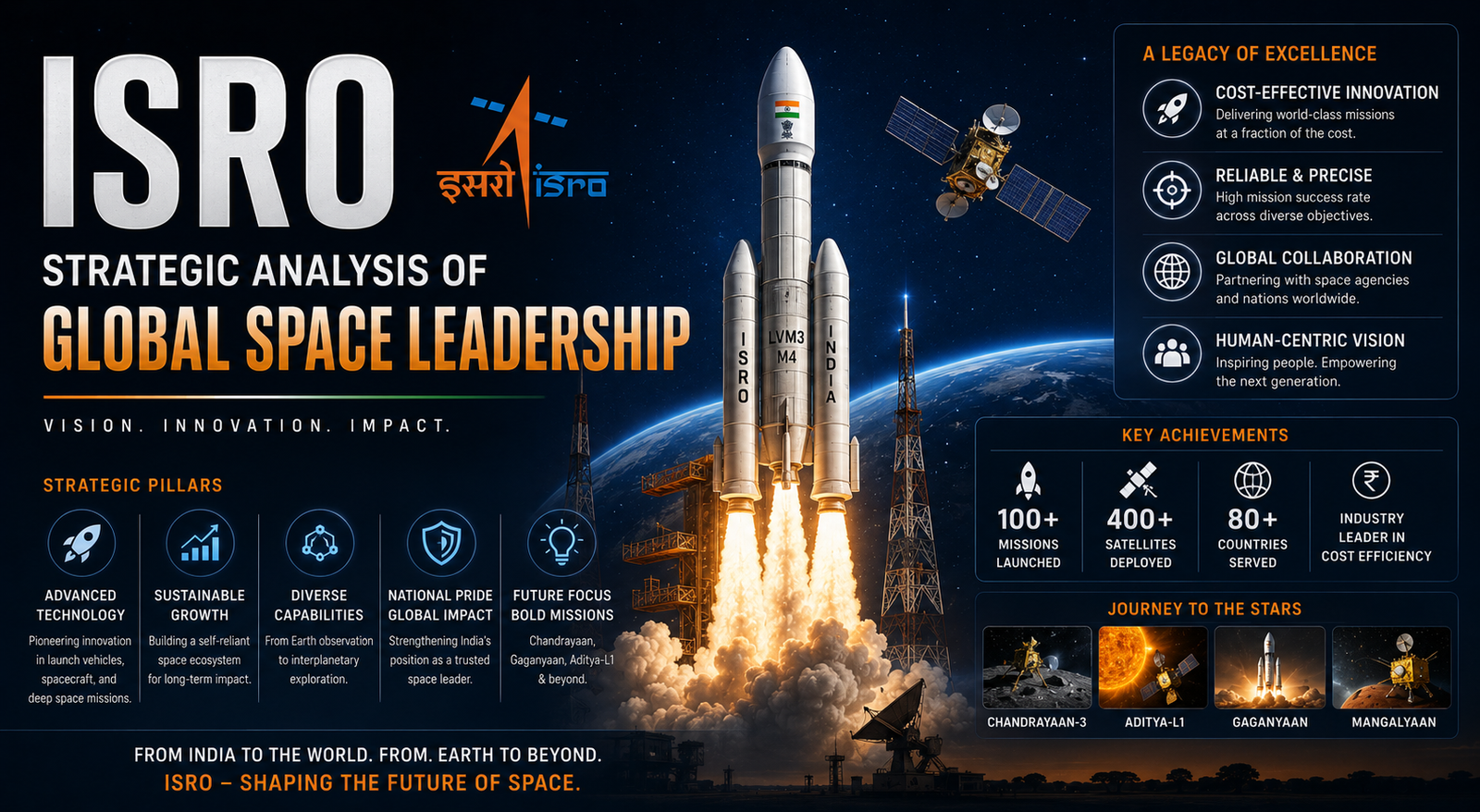
💡 ISRO: Strategic Analysis of Global Space Leadership
A high-authority analysis of the Indian Space Research Organisation (ISRO), focusing on its frugal engineering model, commercial growth, and future lunar and solar missions.
Executive Summary
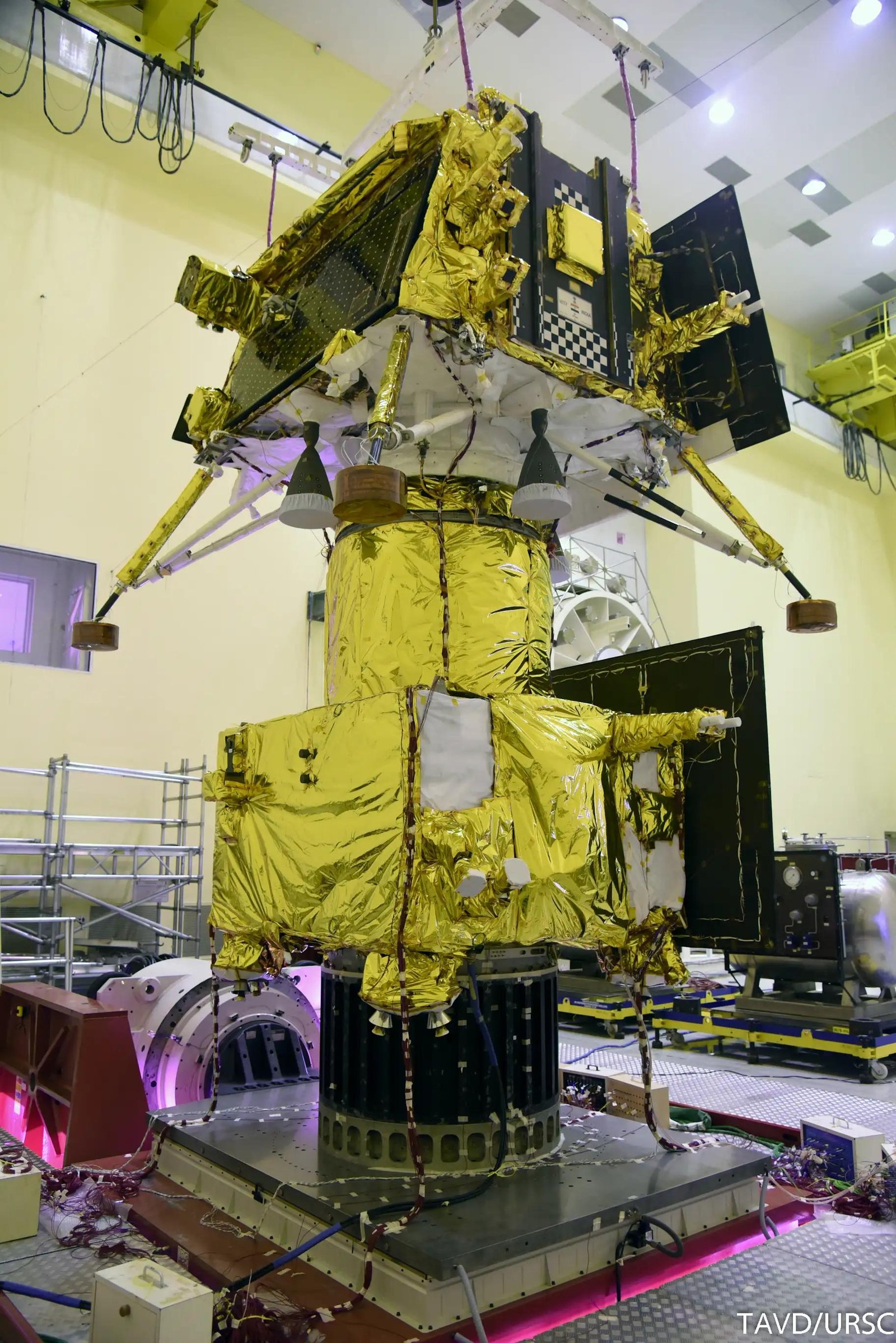
The Indian Space Research Organisation (ISRO) has transitioned from a localized research entity to a dominant global force in the aerospace industry. Key findings indicate that ISRO maintains one of the highest success-to-cost ratios in the world. The historic success of the Chandrayaan-3 mission, which landed on the lunar south pole with a budget of approximately 75 million USD, has solidified India's position as a tier-one space power. Currently, the Indian space economy is valued at roughly 8 billion USD, with projections suggesting it could reach 13 billion USD by 2025. This growth is driven by a shift toward private sector participation and the aggressive commercialization of launch services through NewSpace India Limited (NSIL).
Introduction
The trajectory of the Indian Space Research Organisation (ISRO) represents a unique case study in strategic resource management and technical excellence. Established in 1969, the agency was founded with the vision of using space technology for national development. Unlike contemporary agencies that focused primarily on geopolitical signaling, ISRO prioritized telecommunications, remote sensing, and disaster management. This foundational strategy created a robust infrastructure that now supports a wide array of commercial and scientific endeavors. As global interest in the lunar economy intensifies, ISRO's ability to deliver high-precision results on a fraction of the budget used by NASA or the ESA has made it the primary choice for cost-conscious satellite operators and international partners.
The Deep Dive: Strategic Pillars of ISRO
To understand the current dominance of ISRO, one must analyze the specific pillars that support its operations. These include launch vehicle reliability, the frugal engineering mindset, and the recent pivot toward commercial scalability.
1. The Reliability of the PSLV and LVM3
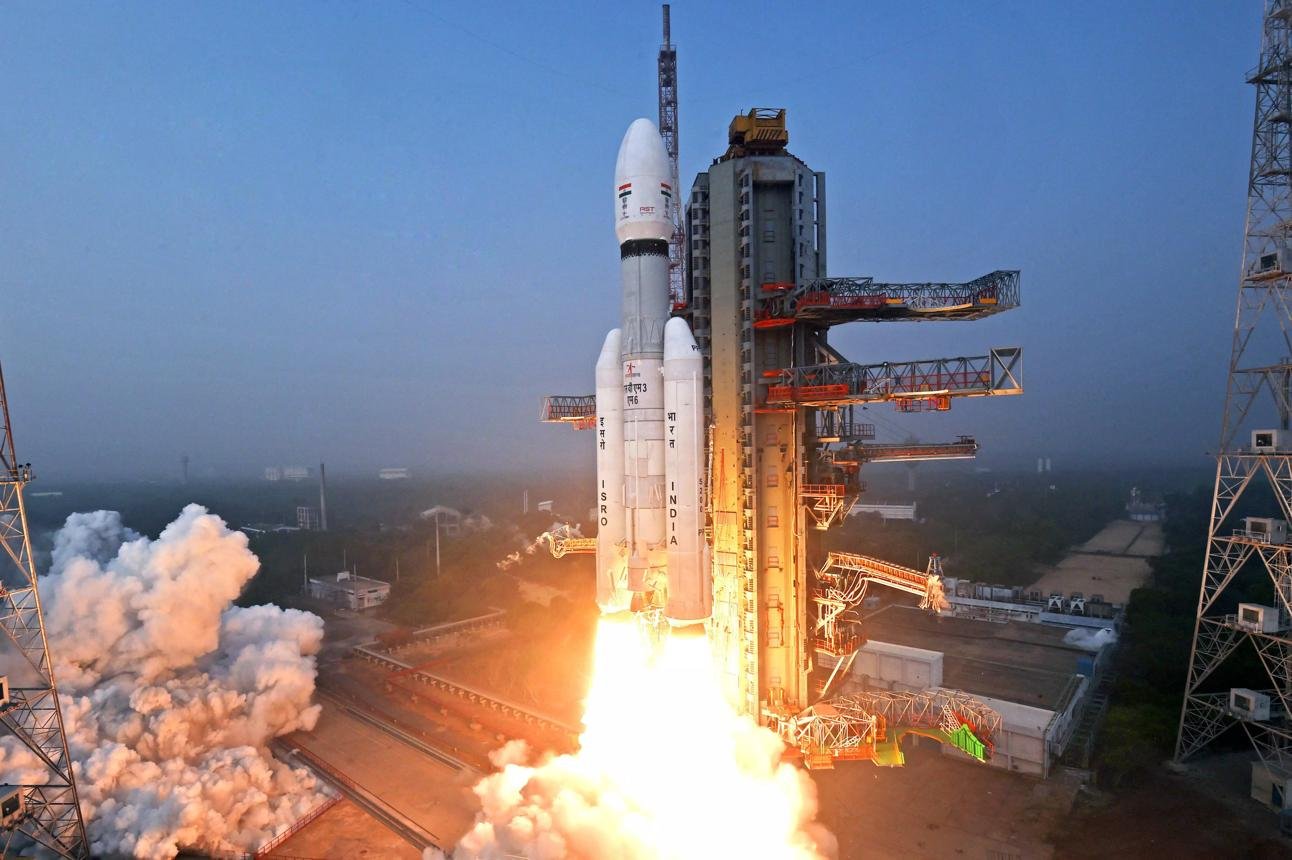
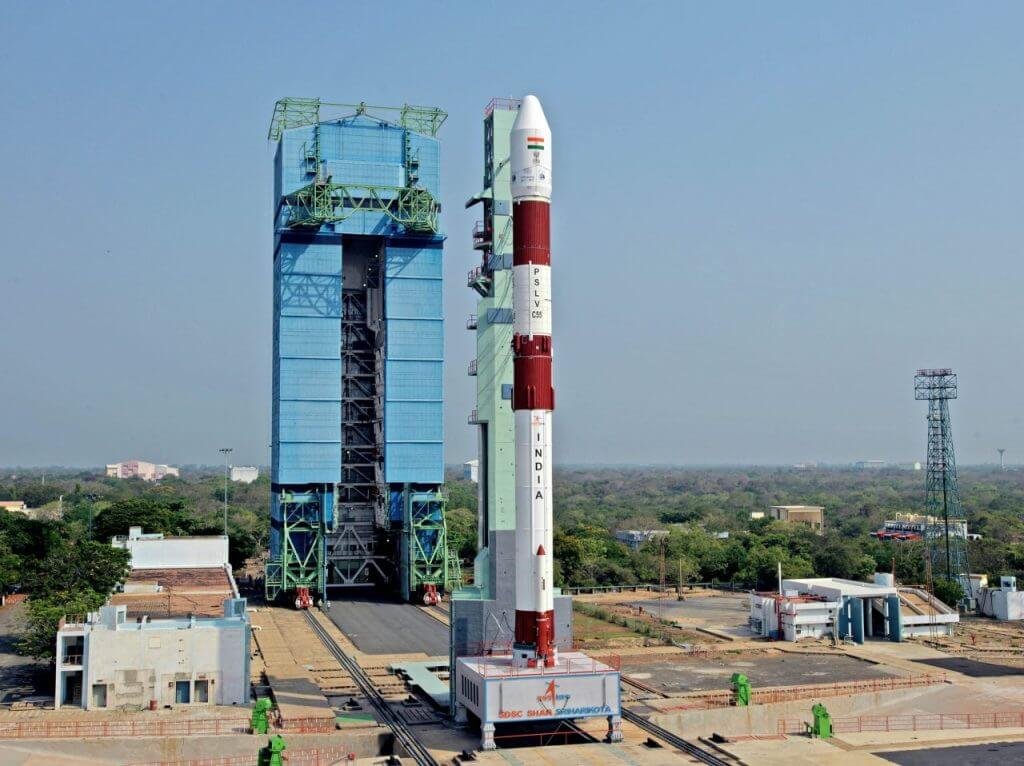
The Polar Satellite Launch Vehicle (PSLV) is often referred to as the workhorse of ISRO. It has a track record of over 55 successful missions, launching hundreds of foreign satellites from over 30 countries. This reliability is a critical asset in the global market. Furthermore, the Launch Vehicle Mark-3 (LVM3) has demonstrated the capability to carry heavier payloads, including the 3,897 kg Chandrayaan-3 spacecraft. This heavy-lift capability is essential for India's upcoming human spaceflight mission, Gaganyaan. In a manner similar to how a Reliance Infrastructure strategic analysis reveals the importance of foundational engineering in corporate turnarounds, ISRO's focus on refining its core propulsion systems has allowed it to scale without compromising safety.
2. The Frugal Engineering Model
ISRO's cost-efficiency is not merely about low labor costs; it is a result of modular design and rigorous testing protocols. The Mars Orbiter Mission (Mangalyaan) cost approximately 74 million USD, which was notably cheaper than the production budget of several Hollywood space films. This is achieved through indigenous component manufacturing and a preference for software-based simulations over expensive physical prototypes. This economic prudence attracts significant attention from global investors who monitor the stock market strategic analysis for emerging aerospace and defense opportunities in the South Asian region.
3. Satellite Data and Climate Monitoring
One of ISRO's most significant contributions is in the realm of Earth observation. The Indian Remote Sensing (IRS) satellite constellation is one of the largest in the world. These satellites provide critical data for agriculture, forestry, and water management. This data is vital for a strategic analysis of global weather dynamics, as it helps in predicting monsoon patterns and managing natural disasters. By providing precise telemetry and imaging, ISRO supports the economic stability of the Indian agrarian sector, which remains a cornerstone of the national GDP.
4. Commercial Expansion via NSIL and In-SPACe
The creation of NewSpace India Limited (NSIL) and the Indian National Space Promotion and Authorization Centre (In-SPACe) marks a paradigm shift. The government has effectively opened the doors for private startups like Skyroot Aerospace and Agnikul Cosmos. This move aims to increase India's share of the global space economy from the current 2 percent to 10 percent by 2030. This strategy mirrors the decentralization seen in other high-growth sectors, where state-led initiatives provide the framework for private innovation.
What This Means For You
For the general public and business professionals, ISRO's success translates into tangible benefits. The precision of Indian satellites improves the accuracy of GPS services, weather forecasting, and high-speed satellite internet in remote areas. For investors, the liberalization of the space sector opens new avenues in defense and aerospace stocks. For students and researchers, ISRO represents a pinnacle of scientific achievement that proves that technical excellence can be achieved through strategic planning and indigenous innovation rather than just massive capital expenditure.
Expert Verdict / Future Outlook
The future of ISRO is centered on three major frontiers: Human Spaceflight (Gaganyaan), Solar Research (Aditya-L1), and Lunar Sustainability. The Gaganyaan mission will be a defining moment, as it aims to send a three-member crew to an orbit of 400 km for a three-day mission. Experts suggest that the next decade will see ISRO transitioning from a service provider to a lead explorer. The agency is expected to play a pivotal role in the Artemis Accords and future Mars exploration. The strategic focus will likely shift toward reusable launch vehicles (RLV), which will further reduce the cost of access to space, potentially by another 50 percent.
FAQ
- What is the main reason for ISRO's low-cost missions? ISRO utilizes a strategy of indigenous manufacturing, modular design, and a highly skilled workforce that focuses on optimizing existing technologies rather than reinventing them for every mission.
- How does ISRO contribute to the Indian economy? Beyond satellite services for telecommunications and agriculture, ISRO generates revenue through its commercial arm, NSIL, by launching satellites for international clients.
- What is the Gaganyaan mission? Gaganyaan is India's first human spaceflight program, designed to demonstrate the capability to send humans to low earth orbit and bring them back safely.
- Can private companies now work with ISRO? Yes, the formation of In-SPACe allows private players to use ISRO's facilities and participate in space-related activities, fostering a new ecosystem of space startups.
- What was the significance of the Chandrayaan-3 landing? It made India the first country to land a spacecraft near the lunar south pole, a region believed to contain water ice, which is crucial for future human settlements.
Conclusion
ISRO stands as a testament to the power of strategic vision and disciplined execution. By balancing national development goals with high-end scientific exploration, the agency has created a sustainable model for space research. As the global space race moves toward commercialization and deep-space habitation, ISRO's role as a reliable, cost-effective, and innovative partner will only grow. The strategic takeaway for global observers is clear: leadership in the modern era is defined not just by the size of the budget, but by the efficiency of the engineering and the clarity of the mission objectives.





Comments 0
Leave a Reply
Your email address will not be published. Required fields are marked *
Be the first to share your thoughts!