
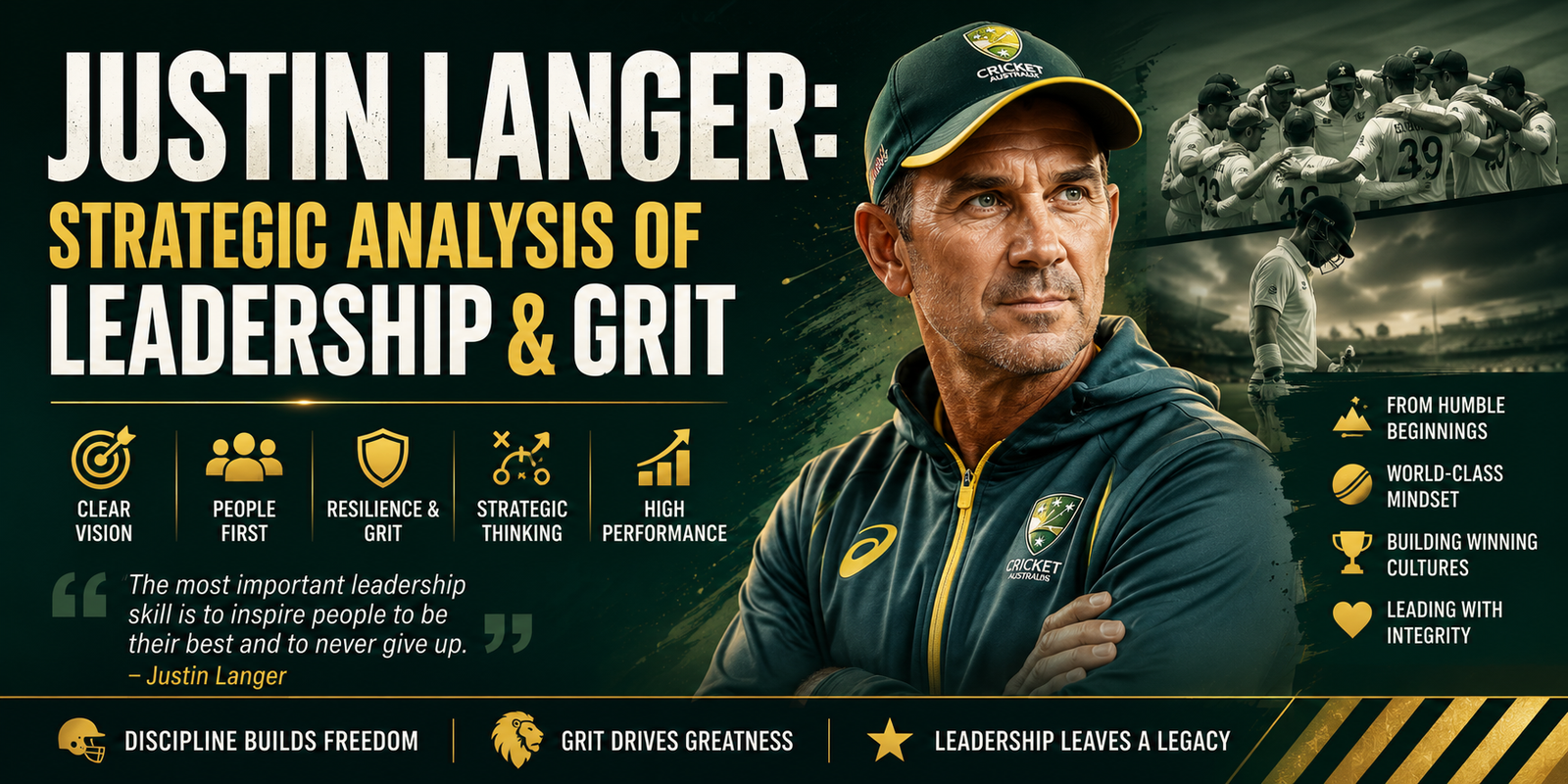
💡 Justin Langer: Strategic Analysis of Leadership & Grit
An authoritative analysis of Justin Langer’s leadership model, focusing on discipline, high-performance culture, and his transition from international coaching to IPL strategy.
Quick Take: The Langer Philosophy in 60 Seconds
Justin Langer represents the intersection of traditional discipline and modern performance metrics. His philosophy is built on three non-negotiable pillars: elite honesty, physical preparation, and institutional loyalty. Unlike contemporary coaches who prioritize player comfort, Langer operates as a high-performance architect who views friction as a necessary catalyst for growth. His tenure as the head coach of the Australian Men's Cricket Team saw a recovery from the 2018 cultural crisis to a T20 World Cup victory in 2021, proving that a structured, authoritative approach can yield championship results even in a volatile sporting landscape.
Introduction: The Architect of Cultural Transformation
In May 2018, Australian cricket faced its most significant existential threat following the ball-tampering scandal in South Africa. The appointment of Justin Langer was not merely a coaching hire but a strategic decision to reset the national identity. Langer, a veteran of 105 Test matches with 7,696 runs to his name, brought a reputation for legendary grit. His task was to rebuild a brand that had lost the trust of its stakeholders and the public.
Langer’s leadership style is characterized by a refusal to compromise on standards. This strategic analysis examines how he utilized a disciplinarian framework to stabilize a chaotic organization. Much like Namit Malhotra scaled global media operations by enforcing rigorous quality benchmarks, Langer sought to institutionalize excellence through a top-down mandate of accountability. This article breaks down the mechanics of his model and evaluates its efficacy in both international and franchise-based environments.
Practical Explanation: The Pillars of the Langer Leadership Model
The Langer model is distinct from the laissez-faire approach often seen in modern T20 coaching. It is rooted in the following core principles:
- Discipline and Routine: Langer believes that technical proficiency is a byproduct of disciplined habits. Under his tenure, training sessions were notoriously intense, designed to simulate the psychological pressure of match conditions.
- Elite Honesty: This was a trademarked phrase during his early coaching years. It required players to engage in radical transparency regarding their performance, fitness, and conduct. This mirrors the accountability seen in high-stakes corporate environments.
- Institutional Loyalty: For Langer, the baggy green cap is the ultimate symbol of success. He prioritized the history and legacy of the organization to foster a sense of belonging and responsibility among the players.
- Resilience through Hardship: His coaching emphasizes mental fortitude. By exposing players to difficult conditions in practice, he aimed to build a collective immunity to external pressure.
Real-life Use Cases: Rebuilding Cricket Australia and the IPL Strategic Shift
The most prominent application of Langer’s strategy was the post-2018 recovery of the Australian team. When he took over, the team’s global standing was at a historic low. Within three years, he led them to retain the Ashes on English soil for the first time since 2001 and secured Australia’s maiden T20 World Cup title in 2021. These outcomes were achieved through a systematic pruning of toxic cultural traits and a refocusing on fundamental skills.
In 2024, Langer transitioned to the Indian Premier League (IPL) as the head coach of the Lucknow Super Giants (LSG). This move marked a significant strategic shift. In the IPL, where player management often supersedes long-term cultural building, Langer had to adapt his iron-fist approach to fit a high-velocity, short-duration tournament. His success in the IPL highlights his ability to translate traditional leadership values into the fast-paced world of franchise sports, similar to how Jason Kidd transformed the Dallas Mavericks by balancing veteran egos with tactical discipline.
Comparison Table: Justin Langer vs. Modern Player-Centric Coaching
To understand the unique nature of Langer’s strategy, it is helpful to compare it with the contemporary trend of player-led coaching, often exemplified by the Bazball era in England.
| Feature | Langer’s Disciplinarian Model | Modern Player-Centric (e.g., Bazball) |
|---|---|---|
| Primary Authority | The Head Coach and the System | The Players and Captain |
| Cultural Focus | Discipline, Honesty, and Grit | Freedom, Expression, and Aggression |
| Training Style | High-intensity, structured drills | Adaptive, low-friction environments |
| Success Metric | Consistency and Institutional Pride | Entertainment and High-Risk Gains |
| Conflict Handling | Direct confrontation and correction | Supportive mediation and empowerment |
What This Means for You: Translating Elite Sport Leadership to Corporate Strategy
The lessons from Justin Langer’s career are highly applicable to business leaders navigating organizational change. His focus on elite standards suggests that when a company faces a crisis of values, a return to fundamentals is often the most effective remedy. Just as Disney Plus utilized strategic scaling to dominate the streaming market through consistent brand standards, corporate leaders can use Langer’s pillars to drive performance.
Implementing high-performance standards requires a leader to be comfortable with being unpopular. Langer’s eventual exit from the Australian setup, despite his winning record, serves as a case study in the shelf-life of authoritative leadership. It suggests that while a disciplinarian can fix a broken culture, sustaining that culture requires a transition toward a more collaborative model once the foundation is stable.
Actionable Insights: 5 Steps to Implementing High-Performance Standards
- Define Non-Negotiables: Identify three core behaviors that every team member must exhibit. These should be related to effort and attitude rather than just outcomes.
- Establish a Feedback Loop: Implement a system of elite honesty where team members can provide and receive direct, constructive criticism without fear of retribution.
- Standardize the Routine: Create a structured environment where high-performance habits become automated. Consistency in the small things leads to excellence in the large things.
- Monitor Cultural Health: Use data and qualitative feedback to ensure that the pressure for performance does not lead to burnout or systemic resentment.
- Plan for Evolution: Recognize when the team has matured beyond the need for strict oversight and be prepared to delegate authority to emerging leaders.
Expert Tips: Cultivating Mental Fortitude and Institutional Loyalty
Industry experts suggest that Langer’s greatest strength was his ability to make players believe in a cause greater than themselves. To replicate this, leaders should focus on the history and mission of their organization. Telling the story of the company’s past struggles and triumphs can build a sense of duty among employees. Furthermore, mental fortitude is built by gradually increasing the complexity and pressure of tasks, ensuring that the team is never too comfortable.
Advantages vs. Limitations of the 'Iron Fist' Leadership Style
The advantages of Langer’s style include rapid cultural alignment, high levels of physical and mental preparation, and a clear chain of command. It is exceptionally effective during periods of crisis or when a team has become complacent. However, the limitations are equally significant. This style can lead to emotional fatigue among subordinates and may stifle individual creativity. In the long term, a strictly authoritative approach can create a disconnect between the leadership and the workforce, as seen in the latter stages of Langer’s tenure with the Australian national team.
FAQ: 5 Critical Questions on Justin Langer’s Career and Coaching Impact
1. Why did Justin Langer leave the Australian coaching role despite winning the T20 World Cup?
His departure was primarily due to a breakdown in the relationship with senior players who desired a more player-led environment rather than the intense, hands-on management style Langer provided. Despite the on-field success, the internal consensus was that the team had outgrown his specific brand of leadership.
2. What is the core meaning of Elite Honesty?
Elite Honesty is a framework where individuals hold themselves and their peers to the highest possible standard of integrity. It involves acknowledging mistakes immediately and committing to corrective action without excuses.
3. How has Langer adapted to the IPL environment?
In the IPL, Langer has focused more on tactical flexibility and managing high-profile international stars. While he maintains his focus on discipline, the shorter format requires a more agile approach to strategy and player rotation.
4. Is Langer's coaching style still relevant in 2024?
Yes, particularly for organizations in need of a turnaround. While the trend is moving toward player empowerment, the foundational elements of discipline and high standards that Langer champions remain essential for any winning culture.
5. How does Langer compare to other legendary Australian coaches?
Langer is often compared to John Buchanan, though their styles differ. Buchanan focused on innovation and holistic development, whereas Langer is a traditionalist who focuses on the psychological and physical grit of the individual player.
Conclusion
Justin Langer remains one of the most influential and polarizing figures in modern sports leadership. His ability to transform a broken culture into a world-champion unit is a testament to the power of disciplined, values-based management. While his authoritative style has its limitations in long-term retention, the strategic blueprint he provided for high-performance remains a gold standard for leaders across all industries. The lasting legacy of Justin Langer is the realization that grit, when combined with a clear strategic vision, can overcome even the most significant institutional crises.




Comments 0
Leave a Reply
Your email address will not be published. Required fields are marked *
Be the first to share your thoughts!