
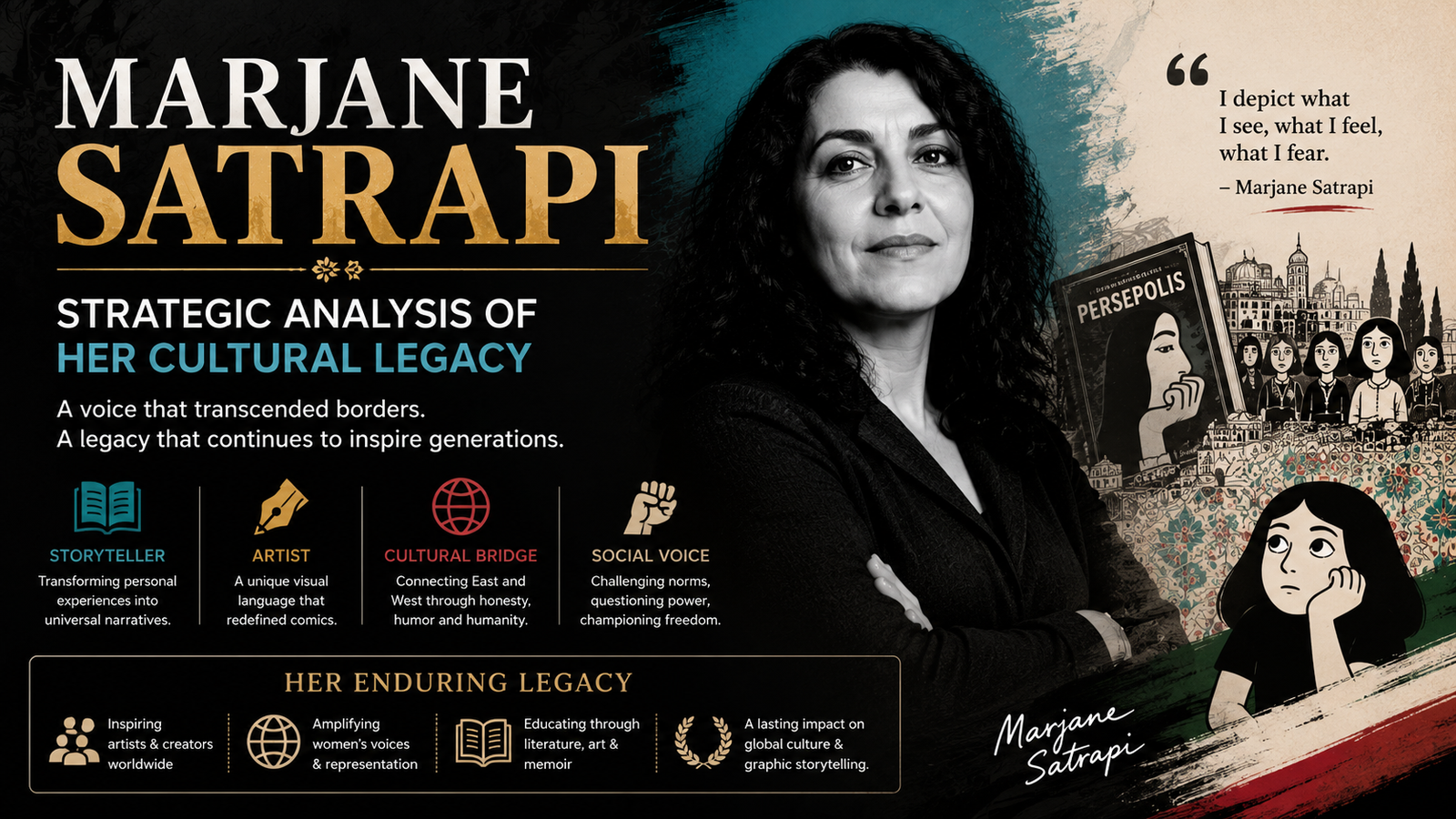
💡 Marjane Satrapi: Strategic Analysis of Her Cultural Legacy
A comprehensive analysis of Marjane Satrapi's impact on literature, film, and global socio-political discourse through the lens of graphic memoirs.
Executive Summary
Marjane Satrapi stands as a pivotal figure in the 21st-century literary and cinematic landscape. Her seminal work, Persepolis, has sold over 3 million copies worldwide and has been translated into more than 40 languages. This analysis examines Satrapi’s strategic role in elevating the graphic memoir from a niche format to a primary tool for geopolitical commentary. Key data highlights include the 2007 film adaptation’s Jury Prize win at Cannes and its 96 percent critical approval rating on Rotten Tomatoes. Satrapi’s influence extends beyond art, impacting educational curricula and international discussions on Iranian identity and female agency.

Introduction
The intersection of personal narrative and historical record is rarely navigated with the precision demonstrated by Marjane Satrapi. Born in Rasht, Iran, in 1969, Satrapi lived through the Iranian Revolution and the subsequent Iran-Iraq War before moving to Europe. Her decision to document these experiences through the medium of the graphic novel was not merely an artistic choice but a strategic move that bypassed traditional linguistic and cultural barriers. By utilizing a visual language, Satrapi democratized complex political history, making it accessible to a global audience. This report analyzes her trajectory, the commercial and critical success of her work, and her ongoing influence on contemporary storytelling and digital boundaries of expression.
The Deep Dive: Analyzing the Satrapi Phenomenon
The Strategic Shift in Graphic Literature
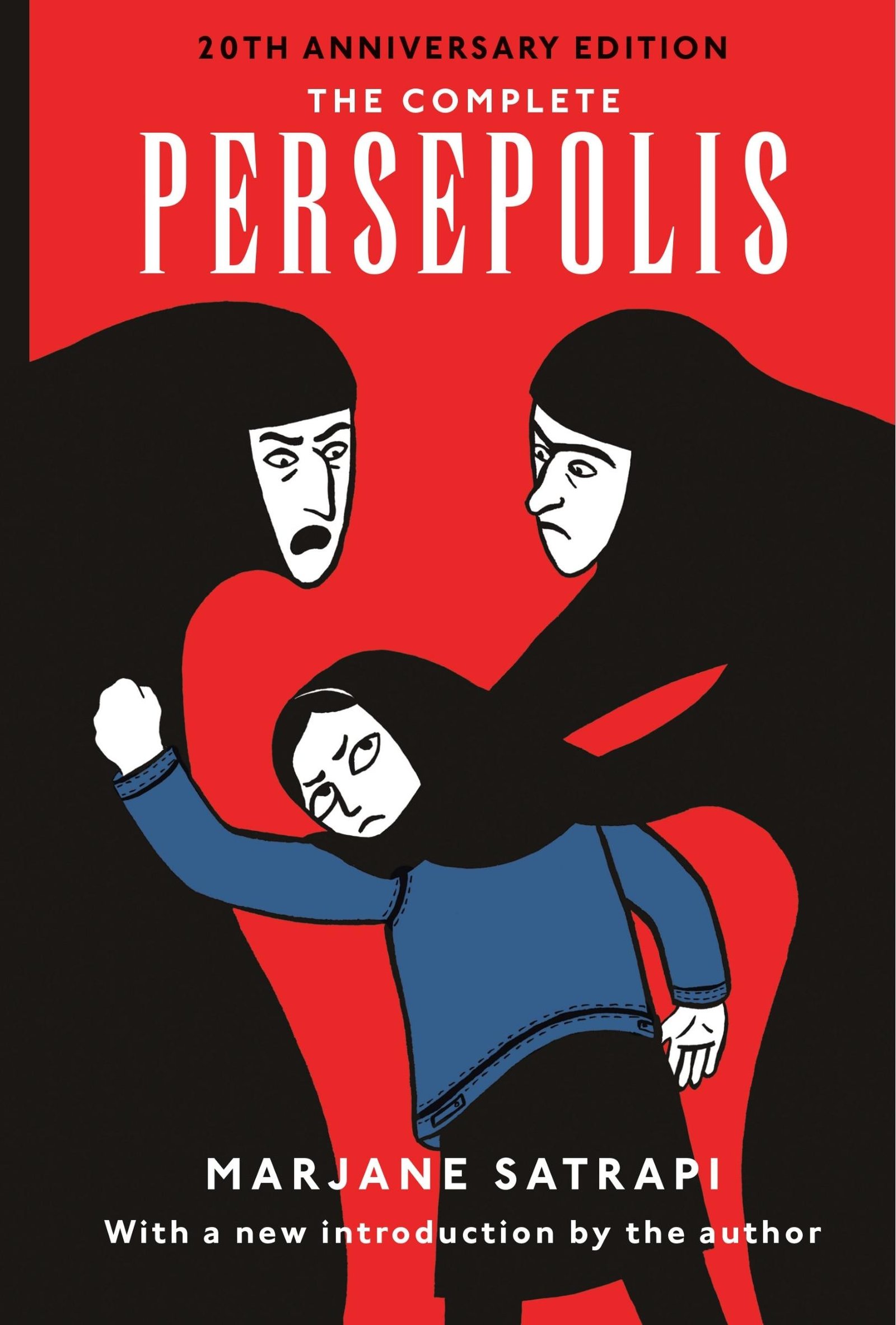
Before the publication of Persepolis in the early 2000s, the graphic novel was often relegated to superhero tropes or underground comix. Satrapi, influenced by the stark black-and-white aesthetic of German Expressionism and the narrative depth of Art Spiegelman’s Maus, redefined the genre. Industry reports from the early 2010s indicate that Satrapi’s success contributed to a 12 percent compound annual growth rate in the graphic memoir sub-sector. Her work proved that the medium could handle heavy themes like state-sponsored violence and religious fundamentalism without losing its accessibility.
The strategic narrative structure she employed, blending childhood innocence with the harsh realities of a maturing political state, created a unique psychological proximity for the reader. This is similar to how developers use a strategic narrative to build character depth in modern media. Satrapi’s approach allowed Western readers to empathize with an Iranian protagonist, effectively humanizing a population that was frequently caricatured in mainstream news media during the early 2000s.
Cinematic Expansion and Global Recognition
The transition from page to screen in 2007 marked a significant scaling of Satrapi’s influence. Co-directing with Vincent Paronnaud, Satrapi maintained the aesthetic integrity of her original drawings. The film’s success was not just critical but commercial, grossing over 22 million dollars worldwide on a relatively modest budget. The strategic choice to use traditional 2D animation stood in contrast to the burgeoning 3D trend, reinforcing the timeless, universal quality of the story.
Data from film festival archives shows that Persepolis was one of the first animated memoirs to receive an Academy Award nomination for Best Animated Feature. This recognition forced the industry to reconsider animation as a medium for adult-oriented, socio-political discourse. Satrapi’s subsequent films, including Chicken with Plums and Radioactive, further demonstrate her versatility as a director, moving from autobiography to historical fiction and biography, while always maintaining a focus on individuals caught in the gears of history.
Socio-Political Impact and Censorship Statistics
Satrapi’s work has frequently been at the center of debates regarding educational content and censorship. In 2013, the Chicago Public Schools system faced significant backlash for attempting to remove Persepolis from its curriculum. According to the American Library Association, Persepolis has consistently appeared on lists of challenged books. However, these challenges often result in a Streisand Effect, where the attempt to censor the book leads to a measurable spike in sales and public interest.
In the context of the 2022-2023 'Woman, Life, Freedom' protests in Iran, Satrapi’s work saw a resurgence in relevance. She curated the book Woman, Life, Freedom, collaborating with activists and artists to provide a strategic analysis of the movement. This project highlights her role as a cultural diplomat, using her platform to provide context to unfolding global events.
What This Means For You
- For Creators: Satrapi’s career demonstrates that local, personal stories can achieve global scale if they utilize universal visual languages. Complexity does not have to sacrifice clarity.
- For Educators: The graphic memoir is a proven tool for teaching historical empathy and media literacy, particularly for students who may struggle with dense, text-only historical accounts.
- For Cultural Analysts: Satrapi provides a blueprint for how art can serve as a counter-narrative to state propaganda, offering a more nuanced view of geopolitics than traditional news cycles.
- For Consumers: Engaging with Satrapi’s work offers a masterclass in how to process personal trauma through creative output, turning individual experience into a collective asset.
Expert Verdict / Future Outlook
Marjane Satrapi has successfully transitioned from a memoirist to a polymath whose influence spans literature, film, and activism. Her strategic decision to remain independent of major studio formulas has preserved the authenticity of her voice. Looking forward, the graphic memoir genre is expected to continue its expansion into digital formats and interactive media. Satrapi’s legacy will likely be defined by her ability to bridge the gap between the East and the West during a period of intense geopolitical friction. As digital storytelling evolves, the principles of visual economy and emotional honesty established in Persepolis will remain the gold standard for narrative non-fiction.
FAQ
Is Persepolis based on a true story?
Yes, Persepolis is an autobiographical graphic novel that chronicles Marjane Satrapi’s childhood and early adult years in Iran during and after the Islamic Revolution.
Why is Marjane Satrapi's work often in black and white?
Satrapi uses black and white to emphasize the story's themes and to ensure the visuals remain universal. This choice also draws inspiration from historical art movements and allows the reader to focus on the emotional and narrative weight of the panels.
What awards has Marjane Satrapi won?
Satrapi has won numerous awards, including the Jury Prize at the Cannes Film Festival, the Angoulême Coup de Coeur Award, and several prestigious literary prizes across Europe and North America.
Has Marjane Satrapi written other books?
Yes, her other notable works include Embroideries, which focuses on the private lives of Iranian women, and Chicken with Plums, which was also adapted into a live-action film.
Where does Marjane Satrapi live now?
Marjane Satrapi has lived in Paris, France, since the 1990s. She chose to live in exile to maintain her creative freedom and personal safety while continuing her work as an artist and filmmaker.
Conclusion
Marjane Satrapi is not merely an illustrator but a strategic architect of modern cultural understanding. By leveraging the visual medium of the graphic novel, she has provided a vital counter-narrative to reductive geopolitical tropes. Her work remains a benchmark for how personal history can be transformed into a global educational resource, ensuring that the human element of history is never lost to statistics or political rhetoric.





Comments 0
Leave a Reply
Your email address will not be published. Required fields are marked *
Be the first to share your thoughts!