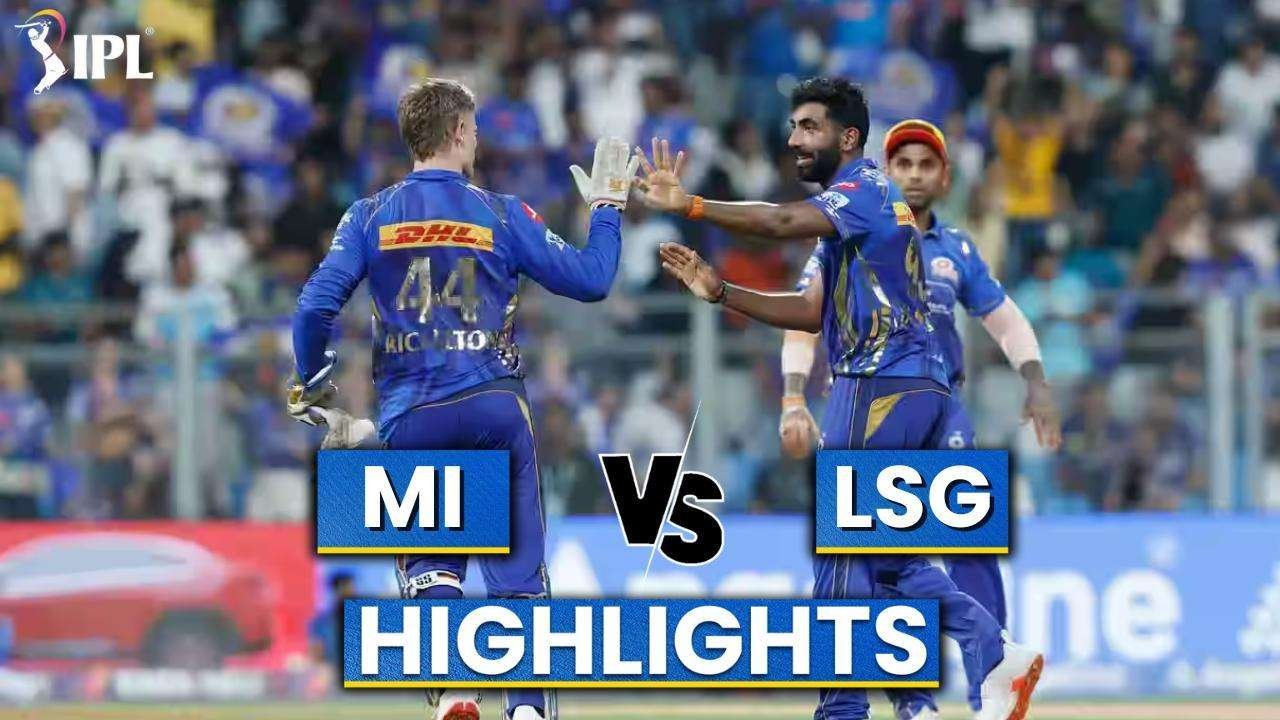
💡 MI vs LSG: A Comprehensive Guide to the IPL’s Clash of Legacy and Ambition
Explore the intense rivalry between Mumbai Indians and Lucknow Super Giants, featuring head-to-head stats, player matchups, and tactical breakdowns.
The rivalry between the Mumbai Indians (MI) and the Lucknow Super Giants (LSG) is a fascinating study of the IPL’s evolution, pitting the league's most successful legacy franchise against one of its most tactically disciplined new entrants. Since Lucknow joined the league in 2022, they have maintained a surprisingly dominant record over Mumbai, often neutralizing MI’s aggressive power-hitting with disciplined bowling and calculated anchoring. This matchup is defined by the contrast between Mumbai’s 'superstar' culture and Lucknow’s 'utility-first' philosophy.
The Narrative of Experience vs. Emerging Dominance
Mumbai Indians entered the 2020s as the undisputed kings of the IPL, boasting five titles and a scouting system that consistently produced international stars. However, the expansion of the league in 2022 introduced the Lucknow Super Giants, a team that didn't just aim to participate but to disrupt the established hierarchy. While MI relies on high-octane cricket and a 'never say die' attitude rooted in a decade of success, LSG brought a more clinical, data-driven approach to the field.
This clash isn't just about the points on the table; it represents the old guard trying to protect its territory against a new power that refuses to be intimidated by history. In their very first encounters, LSG proved they could handle the pressure of playing against a titan, setting the stage for a modern rivalry that grows more intense with every season.
The Historical Context: How the MI vs LSG Rivalry Has Shaped Up Since 2022
When LSG entered the fray in 2022, few expected them to immediately challenge the dominance of a team like Mumbai Indians. However, the early history of this matchup was heavily skewed in favor of the newcomers. In their debut season, LSG managed to defeat MI convincingly in both their group-stage encounters, largely thanks to stellar individual performances from their leadership core.
The rivalry evolved in 2023 and 2024, as Mumbai attempted to rebuild their bowling core in the post-Malinga/Pollard era. LSG, meanwhile, focused on building a deep middle order filled with versatile all-rounders. This strategic difference has made their games a tactical chess match, where MI tries to blow teams away in the powerplay, while LSG often looks to take the game deep and capitalize on late-inning errors.
Statistical Deep Dive: Head-to-Head Records and Performance Trends
Statistically, the Lucknow Super Giants have enjoyed a superior win percentage against Mumbai Indians compared to most other franchises. One of the standout trends in this rivalry is the frequency of high-impact individual centuries; specifically, LSG’s top order has historically found the MI bowling attack to their liking.

Key stats to consider:
- Average Score: Both teams typically hover around the 165–180 run mark when facing each other.
- Defending vs. Chasing: LSG has shown a particular strength in defending totals against MI, using their spin-heavy attack to choke the scoring rate in the middle overs.
- Venue Impact: While MI is nearly invincible at their home ground on their best days, LSG’s balanced bowling attack has allowed them to compete fiercely even in the high-scoring environment of Mumbai.
Individual Brilliance: Key Player Matchups to Watch
The outcome of an MI vs LSG encounter often hinges on specific player battles. These matchups highlight the technical nuances of the game:
- Jasprit Bumrah vs. KL Rahul: This is the ultimate battle of skill. Rahul’s ability to anchor an innings and play low-risk cricket at the start is tested by Bumrah’s relentless accuracy and lethal yorkers.
- Hardik Pandya vs. Marcus Stoinis: A battle of the premier all-rounders. Both players can change the game with the bat in the space of two overs and provide crucial breakthroughs with the ball. Their performance in the 'death overs' often decides the momentum of the match.
- Suryakumar Yadav vs. Ravi Bishnoi: Yadav’s 360-degree stroke play against Bishnoi’s quick, skidding leg-spin is a treat for fans. Bishnoi’s ability to cramp Yadav for room is often LSG’s primary weapon to stop an MI onslaught.

Pitch and Conditions: Analyzing Wankhede and Ekana Stadiums
The conditions at the home grounds of these two teams couldn't be more different, which plays a massive role in their tactical planning.
The Wankhede Stadium (Mumbai)
Wankhede is a paradise for batsmen. With short boundaries and a pitch that offers consistent bounce, it rewards aggressive stroke-making. The presence of dew in evening games often makes chasing the preferred option. MI’s roster is traditionally built to exploit these conditions, stacked with players who can clear the ropes with ease.
The Ekana Cricket Stadium (Lucknow)
In contrast, the Ekana Stadium has historically offered more assistance to spinners and slow-ball specialists. The boundaries are larger, making it difficult for batsmen to muscle every ball for a six. This suits LSG’s tactical blueprint, which involves rotating strike and squeezing the opposition with disciplined line and length. When MI travels to Lucknow, they are often forced to curb their natural instincts and play a more patient game.

Tactical Blueprints: Comparing Team Philosophies
The success of these two franchises stems from very different leadership and organizational philosophies.
Mumbai Indians: The Powerhouse Approach
- Pros: Exceptional talent scouting, aggressive mindset, and a culture of winning high-pressure playoff games.
- Limitations: Can sometimes struggle with team balance if their primary fast bowlers are injured; tendency to be 'top-heavy' in the batting department.
Lucknow Super Giants: The Utility Approach
- Pros: High flexibility with multiple bowling options; focus on 'matchups' rather than just reputation; very strong at defending par totals.
- Limitations: Sometimes lacks the 'X-factor' power-hitter who can win a game from an impossible situation; can become overly defensive in the middle overs.
Frequently Asked Questions Regarding MI vs LSG
1. Who has won more matches in the MI vs LSG head-to-head?
Since their inception in 2022, the Lucknow Super Giants have held a significant lead in the head-to-head record, winning the majority of their encounters against the Mumbai Indians.
2. Why does KL Rahul perform so well against Mumbai Indians?
KL Rahul has a phenomenal record against MI, including multiple centuries. His technique allows him to handle MI's pace-heavy attack, and he often plays through the innings, which neutralizes MI's strategy of taking early wickets.
3. Which stadium favors which team in this rivalry?
Wankhede Stadium favors Mumbai's aggressive batting style due to the small boundaries and true bounce. The Ekana Stadium in Lucknow favors LSG's tactical bowling and spin-heavy attack due to its slower nature and larger outfield.
4. Has there ever been a Super Over between MI and LSG?
As of the most recent seasons, there has not been a Super Over in the MI vs LSG rivalry, though many of their games have been closely contested until the final over.
Conclusion
The MI vs LSG rivalry is a testament to the IPL's ability to create compelling narratives even with newer teams. Mumbai Indians bring the weight of history and a legacy of champions, while Lucknow Super Giants bring a modern, tactical edge that has frequently left the giants searching for answers. As both teams continue to evolve, this matchup remains a highlight of the cricketing calendar, offering a perfect blend of individual brilliance and strategic depth. Whether it's a high-scoring thriller in Mumbai or a tactical grind in Lucknow, the clash of legacy and ambition never fails to deliver.




Comments 0
Leave a Reply
Your email address will not be published. Required fields are marked *
Be the first to share your thoughts!