

💡 Montreal Open: Strategic Analysis of Economic Impact and ROI
A comprehensive strategic analysis of the Montreal Open tennis tournament, exploring its $100 million economic impact, infrastructure growth, and global brand value.
Executive Summary
The Montreal Open, officially known as the National Bank Open presented by Rogers, is one of the most important events in the Canadian professional tennis calendar and a significant contributor to the country's sports and tourism economy. The Montreal tournament generated an estimated nearly $40 million in GDP impact for the city in 2025, according to Tennis Canada, while the combined Montreal and Toronto events attracted a record 504,860 spectators.
A major strategic development was the introduction of a 12-day main-draw format with 96 singles players in 2025, bringing the National Bank Open closer to the extended format used by several other premier ATP and WTA events. The expanded format added more players, matches, sessions, and rest days while creating additional opportunities for fan engagement and international exposure.
This report examines the tournament's economic and commercial impact, its value to sponsors and host cities, the role of expanded scheduling and media exposure, and its broader influence on Canadian tennis and the international tennis calendar.
Introduction
The Montreal Open, part of the National Bank Open presented by Rogers, is not merely a sporting event; it is a major international tennis property with significant commercial, tourism, and cultural value. First held in 1881, the tournament is the third-oldest active tennis tournament in the world, behind Wimbledon and the US Open. Today, the event operates across two Canadian host cities, Montreal and Toronto, giving it a unique national footprint within the ATP and WTA tours.
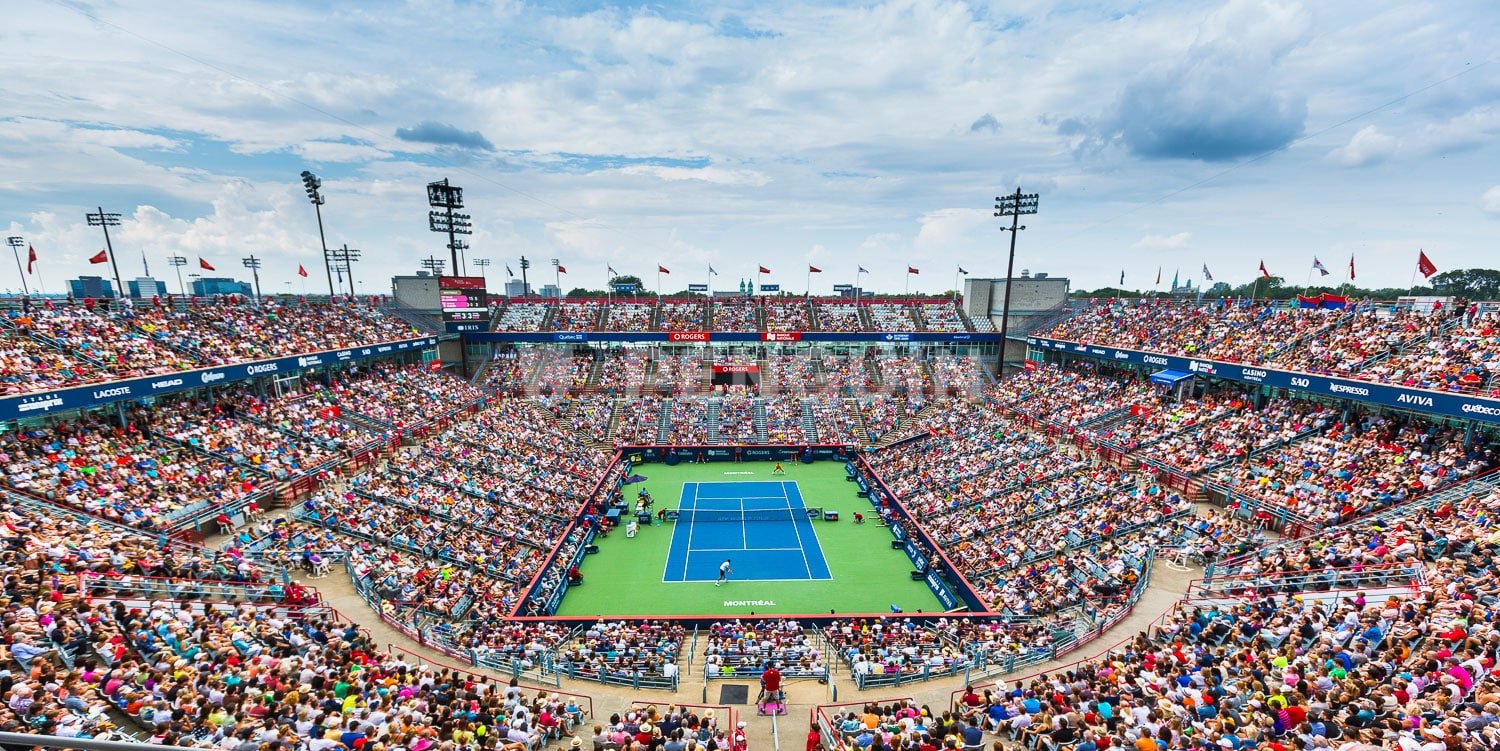
The Montreal edition is hosted at IGA Stadium in Jarry Park, a venue that combines professional tennis with hospitality, entertainment, and fan-focused experiences. The tournament's strategic importance has evolved from its historical roots into a major international sports platform capable of attracting hundreds of thousands of visitors and substantial global media attention.
The introduction of the 12-day format in 2025 further strengthened this position. The expanded 96-player draw increased the number of matches and sessions while giving players additional recovery time between rounds. In 2025, the combined tournament in Montreal and Toronto generated a record 504,860 in-person visits, while Tennis Canada reported that the event reached 71 million viewers through more than 28,000 hours of international broadcast coverage.
The Deep Dive: Economic Drivers and Strategic Growth
The financial and commercial model of the Montreal Open, officially known as the National Bank Open presented by Rogers, is supported by multiple revenue streams, including ticket sales, sponsorships, hospitality, food and beverage, and media exposure. Tennis Canada has also stated that the additional revenue generated by the tournament's expanded format will support the growth and development of tennis in Canada and help advance the organization toward equal prize money for men and women by 2027. Rather than describing the tournament as the sole or primary funding source for Canadian tennis, it is more accurate to view the National Bank Open as an important commercial platform that contributes to Tennis Canada's broader tennis-development objectives.
The tournament's connection to Canadian talent is also significant. The expanded format provides Tennis Canada with additional main-draw wild cards, creating more opportunities for Canadian players to compete at one of the country's most important international events. Initiatives such as the Road to the NBO further connect the professional tournament with Canada's domestic tennis pathway.
One of the most significant strategic shifts was the introduction of the 12-day main-draw format in 2025. The singles draw expanded from 56 to 96 players, while the tournament added an additional round and increased the number of sessions. The expanded schedule also provides players with a rest day between matches through the semifinals, supporting player recovery and allowing the tournament greater flexibility in scheduling.
The longer format also creates additional opportunities for fan engagement, programming, hospitality, and international exposure. However, the previously stated 15 percent increase in revenue and a specific increase in international broadcast revenue should not be presented as confirmed figures unless supported by a tournament financial report. Tennis Canada has confirmed that the expanded format is expected to generate additional revenue, which will be used to support the tournament's development and Canadian tennis.
The infrastructure at IGA Stadium also plays an important role in the tournament's commercial strategy. The venue offers premium seating, private suites, VIP restaurants, hospitality areas, and enhanced food-and-beverage experiences designed for both fans and corporate guests. The 2025 tournament also introduced new culinary partners and expanded its food and beverage offering to better reflect Montreal's culinary identity.
Rather than claiming that hospitality generates a specific percentage of tournament profits or that average fan spending has increased by 12 percent, it is more accurate to describe premium experiences and on-site services as important components of the event's broader commercial and fan-engagement strategy. The tournament's ongoing venue-development plans, including the feasibility work around the modernization of IGA Stadium, also demonstrate the importance of infrastructure investment to its long-term growth.

From a tourism perspective, the National Bank Open is an important driver of sports tourism in Montreal. According to Tennis Canada, 32 percent of visitors to the Montreal event in 2025 came from outside the city, demonstrating the tournament's ability to attract visitors from other parts of Canada and international markets. The event also generated an estimated nearly $40 million in GDP impact for Montreal, highlighting its contribution beyond the tennis venue itself.
The tournament's international reach further strengthens its tourism value. In 2025, the Montreal and Toronto events reached approximately 71 million viewers through more than 28,000 hours of international broadcast coverage, providing significant global exposure for both host cities. The tournament also works with hotels and tourism partners to support visitors travelling to Montreal for the event.
What This Means For You
- For Local Businesses: The National Bank Open creates an opportunity for hotels, restaurants, transportation providers, retailers, and other local businesses to benefit from increased visitor activity during the tournament. With 32 percent of Montreal attendees coming from outside the city, businesses can use partnerships, promotions, and event-focused services to reach visiting fans.
- For Investors: The expansion to a 12-day format represents a significant structural development for the tournament, increasing the number of players, matches, sessions, and opportunities for fan engagement. However, the format should not automatically be interpreted as a guaranteed return on investment. Investment decisions should be based on specific financial and commercial data rather than the tournament format alone.
- For Fans: The 12-day format provides a longer tournament experience with more matches, additional sessions, and more opportunities to see top-level tennis. The expanded format also creates more opportunities for fan activities, entertainment, food, and hospitality throughout the grounds.
- For the City of Montreal: The tournament strengthens Montreal's position as an international sports and tourism destination. Its economic contribution, visitor attraction, international media exposure, and year-round legacy at IGA Stadium all add value to the city's broader tourism ecosystem.
Expert Verdict / Future Outlook
The National Bank Open enters the coming years from a strong position, supported by record attendance, an expanded 12-day format, significant international media exposure, and growing interest in sports tourism. In 2025, Montreal recorded 287,329 spectators, while the combined Montreal and Toronto events attracted 504,860 visitors, setting a record among combined 1000-level events.
The tournament's future growth will depend on its ability to balance commercial expansion with player experience, fan engagement, infrastructure development, and sustainability. Digital technologies such as data-driven fan engagement, enhanced digital experiences, and innovative broadcast features could create additional opportunities, although these should be viewed as potential areas for development rather than confirmed future commitments.
Sustainability is already an established part of the National Bank Open's strategy. Tennis Canada has stated its goal of becoming a sustainability leader by 2030, with initiatives covering waste management, water, energy, emissions, and social responsibility. The Montreal event has also implemented measures such as recyclable and compostable food containers, reusable glasses, waste-sorting programs, and carbon-offset initiatives.
Looking toward 2030, the National Bank Open is well positioned to remain an important fixture on the international tennis calendar. Its long-term success will depend on maintaining the balance between sporting excellence, commercial sustainability, tourism impact, infrastructure investment, and responsible event management.

FAQ
How much prize money is awarded at the Montreal Open?
Prize money changes by year and by whether Montreal hosts the ATP or WTA event. Instead of using fixed figures such as “$6 million for men and $3 million for women,” it is more accurate to note that Tennis Canada has established a pathway toward equal prize money for the men's and women's events by 2027. The WTA prize pool was planned to increase progressively, reaching 78% of the ATP prize money in 2026 and 100% in 2027.
Does the Montreal Open happen every year?
Yes. The National Bank Open is held annually in both Montreal and Toronto, with the ATP and WTA events alternating between the two cities. In 2026, Montreal hosts the ATP event while Toronto hosts the WTA event. The 2026 tournament is scheduled for August 1–13.
What is the economic impact of the tournament on Quebec?
The economic impact varies by study and location. For Montreal, Tennis Canada estimates that the National Bank Open generated nearly $40 million in GDP impact. The tournament also attracts visitors from outside the host city; in 2025, 32% of Montreal visitors came from outside Montreal.
How can I buy tickets for the Montreal Open?
Tickets and packages are available through the official National Bank Open website. The tournament offers single-session and multi-session options, with the expanded format providing more sessions and opportunities to watch world-class tennis. Schedules and matchups can change, so visitors should check the official schedule before attending.
Is the Montreal Open using a 12-day format?
Yes. The National Bank Open introduced its 12-day main-draw format with 96 singles players in 2025. The expanded format includes additional players, rounds, sessions, and rest days for players. However, the 12-day format is intended for non-Olympic years, with the tournament reverting to a seven-day model during Olympic years.
Conclusion
The Montreal Open, as part of the National Bank Open presented by Rogers, has evolved into a major international tennis event with significant sporting, commercial, tourism, and community value. Its expanded 12-day format, larger 96-player draw, growing attendance, and increased opportunities for Canadian players have strengthened its position within the ATP and WTA calendars.
The tournament also contributes to the broader Canadian tennis ecosystem. Tennis Canada states that the additional revenue generated by the expanded format will support the growth and development of tennis in Canada, while the organization is working toward equal prize money for women and men by 2027.
For Montreal, the event provides more than sporting entertainment. Its ability to attract visitors, generate economic activity, engage corporate partners, and showcase the city to international audiences makes it an important component of Montreal's sports-tourism strategy. In 2025, Montreal welcomed 287,329 spectators, while the combined Montreal and Toronto events attracted 504,860 fans.
Looking ahead, the National Bank Open's success will depend on its ability to balance world-class tennis, commercial growth, fan experience, player welfare, Canadian talent development, and sustainable event management. Rather than guaranteeing a specific ROI, the tournament's expanding audience, commercial partnerships, international exposure, and economic contribution demonstrate why it remains an important asset within Canada's professional sports landscape.
Important Note: Financial Disclaimer: This content is for educational purposes only and does not constitute professional financial advice. Always consult with a certified financial planner before making investment decisions.





Comments 0
Leave a Reply
Your email address will not be published. Required fields are marked *
Be the first to share your thoughts!