
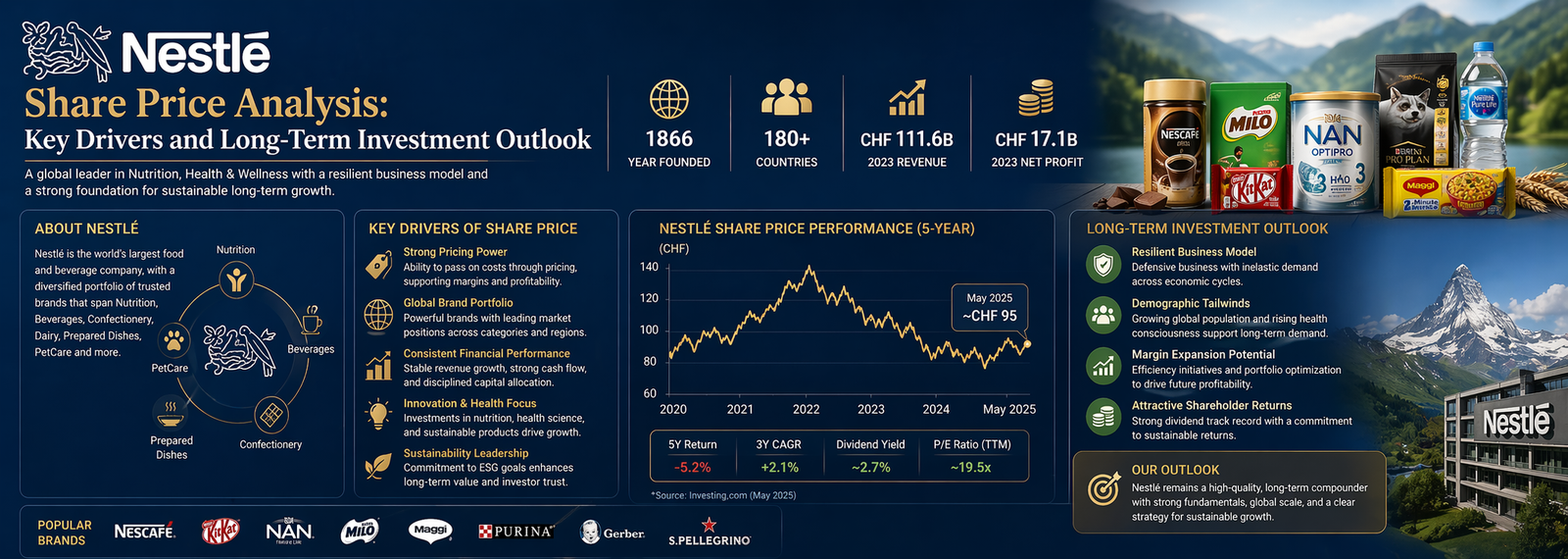
💡 Nestlé Share Price Analysis: Key Drivers and Long-Term Investment Outlook
An in-depth analysis of Nestlé's share price, examining its market position, dividend history, and the factors driving its long-term valuation for investors.
Nestlé is one of the world’s largest food and beverage companies, and its share price is influenced by several business and market factors such as global demand, commodity costs, and currency movements. For investors, the stock serves as a defensive cornerstone, offering stability during market volatility while capturing growth from high-demand sectors like PetCare, Coffee, and Health Science. While short-term fluctuations occur due to commodity price spikes and currency shifts, Nestlé’s long-term valuation is anchored by its consistent organic growth and strategic portfolio transformation.
The Role of Nestlé in the Global Consumer Goods Market
Nestlé is more than just a food company; it is a massive ecosystem of brands that touch almost every aspect of daily life. From Nescafé and Maggi to Purina and Gerber, the company operates in over 180 countries. This geographic and product diversity is its greatest strength. When one region faces economic stagnation, growth in emerging markets—particularly India and Southeast Asia—often compensates for the lag.
In the global consumer staples sector, Nestlé is often used as a benchmark for operational efficiency. Its scale allows it to negotiate better prices with suppliers and invest heavily in R&D, ensuring it stays ahead of changing consumer preferences, such as the shift toward plant-based diets and premium health supplements.
Understanding the Nestlé (NESN) Listing and Currency Dynamics
The primary listing for Nestlé (ticker: NESN) is on the SIX Swiss Exchange. For international investors, this introduces a layer of currency consideration. The Swiss Franc (CHF) is traditionally viewed as a "safe haven" currency. When global markets are turbulent, the CHF tends to appreciate, which can provide an added layer of protection for the value of the investment.
However, for a company that earns the majority of its revenue outside of Switzerland, a strong Franc can be a double-edged sword. When Nestlé brings its global earnings back to Switzerland, a strong CHF can make those earnings look smaller on paper. Investors must distinguish between "organic growth" (actual sales performance) and "reported growth" (which includes these currency fluctuations).
Core Factors Influencing Nestlé’s Share Price Volatility
While Nestlé is known for low volatility, several factors can cause the share price to move significantly in the short term:
- Consumer Sentiment: Shifts in how people view processed foods or sugar-heavy products can impact sales volumes.
- Regulatory Changes: New labeling laws or sugar taxes in major markets like the EU or the US can force expensive product reformulations.
- Supply Chain Disruptions: As a massive logistics operation, any hitch in global shipping or local distribution can temporarily squeeze margins.
The Impact of Organic Growth and Portfolio Transformation on Valuation
Nestlé has spent the last decade aggressively pruning its portfolio. It has moved away from slow-growth, low-margin businesses (like certain confectionery brands or mass-market bottled water in some regions) and doubled down on high-growth categories. This transformation is a major catalyst for its share price.
Categories like PetCare (Purina) and Coffee (Nespresso and Starbucks at Home) carry higher margins and exhibit stronger customer loyalty. When Nestlé reports high "Organic Revenue Growth," it signals to the market that the company is successfully selling more products and at higher prices, rather than just growing through acquisitions. This organic strength is what typically justifies a higher Price-to-Earnings (P/E) multiple compared to its competitors.

Dividend Reliability: Why Income Investors Track Nestlé’s Performance
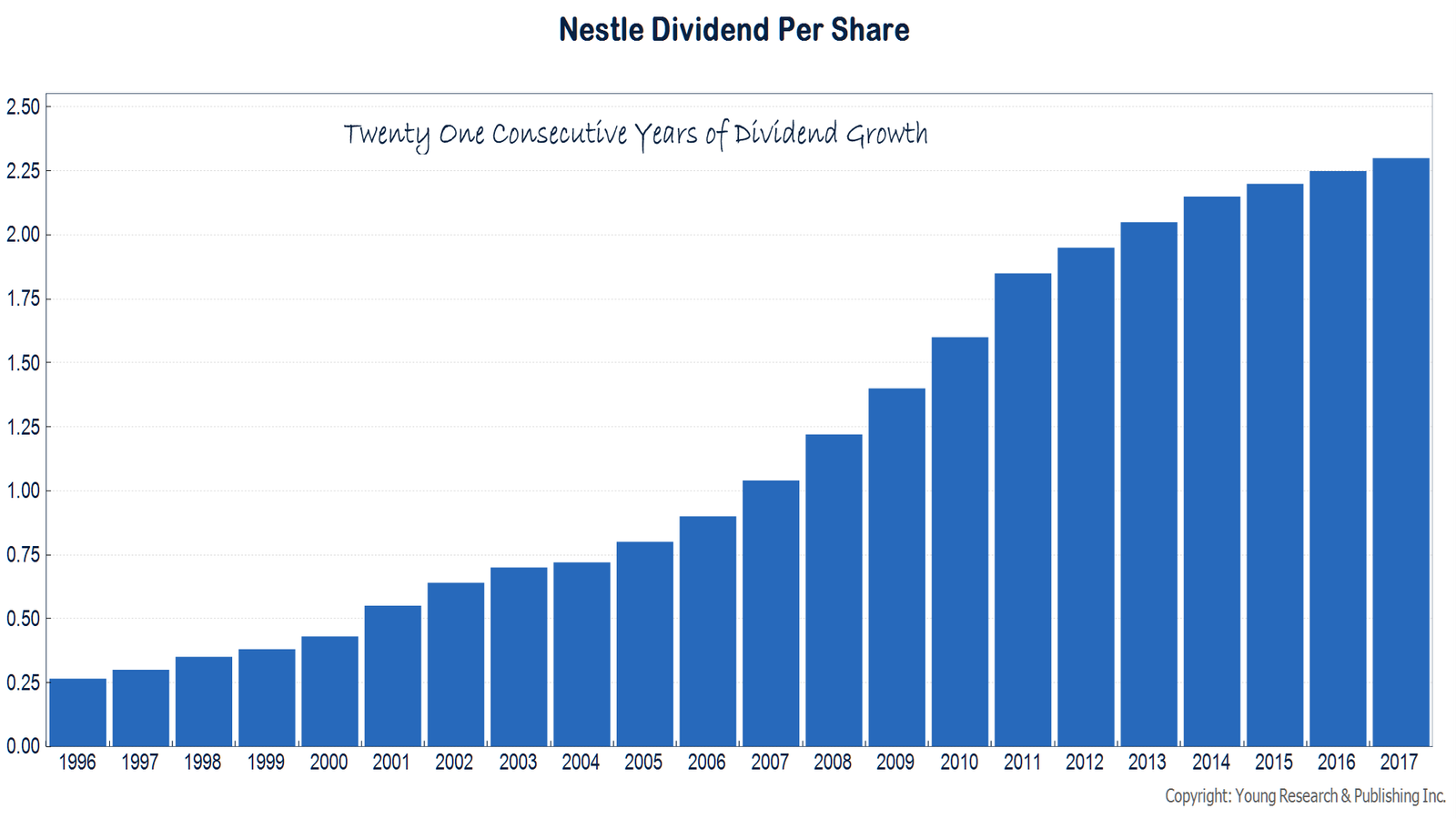
Nestlé is a favorite among "income seekers" because of its dividend track record. The company has a policy of maintaining or increasing its dividend every year in Swiss Francs. This consistency makes it a proxy for a high-quality bond in many portfolios.
For investors in India, looking at Nestlé India (NESTLEIND) provides a similar story. The Indian subsidiary has consistently rewarded shareholders with healthy payouts, backed by record sales and double-digit profit growth. This reliability builds a "floor" for the share price; even when the market drops, the dividend yield becomes more attractive, drawing buyers back in.
Macroeconomic Headwinds: Inflation, Commodity Costs, and Interest Rates
No company is immune to the broader economy. Nestlé faces three main headwinds that investors should monitor:
- Input Costs: Prices for coffee beans, cocoa, sugar, and dairy fluctuate wildly. If Nestlé cannot raise prices fast enough to cover these costs, its profit margins shrink.
- Inflation: While Nestlé has "pricing power," there is a limit to how much consumers will pay for a premium coffee pod or a bag of pet food during a cost-of-living crisis.
- Interest Rates: When interest rates rise, investors can get better returns from "risk-free" assets like government bonds. This often leads to a sell-off in high-quality dividend stocks like Nestlé as investors rotate their capital.
Evaluating Nestlé’s Valuation Metrics: P/E Ratios and Yield Spreads
When analyzing the share price, the P/E ratio is the most common tool. Nestlé typically trades at a premium (often between 20x and 25x earnings). This premium exists because the market perceives Nestlé as a lower-risk investment.
Another key metric is the Dividend Yield Spread. This is the difference between Nestlé’s dividend yield and the yield on 10-year government bonds. If the spread is narrow, the stock might be considered overvalued. If the spread is wide, it may represent a buying opportunity for long-term holders. In the context of Nestlé India, the valuation is often even higher due to the massive growth potential of the Indian middle class, which justifies a higher growth premium.
Frequently Asked Questions About Investing in Nestlé
1. Is Nestlé a good stock for beginners?
Yes, it is often considered a "blue-chip" stock. It offers a balance of stability and moderate growth, making it suitable for those who want to avoid the high risk of tech or startup stocks.
2. Does Nestlé India perform differently than Nestlé SA (Global)?
While they are linked, Nestlé India is a separate listing on the NSE and BSE. It often grows faster than the global parent because the Indian market is still expanding rapidly in terms of consumption and urbanization.
3. How do commodity prices like cocoa affect the share price?
Significant increases in cocoa or coffee prices can lead to short-term dips in the share price if investors fear that Nestlé won't be able to pass those costs on to consumers immediately.
4. Can I buy Nestlé (NESN) shares from India?
Yes, Indian investors can buy the Swiss-listed shares through international brokerage accounts that offer access to the SIX Swiss Exchange, subject to LRS (Liberalised Remittance Scheme) limits.
Conclusion: Assessing Nestlé’s Position in a Diversified Portfolio
Investing in Nestlé is essentially a Many investors include Nestlé in diversified portfolios due to its long-term presence in global markets. The company’s share price reflects a unique blend of defensive stability and strategic evolution. While it may not offer the explosive 100% returns seen in the tech sector, its ability to generate cash and grow dividends through economic cycles makes it an essential component of a diversified portfolio. For those looking at the Indian market specifically, the subsidiary's record sales and profit growth highlight the immense potential of localized operations within a global framework. As long as people continue to drink coffee, feed their pets, and seek convenient nutrition, Nestlé’s fundamental value proposition remains intact.
Important Note: Financial Disclaimer: This content is for educational purposes only and does not constitute professional financial advice. Always consult with a certified financial planner before making investment decisions.





Comments 0
Leave a Reply
Your email address will not be published. Required fields are marked *
Be the first to share your thoughts!