
💡 Nico Rosberg: Strategic Analysis of Formula 1 Success
An authoritative analysis of Nico Rosberg’s Formula 1 career, his 2016 World Championship victory, and his strategic transition into sustainability and venture capital.
Executive Summary
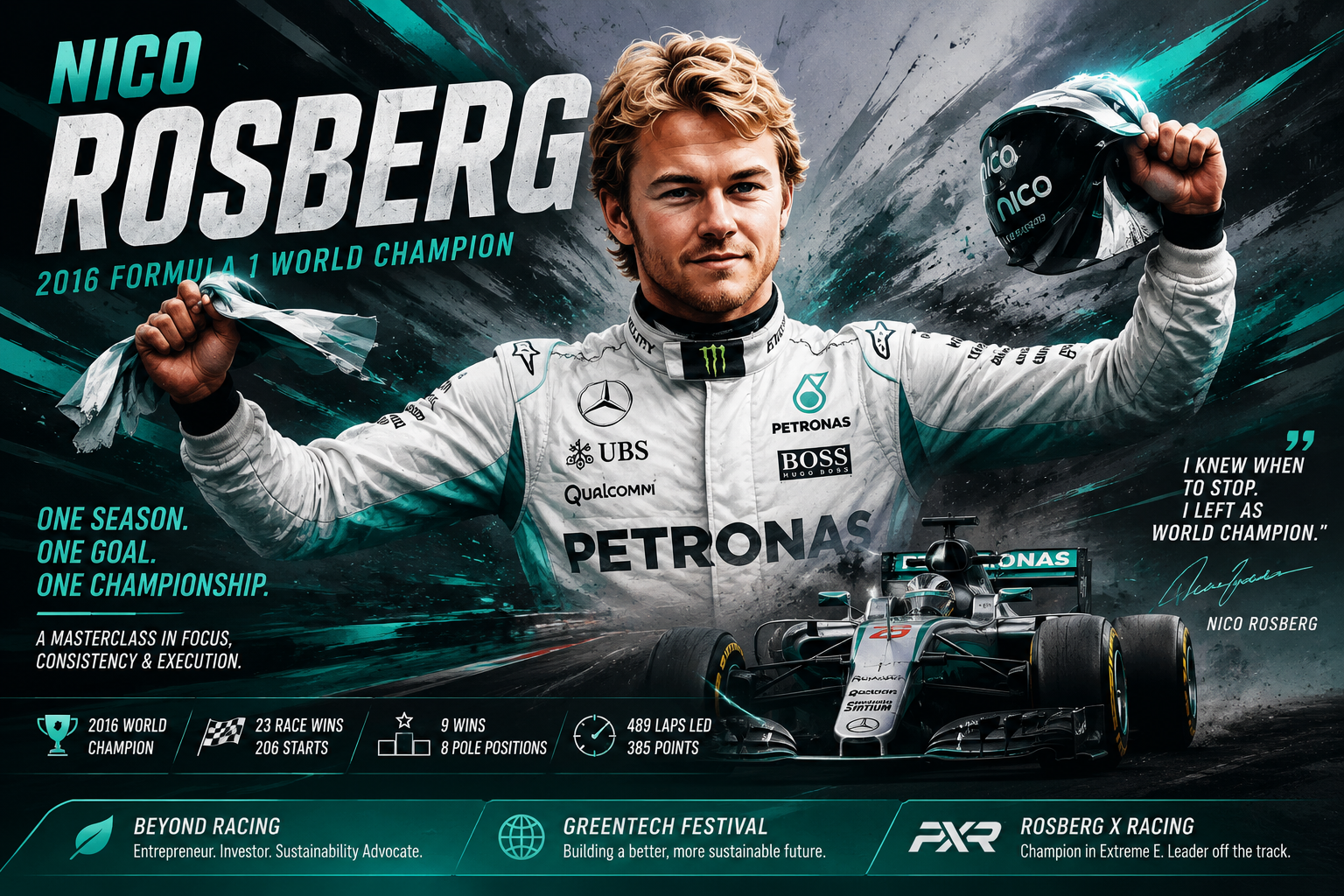
Nico Rosberg remains one of the most analytically fascinating figures in modern Formula 1. He reached the pinnacle of the sport by winning the 2016 FIA Formula One World Championship, defeating Mercedes teammate Lewis Hamilton by just five points before announcing his retirement five days later. His championship campaign produced nine victories and eight pole positions, combining exceptional qualifying consistency, race management, reliability and sustained pressure throughout the season.
Beyond Formula 1, Rosberg has built a second career focused on sustainability, technology, investment and entrepreneurship. His transition from elite motorsport to business and sustainability demonstrates how high-performance habits, strategic thinking and personal branding can be applied beyond professional sport.
Introduction: The Calculated Champion
Nico Rosberg's Formula 1 legacy is defined by an exceptionally disciplined pursuit of excellence. Rather than relying solely on outright speed, he placed considerable emphasis on preparation, consistency, technical understanding and performance optimization. His Formula 1 career spanned 11 seasons, 206 race starts and 23 victories, culminating in his 2016 World Championship with Mercedes.
The 2016 season was particularly significant because Rosberg successfully challenged and ultimately defeated his highly accomplished teammate Lewis Hamilton. His approach combined strong qualifying performances, careful race management and the ability to maintain championship pressure over a 21-race season.
The Deep Dive: Engineering the 2016 Championship
To understand Rosberg's championship success, the 2016 season should be examined through a combination of performance statistics and strategic consistency.
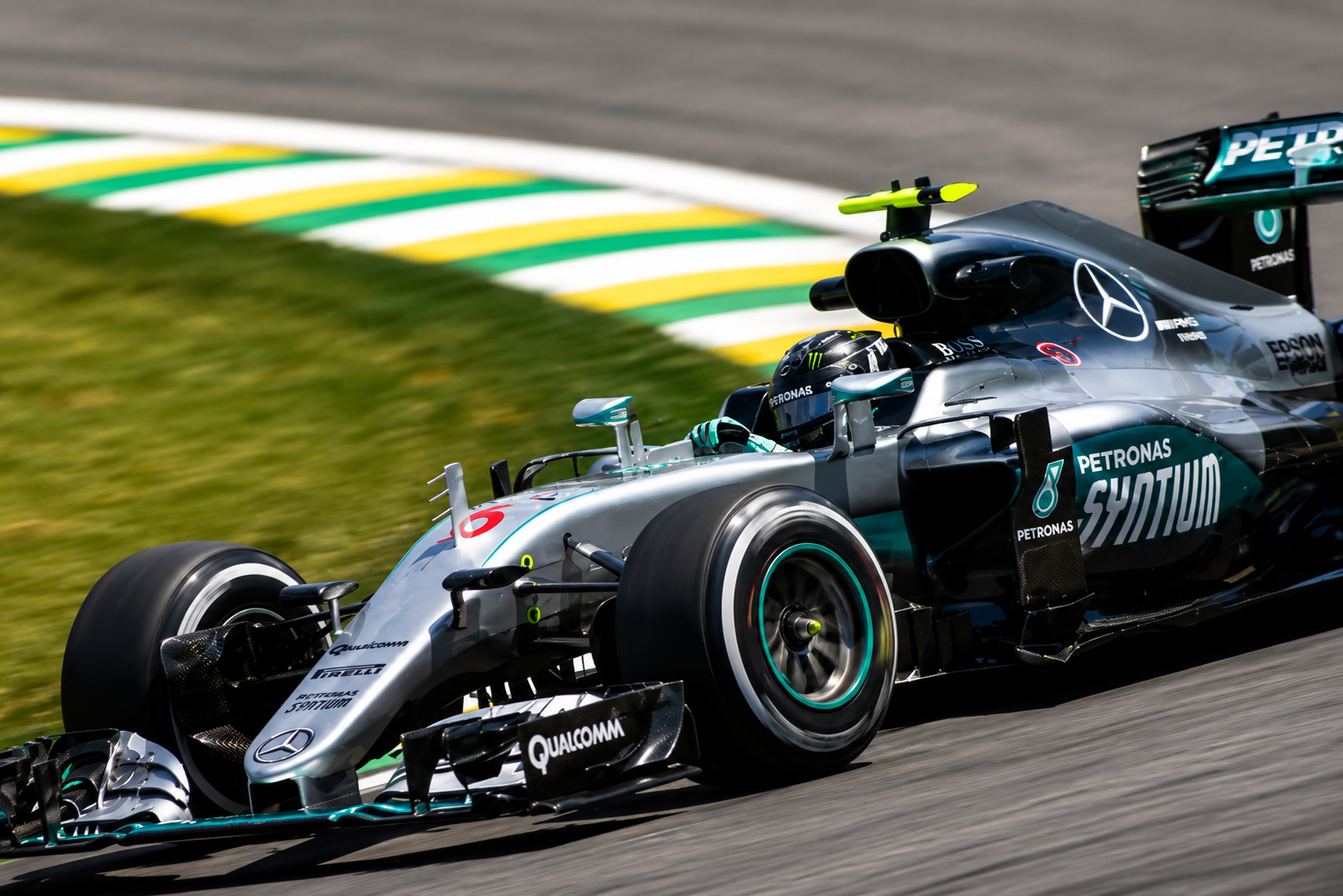
Rosberg began the season with four consecutive victories in Australia, Bahrain, China and Russia, establishing an early championship advantage. His ability to convert strong qualifying performances into race victories gave him an important points cushion during the opening phase of the season.
His championship campaign was built not only on outright pace but also on consistency, reliability management and effective execution across the season.
Key Performance Indicators from 2016:
-
Total Points: 385
-
Race Wins: 9
-
Pole Positions: 8
-
Podium Finishes: 16 of 21 races
-
Podium Finish Rate: 76.2%
-
Laps Led: 489
-
Front-Row Starts: 20
Formula 1's official season statistics record Rosberg as the driver with 489 laps led in 2016 and 20 front-row starts, highlighting the exceptional qualifying consistency that supported his championship campaign.
Rosberg's success was a masterclass in consistency, preparation and pressure management. His approach to performance extended beyond driving technique, with a strong focus on physical preparation, recovery, mental preparation and attention to detail.
The defining characteristic of his 2016 campaign was his ability to maintain competitive performance while managing the demands of a championship battle against Hamilton. His season demonstrated that Formula 1 championships are not determined solely by outright speed; consistency, execution, reliability and decision-making can be equally important.
Rosberg ultimately secured the championship with 385 points, five points ahead of Hamilton, before making the extraordinary decision to retire from Formula 1 as the reigning World Champion. Formula 1 records that his championship pursuit came at a significant personal cost and that he announced his retirement five days after winning the title.
The Pivot: From the Cockpit to the Boardroom
Rosberg's retirement five days after winning the 2016 World Championship was one of the most unexpected decisions in modern Formula 1. Rather than continuing his racing career, he redirected his attention toward entrepreneurship, sustainability, investment and technology.
Rosberg became a co-founder of the GREENTECH FESTIVAL, alongside Marco Voigt, creating a platform focused on sustainable technologies, innovation and climate-related solutions. The festival brings together companies, startups, investors, researchers and policymakers to showcase and discuss developments in green technology.
His post-racing activities have also included investments and involvement in technology-focused businesses, particularly in areas such as sustainable mobility and climate technology. His investment activities reflect a broader interest in businesses positioned around technological change, electrification and sustainability.
This transition illustrates how an elite athlete can apply skills developed in high-performance competition—including disciplined preparation, risk assessment, long-term planning and decision-making—to entrepreneurship and investment.
Strategic Team Ownership: Rosberg X Racing
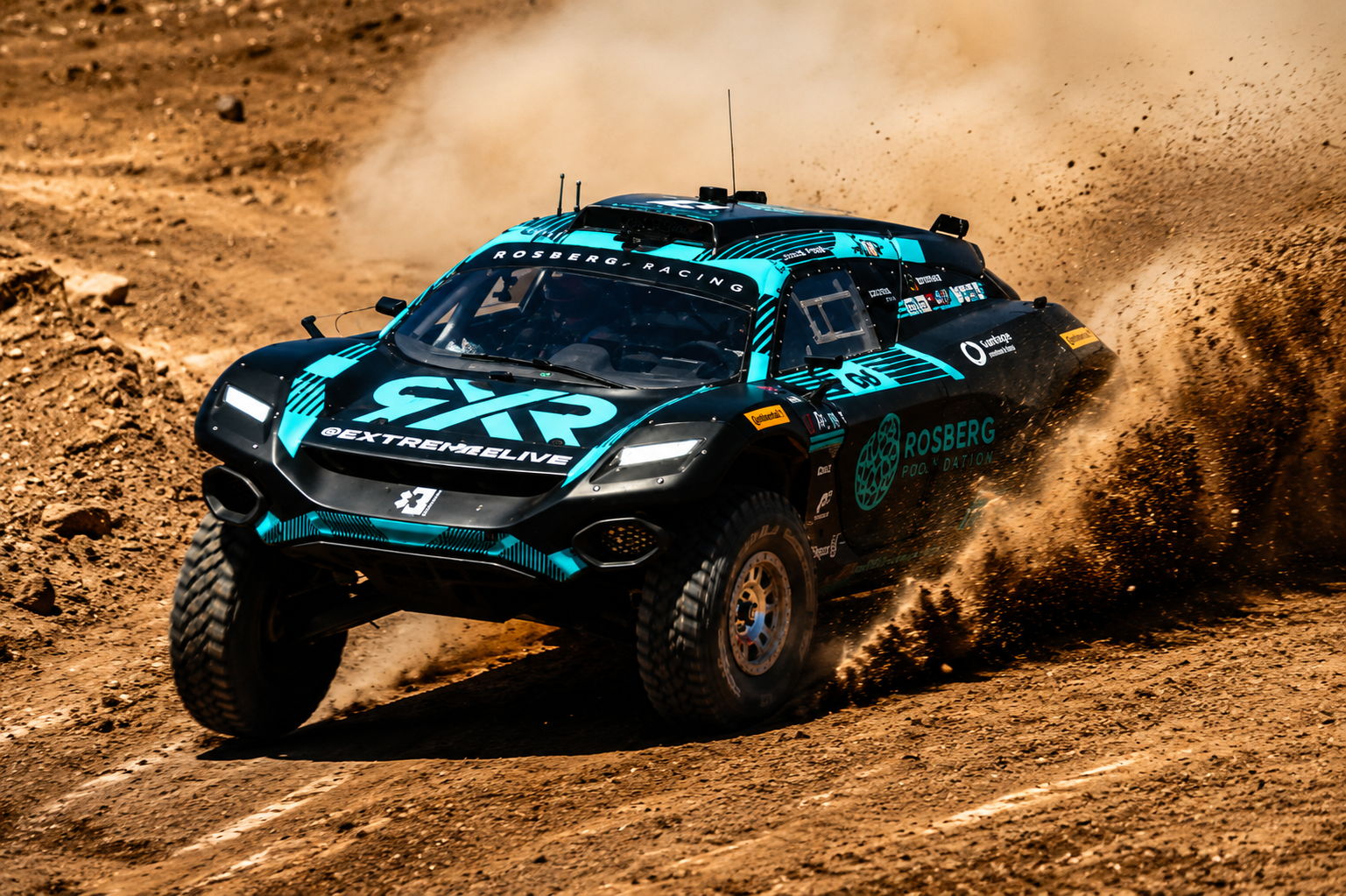
In 2020, Rosberg entered the emerging electric off-road racing series Extreme E as the founder of Rosberg X Racing (RXR). The team combined competitive motorsport with a strong focus on sustainability and environmental awareness.
RXR made an immediate competitive impact by winning the inaugural Extreme E championship in 2021, with drivers Johan Kristoffersson and Molly Taylor. The achievement demonstrated Rosberg's ability to build and lead a competitive racing organization after stepping away from the driver's seat.
The team's approach combines experienced drivers, engineering expertise, race strategy and data-driven preparation to compete in challenging off-road environments. RXR also competed directly against other high-profile Extreme E organizations, including Lewis Hamilton's X44 Vida Carbon Racing team.
Rosberg's move into team ownership therefore represents more than a return to motorsport. It demonstrates a broader evolution from driver to team leader, entrepreneur and sustainability advocate, allowing him to remain connected to competitive racing while pursuing interests beyond Formula 1.
What This Means For You
Nico Rosberg's career offers several useful lessons for professionals across different industries.
First, the value of marginal gains: Rosberg placed significant emphasis on preparation, physical conditioning, technical feedback, consistency and performance optimization. His 2016 championship demonstrated how improvements across many small areas can contribute to elite-level performance.
Second, the importance of strategic decision-making: Rosberg chose to retire immediately after achieving his primary professional goal. His decision demonstrates that career success can also involve recognizing when to pursue a different opportunity rather than continuing along an established path.
Third, the importance of personal brand evolution: Following his Formula 1 career, Rosberg expanded his activities into sustainability, entrepreneurship, investment and media. His transition demonstrates how professionals can use their existing expertise and reputation to build opportunities in new fields.
Expert Verdict: The Future Outlook
Nico Rosberg's post-racing career has established him as a notable figure at the intersection of motorsport, sustainability, technology and entrepreneurship. His work through the GREENTECH FESTIVAL, investment activities and involvement in electric motorsport demonstrates a continued focus on emerging technologies and sustainable innovation.
Rather than assuming a specific future trajectory, Rosberg's career suggests that his influence is likely to remain connected to sustainability, mobility, technology and entrepreneurship. The continued development of these sectors could create further opportunities for him to expand his role as an investor, entrepreneur, commentator and advocate for sustainable innovation.
His broader career provides a useful example of how elite athletes can transition from competition into long-term professional roles while maintaining a connection to their original field.
FAQ: Authority Insights
-
Why did Nico Rosberg retire immediately after winning the 2016 title?
Rosberg explained that winning the World Championship had been his ultimate professional goal and that the physical and psychological demands of competing at the highest level had been significant. After achieving his objective, he decided to step away from Formula 1 while still at the top of the sport. -
What is Nico Rosberg's net worth?
Rosberg's exact net worth is not publicly disclosed. Various media outlets have published estimates based on his Formula 1 earnings, business activities and investments, but these figures should be treated as estimates rather than verified financial data. -
What is the GREENTECH FESTIVAL?
The GREENTECH FESTIVAL is a sustainability and technology platform co-founded by Nico Rosberg and Marco Voigt. It brings together companies, startups, investors, innovators and policymakers to showcase and discuss sustainable technologies and solutions. -
How does Rosberg's racing record compare with Hamilton's?
Lewis Hamilton has won significantly more Formula 1 World Championships than Rosberg. However, Rosberg achieved one of the most notable accomplishments of his career by defeating Hamilton in the 2016 World Championship while they were Mercedes teammates. Jenson Button also finished ahead of Hamilton in the 2011 championship standings when both were teammates at McLaren. -
Is Nico Rosberg involved in Formula 1 today?
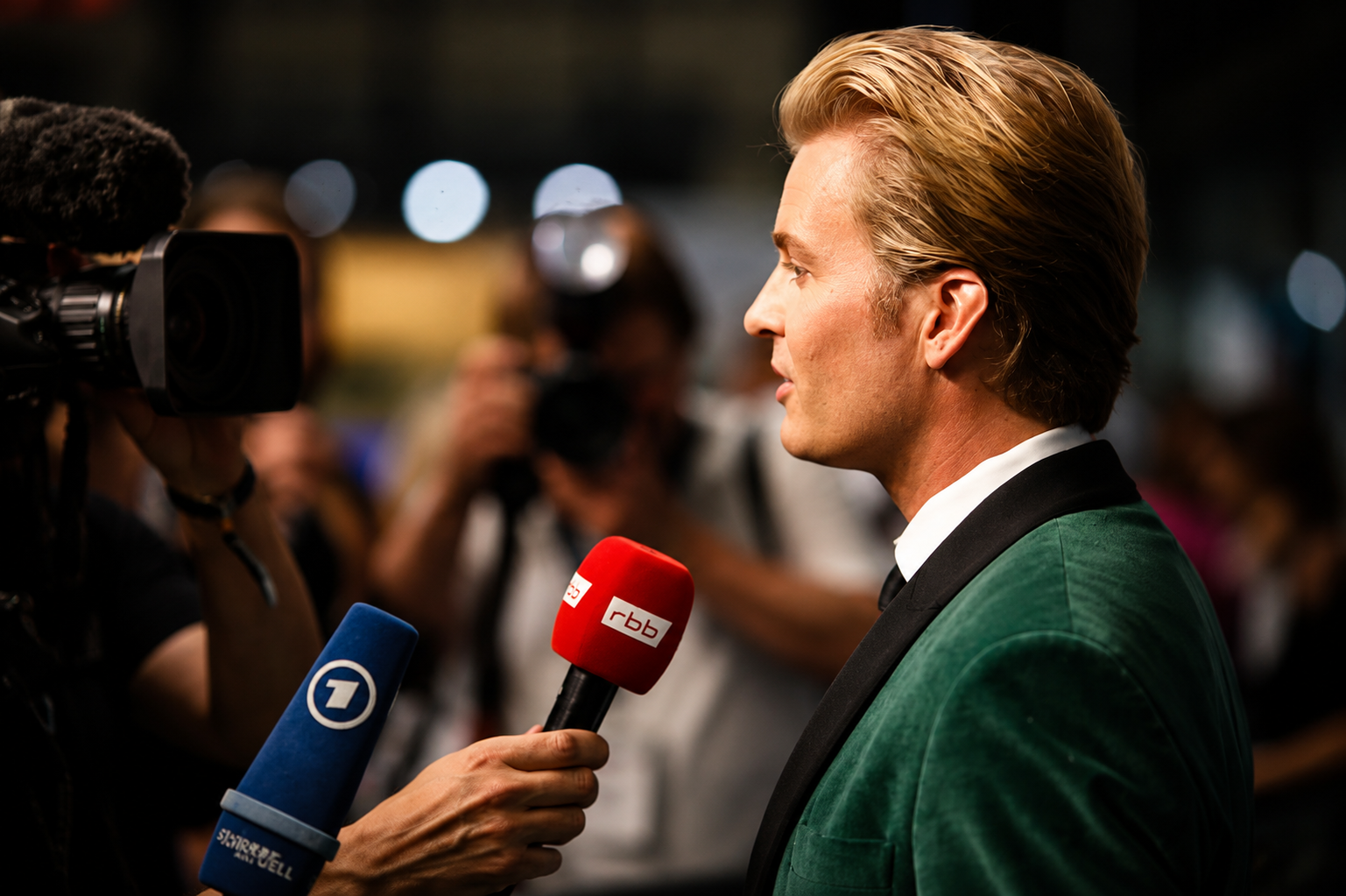
Rosberg remains connected to Formula 1 through motorsport media, analysis and public appearances. His exact broadcasting roles can change over time, so current broadcaster affiliations should be verified against the latest official announcements.
Conclusion: Strategic Takeaway
Nico Rosberg's journey from Formula 1 driver to World Champion, entrepreneur and sustainability advocate demonstrates the value of preparation, disciplined execution and strategic decision-making. His 2016 championship showed that sustained performance is built through consistency, technical understanding, mental preparation and attention to detail.
His decision to retire immediately after achieving his ultimate sporting objective also highlights the importance of recognizing when to pursue a new direction. Since leaving Formula 1, Rosberg has developed interests across sustainability, technology, investment and electric motorsport.
For professionals and aspiring leaders, the broader Rosberg model offers a useful lesson: high performance is not only about achieving a specific goal, but also about knowing how to adapt, evolve and apply the skills developed in one field to new opportunities.


Comments 0
Leave a Reply
Your email address will not be published. Required fields are marked *
Be the first to share your thoughts!