💡 Rythu: Strategic Analysis of Agricultural Authority
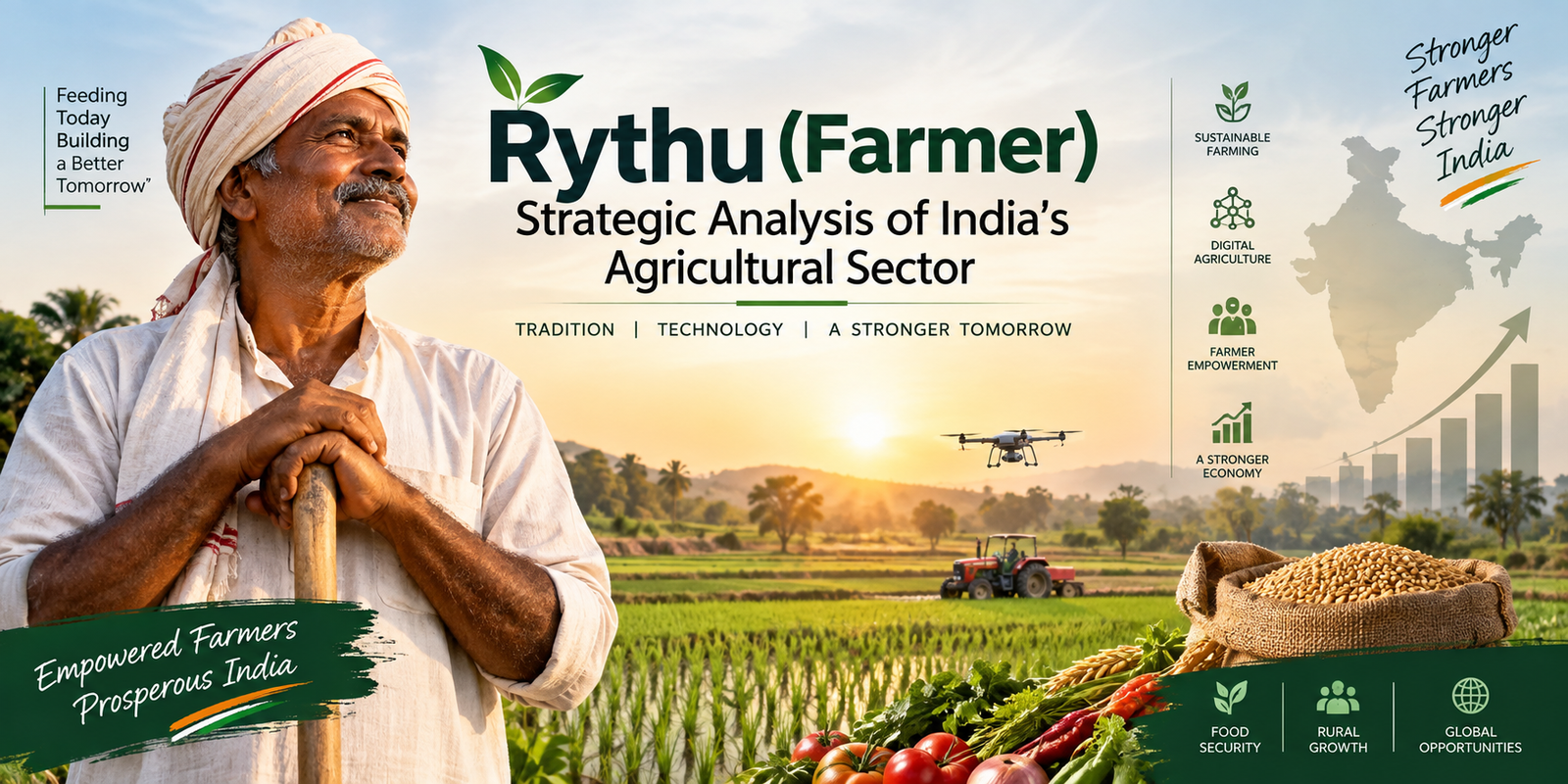
An in-depth analysis of the economic, technological, and structural frameworks governing the Indian agricultural sector and the modern farmer.
Executive Summary
The agricultural sector, represented by the Rythu (Farmer), remains a foundational pillar of the Indian economy. As of the 2023–24 fiscal year, agriculture and allied activities contributed approximately 18.2 percent to India’s Gross Value Added (GVA) at current prices. Despite the rapid growth of the service and manufacturing sectors, agriculture employs nearly 45 percent of the national workforce.
This analysis identifies a critical shift from traditional subsistence farming toward technology-driven commercial agriculture. Key data highlights include the expansion of the PM-KISAN scheme, which has disbursed over ₹2.8 lakh crore to more than 11 crore farmers, and the projected growth of the Indian AgTech market to $24 billion by 2025.
The strategic convergence of digital infrastructure and policy reform is redefining the role and authority of the farmer within the global supply chain.
Introduction
The term Rythu transcends its literal meaning of “farmer” and represents a complex socio-economic institution. In a nation where food security is closely connected with national security, the strategic importance of the agricultural professional cannot be overstated.
While the agricultural sector continues to face systemic challenges such as land fragmentation and climate volatility, it is undergoing a structural transformation. This transition is characterized by the integration of digital public infrastructure, precision farming, and revised credit mechanisms.
Understanding the modern farmer requires examining the relationship between traditional agricultural knowledge and modern economic indicators such as the PPI Strategic Analysis: Producer Price Index Authority, which directly influences the cost of agricultural inputs and the eventual market price of produce.
The Deep Dive: Economic and Structural Analysis
The economic authority of the farmer is rooted in production capacity and market integration.
India currently holds the position of the world’s largest producer of milk, pulses, and spices, and the second-largest producer of rice, wheat, and cotton.
However, the agricultural sector is characterized by a high percentage of small and marginal farmers, with average landholding sizes dropping below 1.08 hectares.
This fragmentation necessitates a shift toward Farmer Producer Organizations (FPOs), allowing farmers to pursue greater economies of scale and strengthen their position within the agricultural market.
Technological Integration and Digital Infrastructure
The modernization of India’s agricultural landscape is heavily dependent on the digital framework established by the state.
Under the leadership of officials like Ashwini Vaishnaw: Strategic Analysis of India's Digital and Infrastructure Growth, the push for AgriStack, a collection of technology building blocks, is creating a unified farmer identity.
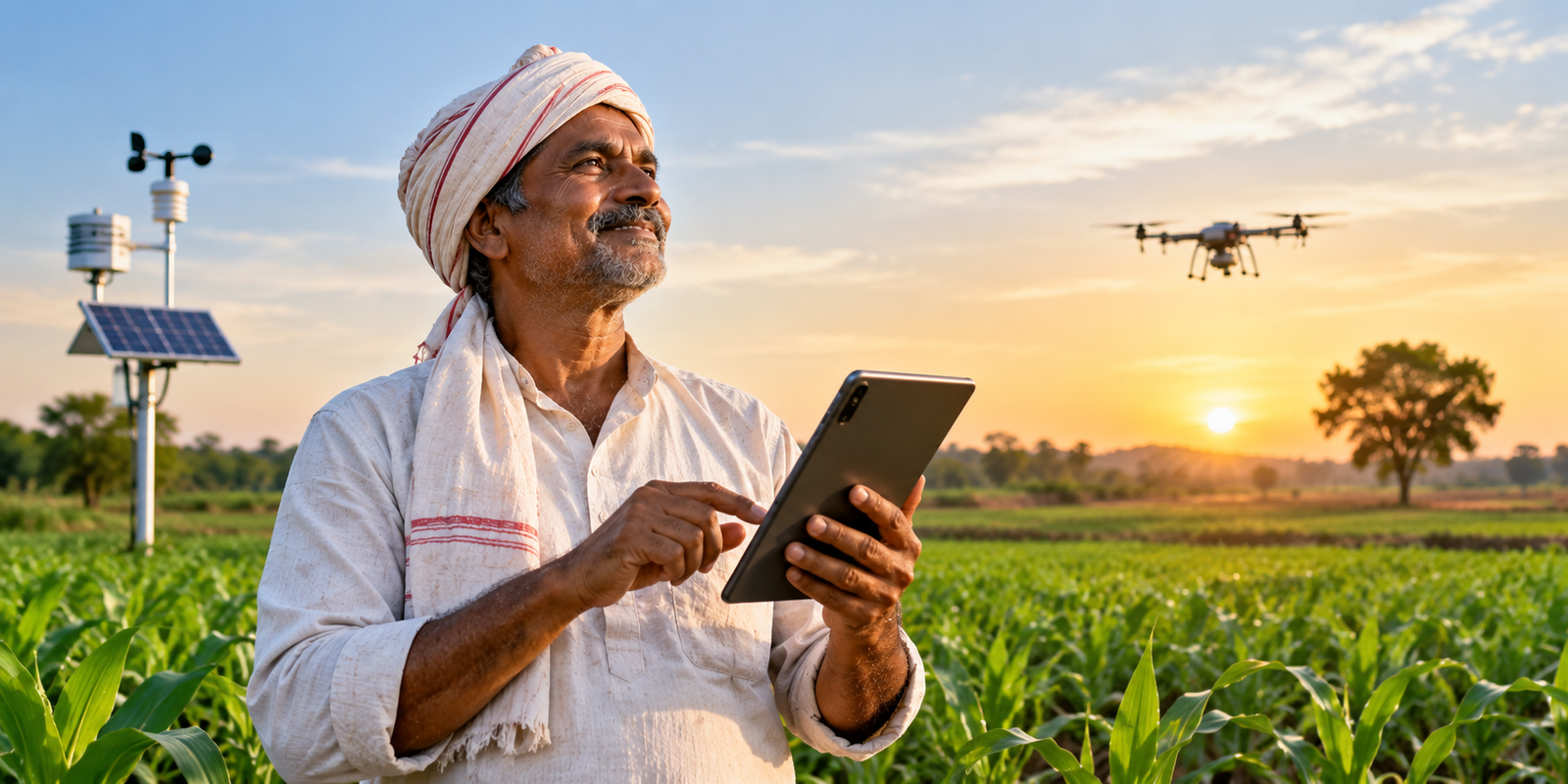
This digital ecosystem enables precision farming through satellite imagery, IoT devices for soil health monitoring, and AI-driven pest prediction models.
By 2026, the integration of 5G technology is expected to facilitate real-time data transmission for automated irrigation systems, potentially reducing water consumption by 30 percent while increasing crop yields by 20 percent.
Policy Frameworks and Financial Security
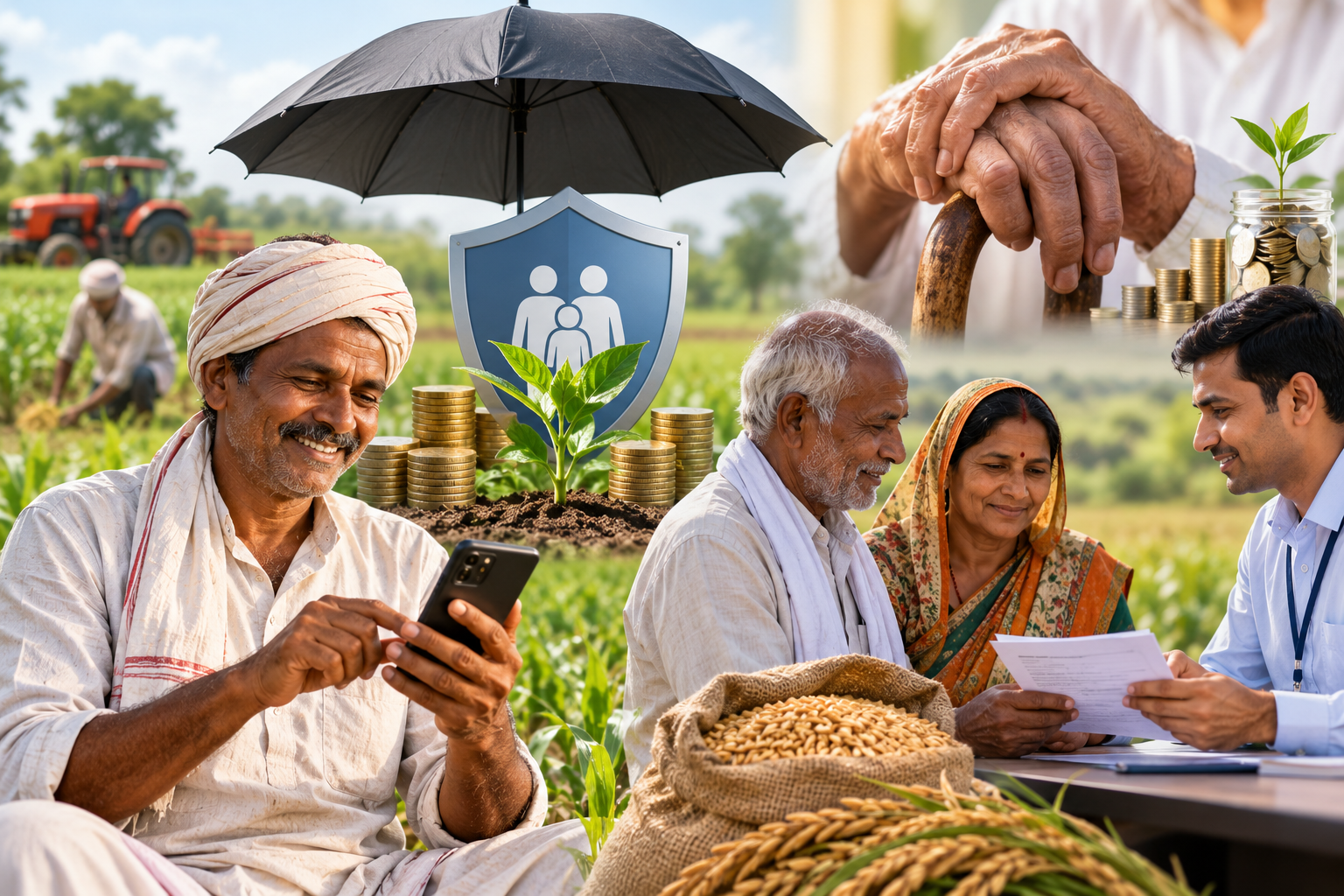
Government interventions in the agricultural sector have moved beyond simple subsidies toward structured income support and insurance mechanisms.
The Pradhan Mantri Fasal Bima Yojana (PMFBY) has provided a safety net for millions, processing claims worth billions during climate-related crop failures.
Furthermore, the discussion around social security for the rural workforce is gaining traction. While the urban workforce looks toward programs like the EPFO 2026 Salaried Employee Benefits, the agricultural sector is advocating for similar structured pension schemes for farmers to ensure long-term financial stability.
Logistics and Global Supply Chain Authority
The strategic value of the farmer is increasingly connected to the efficiency of the post-harvest supply chain. India loses approximately 15 to 20 percent of its agricultural produce due to inadequate cold chain infrastructure and logistics.
Investments in the Agriculture Infrastructure Fund (AIF) are targeting this gap by providing ₹1 lakh crore for post-harvest management projects.
By improving the shelf life of perishable products, farmers gain greater flexibility to time their market entry and reduce dependence on distress sales during harvest gluts.
This shift is essential for India to increase its share in the global agricultural export market, which currently stands at approximately 2.5 percent.
Climate Resilience and Sustainable Practices
Climate change poses one of the most significant threats to agricultural authority. With over 50 percent of India’s net sown area being rain-fed, dependence on the monsoon creates considerable volatility in agricultural production.
Strategic responses include the promotion of climate-resilient crop varieties and the adoption of Natural Farming practices.
The National Mission on Natural Farming aims to reach 1 crore farmers over the next few years, reducing dependence on chemical fertilizers and lowering the overall cost of production.
These practices can improve soil health while positioning Indian farmers as potential leaders in the global organic and sustainable produce market.
What This Means For You
For the average consumer and investor, the evolution of the farmer represents several important shifts.
First, the professionalization of agriculture can lead to better food quality and traceability through blockchain and digital logs.
Second, the growth of AgTech startups presents a significant investment opportunity as the agricultural sector seeks greater efficiency through technological innovation.
Finally, for the rural population, the transition from labor-intensive farming toward technology-enabled management offers a potential path toward higher income levels and an improved quality of life.
The stability of the agricultural sector remains a primary driver of rural demand, which in turn contributes to the broader national economy.
Expert Verdict and Future Outlook
The future of the Rythu lies in the transition from being primarily a producer of raw commodities to becoming a stakeholder within a value-added agricultural ecosystem.
Experts agree that the next decade will be increasingly defined by the democratization of technology. As smartphone penetration in rural areas exceeds 50 percent, the information asymmetry that once affected farmers is gradually dissolving.
The future outlook suggests a hybrid agricultural model in which traditional farming knowledge is supported by predictive analytics and modern technology.
We can also expect to see a significant rise in carbon credit farming, where farmers are compensated for adopting sustainable practices. This could create a secondary revenue stream and reduce the dependence of farmer income on purely volumetric agricultural output.
FAQ
What is the contribution of agriculture to India's GDP?
As of recent data, agriculture and allied sectors contribute approximately 18.2 percent to the national GVA, making the sector an important driver of the Indian economy.
How is technology changing the life of a modern farmer?
Through AgriStack and AI-driven tools, farmers can access real-time weather data, soil health reports, and direct market prices, helping reduce their reliance on middlemen.
What is the significance of FPOs?
Farmer Producer Organizations allow small-scale farmers to pool resources, access better credit, and negotiate higher prices for their produce through collective bargaining.
How does the Producer Price Index affect farmers?
The PPI tracks the average change over time in the selling prices received by domestic producers. For farmers, it reflects changes in the costs of agricultural inputs such as seeds, fertilizers, and fuel.
What are the main challenges facing the agricultural sector today?
Key challenges include climate change, decreasing landholding sizes, water scarcity, and the need for modernized post-harvest logistics.
Conclusion
The strategic authority of the farmer is being strengthened through a combination of digital empowerment and policy innovation. While the agricultural sector remains vulnerable to environmental factors, the shift toward data-driven agriculture is creating a more resilient foundation.
The evolution of the Rythu is not merely a rural development story. It is also a central component of India’s broader economic strategy.
By integrating farmers into the global digital and commercial ecosystem, India is working toward securing its food future while fostering a new era of rural entrepreneurship.
The long-term success of the agricultural sector will ultimately depend on continued investment in infrastructure and the effective adoption of sustainable technologies.






Comments 0
Leave a Reply
Your email address will not be published. Required fields are marked *
Be the first to share your thoughts!