
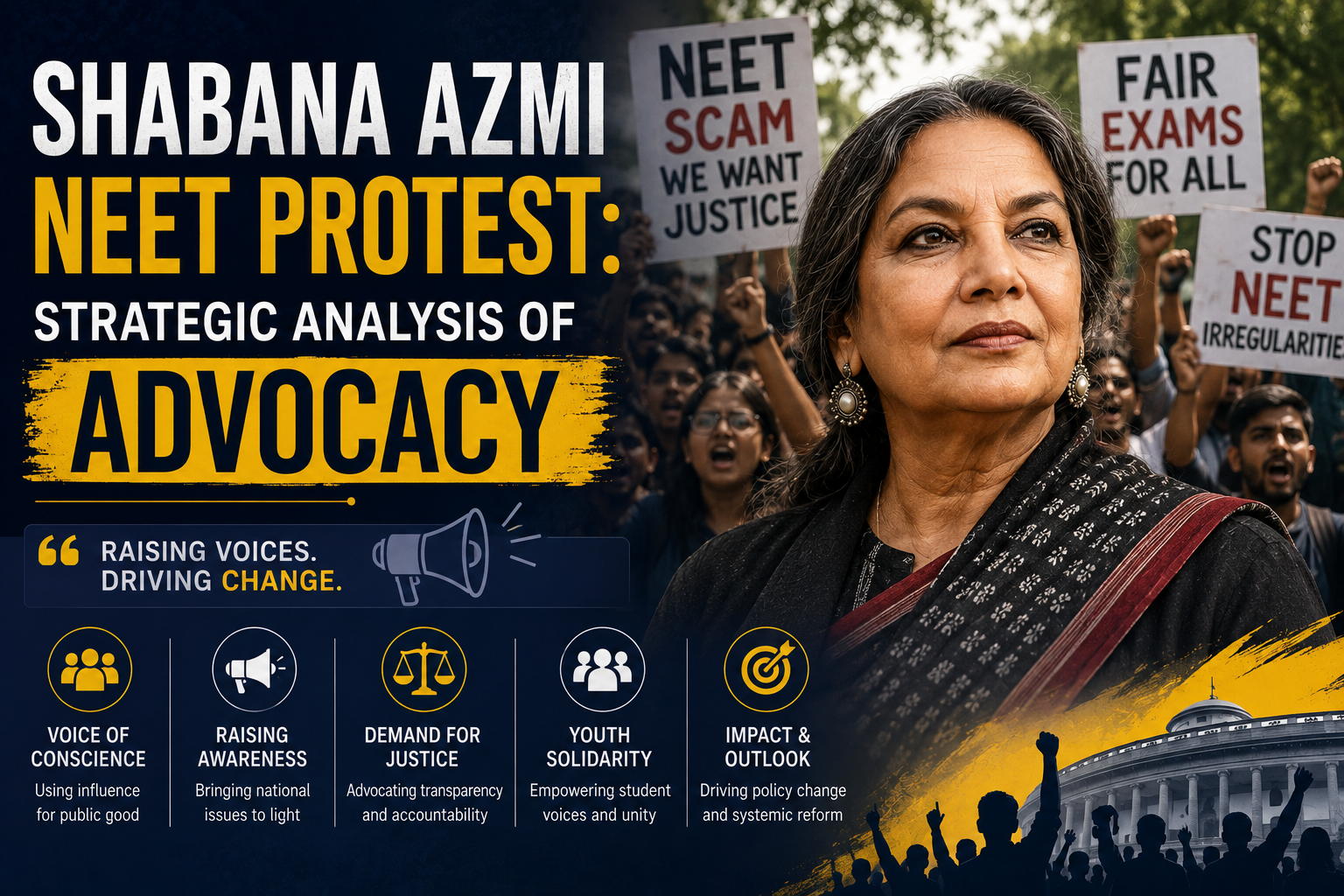
💡 Shabana Azmi NEET Protest: Strategic Analysis of Advocacy
An authoritative analysis of Shabana Azmi's involvement in the NEET-UG 2024 protests and the broader implications for Indian medical education reform.
Executive Summary
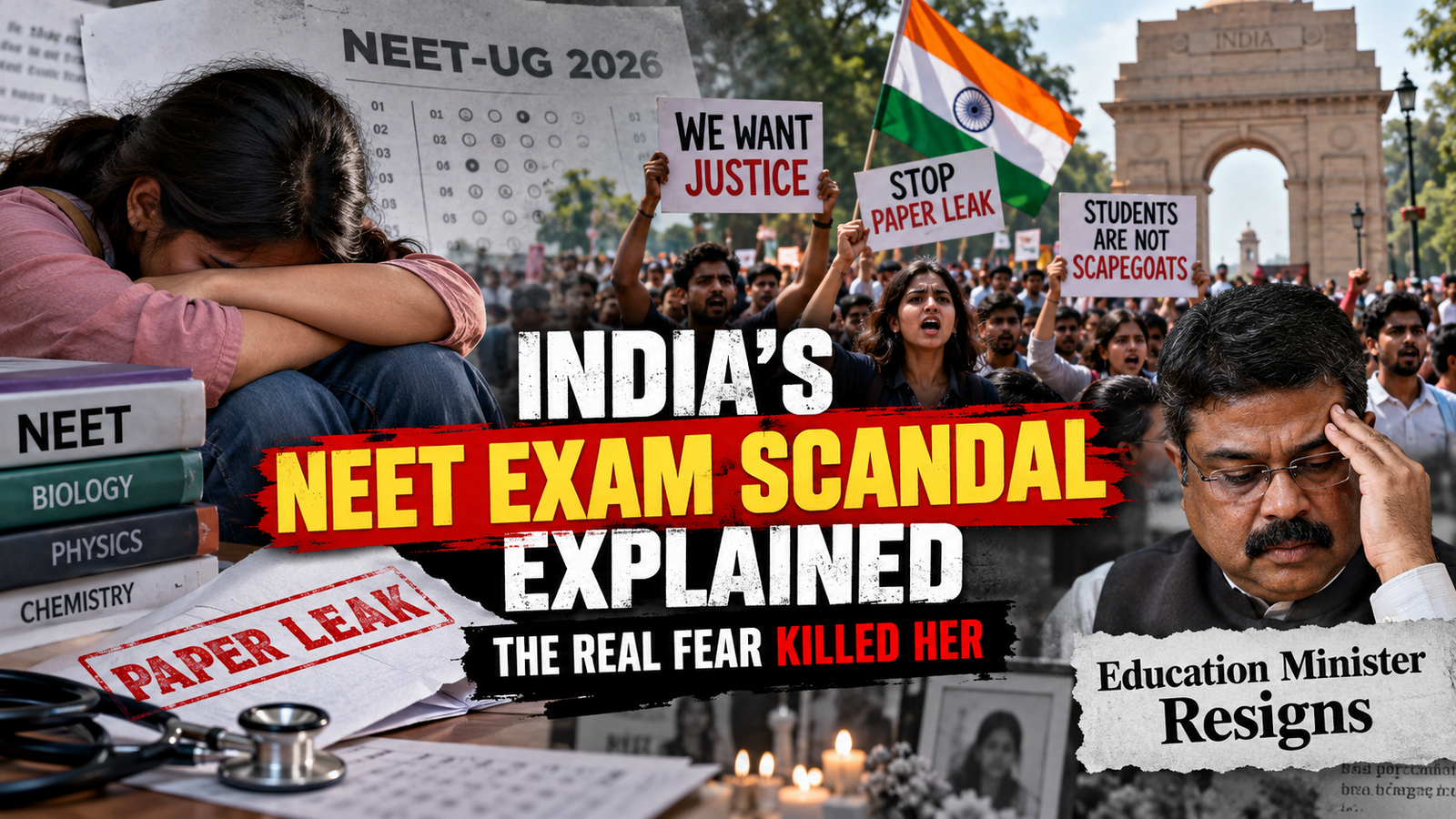
The 2024 National Eligibility cum Entrance Test (NEET-UG) has become a focal point of national debate, marked by allegations of paper leaks, unprecedented high scores, and systemic irregularities. Veteran actor and activist Shabana Azmi has emerged as a prominent voice in this discourse, lending her cultural capital to the demands of over 2.4 million students. Key data points highlight the severity of the crisis: 67 students achieved a perfect score of 720, a statistical anomaly compared to previous years where only two or three candidates reached the top rank. This strategic analysis examines the intersection of celebrity advocacy and institutional accountability, focusing on the demand for a transparent examination framework and the psychological impact on India's future medical professionals. The findings suggest that high-profile involvement like that of Azmi serves to catalyze public sentiment and pressure regulatory bodies toward structural reform.
Introduction
The integrity of competitive examinations in India is a critical pillar of social mobility and professional standards. When the results of the NEET-UG 2024 were announced on June 4, coincidentally the same day as the general election results, they sparked immediate controversy. The emergence of Shabana Azmi in the protest landscape was not merely a celebrity endorsement but a strategic alignment with a growing movement for educational justice. As a figure known for her long-standing commitment to social causes through the Mijwan Welfare Society and various human rights platforms, Azmi's critique of the National Testing Agency (NTA) brought the issue from the streets of Kota to the center of mainstream media attention. This article provides a comprehensive examination of the protest's origins, the specific grievances raised by the academic community, and the potential for long-term reform in the medical education sector.
The Deep Dive: Analyzing the NEET-UG 2024 Crisis
The scale of the 2024 NEET controversy is rooted in several statistical and procedural anomalies. For the first time in the history of the exam, which serves as the sole gateway to the NMC MBBS Seat Matrix: Strategic Analysis of Medical Education, 67 candidates secured the top rank. Furthermore, the distribution of marks showed unusual spikes in specific centers, particularly in Bihar and Gujarat, where local police investigations uncovered evidence of organized paper leaks. The National Testing Agency initially attributed the high scores to a simpler question paper and the awarding of grace marks to 1,563 students due to time loss at certain centers. However, this explanation failed to satisfy the legal and academic communities.
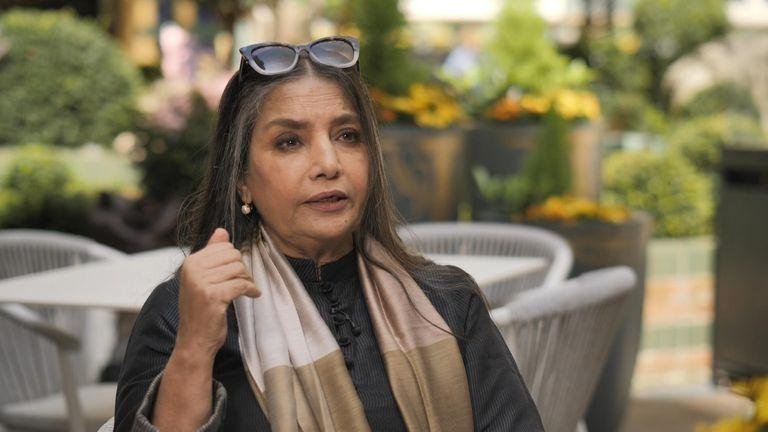
Shabana Azmi's involvement centered on the ethical obligation of the state to protect the meritocracy. Her public statements emphasized that the aspirations of millions of students cannot be sacrificed at the altar of administrative convenience. This form of advocacy is essential in a democratic setup where institutional failures often require a loud, authoritative voice to trigger judicial intervention. The Supreme Court of India eventually took cognizance of the matter, describing the sanctity of the exam as affected and demanding a thorough report from the NTA and the Central Bureau of Investigation (CBI).
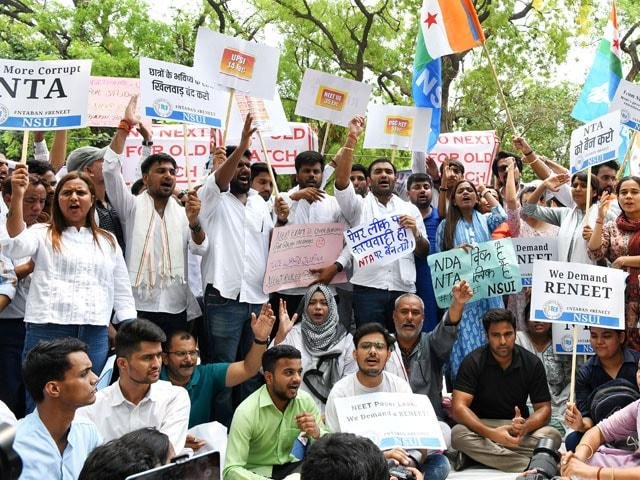
The response of the student community and the subsequent support from public figures like Azmi reflect a broader trend of collective resilience. This phenomenon is comparable to other instances where communities have rallied against systemic negligence, a theme explored in the Uvalde Texas: Strategic Analysis of Community Resilience. In both cases, the demand for accountability transcends the immediate incident, seeking a fundamental change in how institutions protect the vulnerable. For the NEET aspirants, the protest was about more than just a single exam; it was about the credibility of the entire medical profession in India.
Media coverage played a pivotal role in sustaining the momentum of the protest. The digital dissemination of information across platforms, including news segments on Hotstar: Strategic Analysis of the Streaming Powerhouse, ensured that the grievances reached a global audience. The use of social media by activists and celebrities created a feedback loop that kept the NTA under constant scrutiny, eventually leading to the removal of the NTA Director General and the formation of a high-level committee led by Dr. K. Radhakrishnan to suggest exam reforms.
What This Means For You
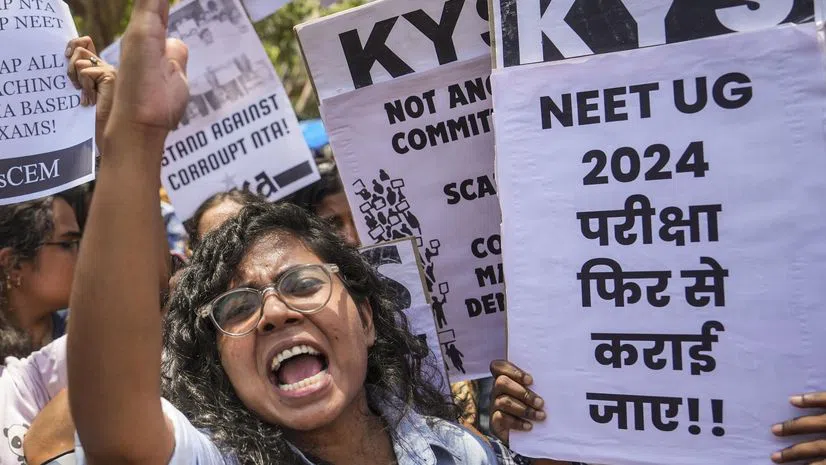
For students and parents navigating the current educational landscape, the NEET protest serves as a critical case study in advocacy and rights. It is essential to understand that systemic changes often follow public pressure. Here is a breakdown of what this situation implies for stakeholders:
- Verification of Information: In an era of rapid news, always rely on official notifications from the Ministry of Education and the Supreme Court rather than unverified social media claims.
- Legal Awareness: Understanding the basics of Public Interest Litigation (PIL) can empower student groups to seek judicial remedies when administrative processes fail.
- Psychological Resilience: The uncertainty of exam results and re-tests can take a toll on mental health. Seeking professional counseling and maintaining a support network is as important as academic preparation.
- Advocacy Matters: The involvement of public figures like Shabana Azmi demonstrates that your grievances are heard at the highest levels of society, validating the struggle for a fair system.
Expert Verdict and Future Outlook
The future of medical entrance examinations in India is at a crossroads. Industry experts suggest that the NTA must transition toward a more robust, technologically secure testing model. This includes the implementation of biometrics, AI-based proctoring, and perhaps a return to a decentralized or hybrid model of testing to minimize the risk of large-scale leaks. The expert consensus is that the 2024 crisis will lead to the most significant overhaul of the Indian examination system in a decade. We expect to see a more transparent process for awarding grace marks and a stricter legal framework to penalize paper leak syndicates. The role of activists will remain crucial in ensuring that these promised reforms are implemented in letter and spirit.
FAQ: Authoritative Answers on the NEET Protest
Why did Shabana Azmi join the NEET protest?
Shabana Azmi joined the protest to highlight the systemic failures of the NTA and to advocate for the rights of students who were affected by alleged paper leaks and unfair marking. Her involvement was aimed at ensuring the issue received national attention and prompted government action.
What were the main irregularities found in NEET-UG 2024?
The primary irregularities included the awarding of grace marks without a transparent formula, an unprecedented 67 students achieving perfect scores, and credible reports of paper leaks in several states which led to multiple arrests by the CBI.
How did the Supreme Court respond to the protests?
The Supreme Court acknowledged that the sanctity of the examination was compromised. While it did not cancel the entire exam for all 2.4 million students, it ordered a re-test for the 1,563 students who received grace marks and demanded a comprehensive investigation into the leak allegations.
What is the role of the NTA in this controversy?
The National Testing Agency (NTA) is the body responsible for conducting the exam. It faced severe criticism for its lack of transparency and initial denial of any leaks, leading to a loss of public trust and a subsequent leadership change within the organization.
What reforms are expected in the future?
Expected reforms include a more secure digital question paper delivery system, an overhaul of the grace marks policy, and the potential introduction of multi-stage exams to reduce the pressure and risk associated with a single-day national test.
Conclusion
The Shabana Azmi NEET protest represents a significant moment where cultural influence and student grievances converged to demand institutional integrity. The 2024 controversy has exposed deep-seated vulnerabilities in the national testing framework, necessitating a strategic shift toward transparency and technological security. As the government moves forward with the recommendations of high-level committees, the vigilance of public figures and the student community will be the primary safeguard for the future of medical education in India.




Comments 0
Leave a Reply
Your email address will not be published. Required fields are marked *
Be the first to share your thoughts!