
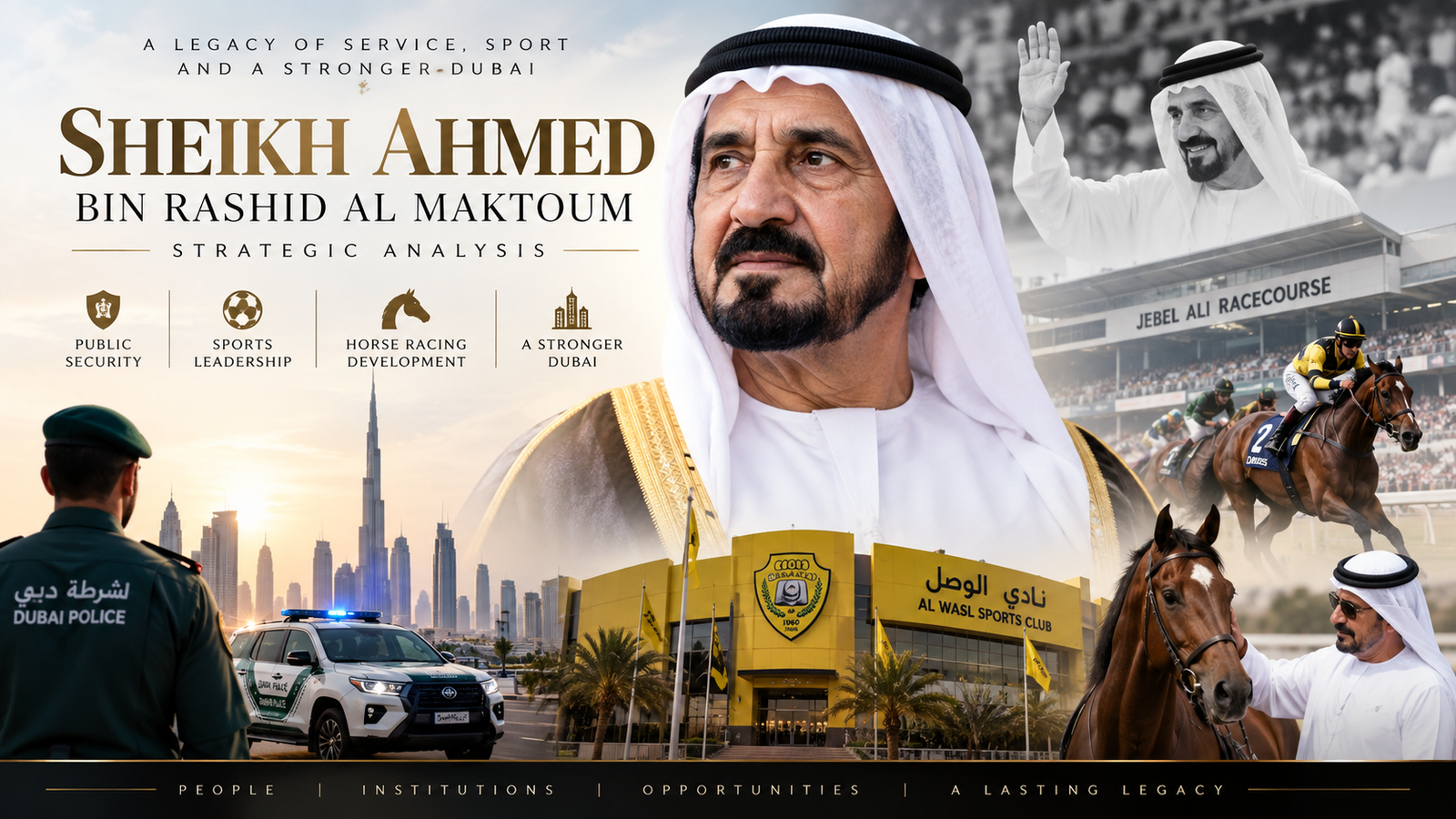
💡 Sheikh Ahmed bin Rashid Al Maktoum: Strategic Analysis
A comprehensive analysis of Sheikh Ahmed bin Rashid Al Maktoum’s influence on Dubai’s security infrastructure, sports governance, and international horse racing authority.
Executive Summary
Sheikh Ahmed bin Rashid Al Maktoum was a prominent member of Dubai’s ruling Al Maktoum family whose career spanned public security, military service, sports, business, and horse racing. He served as Deputy Chairman of Dubai Police and Public Security and was President of Al Wasl Sports Club. He was also closely associated with the development of Jebel Ali Racecourse and the wider UAE horse-racing industry.
Sheikh Ahmed was the fourth and youngest son of the late Sheikh Rashid bin Saeed Al Maktoum and the younger brother of Sheikh Mohammed bin Rashid Al Maktoum, Vice President and Prime Minister of the UAE and Ruler of Dubai. He graduated from the Royal Military Academy Sandhurst and subsequently served in Dubai’s military establishment.
His legacy extends across several areas of Dubai’s development. In sport, he maintained a decades-long association with Al Wasl, while in horse racing he established Jebel Ali Racecourse and supported institutions including Al Adiyat and the Dubai Horse Racing Centre.
Sheikh Ahmed bin Rashid Al Maktoum passed away on 21 September 2026 at the age of 76. The Dubai Ruler’s Court announced a 10-day official mourning period, with flags flown at half-mast across the emirate.
Introduction
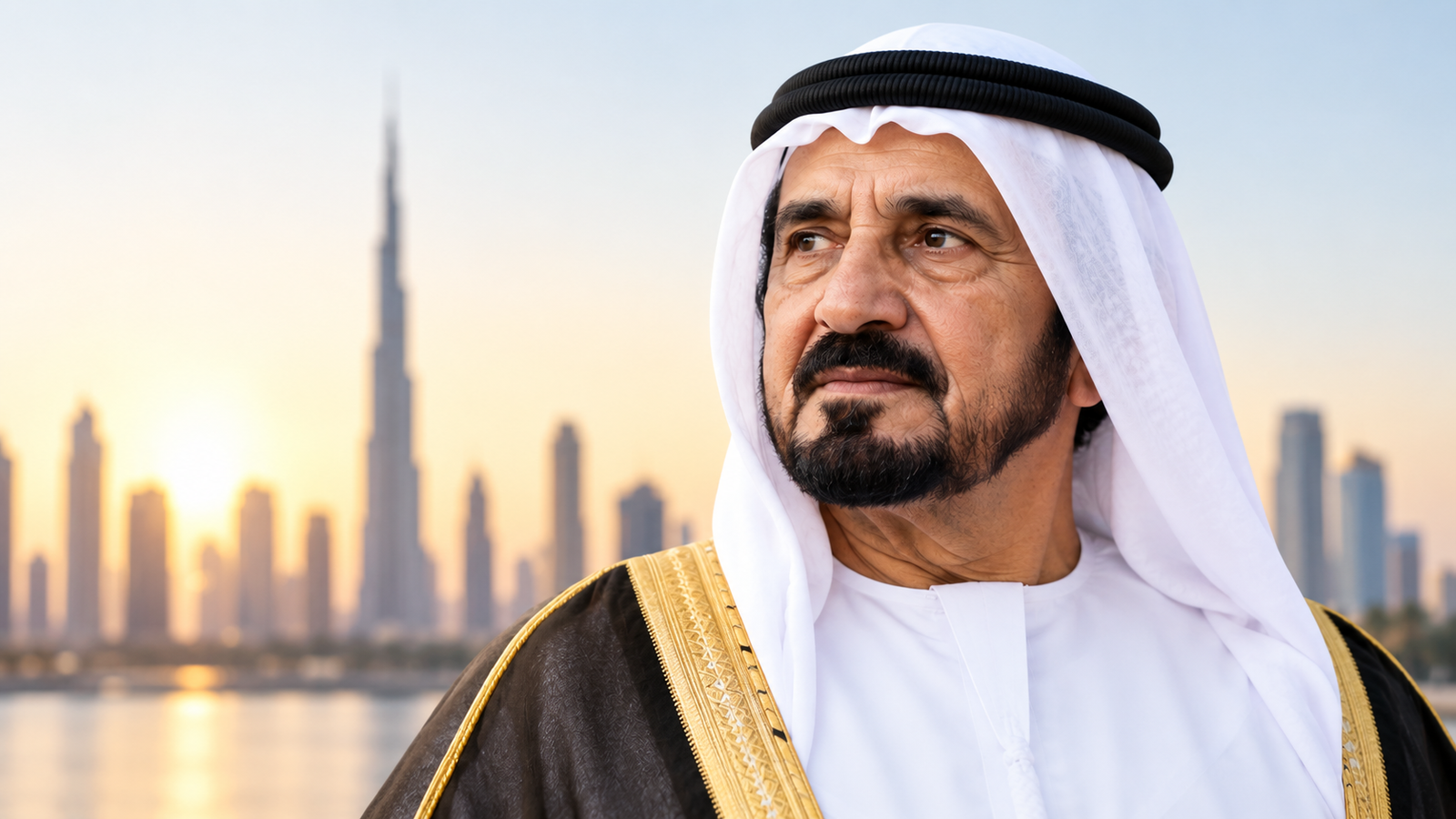
Sheikh Ahmed bin Rashid Al Maktoum was one of the longstanding figures associated with Dubai’s public institutions and sporting history. As a member of the Al Maktoum family, he held responsibilities across security, military affairs, business, and sport during several decades of Dubai’s rapid development.
His public career included senior responsibilities within Dubai Police and Public Security, while his sporting activities made him particularly well known through Al Wasl Sports Club and horse racing.
Unlike a purely political or economic leadership profile, Sheikh Ahmed’s career reflected the connection between public institutions, community sports, and the development of Dubai’s international sporting identity.
This analysis examines his documented contributions to these areas and considers his broader legacy following his death in September 2026.
Public Service and Security Responsibilities
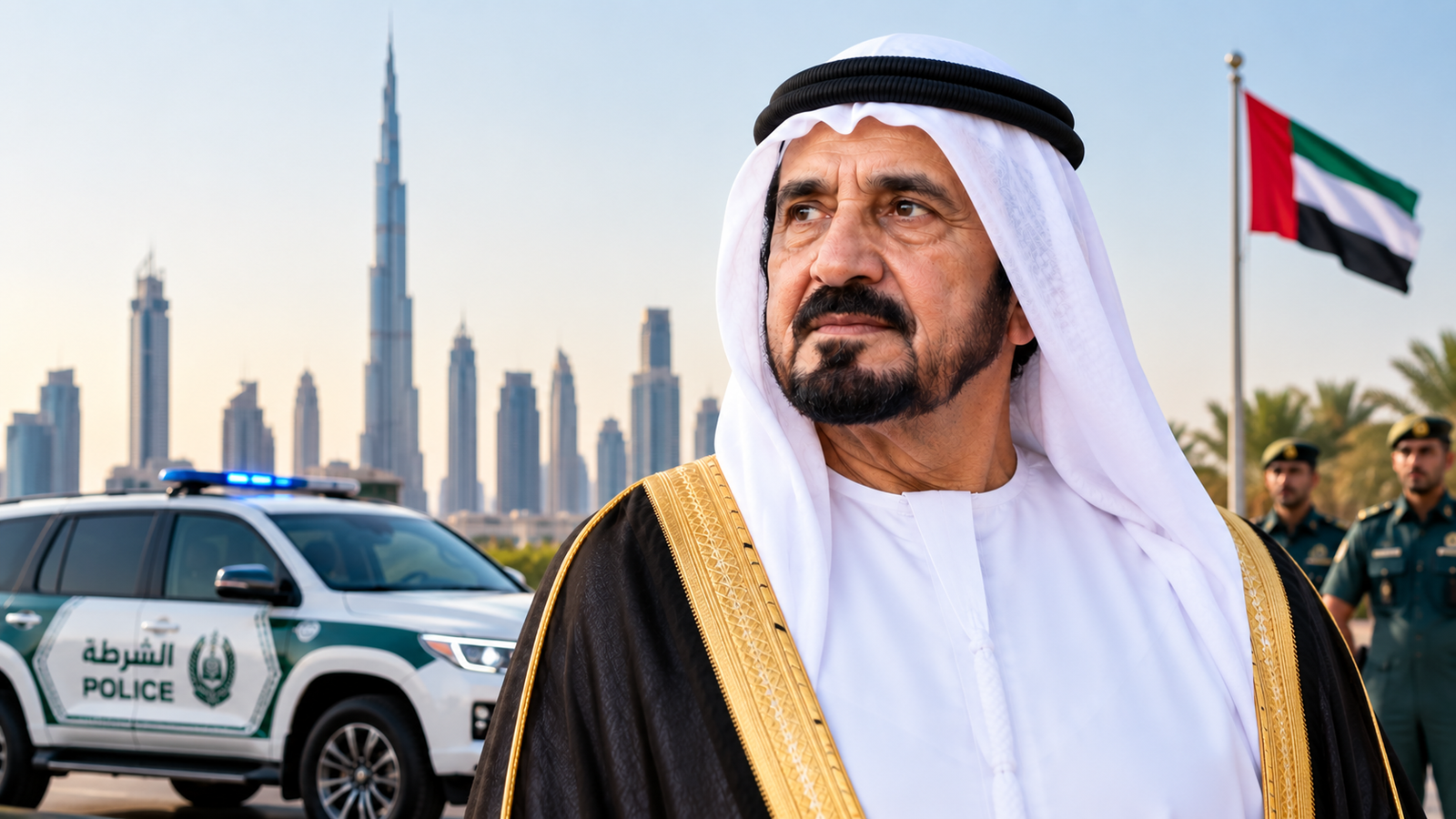
One of Sheikh Ahmed bin Rashid Al Maktoum’s major areas of public service was Dubai’s security establishment. He served as Deputy Chairman of Dubai Police and Public Security.
His earlier military career also formed an important part of his public service. After graduating from the Royal Military Academy Sandhurst in the United Kingdom, he joined Dubai’s Central Military Command and later became its commander-in-chief. According to Al Wasl’s official biography, the military base developed significantly during his leadership.
It is important, however, not to attribute Dubai’s overall safety performance to one individual. Public safety in Dubai is the result of a wider institutional system involving police, government agencies, legislation, emergency services, infrastructure, and technology.
Dubai does have a high perceived-safety rating. Numbeo’s 2026 city data gives Dubai a Safety Index of 83.9 and a Crime Index of 16.1. Its survey-based data also reports a very high perceived level of safety when walking alone at night. However, Numbeo states that these figures are based on website-user perceptions rather than official government crime statistics.
Therefore, Dubai’s high safety ranking should be viewed as an indicator of perceived safety rather than evidence that Sheikh Ahmed personally caused or controlled the city’s crime rate.
Military Career and Institutional Service
Sheikh Ahmed’s military background began after his education at the Royal Military Academy Sandhurst.
Following his graduation, he joined Dubai’s Central Military Command and eventually became its commander-in-chief. His military service preceded his later responsibilities in Dubai’s public-security institutions.
His long involvement in public institutions placed him within a generation of Dubai leaders who participated in the emirate’s transformation from a regional trading centre into a major international city.
His contribution should therefore be understood within the wider institutional development of Dubai rather than as the work of a single officeholder.
Leadership and Legacy at Al Wasl Sports Club
Sheikh Ahmed’s connection with Al Wasl dates back to the early history of the club.
Al Wasl was originally established as Al Zamalek in 1960. In 1962, the club moved under the patronage of Sheikh Ahmed bin Rashid Al Maktoum and Sheikh Butti bin Maktoum Al Maktoum, and Sheikh Ahmed became its president. The club was later renamed Al Wasl in 1974.
According to Al Wasl’s official biography, Sheikh Ahmed remained closely associated with the club for approximately six decades. He helped form its first board of directors and served as chairman of the board until 1974, while continuing as president and patron over the following decades.
His association with Al Wasl was therefore considerably longer than a conventional sports-administration appointment. The club became an important part of Dubai's sporting culture, with activities extending beyond football into several other sports.
Al Wasl's official history records multiple domestic and regional achievements, including league titles and success in the Gulf and Asian competitions.
Contribution to Horse Racing in the UAE
Horse racing was another major part of Sheikh Ahmed bin Rashid Al Maktoum’s legacy.
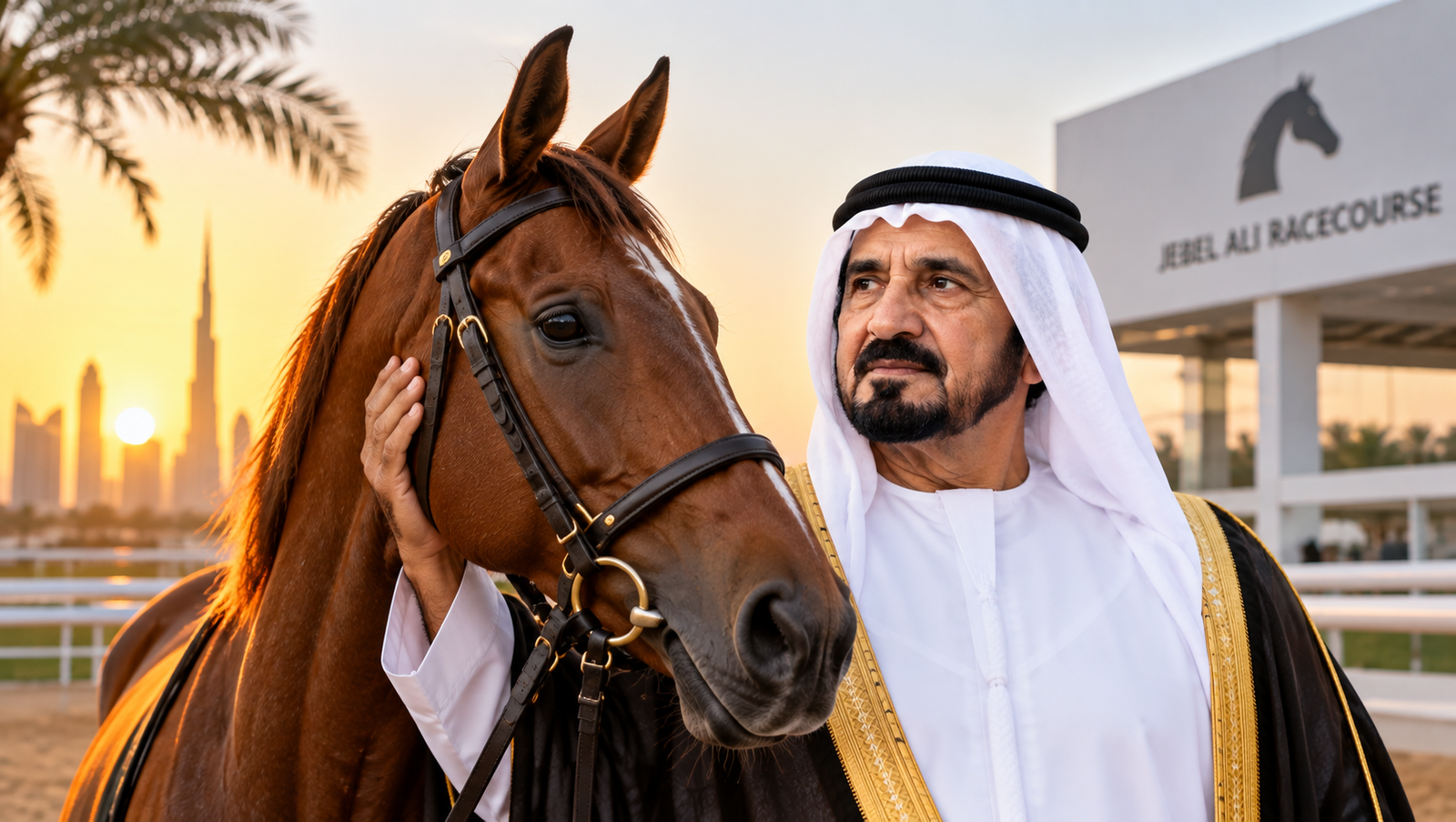
He established Jebel Ali Racecourse in the early 1990s as part of efforts to promote horse racing in the UAE. According to the Emirates Racing Authority information reported by Khaleej Times, the track and grandstand were built in 1990, with the first racing season taking place in 1991.
This corrects the commonly repeated claim that the racecourse simply “opened in 1992.”
Sheikh Ahmed was also associated with the adjoining Jebel Ali Stables. His involvement went beyond horse ownership: he supported the development of racing infrastructure and institutions and was involved in the launch of Al Adiyat and the Dubai Horse Racing Centre.
His official Al Wasl biography also states that he and his team contributed to the development of handicapping and other racing rules.
His personal involvement in racing began before the establishment of Jebel Ali Racecourse. Al Wasl records that his first horse, Wasl, won the Irish 2,000 Guineas in 1982.
The combination of racecourse development, horse ownership, racing administration, and industry support made Sheikh Ahmed an important figure in the history of UAE thoroughbred racing.
Jebel Ali Racecourse and Dubai’s Sporting Identity
Jebel Ali Racecourse occupies a distinctive place in Dubai’s racing landscape.
Unlike Dubai’s larger and more modern Meydan Racecourse, Jebel Ali developed its own identity around its location, track design, racing programme, and long-standing association with Sheikh Ahmed.
The racecourse and its surrounding stables helped establish horse racing as an important part of Dubai’s sporting culture during a period when the emirate was rapidly expanding its international profile.
According to reporting based on Emirates Racing Authority data, Sheikh Ahmed recorded hundreds of wins as an owner during his racing career, further demonstrating the scale of his involvement in the sport.
His contribution to racing was therefore not limited to personal participation; it included the creation and support of sporting infrastructure.
Maritime Sports and the Victory Team
Sheikh Ahmed’s sporting interests also extended beyond football and horse racing.
He was closely involved in the establishment of the Dubai International Marine Club and served as its first chairman in 1988. According to Al Wasl’s official biography, the club later became the first organisation in the Middle East and Africa to become a member of the Union Internationale Motonautique (UIM).
He was also associated with the establishment of the Victory Team in 1989, adding another dimension to his contribution to the development of organised sport in Dubai.
These activities illustrate that his sporting involvement extended across football, equestrian sport, and powerboat racing.
Business and Economic Involvement
Sheikh Ahmed also had interests beyond government and sport.
He served as Group Chairman of A.R.M. Holding, a private investment group with interests that include real estate and other sectors. His business activities formed another part of his long-term involvement in Dubai's economic development.
Dubai's economic development, however, cannot accurately be attributed to any single member of the ruling family. The emirate's growth has involved government institutions, private companies, investors, infrastructure development, tourism, trade, finance, real estate, and other sectors.
At the national level, the UAE's non-oil economy has continued to expand. The Federal Competitiveness and Statistics Centre reported that the UAE's real GDP grew by 6.2% in 2025, while real non-oil GDP grew by 6.8%.
Earlier official data showed non-oil activities accounting for 77.5% of real GDP in the first half of 2025, demonstrating the importance of non-oil sectors to the UAE economy.
These figures describe the broader UAE economy and should not be interpreted as a direct result of Sheikh Ahmed's individual activities.
What His Career Meant for Dubai's Sporting and Institutional History
Sheikh Ahmed bin Rashid Al Maktoum's career is notable for the breadth of his involvement.
His public-security responsibilities connected him with one of Dubai's key government institutions. His military career reflected the development of the UAE's early defence institutions. His association with Al Wasl connected him with grassroots and professional sport, while Jebel Ali Racecourse became a lasting part of Dubai's horse-racing infrastructure.
This combination makes his career different from that of a figure associated with only one sector.
His influence was particularly visible through institutions that continued operating beyond his individual leadership, including Al Wasl Sports Club and Jebel Ali Racecourse.
Legacy and Future Outlook
Sheikh Ahmed bin Rashid Al Maktoum passed away on 21 September 2026 at the age of 76. Following his death, Dubai announced a 10-day official mourning period, with flags flown at half-mast across the emirate.
His legacy is now best considered through the institutions and sporting organisations with which he was associated.
In public service, his decades of involvement in Dubai's military and security institutions form an important part of his record. In football, his approximately six-decade association with Al Wasl places him among the club's longest-serving institutional figures. In horse racing, the establishment of Jebel Ali Racecourse and his support for racing institutions created a lasting contribution to the UAE's equestrian history.
The future development of Dubai's security, sports, and racing sectors will depend on the institutions and leaders that succeed him. His contribution can therefore be assessed as part of Dubai's broader institutional history rather than as a continuing personal role.
FAQ
Who was Sheikh Ahmed bin Rashid Al Maktoum?
Sheikh Ahmed bin Rashid Al Maktoum was a senior member of Dubai's ruling Al Maktoum family. He served in Dubai's military and public-security institutions and was President of Al Wasl Sports Club. He was also a prominent figure in UAE horse racing.
What was Sheikh Ahmed's role in Dubai's security system?
He served as Deputy Chairman of Dubai Police and Public Security and had previously held senior military responsibilities in Dubai.
Which football club was Sheikh Ahmed associated with?
He was closely associated with Al Wasl Sports Club and served as its president for approximately six decades.
What was Sheikh Ahmed's contribution to horse racing?
He established Jebel Ali Racecourse in the early 1990s and supported the development of horse racing through Jebel Ali Stables, Al Adiyat, and the Dubai Horse Racing Centre.
When was Jebel Ali Racecourse established?
The track and grandstand were built in 1990, and the first racing season was held in 1991, according to information attributed to the Emirates Racing Authority.
When did Sheikh Ahmed bin Rashid Al Maktoum die?
He passed away on 21 September 2026, aged 76. Dubai subsequently announced a 10-day official mourning period.
Is Dubai's safety ranking evidence of Sheikh Ahmed's individual impact?
Not directly. Dubai has a high perceived-safety score, with Numbeo reporting a 2026 Safety Index of 83.9. However, Numbeo's data is based on user perceptions and should not be treated as official crime statistics or as evidence of the impact of one individual.
Conclusion
Sheikh Ahmed bin Rashid Al Maktoum left a broad institutional and sporting legacy in Dubai. His career included military and public-security responsibilities, long-standing leadership at Al Wasl Sports Club, and significant involvement in the development of horse racing and other sports in the UAE.
His establishment of Jebel Ali Racecourse, support for racing institutions, and decades-long association with Al Wasl remain among the most visible aspects of his sporting legacy. His public-service career also connected him with important stages of Dubai's institutional development.
Following his death on 21 September 2026, Sheikh Ahmed's contribution is best understood through the institutions, sporting organisations, and racing infrastructure with which he was associated. His legacy forms part of the wider history of Dubai's transformation and the development of the UAE's modern sporting and public institutions.




Comments 0
Leave a Reply
Your email address will not be published. Required fields are marked *
Be the first to share your thoughts!