
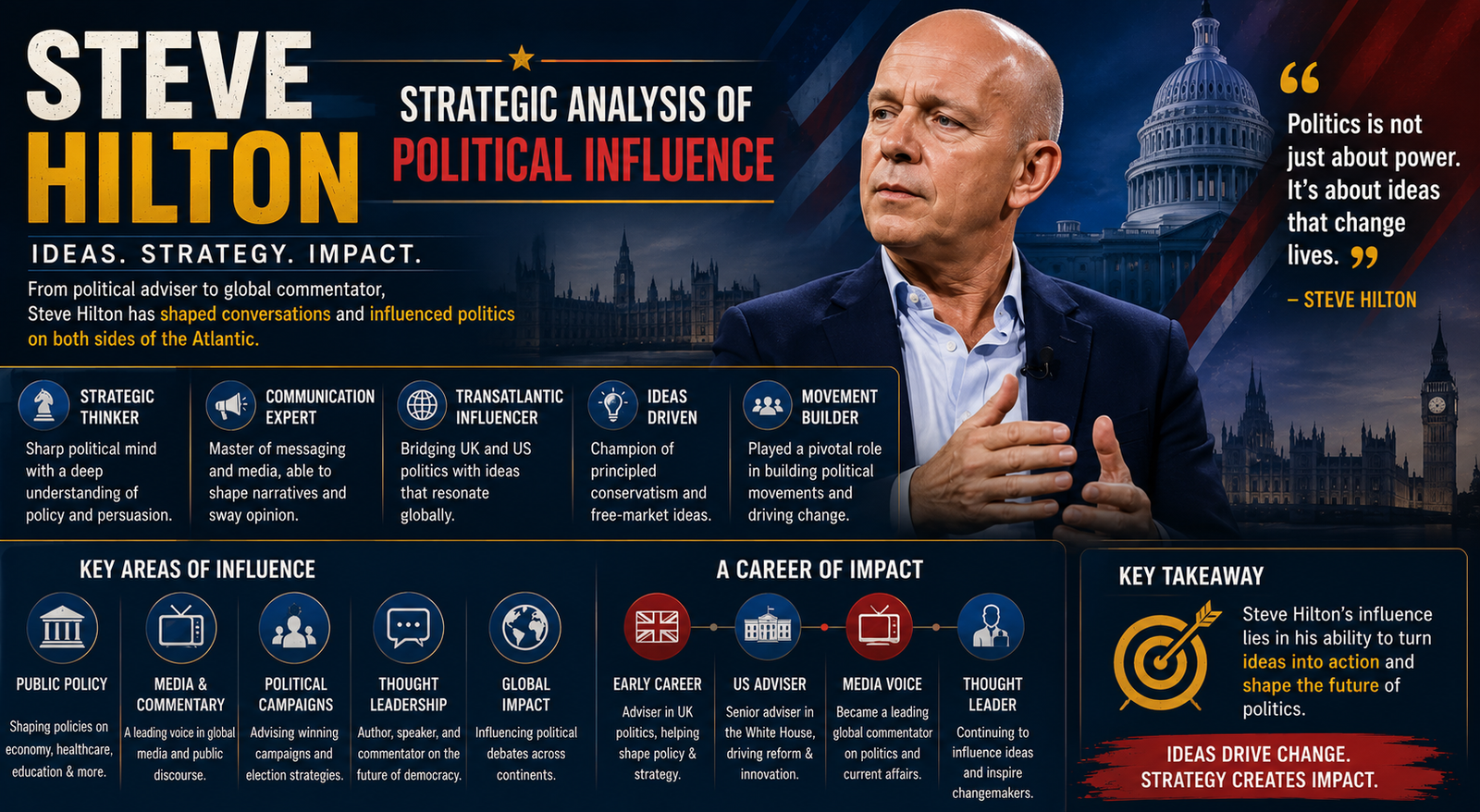
💡 Steve Hilton: Strategic Analysis of Political Influence
An authoritative analysis of Steve Hilton’s impact on UK and US politics, his media influence, and his potential 2026 California gubernatorial run.
Executive Summary
Steve Hilton remains one of the most influential and unconventional political strategists of the 21st century. As the former Director of Strategy for British Prime Minister David Cameron, Hilton was the primary architect of the modernization of the Conservative Party. His transition from the halls of 10 Downing Street to the studios of Fox News in the United States represents a rare cross-continental shift in political influence. Key data highlights include his role in the 2010 UK General Election, where the Conservatives gained 96 seats, and his subsequent media reach, where his program The Next Revolution consistently engaged millions of viewers. This analysis explores his policy frameworks, his technological ventures like Crowdpac, and the strategic implications of his potential 2026 California gubernatorial candidacy.
Introduction: The Architect of Modern Conservatism
Steve Hilton is frequently described by colleagues and critics alike as a disruptive thinker who prioritizes radical reform over incremental change. Born in the United Kingdom to Hungarian immigrants, Hilton’s perspective has always been shaped by a desire to challenge established bureaucracies. He rose to prominence in the mid-2000s as David Cameron’s closest advisor, tasked with rebranding a Conservative Party that had been out of power for over a decade. His approach was not merely cosmetic; it involved a fundamental shift in policy focus toward environmentalism, social responsibility, and a concept he famously termed the Big Society.
In the current political landscape, Hilton has evolved from a behind-the-scenes advisor to a public-facing commentator and policy advocate. His move to California in 2012 marked the beginning of a new chapter where he sought to apply his strategic insights to the American tech and media sectors. His career trajectory provides a unique case study in how political branding and strategic communication can transcend national borders, much like the strategic analysis of media influence seen in global news organizations that shape public perception across different cultures.
The Deep Dive: From Downing Street to the Golden State
1. The Cameron Era and the Modernization Strategy
During his tenure with David Cameron, Hilton focused on the modernization of the Tory brand. He was instrumental in changing the party logo to a green tree, signaling a commitment to environmental issues. Strategically, this was designed to appeal to younger, urban voters who had previously viewed the party as out of touch. The 2010 UK General Election results validated this strategy to an extent, as the Conservatives became the largest party in a hung parliament, eventually forming a coalition government. Hilton’s influence led to the implementation of the Big Society, a policy framework intended to shift power from central government to local communities and volunteers.
2. The Big Society: A Data-Driven Policy Framework
The Big Society was Hilton’s signature project. It aimed to create a society where people feel empowered to help themselves and their communities. While the policy faced criticism for being a cover for austerity-driven budget cuts, it introduced significant structural changes. According to UK Cabinet Office reports from the era, the initiative led to the creation of the Big Society Bank (now Big Society Capital), which has since committed billions of pounds to social impact investments. This focus on decentralized power remains a core pillar of Hilton’s current political philosophy.
3. Technological Innovation: The Crowdpac Venture
Upon moving to Silicon Valley, Hilton co-founded Crowdpac in 2014. This was a non-partisan platform designed to provide voters with data-driven insights into political candidates. The platform used a proprietary algorithm to map candidates on a political spectrum based on their voting records and donor lists. At its peak, Crowdpac facilitated millions of dollars in small-dollar donations, demonstrating Hilton’s belief that technology could disrupt the traditional political establishment. This venture highlighted the intersection of data and democracy, a theme that continues to influence his commentary on strategic analysis of global impact and technological integration in public life.
4. Media Influence and The Next Revolution
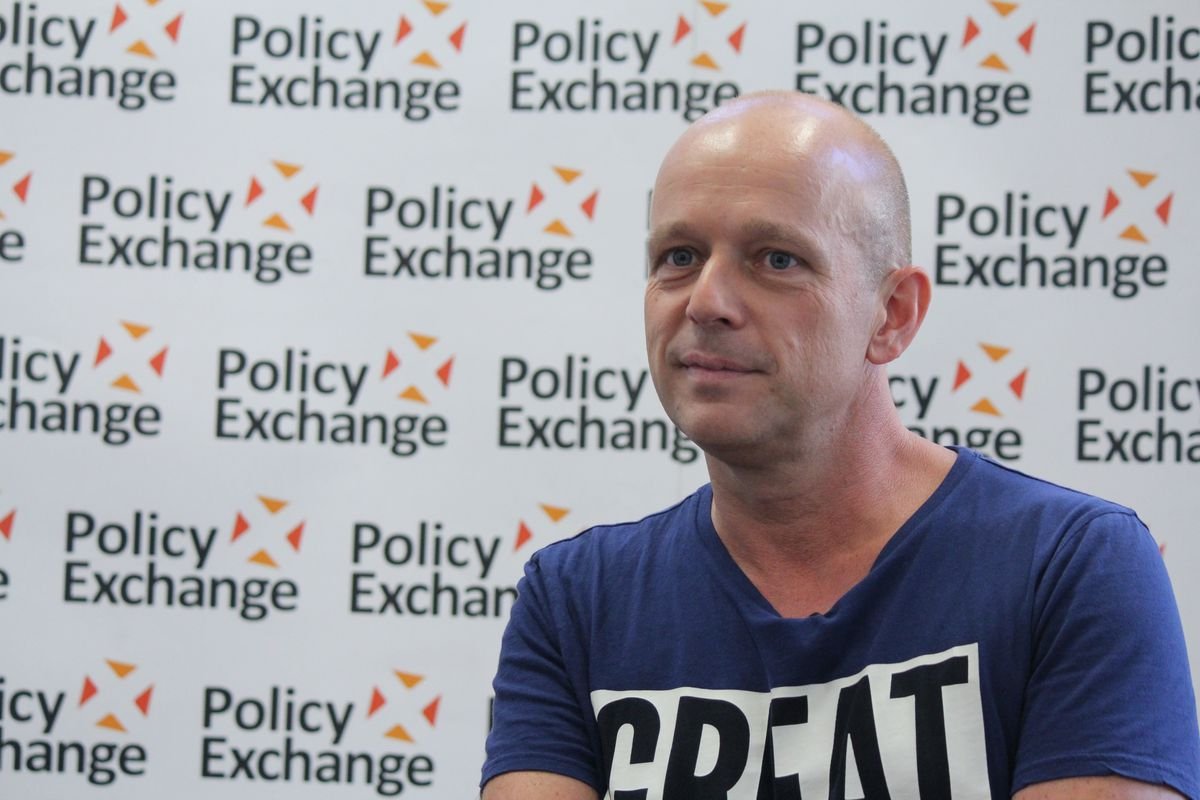
Hilton’s shift to Fox News in 2017 as the host of The Next Revolution allowed him to introduce his brand of positive populism to an American audience. His show focused on the impact of globalism on local communities, the rise of the populist movement, and the need for structural reform in Washington D.C. Industry data from Nielsen often showed Hilton’s program leading its time slot in key demographics, particularly among viewers interested in policy-heavy populist discourse. His media presence has been a critical tool in maintaining his relevance and building a base of support for his future endeavors.
5. The 2026 California Gubernatorial Outlook
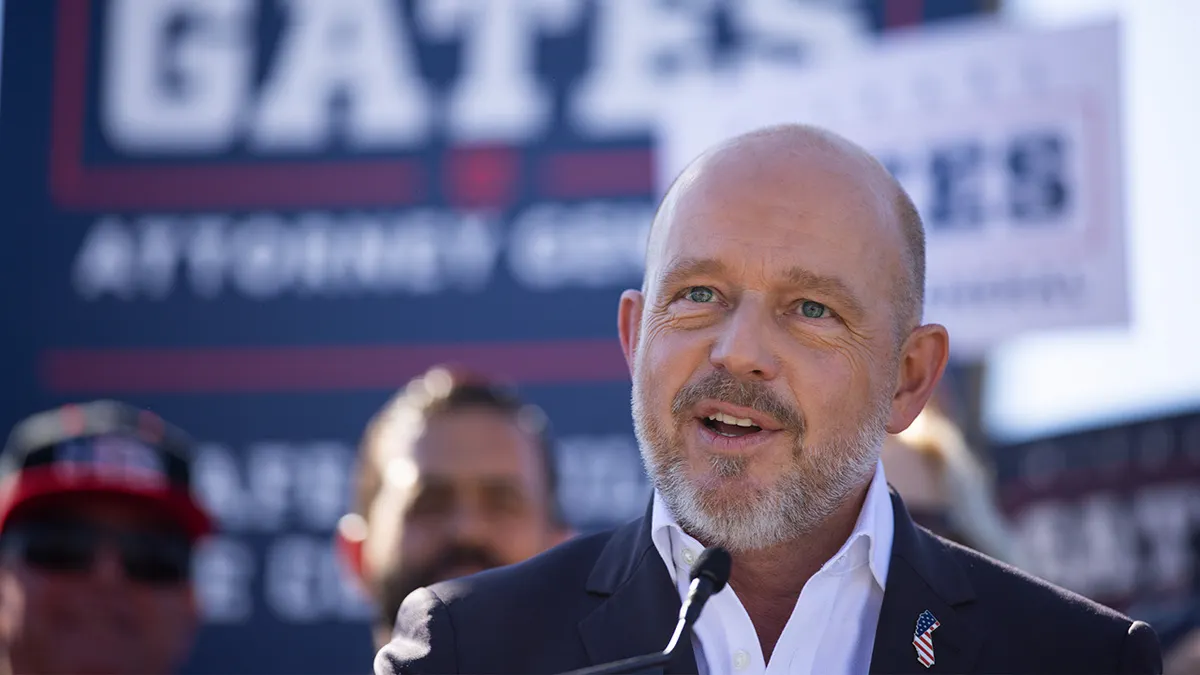
As of late 2024 and heading into 2025, Hilton has signaled a serious interest in the 2026 California gubernatorial race. Operating under the banner of his Golden Frontier initiative, he has focused on three primary crises facing the state: housing affordability, the cost of living, and the decline of public education. California currently faces a median home price exceeding 800,000 dollars, a figure that Hilton argues is a direct result of bureaucratic overreach and poor land-use policies. His strategy involves a radical simplification of the state’s regulatory environment to spur innovation and economic growth.
This potential candidacy is strategically positioned to capitalize on voter frustration. While California is a deeply blue state, Hilton’s history as a modernizer suggests he may attempt a coalition-building strategy similar to his UK years. His analysis of state-level issues often mirrors the complexity of broader international challenges, such as the strategic analysis of geopolitical conflict, where local stability is frequently tied to larger systemic reforms.
What This Means For You
- Understanding Political Branding: Hilton’s career shows how a clear, consistent brand, focused on disruption and decentralization, can be adapted to different political systems.
- The Power of Media: His transition highlights the importance of media platforms in building political capital and maintaining public engagement outside of election cycles.
- Policy Over Party: Hilton often prioritizes specific policy outcomes, such as housing reform or localism, over rigid party loyalty, suggesting a path for independent-minded voters.
- Technological Literacy: His work with Crowdpac underscores the necessity for modern citizens to understand how data and algorithms influence political choices and funding.
Expert Verdict / Future Outlook
Steve Hilton is a strategic outlier who successfully bridged the gap between policy expertise and media personality. His future depends on his ability to translate his populist-reformist rhetoric into a viable electoral platform in California. Experts suggest that if Hilton can successfully frame his campaign around cost-of-living issues rather than partisan identity, he could disrupt the status quo in the 2026 race. Regardless of the electoral outcome, his influence on the discourse surrounding localism and government reform will likely persist for the next decade. His ability to synthesize complex economic data into actionable political slogans remains his greatest asset.
FAQ
1. What is Steve Hilton's most famous policy?
His most famous policy framework is the Big Society, which he developed for the UK Conservative Party. It focused on decentralizing power and encouraging community-led initiatives rather than state-mandated solutions.
2. Is Steve Hilton still on Fox News?
While he stepped away from his weekly show The Next Revolution to focus on his policy work and potential political run in California, he remains a frequent contributor and a prominent voice in conservative media circles.
3. What is the Golden Frontier?
The Golden Frontier is a policy initiative launched by Hilton in California. It focuses on solving the state's housing crisis, reducing the cost of living, and reforming the educational system through innovation and deregulation.
4. How did Steve Hilton influence David Cameron?
Hilton was Cameron's Director of Strategy. He was responsible for the party's modernization, the 2010 election manifesto, and the overall branding that helped the Conservatives return to power after 13 years.
5. What is Crowdpac?
Crowdpac is a political data and crowdfunding startup co-founded by Hilton. It was designed to help non-traditional candidates raise money and to provide voters with objective data on where candidates stand on the political spectrum.
Conclusion
Steve Hilton’s career serves as a masterclass in strategic disruption. From the modernization of the UK Conservative Party to his influential role in American media and his potential future in California politics, Hilton has consistently challenged the status quo. His focus on decentralization, technological integration, and positive populism provides a roadmap for how political influence can be wielded in an increasingly complex and media-driven world. As he moves toward 2026, his ability to merge policy depth with public communication will be the ultimate test of his strategic vision.





Comments 0
Leave a Reply
Your email address will not be published. Required fields are marked *
Be the first to share your thoughts!