
💡 Indian Stock Market Holidays 2026: BSE & NSE Trading Calendar
Plan your investment strategy with our detailed guide to the Indian stock market holidays for 2026, covering BSE and NSE schedules, Muhurat trading, and expert trading tips.
Comprehensive Guide to Indian Stock Market Holidays 2026: BSE and NSE Trading Calendar
For any active investor or professional trader in the Indian financial ecosystem, the trading calendar is as essential as the stock ticker itself. Understanding the schedule of the National Stock Exchange (NSE) and the Bombay Stock Exchange (BSE) is crucial for managing liquidity, planning entry and exit points, and ensuring that settlement cycles do not disrupt financial goals. As we look ahead to the year 2026, preparing for market closures allows for a more disciplined and strategic approach to wealth creation.
The Indian stock market does not operate on a 24/7 basis. Beyond the standard weekend closures on Saturdays and Sundays, the exchanges observe several national, cultural, and religious holidays. According to global analysts, synchronized market closures in emerging economies like India often lead to specific volatility patterns before and after long weekends. Therefore, having a clear roadmap of the stock market holidays 2026 is a prerequisite for both retail and institutional participants.
What are the standard trading hours in India?
Before diving into the specific holiday list for 2026, it is vital to understand the regular operating hours of the Indian exchanges. Both the NSE and BSE follow a strict timeline from Monday to Friday. The morning begins with a pre-open session from 9:00 AM to 9:15 AM, which helps in price discovery. The main trading session, where the bulk of buying and selling occurs, runs from 9:15 AM to 3:30 PM. Any holiday mentioned in the 2026 list implies that these specific windows will remain closed for the Equity, Equity Derivative, and SLR segments.
Why do stock market holidays matter for investors?
Stock market holidays pause trading and settlements. Traders should plan to avoid unexpected price gaps, and derivative traders must note that options continue to experience time decay even during holidays. Planning for these dates helps in managing margin requirements and avoiding unnecessary overnight risks.

What is the projected stock market holiday list for 2026?
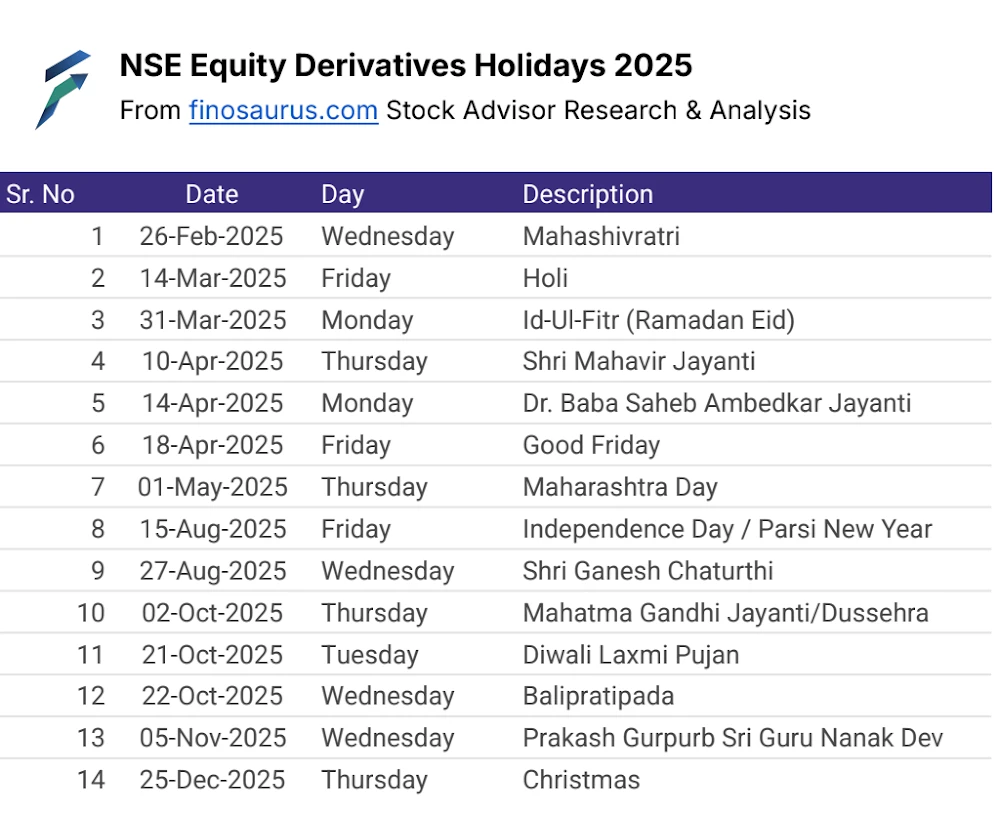
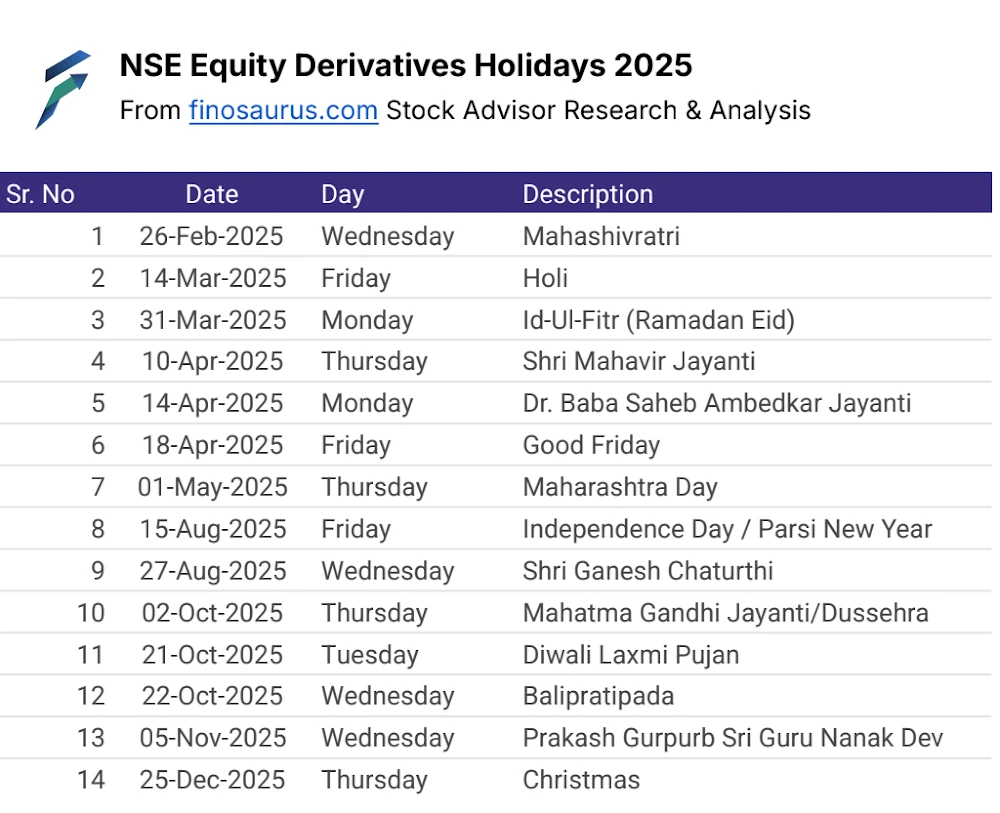
While the official list is typically finalized by the exchanges toward the end of the preceding year, the 2026 calendar follows the standard cycle of Indian gazetted holidays. Based on the lunar calendar and national observances, the following days are expected to be trading holidays for the BSE and NSE in 2026.
| Date | Holiday | NSE/BSE Closed? | Notes |
|---|---|---|---|
| 26 Jan 2026 | Republic Day | Yes | National holiday |
| 17 Mar 2026 | Holi | Yes | Depending on state notification |
| 1 May 2026 | Maharashtra Day | Yes | Regional holiday |
| 15 Aug 2026 | Independence Day | Yes | Falls on Saturday |
| 2 Oct 2026 | Gandhi Jayanti | Yes | National holiday |
| 5 Nov 2026 | Diwali (Lakshmi Pujan) | Yes | Muhurat trading session 6–7 PM |
| 25 Dec 2026 | Christmas | Yes | National holiday |
How does Muhurat Trading work?
A unique aspect of the Indian stock market is the Muhurat Trading session held on the day of Lakshmi Pujan during Diwali. Even though it is a scheduled holiday, the BSE and NSE open for a symbolic sixty-minute window. This tradition, which has lasted for decades, is considered auspicious for starting new investments. As per recent industry reports, while the volumes during this hour are not as high as a regular day, the sentimental value often drives a positive market breadth.

What are the common mistakes to avoid during holiday weeks?
Many investors fail to account for the 'settlement holiday' versus the 'trading holiday.' A settlement holiday is a day when the markets are open, but the clearing houses and banks are closed. This means that while you can buy or sell stocks, the actual transfer of shares and funds might be delayed by an extra day. Another common mistake is carrying high-leverage positions into a long weekend. Unexpected global events can cause significant volatility when the Indian markets reopen, potentially leading to margin calls.
Pro tips for managing your portfolio around holidays
- Review liquidity needs 2 days before a holiday
- Monitor global indices (S&P 500, Nikkei, Hang Seng) for clues
- Use limit orders to avoid price gaps
- Verify derivative expiry dates if a holiday affects the typical Thursday expiry
How to stay updated on official announcements?
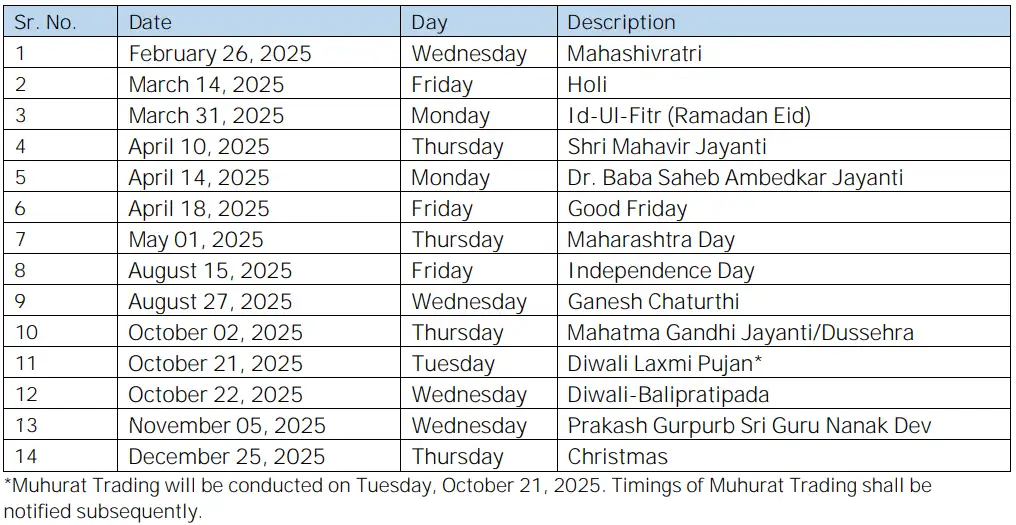
While projected calendars are helpful for long-term planning, the official list is released by the NSE and BSE on their respective websites. These lists include specific details for the Capital Market, Futures and Options (F&O), and Currency Derivative segments. Experts suggest bookmarking the official 'Holiday' section of the exchange websites to ensure you have the most accurate and up-to-date information regarding any sudden changes or additional closures announced by the government.
Frequently Asked Questions
What is the difference between a trading holiday and a clearing holiday?
A trading holiday means the stock exchange is completely closed for buying and selling. A clearing holiday means the exchange is open for trading, but the banks or clearing houses are closed, meaning no money or shares will be moved between accounts on that specific day.
Does the stock market close on every Saturday and Sunday?
Yes, the NSE and BSE remain closed for regular trading on all Saturdays and Sundays throughout the year, unless a special session (like a disaster recovery site test or Muhurat trading) is specifically announced.
What happens to my SIP if it falls on a market holiday?
If your Systematic Investment Plan (SIP) date falls on a stock market holiday, the transaction is usually processed on the next business day. The Net Asset Value (NAV) applied to your mutual fund purchase will be the one from the day the transaction is actually processed.
Is the commodity market open on stock market holidays?
Not necessarily. The Multi Commodity Exchange (MCX) often has different timings. On some holidays, the morning session (9:00 AM to 5:00 PM) might be closed, while the evening session (5:00 PM to 11:30/11:55 PM) remains open to align with global commodity prices.
How can I find the specific dates for 2026?
The specific dates are determined by the appearance of the moon for certain festivals and government notifications. You should consult the official BSE and NSE circulars which are typically released in December of the previous year for the full confirmed list.
Conclusion
Navigating the stock market holidays 2026 requires a blend of foresight and flexibility. By understanding the periods of closure, investors can better manage their risks, ensure liquidity, and participate in the cultural traditions of the Indian financial markets, such as Muhurat trading. Whether you are a long-term investor or a day trader, keeping this calendar at the heart of your strategy is a hallmark of a professional approach to the markets. Always remember to stay updated with official exchange notifications to account for any mid-year changes to the schedule.
Important Note: Financial Disclaimer: This content is for educational purposes only and does not constitute professional financial advice. Always consult with a certified financial planner before making investment decisions.
Related Media
Quick View: Comprehensive Guide to Indian Stock Market Holidays 2026: BSE and NSE Trading Calendar





Comments 0
Leave a Reply
Your email address will not be published. Required fields are marked *
Be the first to share your thoughts!