
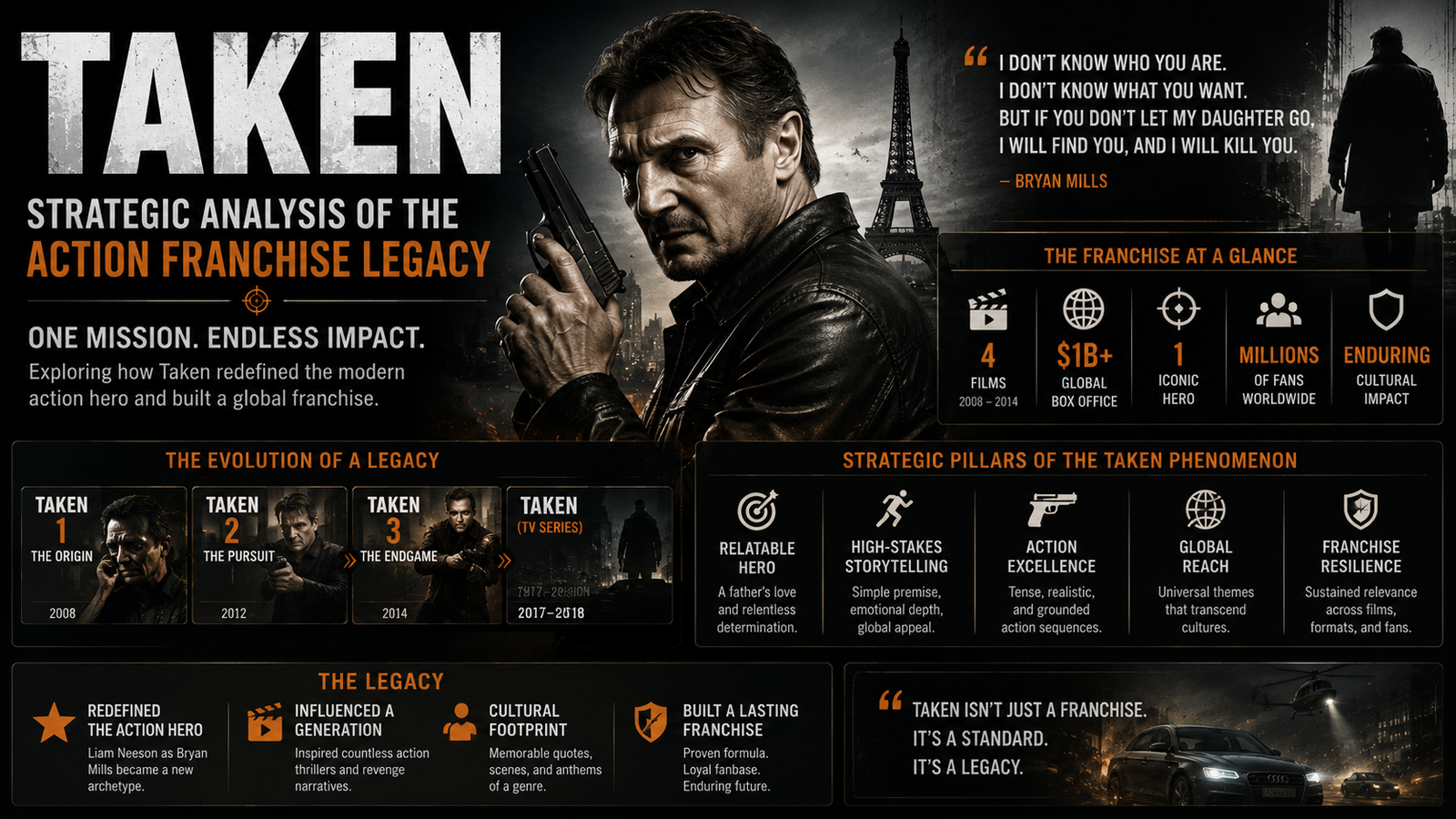
💡 Taken: Strategic Analysis of the Action Franchise Legacy
A comprehensive strategic analysis of the Taken franchise, its financial impact on the film industry, and the rise of the geriatric action subgenre.
Executive Summary
The Taken franchise, initiated in 2008, represents one of the most significant shifts in the action-thriller landscape of the 21st century. Originally produced on a modest budget of 25 million USD, the first installment yielded a staggering 226.8 million USD worldwide, marking a nearly 900 percent return on investment. This analysis examines the strategic pillars that allowed a mid-budget European production to redefine Hollywood archetypes. Key findings include the institutionalization of the geriatric action star, the optimization of the EuropaCorp production model, and the psychological impact of the protector narrative on global audiences. Data suggests that Taken did not merely succeed as a film; it functioned as a market disruptor that altered casting strategies for the subsequent fifteen years.
Introduction
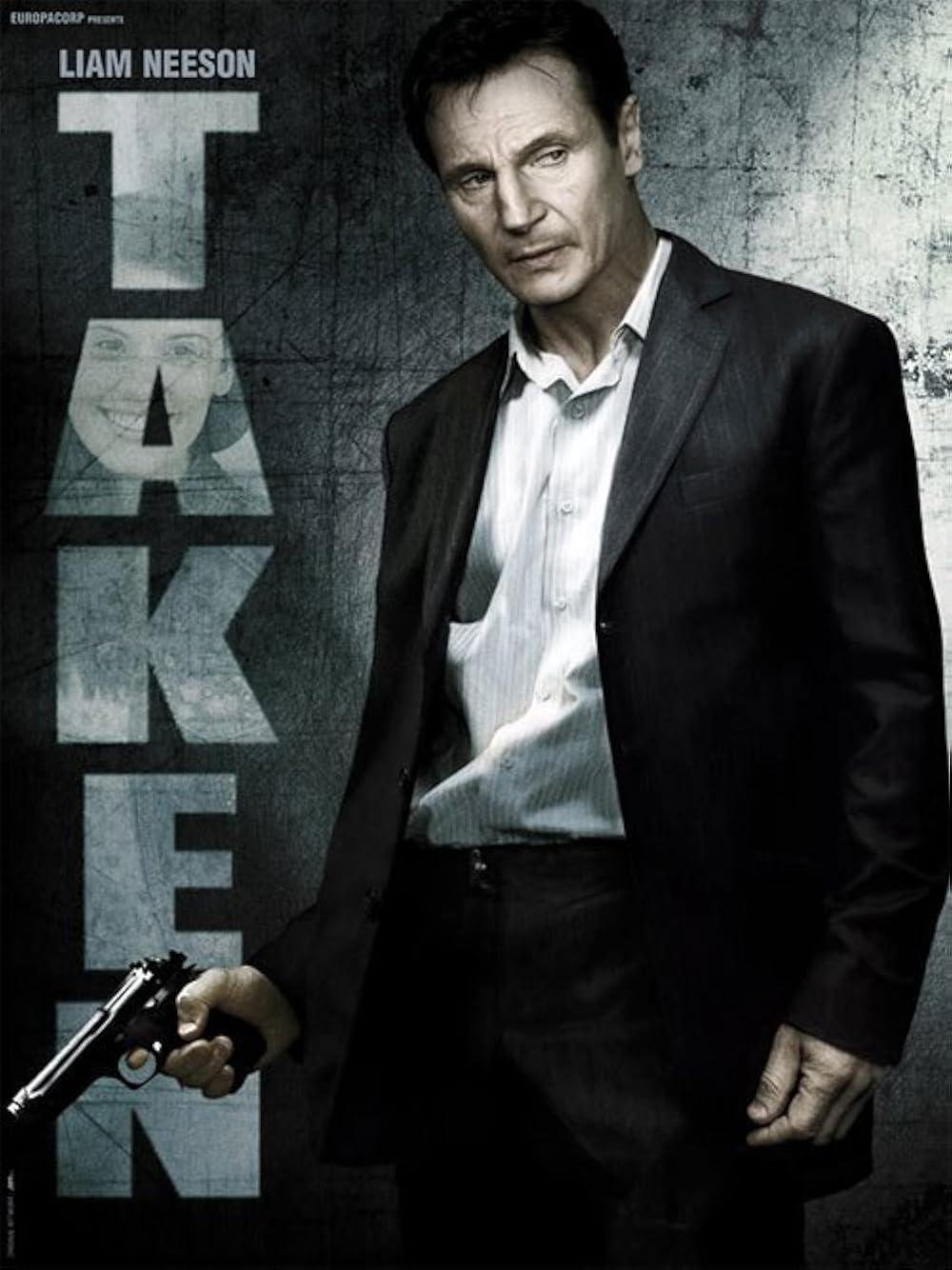
When Taken arrived in cinemas, the action genre was largely dominated by high-concept superhero narratives and the hyper-stylized aesthetics of the post-Matrix era. However, the collaboration between producer Luc Besson and director Pierre Morel introduced a grounded, visceral, and efficiently paced alternative. The film centered on Bryan Mills, a retired CIA operative with a particular set of skills, searching for his kidnapped daughter in Paris. While the premise was simple, the strategic execution was revolutionary. It leveraged the gravitas of an Academy Award-nominated actor, Liam Neeson, and placed him in a role that prioritized efficiency over spectacle. This strategic pivot created a blueprint for what industry analysts now call the Geri-action subgenre. By understanding the mechanics of this franchise, we gain insight into how niche intellectual properties can achieve global dominance through targeted demographic appeal and lean production cycles.
THE DEEP DIVE: Strategic Pillars of the Taken Phenomenon

1. The Financial Efficiency of the EuropaCorp Model
The success of Taken is inseparable from the business strategy of EuropaCorp, the studio founded by Luc Besson. The studio utilized a vertically integrated model that focused on English-language films produced in France to minimize costs while maximizing global exportability. The first Taken film cost approximately 25 million USD to produce. In contrast, contemporary action blockbusters like Quantum of Solace (2008) carried budgets exceeding 200 million USD. By maintaining a lean production budget, the franchise achieved a lower break-even point, allowing for aggressive marketing and high profit margins. The subsequent sequels, Taken 2 and Taken 3, saw budget increases to 45 million and 48 million USD respectively, yet they continued to deliver massive returns, with the trilogy collectively grossing over 929 million USD globally.
2. The Rise of the Geriatric Action Star
Before 2008, Liam Neeson was primarily recognized for his roles in prestige dramas such as Schindlers List. The strategic decision to cast a 55-year-old actor as a lethal protagonist challenged the industry's obsession with youth. This move tapped into an underserved demographic: older male audiences who sought relatable heroes. The success of this casting choice led to a surge in similar projects, including The Equalizer with Denzel Washington and John Wick with Keanu Reeves. This shift demonstrates a strategic narrative and character analysis of the father-protector archetype, which resonates deeply with viewers across different cultures and age groups.
3. Narrative Economy and the Shaky Cam Aesthetic
Taken utilized a specific technical strategy known as narrative economy. The film strips away unnecessary subplots, focusing entirely on the ticking-clock element of the rescue mission. Complementing this was the use of rapid-fire editing and handheld camera work. While sometimes criticized for reducing clarity, this aesthetic choice served a strategic purpose: it masked the physical limitations of an older lead actor while conveying a sense of frantic urgency. This style became a hallmark of late 2000s cinema, influencing how digital boundaries and physical realism were portrayed on screen, much like the concepts discussed in our strategic analysis of digital boundaries regarding modern media consumption.
4. Cultural Impact and Geopolitical Perceptions
The franchise also provides a lens through which we can observe cultural perceptions of safety and foreign travel. The portrayal of Paris and Istanbul as dangerous territories for Western tourists sparked significant discourse. While the films are works of fiction, they influenced real-world perceptions of international security. This highlights the power of cinema to shape cultural legacies, a theme often explored when conducting a strategic analysis of her cultural legacy in the context of global storytelling. The Taken monologue, specifically the I will find you and I will kill you speech, became a viral phenomenon before the era of TikTok, proving that high-intent dialogue can serve as a powerful marketing tool in its own right.
WHAT THIS MEANS FOR YOU
For the average consumer and professional, the Taken franchise offers several actionable insights into market dynamics and brand positioning:
- Value of Niche Targeting: Success does not always require a universal appeal; satisfying a specific, underserved demographic can lead to massive ROI.
- The Power of Rebranding: Liam Neeson's career trajectory proves that professional pivots are possible at any age if the core skill set is repositioned effectively.
- Efficiency Over Excess: High-quality results can be achieved with modest resources if the focus remains on core strengths and streamlined processes.
- Communication is Key: The iconic phone speech demonstrates how a single, well-crafted message can define an entire brand identity for decades.
Expert Verdict and Future Outlook
The legacy of Taken is not found in its sequels, which saw diminishing critical returns, but in the industry-wide shift it catalyzed. The film proved that the mid-budget action thriller was not dead; it just needed a new face. Looking forward, the industry is seeing a transition toward more diverse versions of this archetype. We are now seeing female-led action thrillers and international productions that utilize the same lean, high-impact formula. The strategic takeaway is clear: authenticity and emotional stakes are more valuable than CGI-heavy spectacles. The Taken formula remains a gold standard for studios looking to maximize profit while minimizing financial risk.
FAQ
Q1: Why was the first Taken movie so much more successful than its sequels?
The first film benefited from the element of surprise and a tightly constructed script. While the sequels had higher budgets and larger box office numbers, the first film holds the highest critical rating due to its innovative pacing and the novelty of Liam Neeson's transformation.
Q2: How did Taken influence the action movie industry?
It popularized the Geri-action genre and encouraged studios to invest in mid-budget thrillers. It also validated the EuropaCorp production model of filming in Europe with English-speaking casts to reduce costs.
Q3: Is the Taken franchise based on a true story?
No, the story is entirely fictional. However, it draws on real-world concerns regarding human trafficking and international crime, which added a layer of gritty realism that resonated with audiences.
Q4: What are the key elements of the Taken formula?
The formula includes a protagonist with a specialized background, a personal stake (usually family), a ticking-clock scenario, and highly efficient, brutal combat choreography.
Q5: Will there be a Taken 4?
Liam Neeson has repeatedly stated in interviews that he believes the franchise has reached its natural conclusion. While a television series was produced, a fourth film is currently not in development, as the focus has shifted to new IPs following the same structural blueprint.
Conclusion
The strategic analysis of the Taken franchise reveals a masterclass in market disruption and brand management. By identifying an untapped audience and delivering a high-quality, cost-effective product, the creators of Taken redefined what it means to be an action star in the 21st century. The films legacy continues to influence how stories are told, how budgets are allocated, and how characters are developed in the modern cinematic era. The ultimate takeaway is that a particular set of skills, when applied to the right market gap, can create a lasting cultural and financial impact.





Comments 0
Leave a Reply
Your email address will not be published. Required fields are marked *
Be the first to share your thoughts!