
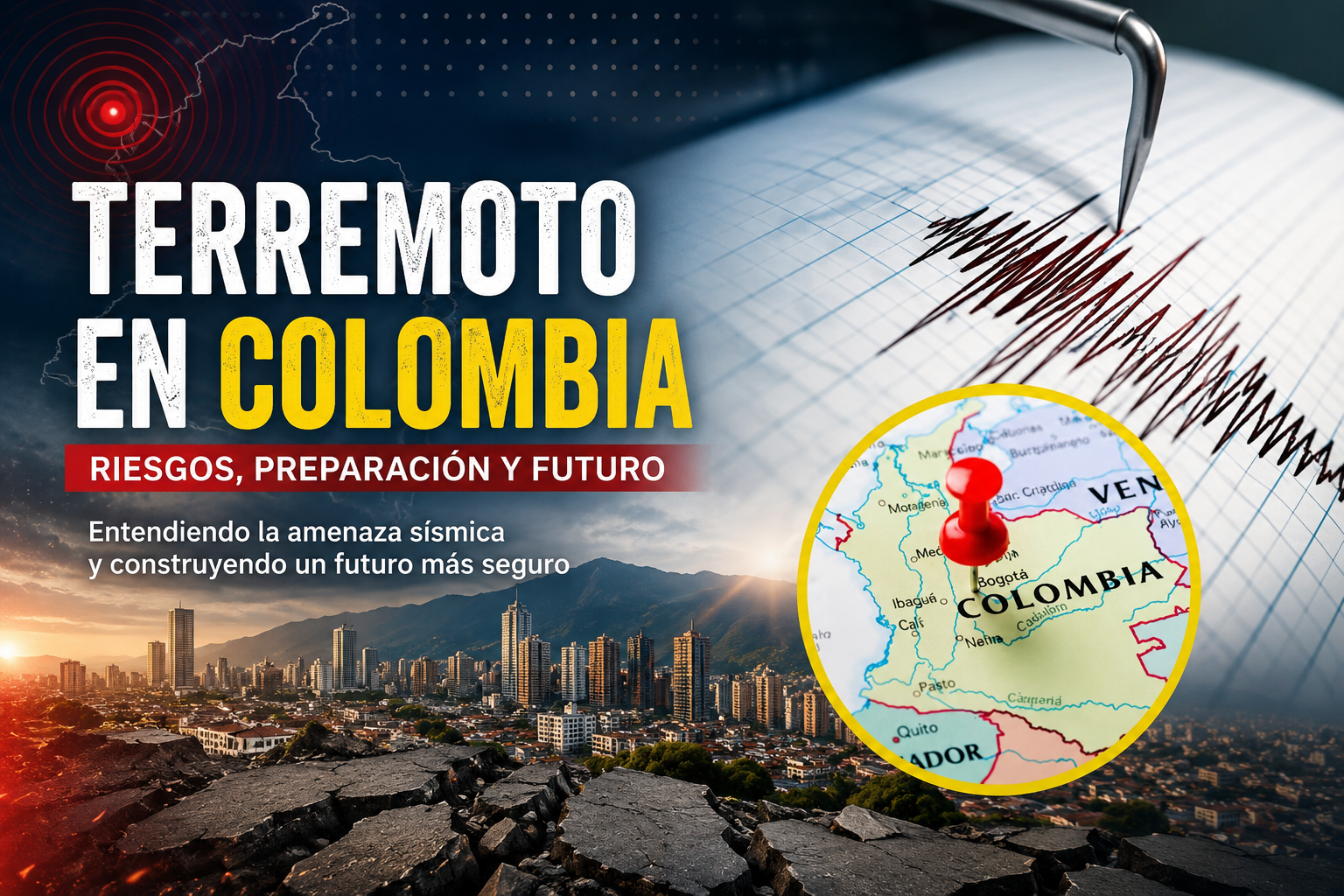
💡 Terremoto en Colombia: Strategic Seismic Risk Analysis
A deep dive into Colombia's seismic vulnerability, geological frameworks, and the economic implications of earthquake preparedness.
Executive Summary
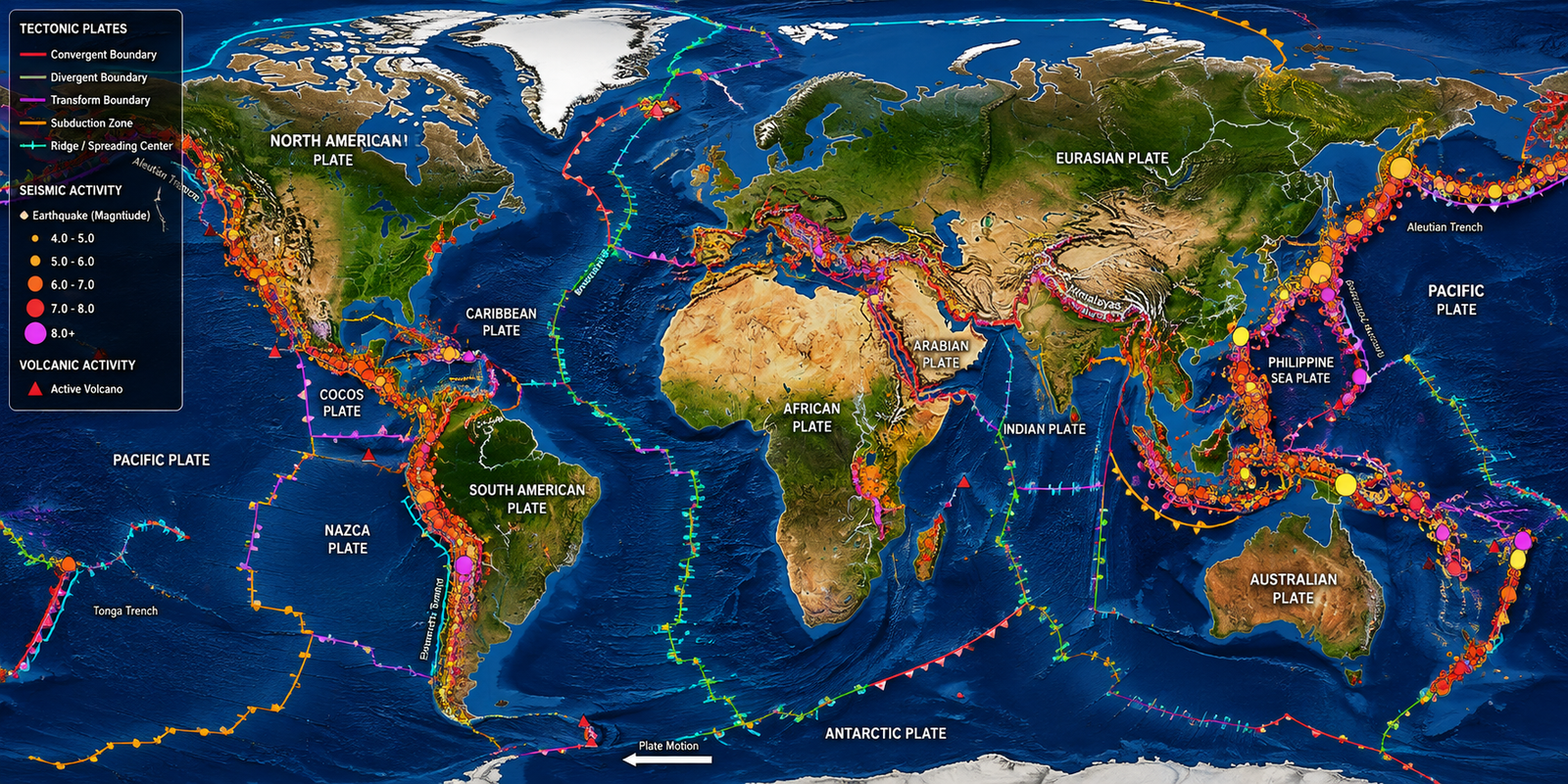
Colombia sits at one of the most complex tectonic junctions in the world, where the Nazca, South American, and Caribbean plates converge. This strategic analysis examines the high frequency of seismic activity in the region, specifically focusing on the Mesa de los Santos seismic nest, which is widely recognized as one of the most active seismic zones in the world. Key findings indicate that while Colombia has advanced its building codes (NSR-10), approximately 80 percent of the population is concentrated in areas of high or medium seismic hazard. Economic data suggests that a major seismic event in a primary urban hub like Bogota or Medellin could have significant national economic consequences, necessitating a robust framework for disaster risk management and public policy integration.
Introduction
The term terremoto en Colombia is not merely a geological descriptor but a constant factor in the nation's strategic planning and urban development. Colombia records approximately 2,500 earthquakes every month, though the vast majority are imperceptible to humans. However, the history of the country is punctuated by devastating events, such as the 1999 Armenia earthquake, which claimed over 1,000 lives and caused economic losses exceeding 1.8 billion dollars. Understanding the seismic landscape requires a technical look at the geological structures and the socio-economic vulnerabilities that define the current Colombian landscape. This analysis provides a professional overview of the risks, the regulatory environment, and the future of seismic resilience in the region.
The Geological Framework of Colombian Seismicity
Colombia is uniquely positioned at the intersection of three major tectonic plates. The Nazca Plate subducts beneath the South American Plate along the Pacific coast, creating a high-risk zone for subduction-related earthquakes and tsunamis. Simultaneously, the Caribbean Plate interacts with the northern part of the country, adding another layer of geological complexity. This configuration has produced a network of active faults, including the Romeral Fault System, which extends through parts of the Andean region and contributes to the country's complex seismic environment.
A significant focal point for researchers is the Mesa de los Santos in the Santander department. This area experiences frequent, often deep earthquakes associated with the Bucaramanga seismic nest. Research has identified the Mesa de los Santos region as one of the world's most active seismic nests, with numerous earthquakes recorded at considerable depths.
These frequent movements are generally small and rarely cause significant surface damage, but they provide valuable information for understanding Colombia's seismic behavior. The Servicio Geológico Colombiano (SGC) operates national monitoring networks that continuously record and analyze seismic activity and crustal deformation across the country. The information collected through these networks is used to determine earthquake location, depth, and magnitude and supports seismic-hazard assessment and risk management.
This level of monitoring is essential for improving seismic hazard assessment, emergency response, and long-term disaster preparedness. It also provides important scientific data for understanding how earthquakes occur across different regions of Colombia.
Economic Impact and Infrastructure Vulnerability
The economic ramifications of a large-scale earthquake in Colombia are profound. Beyond the immediate loss of life and property, the disruption to supply chains, transportation, businesses, and the energy sector can create significant economic challenges. The 1999 Armenia earthquake serves as a primary case study; it caused more than 1,000 deaths and resulted in approximately US$1.8 billion in economic losses, requiring extensive national and international reconstruction efforts.
Today, the concentration of population, economic activity, and critical infrastructure in the Andean region creates a high-stakes environment for insurers, businesses, investors, and government planners. A major earthquake affecting a densely populated urban center could generate consequences extending well beyond the directly damaged buildings, potentially disrupting transportation networks, healthcare services, communications, electricity, and commercial activity.
Building standards have evolved significantly. The NSR-10 (Reglamento Colombiano de Construcción Sismorresistente) establishes technical requirements for earthquake-resistant construction in Colombia and is intended to improve the safety, stability, and functionality of buildings and other structures during seismic events. The regulation has also been modified over time as engineering knowledge and national requirements have evolved.
However, a major challenge remains the presence of informal and vulnerable housing, particularly where buildings may not fully comply with seismic-resistant construction requirements. This creates a vulnerability gap that can increase potential losses during a major earthquake. Bridging this gap requires stronger enforcement of building standards, seismic assessment and retrofitting of vulnerable structures, improved urban planning, and continued public investment in disaster-risk reduction.

Strategic Risk Management and Public Policy
The Colombian government manages disaster and seismic risk through the UNGRD (Unidad Nacional para la Gestión del Riesgo de Desastres), which coordinates national disaster-risk management efforts and works with government agencies and other institutions on risk identification, reduction, preparedness, and emergency response. Strategic risk management in this context involves three main pillars: identification, reduction, and financial protection. Identification involves mapping seismic hazard and vulnerable areas, while risk reduction includes strengthening critical infrastructure such as hospitals, bridges, transportation networks, and other essential facilities.
Financial protection is another important pillar of Colombia's disaster-risk strategy. Colombia has previously used catastrophe bonds (CAT bonds) as a mechanism for transferring earthquake risk to international capital markets. In 2018, Colombia participated in a World Bank-sponsored Pacific Alliance catastrophe bond that provided US$400 million in earthquake-risk coverage for Colombia. The parametric instrument was designed to provide financial protection following qualifying earthquake events and reduce the pressure that major disasters can place on government budgets. Colombia's portion of that three-year coverage expired in February 2021, making the CAT bond an important example of the country's broader experience with sovereign disaster-risk financing rather than a currently active bond.
This combination of risk identification, infrastructure resilience, emergency preparedness, and financial protection demonstrates how disaster management extends beyond immediate response. For a country exposed to significant seismic hazards, strengthening resilience before an earthquake occurs can help reduce potential human, infrastructure, and economic losses.
What This Means for You
-
Individuals: Residents in earthquake-prone areas should understand the seismic safety of their homes and consider professional assessment or retrofitting where necessary. Knowing which walls are structural and which are non-structural can also help residents make safer decisions during an earthquake.
-
Investors: Real estate investment in Colombia should take seismic risk, building quality, location, and compliance with applicable seismic-resistant construction requirements into account. Properties designed and maintained according to appropriate standards may be better positioned to withstand seismic events and reduce potential losses.
-
Businesses: Business continuity planning is essential. Companies should maintain secure off-site or cloud-based data backups, establish emergency communication procedures, protect critical equipment, and prepare contingency plans for possible disruptions to electricity, transportation, telecommunications, and supply chains.
-
Travelers: Visitors to earthquake-prone areas should familiarize themselves with emergency procedures, building evacuation plans, and designated safe areas. In hotels and other accommodation facilities, knowing the location of emergency exits and following local emergency instructions can be particularly important during a seismic event.
Expert Verdict and Future Outlook
The future of seismic safety in Colombia may increasingly involve the integration of Artificial Intelligence (AI) and Internet of Things (IoT) sensors. By deploying low-cost sensors across urban centers, researchers and monitoring agencies could develop more detailed information about how different soil types and urban areas respond to seismic waves. This data could support seismic microzonation, helping authorities better understand local variations in ground motion and improve future planning and construction requirements.
While scientists cannot predict exactly when a terremoto en Colombia will occur, the focus of seismic risk management is increasingly shifting toward better monitoring, preparedness, risk reduction, and resilience. Colombia's capacity to prepare for, respond to, and recover from seismic events can be strengthened through improvements in geological monitoring, resilient infrastructure, disaster-risk management, scientific research, and financial protection mechanisms.
FAQ
How often do earthquakes occur in Colombia?
Colombia experiences approximately 2,500 earthquakes every month. Most are low-magnitude events that are not felt by the population and are detected primarily through seismic monitoring instruments. Earthquakes capable of causing significant damage are much less frequent and vary considerably by region, depth, magnitude, and local ground conditions.
Which cities in Colombia are at the highest risk?
Seismic hazard varies across Colombia and depends on factors such as proximity to active faults, earthquake characteristics, local soil conditions, population exposure, and building vulnerability. Cities and regions across the Andean corridor and Pacific coast, including Bogotá, Medellín, Cali, Bucaramanga, Tumaco, and Quibdó, face varying levels of seismic hazard and risk.
What is the Mesa de los Santos seismic nest?
The Mesa de los Santos area in the Santander department is associated with the Bucaramanga seismic nest, one of the most active seismic regions in Colombia and one of the world's notable concentrations of intermediate-depth earthquakes. Many earthquakes in this region occur at considerable depth, which can reduce the level of surface damage from individual events. However, the area's persistent seismic activity makes it an important focus for geological and seismological research.
Does Colombian insurance cover earthquake damage?
Earthquake coverage in Colombia depends on the type of property and the specific insurance policy. Certain mortgaged properties and common areas of buildings subject to the horizontal property regime may be subject to specific fire and earthquake insurance requirements. Individual homeowners and businesses should review their policies carefully to confirm earthquake coverage, exclusions, deductibles, and insured values.
What should I do during an earthquake in Colombia?
During an earthquake, the recommended general safety action is to Drop, Cover, and Hold On. People indoors should generally stay away from windows, glass, and objects that could fall, and avoid using elevators during the shaking. In multi-story buildings, evacuation should normally be carried out after the shaking stops unless emergency instructions or the building's established procedures indicate otherwise. People should follow instructions from local authorities and emergency services.
Conclusion
The risk of a terremoto en Colombia remains an important consideration for the country's communities, infrastructure, and economic planning. Colombia has strengthened its seismic monitoring, construction regulations, disaster-risk management systems, and financial protection mechanisms over time. However, vulnerable buildings, informal construction, infrastructure exposure, and concentrated urban development remain important challenges.
Strengthening seismic resilience will require continued investment in scientific monitoring, enforcement of seismic-resistant construction requirements, retrofitting of vulnerable structures, emergency preparedness, urban planning, and disaster-risk financing. For residents, businesses, investors, policymakers, and travelers, understanding Colombia's seismic environment is not only a matter of immediate safety but also an important part of long-term social and economic resilience.





Comments 0
Leave a Reply
Your email address will not be published. Required fields are marked *
Be the first to share your thoughts!