
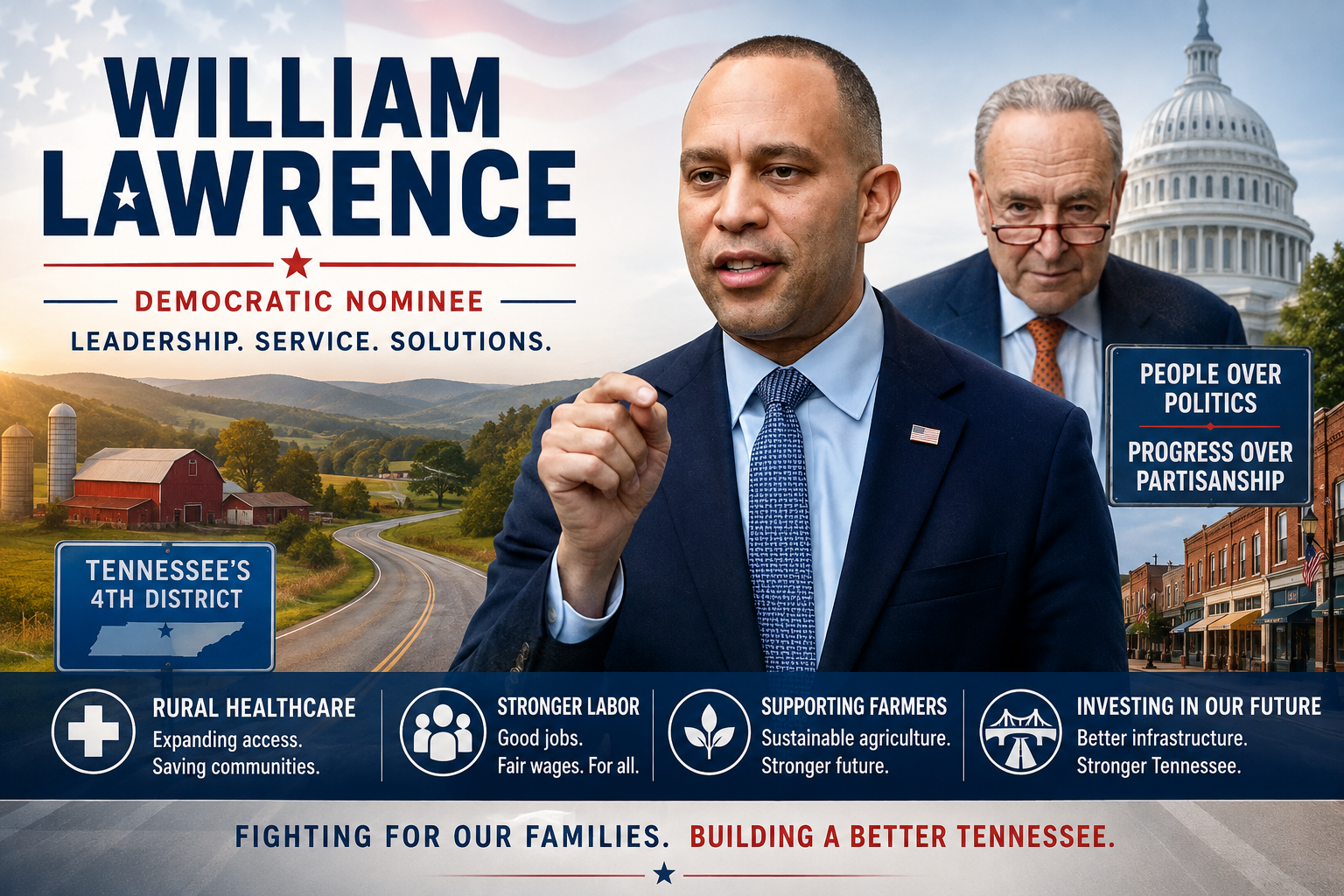
💡 William Lawrence Democratic Nominee: Strategic Analysis
An in-depth strategic analysis of William Lawrence, the Democratic nominee, focusing on rural healthcare, economic policy, and political viability in the 2024 landscape.
Executive Summary
The candidacy of William Lawrence as the Democratic nominee for Tennessee’s 4th Congressional District represents a critical shift in regional political strategy. This analysis highlights three primary pillars of his campaign: the revitalization of rural healthcare, the protection of labor rights, and a focus on agricultural sustainability. Data indicates that Tennessee ranks in the bottom tier for healthcare access, with 16 rural hospitals closing since 2010. Lawrence’s platform leverages these statistics to advocate for Medicaid expansion and federal oversight. Strategically, his campaign mirrors broader shifts identified in our August Strategic Analysis regarding economic trends and regional industry shifts. Key findings suggest that while the district remains a Republican stronghold, the focus on kitchen-table issues provides a unique path for competitive engagement in the 2024 cycle.
Introduction
Political landscapes in the American South are undergoing a period of intense scrutiny as traditional party boundaries are tested by localized economic crises. William Lawrence, an attorney and community organizer, has emerged as the Democratic nominee with a mandate to address the specific needs of Tennessee’s 4th District. This district, which spans from the suburbs of Nashville to the rural borders of Alabama, serves as a microcosm of the national divide between urban growth and rural stagnation. Lawrence enters this race at a time when the electorate is increasingly concerned with rising costs and declining services. By positioning himself as a populist advocate rather than a partisan operative, Lawrence seeks to bridge the gap between disparate voter blocks. This report provides a high-level strategic evaluation of his policy framework, campaign viability, and the broader implications for the Democratic Party’s southern strategy.
The Deep Dive: Policy Framework and Market Impact
To understand the strategic positioning of William Lawrence, one must examine the socio-economic data of Tennessee’s 4th District. According to the U.S. Census Bureau, the district has a median household income that fluctuates significantly between its northern and southern counties. This economic disparity is the foundation of Lawrence’s labor-focused platform.
Rural Healthcare and Infrastructure
The state of healthcare in Tennessee is a primary driver of Lawrence’s campaign. Research from the Chartis Center for Rural Health indicates that Tennessee is among the states most vulnerable to further hospital closures. Lawrence’s advocacy for the expansion of Medicaid under the Affordable Care Act is not merely a social policy but a strategic economic move. Estimates suggest that Medicaid expansion could bring over 1.3 billion dollars in federal funding to the state annually, potentially creating thousands of jobs in the healthcare sector. By framing healthcare as an infrastructure necessity, Lawrence appeals to the pragmatism of rural voters who have seen their local emergency rooms shuttered.
Labor Economics and Wage Growth
Lawrence has aligned his campaign with the resurgence of organized labor. In a state where right-to-work laws are constitutionally protected, his support for the PRO Act (Protecting the Right to Organize) marks a distinct departure from the status quo. Data from the Bureau of Labor Statistics shows that while Tennessee has seen job growth in manufacturing, wage growth has not consistently kept pace with inflation in the 4th District. Lawrence’s platform emphasizes a 15-dollar minimum wage and the protection of collective bargaining rights. This focus on labor ROI is a recurring theme in modern political discourse, much like the fiscal assessments found in our Banking Sector Strategic Analysis, which examines stability and digital evolution in financial markets.
Agricultural Sustainability and Small Farmers
Agriculture remains the backbone of the 4th District’s economy. However, small-scale farmers face increasing pressure from corporate consolidation and volatile global trade markets. Lawrence’s strategy involves advocating for antitrust enforcement in the agricultural sector and increasing federal subsidies for sustainable farming practices. By targeting the 2024 Farm Bill as a key legislative priority, he aims to secure the interests of local producers against multinational agribusiness entities. This long-term planning aligns with the projections discussed in the 2026 Strategic Outlook, which anticipates significant shifts in global food security and technology integration.
Campaign Viability and Voter Sentiment
The 4th District has historically leaned Republican, often by margins exceeding 30 points. However, internal polling and recent special election trends suggest a narrowing gap when Democratic candidates focus on non-partisan issues like infrastructure and utility costs. Lawrence’s campaign has utilized a grassroots funding model, eschewing corporate PAC money to maintain a brand of independence. This approach is designed to counter the incumbent’s significant fundraising advantage by building a volunteer-driven ground game. The success of this model depends on voter turnout, which in Tennessee has historically been among the lowest in the nation. Lawrence’s ability to mobilize non-voters and disenchanted independents is the primary variable in his path to victory.
What This Means For You
For the average resident of the 4th District or a political observer, the candidacy of William Lawrence offers several actionable insights:
- Healthcare Access: A Lawrence victory or a strong showing could signal a shift in the state's approach to Medicaid, potentially reopening rural clinics.
- Economic Policy: Expect a heightened focus on wage transparency and labor protections in regional manufacturing hubs.
- Political Participation: The emphasis on grassroots organizing suggests that local engagement can influence federal policy discussions even in traditionally non-competitive districts.
- Infrastructure Investment: The campaign’s focus on broadband and road maintenance highlights the urgent need for federal funding in underserved areas.
Expert Verdict
William Lawrence represents the modern iteration of the Southern Democrat: a candidate who prioritizes local economic survival over national culture wars. From a strategic standpoint, his campaign is a test case for whether a populist economic message can override deep-seated partisan identities in a rural-suburban district. While the mathematical path to victory remains uphill given the district's partisan lean, the Lawrence campaign is successfully shifting the debate toward issues that the incumbent can no longer ignore. His performance will likely serve as a blueprint for the Democratic National Committee’s approach to the South in the 2026 and 2028 cycles. The focus on tangible results rather than ideological purity is his greatest asset.
FAQ
Who is William Lawrence?
William Lawrence is the Democratic nominee for Tennessee’s 4th Congressional District. He is an attorney and community organizer known for his work in labor rights and healthcare advocacy.
What are the key issues of the Lawrence campaign?
The campaign focuses on expanding Medicaid, protecting labor unions, increasing the minimum wage, and supporting small-scale farmers through antitrust enforcement.
How does Lawrence plan to address rural hospital closures?
Lawrence advocates for Medicaid expansion and increased federal grants for rural health infrastructure to prevent further closures and restore emergency services.
What is the 4th District of Tennessee?
The 4th District is a geographically diverse region including counties like Rutherford, Bedford, and Franklin. It combines rapidly growing suburban areas with traditional agricultural communities.
Does William Lawrence accept corporate PAC money?
No, Lawrence has made it a cornerstone of his campaign to rely on individual donations and grassroots support to maintain independence from corporate interests.
Important Note: Legal Disclaimer: This article provides general information and is not legal advice. For specific legal issues, please consult with a qualified attorney.
Conclusion
The strategic positioning of William Lawrence as the Democratic nominee highlights a growing demand for economic accountability in rural America. By focusing on healthcare, labor, and agriculture, Lawrence provides a competitive alternative in a historically one-sided district. Regardless of the election outcome, his campaign has successfully elevated critical issues that will define the region's political and economic trajectory for years to come.





Comments 0
Leave a Reply
Your email address will not be published. Required fields are marked *
Be the first to share your thoughts!