
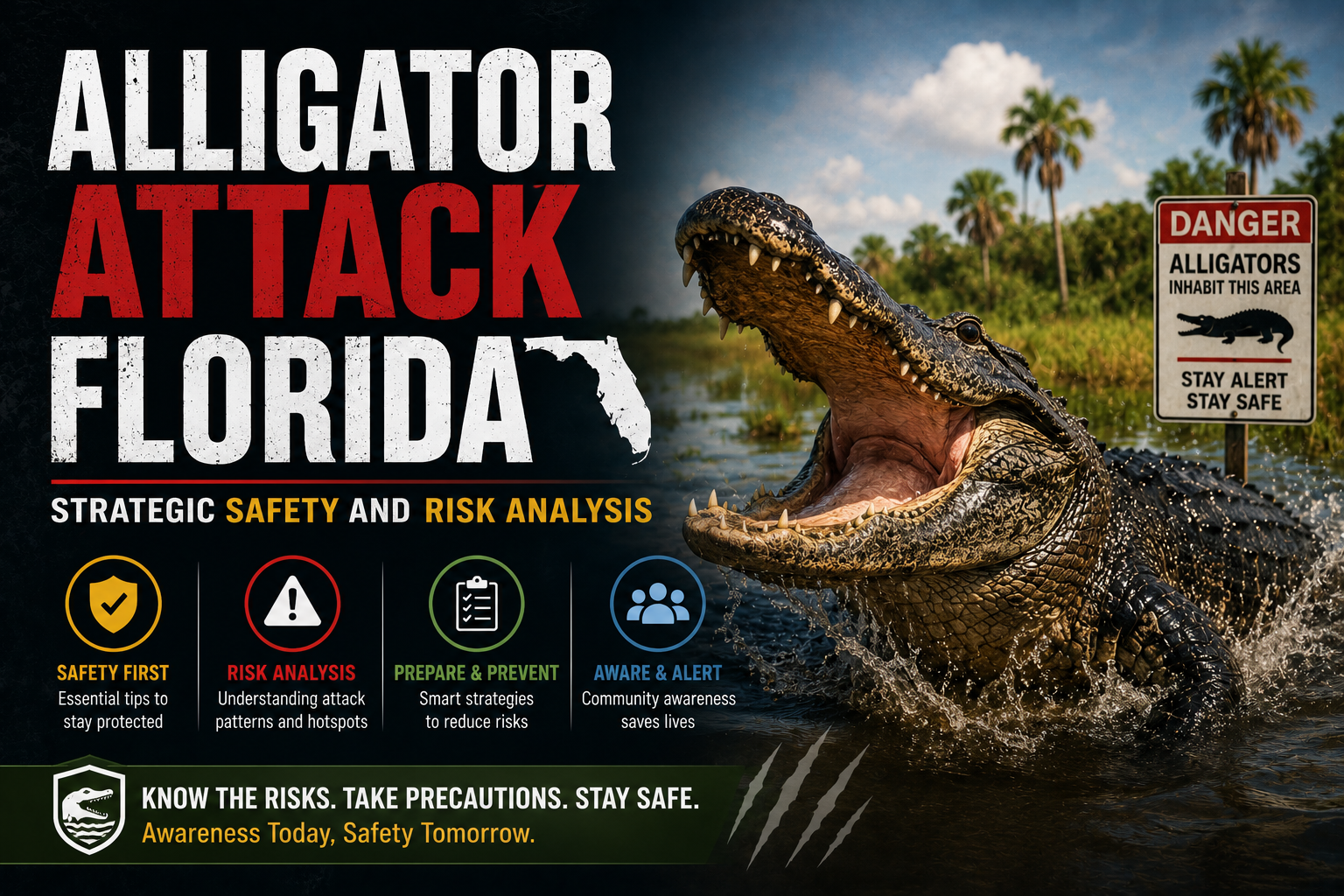
💡 Alligator Attack Florida: Strategic Safety and Risk Analysis
A comprehensive, data-driven analysis of alligator encounters in Florida, featuring FWC statistics, risk mitigation strategies, and expert safety protocols.
Executive Summary
Florida is home to an estimated 1.3 million alligators, inhabiting all 67 counties. Despite the high frequency of human-alligator proximity, the statistical probability of a serious unprovoked attack remains remarkably low. According to the Florida Fish and Wildlife Conservation Commission (FWC), there is an average of eight unprovoked alligator bites requiring professional medical treatment per year. Since 1948, only 26 fatalities have been recorded. This analysis explores the biological, environmental, and behavioral factors that contribute to these incidents, providing a strategic framework for risk assessment and public safety.
Introduction
The American alligator (Alligator mississippiensis) is a fundamental component of the Florida ecosystem. As the state population continues to grow, surpassing 22 million residents, the interface between urban development and natural habitats has narrowed. This proximity creates a complex dynamic where public safety must be balanced with wildlife conservation. Understanding the reality of alligator behavior is essential for anyone living in or visiting the Sunshine State. While media reports often focus on the sensational nature of these encounters, a strategic analysis reveals that most incidents are preventable through education and adherence to established safety protocols. Just as we analyze environmental risks in the Central Kentucky Floods: Strategic Disaster Analysis, understanding the hydrological and biological patterns of Florida is key to predicting and preventing dangerous wildlife interactions.
THE DEEP DIVE: Data, Biology, and Behavioral Patterns
1. Statistical Breakdown of Alligator Incidents
Data provided by the FWC from 1948 through 2022 indicates a total of 453 unprovoked bite incidents. When calculated against the massive growth in Florida's human population over the same period, the rate of incidents per capita has actually decreased. The majority of these bites are classified as minor, though the potential for severe injury or fatality exists whenever a large predator is involved. The risk is not distributed evenly throughout the year; there is a clear seasonal correlation with alligator activity levels.
2. The Biology of Aggression: Seasonal Triggers
Alligators are ectothermic, meaning their activity levels are dictated by external temperatures. During the winter months, their metabolism slows significantly, and they rarely feed. However, as temperatures rise in the spring, their activity increases. The primary windows for heightened risk include:
- Mating Season (April - June): Male alligators become more mobile and aggressive as they seek mates. This is the period when alligators are most likely to be found in unexpected locations, such as swimming pools or residential driveways.
- Nesting Season (June - August): Female alligators are highly protective of their nests. While they do not typically hunt humans, they will defend their territory with significant force if a person or pet approaches a nesting site.
3. Urban Encroachment and Habitat Fragmentation
The primary driver of human-alligator conflict is the loss of natural habitat. As wetlands are drained for residential and commercial development, alligators are forced into smaller, fragmented pockets of water. Retention ponds, golf course hazards, and drainage canals become makeshift habitats. These man-made water bodies often lack the natural prey density found in the Everglades, leading alligators to explore suburban areas for food. The legal frameworks surrounding wildlife management in these areas often mirror the complexity found in SCOTUSblog: Strategic Analysis of Legal Media Authority, where administrative law and public safety mandates intersect.
4. The Impact of Illegal Feeding
One of the most critical factors in alligator attacks is the habituation of the animal to humans. Naturally, alligators have a fear of people and will typically retreat when approached. However, when humans feed alligators, the animals lose this natural inhibition. They begin to associate humans with food, which leads to bold and aggressive behavior. In Florida, feeding alligators is a second-degree misdemeanor under Florida Statute 372.667. Strategic data shows that a significant portion of nuisance alligator reports involve animals that have been previously fed by residents or tourists.
5. The Statewide Nuisance Alligator Program (SNAP)
To manage the risks associated with alligators in developed areas, the FWC administers the Statewide Nuisance Alligator Program (SNAP). This program allows for the removal of alligators that are at least four feet in length and believed to pose a threat to people, pets, or property. In a typical year, SNAP receives over 15,000 complaints, resulting in the removal of approximately 8,000 nuisance alligators. This proactive management strategy is a primary reason why fatal attacks remain rare despite the high alligator population.
WHAT THIS MEANS FOR YOU: Actionable Safety Protocols
Navigating Florida's waterways requires a high level of situational awareness. Maintaining safety involves several key behavioral adjustments:
- Maintain Distance: Always keep a minimum distance of 60 feet from any alligator. If an alligator hisses or lunges, you are too close.
- Swim Only in Designated Areas: Never swim in fresh or brackish water outside of clearly marked swimming zones, especially at night or during dusk and dawn when alligators are most active.
- Pet Safety: Keep pets on a leash and away from the water's edge. Alligators frequently target small mammals, and a pet near the shoreline is at significant risk.
- Dispose of Fish Scraps Properly: If you are fishing, do not throw fish carcasses into the water. This acts as a form of unintentional feeding and attracts alligators to docks and boat ramps.
Managing these personal safety risks requires the same level of focus and strategic discipline seen in elite professional environments, as discussed in our Jannik Sinner: Strategic Analysis of the ATP World No. 1.
Expert Verdict / Future Outlook
The future of human-alligator coexistence in Florida depends on continued public education and robust management programs. As climate change alters water levels and temperatures, alligator migration patterns may shift, potentially leading them into even more frequent contact with human populations. Experts agree that the alligator is not a malicious predator but an opportunistic one. By respecting their habitat and strictly enforcing laws against feeding, the state can maintain its current low rate of serious incidents. The strategic takeaway is clear: awareness is the most effective tool for prevention.
FAQ: Authoritative Answers on Alligator Safety
How fast can an alligator run on land?
Alligators can reach speeds of up to 11 miles per hour on land. However, they are not built for long-distance running. They are ambush predators that rely on short bursts of speed. If you are a safe distance away, you can easily outrun an alligator.
What should I do if an alligator bites me?
The most effective response is to fight back. Strike the alligator on the nose, or poke its eyes. This may trigger the animal's release reflex. If the alligator attempts to perform a bone-crushing roll, you must try to roll with it to minimize limb damage. Seek immediate medical attention, as alligator bites carry a high risk of severe bacterial infection.
Are alligators more dangerous than crocodiles in Florida?
Florida is the only place in the world where both alligators and crocodiles coexist. American crocodiles are much rarer and generally more reclusive than alligators. While crocodiles can be more aggressive in other parts of the world, in Florida, the sheer number of alligators makes them the primary concern for public safety.
Do alligators climb fences?
Yes, alligators are surprisingly good climbers. They can scale chain-link fences if they are motivated to reach a body of water or a potential food source. Homeowners near water should consider solid barriers or specialized fencing if they are in high-activity areas.
Can I relocate an alligator myself?
No. Relocating an alligator is illegal and extremely dangerous. Alligators have a strong homing instinct and will often return to the site of capture, crossing roads and residential areas to do so. Only licensed nuisance alligator trappers authorized by the FWC are permitted to remove and handle these animals.
Conclusion
The strategic analysis of alligator attacks in Florida confirms that while the risk is real, it is statistically manageable. Through a combination of state-led management programs like SNAP, strict legal enforcement against feeding, and public adherence to safety protocols, Florida continues to be a safe place for residents and tourists to enjoy the natural environment. The key to safety lies in respecting the biological boundaries of these apex predators and maintaining a vigilant, data-informed approach to wildlife interaction.





Comments 0
Leave a Reply
Your email address will not be published. Required fields are marked *
Be the first to share your thoughts!