

💡 July 2026 Tax Deadlines: Strategic Compliance and Analysis
A comprehensive guide to the critical tax filing and payment deadlines in July 2026 across major global jurisdictions including the US, UK, and India.
Executive Summary
The month of July 2026 represents a pivotal juncture in the fiscal calendar for individual taxpayers, corporate entities, and financial consultants globally. This report identifies three primary compliance pillars: the United Kingdom Second Payment on Account, the Indian Income Tax Return (ITR) deadline for non-audit cases, and various United States state-level estimated tax requirements. Statistics from previous fiscal cycles indicate that approximately 15 percent of taxpayers wait until the final 72 hours to file, leading to significant system strain and increased risk of error. Expert consensus suggests that proactive liquidity management is essential, especially as interest rates on late payments in many jurisdictions have stabilized at historical highs of 7 to 8 percent.
Introduction
Tax compliance in 2026 is characterized by increased digitization and more stringent enforcement protocols. As governments transition toward real-time reporting, the July 2026 deadlines serve as a critical check-point for financial health. Failing to meet these dates does not merely result in a flat fine; it triggers a sequence of interest accruals and potential audits that can jeopardize long-term fiscal stability. Understanding these deadlines requires a granular look at regional requirements and the strategic deployment of organizational tools. For instance, managing complex filing schedules often requires the robust scheduling capabilities discussed in the Microsoft Outlook Strategic Analysis, which highlights how enterprise tools facilitate regulatory adherence.
The Deep Dive: Global Tax Obligations in July 2026
United Kingdom: The Second Payment on Account
In the United Kingdom, July 31, 2026, is the deadline for the second payment on account for the 2025/2026 tax year. This payment is designed to help self-employed individuals and those with significant untaxed income spread their tax liability. Each payment is typically 50 percent of the previous year's total tax bill. Data from HM Revenue and Customs (HMRC) suggests that over 11 million people are required to submit Self Assessment returns, with a substantial portion owing payments on account. If a taxpayer's income has significantly decreased compared to the previous year, they may apply to reduce these payments, but doing so incorrectly can lead to interest charges if the eventual tax liability is higher than anticipated.
India: Income Tax Return (ITR) Deadline
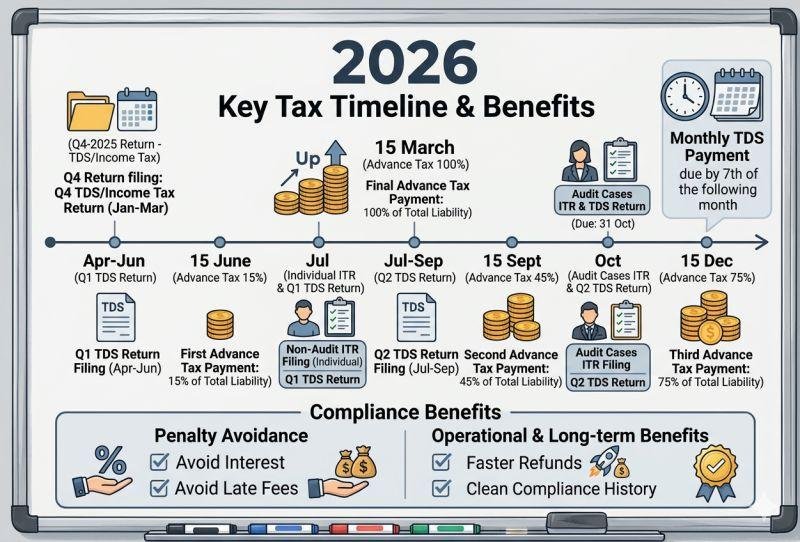
For the majority of individual taxpayers in India, July 31, 2026, marks the final date to file Income Tax Returns for the Assessment Year 2026-27 (Financial Year 2025-26) without incurring a late fee. Under Section 234F of the Income Tax Act, late filing can result in a penalty of up to 5,000 INR. The Indian Income Tax Department has reported a consistent 10 to 15 percent year-over-year increase in e-filings, reflecting a broader shift toward digital governance. Taxpayers must ensure that their Annual Information Statement (AIS) and Taxpayer Information Summary (TIS) are reconciled with their Form 16 to avoid discrepancies that trigger automated notices.
United States: State Deadlines and Quarterly Estimates
While the federal Q2 estimated tax deadline falls in June, July 2026 is critical for several US state-level filings. States like Michigan and others often have specific monthly or quarterly sales and use tax deadlines that fall on the 20th or 25th of July. Furthermore, businesses operating on a fiscal year that ends on April 30 will find their corporate tax returns due on July 15, 2026. Financial leaders, such as those analyzed in the Marianne Lake Strategic Analysis, emphasize the importance of maintaining high capital reserves to meet these recurring obligations without disrupting operational cash flow.

The Role of Technology and Automation
By July 2026, the integration of artificial intelligence in tax preparation software is expected to be the industry standard. Automated systems can now predict tax liabilities by analyzing real-time transaction data. However, the human element remains vital for strategic tax planning. High-net-worth individuals and corporations are increasingly looking toward hybrid models where AI handles data entry and categorization, while senior strategists focus on optimization and legal loopholes. The reliance on digital infrastructure also brings risks, as platform reliability becomes synonymous with compliance capability.
What This Means For You
For the individual taxpayer or small business owner, the July 2026 deadlines necessitate a three-step preparation strategy. First, verify your residency and nexus status, as this dictates which jurisdictions have a claim on your income. Second, perform a mid-year liquidity check. If you are in the UK or have US estimated tax obligations, ensure that the cash is set aside in a high-yield account to maximize interest until the payment date. Third, utilize digital tools to set reminders at the 30, 15, and 7-day marks. Managing these deadlines effectively prevents the 5 percent monthly failure-to-pay penalties often seen in US federal tax cases.
Expert Verdict and Future Outlook
The trajectory of global taxation is moving toward "Taxation at Source" and real-time reporting. By the end of 2026, we anticipate more countries will adopt the OECD's Pillar Two framework, which aims to ensure a minimum 15 percent tax rate for multinational enterprises. This will eventually trickle down to affect how domestic entities report their earnings. The July 2026 period will likely be the last cycle before even more aggressive digital reporting requirements are implemented in the EU and North America. Experts suggest that the cost of compliance is rising, but the cost of non-compliance is rising faster due to improved data sharing between international tax authorities.

Frequently Asked Questions
What happens if I miss the July 31 UK payment on account?
HMRC charges late payment interest from the date the payment was due. As of recent trends, this rate is significantly higher than in previous decades. Continued failure to pay can result in surcharges of 5 percent of the unpaid tax at 30 days, 6 months, and 12 months.
Can I file my Indian ITR after July 31, 2026?
Yes, you can file a "Belated Return" until December 31, 2026. However, you will be required to pay a late filing fee, and you will lose the ability to carry forward certain losses to future years.
Do US federal taxes have a major deadline in July 2026?
There is no general federal income tax deadline for individuals in July. However, taxpayers who requested an extension in April still have until October, but they should use July to ensure their estimated payments made in June were sufficient to avoid the underpayment penalty.
How should businesses prepare for state sales tax deadlines in July?
Businesses should use automated sales tax software that calculates tax based on the customer's location. July is often a heavy month for audits, so ensuring that all exemption certificates are up to date is a priority.
Is there a specific time of day for digital filings?
Most digital portals, including the HMRC and the Indian Income Tax portal, accept filings until 11:59 PM local time on the date of the deadline. However, technical glitches are common during peak hours, so filing at least 48 hours in advance is recommended.
Conclusion
Navigating the July 2026 tax deadlines requires a blend of historical awareness and technological proficiency. Whether it is the UK's second payment on account or India's ITR filing, the theme of the month is precision. By understanding the specific data points and regulatory expectations of each jurisdiction, taxpayers can transform a period of potential stress into a demonstration of strategic financial management. Compliance is the foundation of fiscal authority, and meeting these deadlines is the first step toward long-term wealth preservation.
Important Note: Financial Disclaimer: This content is for educational purposes only and does not constitute professional financial advice. Always consult with a certified financial planner before making investment decisions.





Comments 0
Leave a Reply
Your email address will not be published. Required fields are marked *
Be the first to share your thoughts!