

💡 General Asim Munir: Strategic Leadership and Economic Stability
An authoritative analysis of General Asim Munir’s strategic influence on Pakistan’s economic recovery, regional security, and the SIFC framework.
Executive Summary
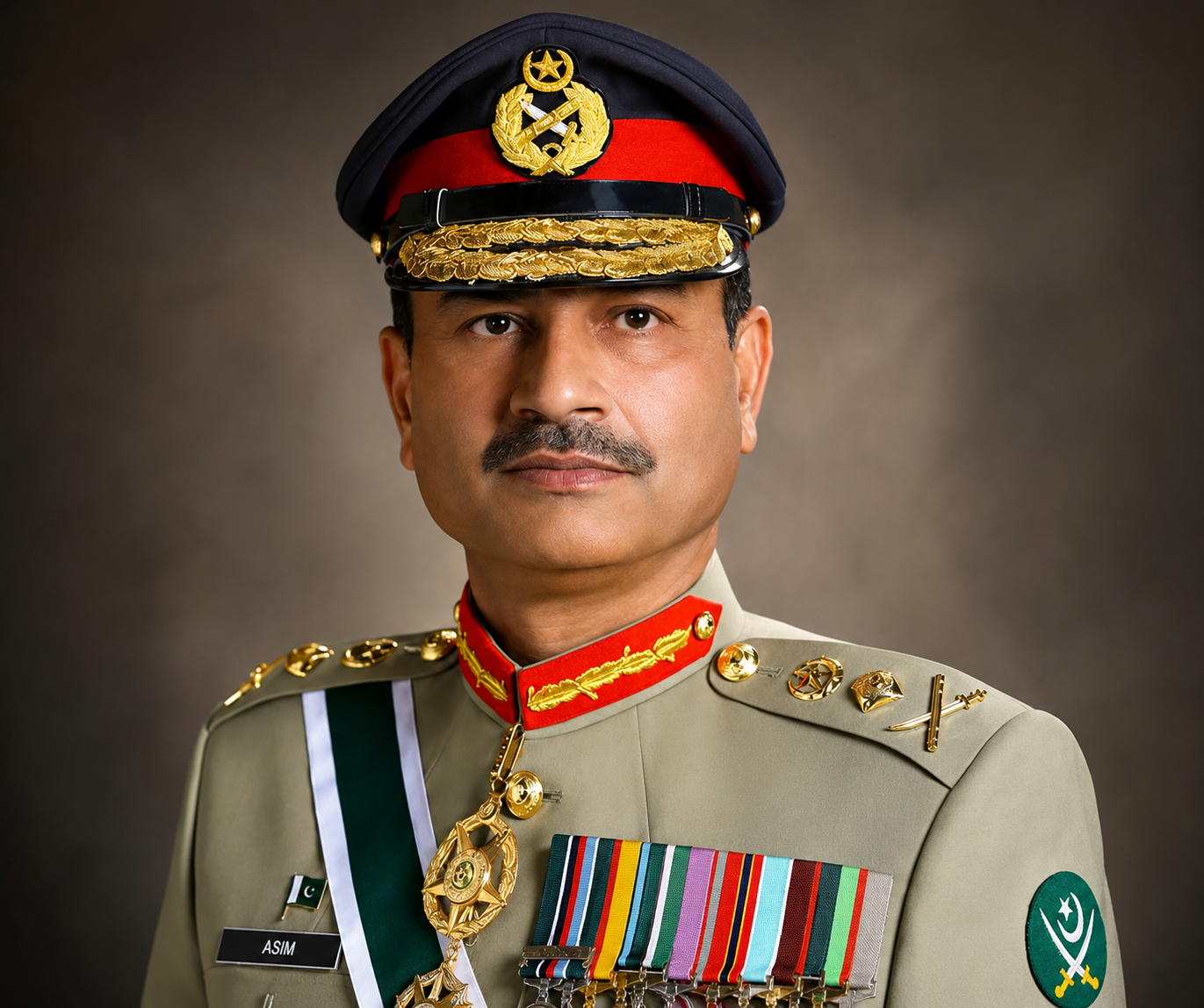
Field Marshal Syed Asim Munir, who became the 11th Chief of Army Staff (COAS) of Pakistan in November 2022, assumed command at a critical juncture defined by high inflation, political polarization, economic instability, and a resurgence in regional militancy. In December 2025, he was also appointed Pakistan’s first Chief of Defence Forces (CDF) while continuing concurrently as COAS for a five-year tenure.
This strategic analysis highlights three primary pillars of his tenure: the institutionalization and expansion of the Special Investment Facilitation Council (SIFC), the implementation of a comprehensive counter-terrorism framework under Azm-e-Istehkam, and the growing role of economic stability within Pakistan’s broader national-security strategy. Key investment ambitions associated with the SIFC include a target of attracting up to $100 billion in investment over five years, particularly from Gulf Cooperation Council (GCC) countries. This figure represents an investment target rather than realized foreign direct investment (FDI).
Under his tenure, Pakistan’s military leadership has taken a more prominent role in economic diplomacy and investment facilitation, while the country has worked to stabilize its economy under a $7 billion IMF Extended Fund Facility (EFF) approved in 2024.
Introduction
The appointment of General Asim Munir in November 2022 marked a significant shift in Pakistan’s domestic and foreign policy trajectory. He became the 11th Chief of Army Staff and was previously the first Pakistani Army Chief to have headed both the Military Intelligence (MI) and the Inter-Services Intelligence (ISI).
His leadership has been characterized by a strong emphasis on national security, economic stability, investment facilitation, and counter-terrorism. Unlike the immediate economic environment faced by some of his predecessors, General Munir has navigated an era where economic security has increasingly been treated as an important component of national security.
This analysis examines how the strategic initiatives associated with his tenure are reshaping Pakistan’s interaction with global markets, regional security challenges, and major economic partners, particularly China and the GCC countries.
THE DEEP DIVE: Strategic Pillars of Leadership
1. The SIFC and Economic Diplomacy
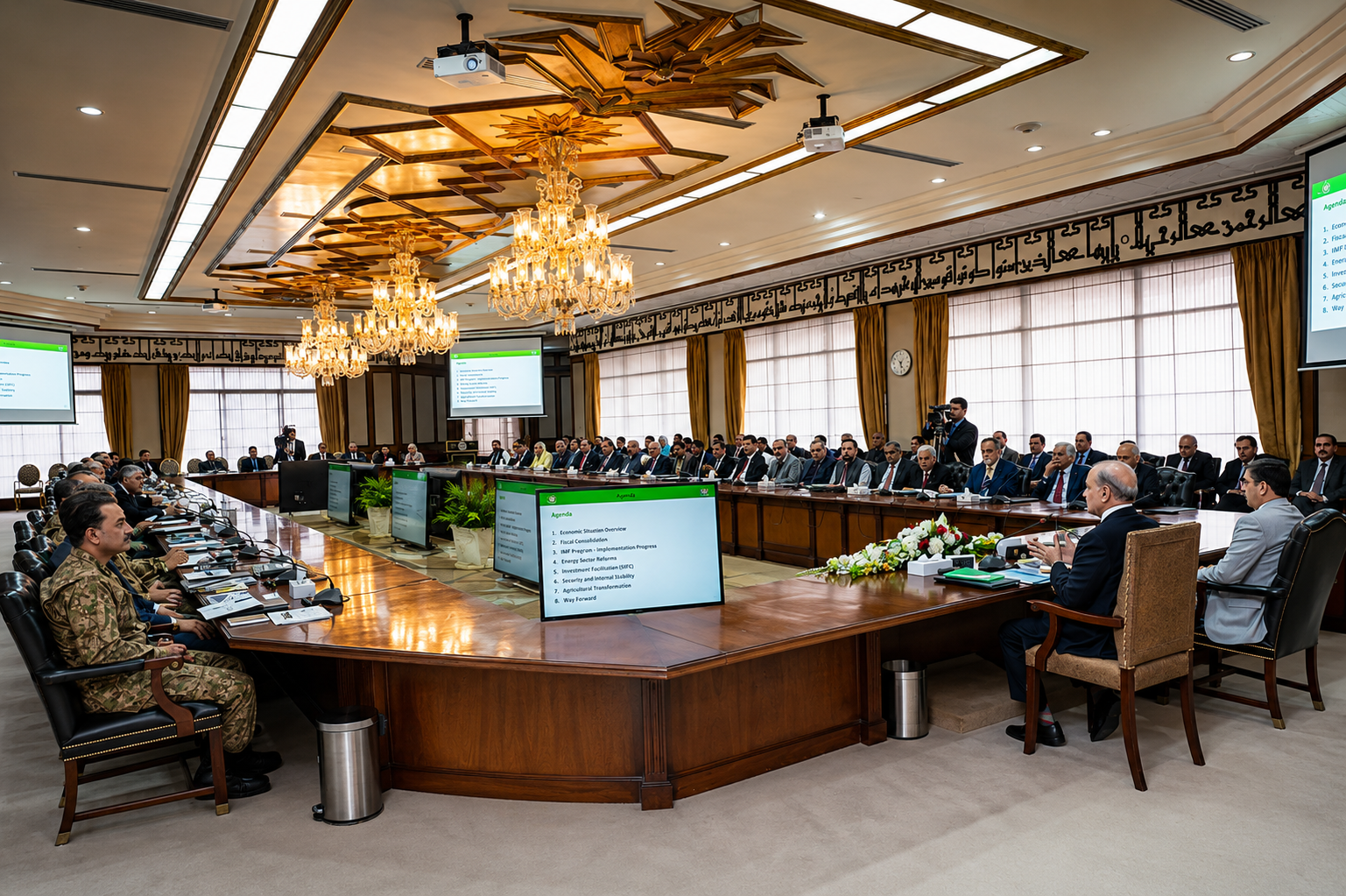
One of the most significant economic initiatives during General Munir’s tenure has been the development and expansion of the Special Investment Facilitation Council (SIFC). Established by the Government of Pakistan in 2023, the SIFC was designed as a single-window mechanism to facilitate investment and reduce bureaucratic barriers, particularly for strategic international investors. Its priority sectors include agriculture, mining and minerals, information technology, energy, and other areas considered important to Pakistan’s economic development.
The SIFC has also strengthened coordination between civilian institutions and the military in facilitating major investment projects. Rather than describing the military as a formal “guarantor” of policy continuity, its role is better understood as part of the broader coordination and implementation mechanism established by the government.
This approach mirrors certain aspects of West Bengal Government Policy: A Strategic Analysis, where institutional coordination and targeted investment policies are used to support industrial and economic development.
The SIFC has promoted investment discussions and agreements with countries including Saudi Arabia, the United Arab Emirates, and Qatar, reflecting Pakistan’s increasing emphasis on investment-oriented economic diplomacy. However, announced commitments and memoranda of understanding should not be treated as equivalent to realized foreign direct investment. Pakistan’s actual FDI inflows have remained substantially below the larger investment ambitions associated with the SIFC.
The Green Pakistan Initiative is another component of Pakistan’s broader agricultural development strategy. The initiative has identified approximately 4.4 million acres of potentially cultivable land for agricultural development. However, estimates of its future economic contribution should be treated as projections rather than guaranteed GDP gains, as the eventual results will depend on investment, water availability, infrastructure, agricultural productivity, and implementation.
2. Counter-Terrorism and Regional Security
Security remains a primary concern for Pakistan as the Tehrik-e-Taliban Pakistan (TTP) and separatist militant organizations in Balochistan have increased their operational activity. According to the Pakistan Institute for Conflict and Security Studies (PICSS), Pakistan recorded 645 militant attacks in 2023 compared with 380 in 2022, representing an increase of approximately 70 percent. PICSS also reported significant increases in deaths and injuries resulting from militant violence during the same period.
In response to the deteriorating security environment, Pakistan introduced the Azm-e-Istehkam (Resolve for Stability) framework in 2024. The initiative was presented by the Pakistani government as a multi-domain, multi-agency, whole-of-system national framework, rather than a conventional large-scale military operation. It combines intelligence-led counter-terrorism efforts with diplomatic, legal, political, information, and socioeconomic measures.
The military’s role in protecting the China-Pakistan Economic Corridor (CPEC) and Chinese personnel has also remained strategically important. Security concerns surrounding Chinese citizens and infrastructure have made the protection of CPEC-related projects a major component of Pakistan-China relations. At the same time, the second phase of CPEC has placed greater emphasis on industrial cooperation, business-to-business engagement, investment, and the development of Special Economic Zones.
General Munir’s engagement with Chinese leadership has repeatedly emphasized the importance of security for Chinese citizens and projects in Pakistan. However, the continuation and success of CPEC Phase II depends on broader cooperation between the Pakistani and Chinese governments, private-sector participation, financing, infrastructure, and the overall security environment.
This level of strategic coordination can be compared with the high-stakes operational oversight seen in United Airlines Strategic Analysis: Aviation Market Leadership, where infrastructure, operational security, and institutional coordination are central to long-term performance.
3. Civil-Military Synergy and Governance
General Munir has repeatedly emphasized the importance of economic stability, national cohesion, reducing smuggling, improving tax compliance, and strengthening Pakistan’s economic base. His engagements with business leaders have focused on investment, economic reform, taxation, currency stability, and measures intended to improve the country’s overall economic environment.
In 2023, Pakistan intensified its crackdown on illegal foreign-exchange trading, smuggling, and activities associated with informal currency markets. The measures contributed to a significant short-term strengthening of the Pakistani rupee. During September 2023, the PKR appreciated by approximately 6.1 percent against the U.S. dollar, making it one of the strongest-performing currencies during that period.
However, this improvement was temporary and should not be presented as evidence that the crackdown alone resolved Pakistan’s broader economic problems. Exchange-rate movements were influenced by several factors, including enforcement measures, market expectations, foreign-exchange availability, import restrictions, and broader economic policies.
The expanding military role in economic coordination represents a notable development compared with the traditional role of Pakistan’s armed forces as primarily a security institution. Supporters argue that greater institutional coordination can improve policy implementation, attract investment, combat illicit economic activity, and support national economic stability. Critics, however, have raised concerns about the appropriate balance between civilian institutions and military influence in economic policymaking.
General Munir’s leadership therefore reflects a broader model of crisis management in which national security, economic stability, investment, and governance are increasingly treated as interconnected strategic priorities. This approach can be compared with the strategic and controversial leadership shifts explored in Sam Altman: Strategic Analysis of AI Leadership and ROI.
WHAT THIS MEANS FOR YOU
For the average citizen, business owner, and international observer, General Asim Munir’s tenure reflects a period in which economic stability, national security, and investment facilitation have become increasingly interconnected. For the business community, the SIFC represents an effort to create a more coordinated investment environment and reduce administrative barriers. For the general public, the government’s economic stabilization program has involved difficult fiscal and monetary measures alongside efforts to achieve longer-term structural reforms under the IMF program.
Key takeaways include:
-
Policy Continuity: The increased involvement of military leadership in economic coordination may provide greater continuity for certain strategic investment and security initiatives. However, economic policy ultimately remains dependent on government institutions, political developments, IMF commitments, and broader economic conditions.
-
Security Focus: Pakistan continues to face significant militant threats, particularly in Khyber Pakhtunkhwa and Balochistan. Intelligence-led counter-terrorism operations and enhanced border-security measures are intended to reduce militant violence, although intensified security activity can also create short-term instability in affected regions.
-
Investment Opportunities: Sectors including mining, minerals, agriculture, energy, and information technology have been identified as investment priorities under Pakistan’s economic strategy and the SIFC framework. Projects such as Reko Diq have attracted significant international attention and have the potential to contribute to employment, exports, infrastructure development, and technology transfer if successfully implemented.
Expert Verdict / Future Outlook
The strategic trajectory associated with General Asim Munir’s tenure can be characterized as one of greater consolidation between national security, economic policy, and investment diplomacy. As Pakistan moves through 2026, the effectiveness of this approach should be assessed through several measurable indicators: continued progress under the IMF program, fiscal and external-account stability, growth in productive investment, conversion of announced investment commitments into actual capital inflows, and a sustained reduction in militant violence.
Pakistan’s increasing focus on investment from GCC countries, China, and other international partners reflects an effort to supplement traditional financial assistance with longer-term investment and commercial partnerships. However, investment announcements and MoUs will have limited economic impact unless they translate into actual capital deployment, productive projects, exports, employment, and government revenue.
The SIFC therefore represents both an opportunity and a test for Pakistan’s economic strategy. If it can successfully convert investment commitments into productive capital while improving institutional coordination and investor confidence, it could contribute meaningfully to Pakistan’s long-term economic development. At the same time, the government faces the challenge of maintaining macroeconomic discipline while addressing inflation, employment, taxation, energy costs, and the broader economic pressures faced by households and businesses.
Ultimately, the long-term assessment of General Munir’s strategic role will depend not only on short-term stabilization, but also on whether Pakistan can achieve sustainable economic growth, stronger institutions, improved internal security, and greater investor confidence without weakening civilian institutional governance.

FAQ
What is General Asim Munir's background?
Field Marshal Syed Asim Munir became Pakistan’s Chief of Army Staff (COAS) in November 2022. Before becoming Army Chief, he served as Director General of Military Intelligence (MI) and later as Director General of Inter-Services Intelligence (ISI), making him the first Pakistani Army Chief to have headed both organizations. He was trained at the Officers Training School in Mangla and was awarded the Sword of Honour during his military training. In December 2025, he was appointed Pakistan’s first Chief of Defence Forces (CDF), while continuing concurrently as COAS.
What is the SIFC and why does it matter?
The Special Investment Facilitation Council (SIFC) is a civil-military investment facilitation mechanism established by the Government of Pakistan in 2023. It was designed to provide a coordinated, single-window framework for facilitating investment and reducing administrative barriers, particularly in sectors such as agriculture, mining, information technology, energy, and infrastructure.
The SIFC is important because it aims to improve coordination between government institutions and investors and attract greater international investment, particularly from GCC countries and other strategic partners. However, it should not be described as providing a formal “sovereign guarantee” of policy stability. The effectiveness of the SIFC ultimately depends on whether investment commitments and MoUs are converted into actual capital inflows and productive projects.
How has the security situation changed under his command?
Pakistan experienced a significant increase in militant violence during General Munir’s tenure, particularly in Khyber Pakhtunkhwa and Balochistan. Militant organizations including the Tehrik-e-Taliban Pakistan (TTP) and Balochistan-based separatist groups have remained major security challenges.
The government has responded through intelligence-led counter-terrorism operations, border-security measures, and the broader Azm-e-Istehkam framework introduced in 2024. The government described Azm-e-Istehkam as a whole-of-system national framework combining security operations with diplomatic, legal, political, information, and socioeconomic measures.
What is his stance on the economy?
General Munir has repeatedly emphasized the connection between economic stability and national security. During his tenure, the military leadership has been involved more prominently in economic coordination, including efforts to attract investment, combat smuggling and illegal currency-market activity, improve tax compliance, and support initiatives such as the SIFC and Green Pakistan Initiative.
Pakistan has also been implementing a $7 billion IMF Extended Fund Facility approved in 2024, which requires fiscal consolidation and structural reforms. It is more accurate to describe Munir as supporting the broader national economic-stabilization agenda rather than attributing individual IMF policy decisions directly to him.
How does he view Pakistan's foreign policy?
During General Munir’s tenure, Pakistan has sought to strengthen strategic and economic relations with China and the Gulf states, while continuing diplomatic and security engagement with the United States and other international partners.
His tenure has placed particular emphasis on economic diplomacy, investment partnerships, regional security, and the protection of Chinese citizens and CPEC-related projects. However, Pakistan’s foreign policy is determined by the broader state structure, including the civilian government, Ministry of Foreign Affairs, military leadership, and other national institutions, rather than by the Army Chief alone.
Conclusion
General Asim Munir’s tenure represents a significant development in Pakistan’s approach to the relationship between national security, economic stability, investment, and strategic diplomacy. The growing role of the military in economic coordination, particularly through mechanisms such as the SIFC, reflects the Pakistani establishment’s increasing view that economic resilience is closely connected to national security.
At the same time, the SIFC and other investment initiatives should be evaluated on measurable outcomes rather than announcements alone. The conversion of investment commitments and MoUs into actual capital inflows, productive projects, exports, employment, and government revenue will be critical to determining their long-term economic impact.
Pakistan also continues to face substantial security challenges, particularly from militant groups operating in Khyber Pakhtunkhwa and Balochistan. The effectiveness of the Azm-e-Istehkam framework and other counter-terrorism measures will ultimately depend on whether militant violence can be reduced while maintaining political stability and institutional capacity.
As Pakistan moves through 2026, the broader test of the strategy associated with General Munir will be whether the country can maintain macroeconomic stability, meet its IMF commitments, attract productive long-term investment, improve internal security, and strengthen institutional governance.
The central challenge is therefore not simply achieving short-term stability, but converting stabilization into sustainable economic growth, stronger institutions, improved security, and greater investor confidence while maintaining an appropriate balance between civilian governance and military involvement in national policymaking.





Comments 0
Leave a Reply
Your email address will not be published. Required fields are marked *
Be the first to share your thoughts!