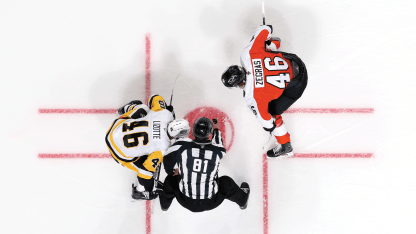
💡 The Battle of Pennsylvania: A Deep Dive into the Flyers vs. Penguins Rivalry
An in-depth look at the historic NHL rivalry between the Philadelphia Flyers and the Pittsburgh Penguins, covering legendary players, iconic playoff moments, and the clash of team identities.
The rivalry between the Philadelphia Flyers and the Pittsburgh Penguins, known as the Battle of Pennsylvania, is one of the most intense and storied feuds in professional sports. It is defined by geographic proximity, contrasting styles of play, and a relentless history of high-stakes postseason matchups. Since both teams entered the NHL during the 1967 expansion, this cross-state clash has evolved from a lopsided dominance by Philadelphia into a modern-day battle of superstars, where every game—regardless of the standings—carries the weight of regional pride.
The Intangible Heat of the Keystone State Clash
To understand the Flyers-Penguins rivalry, you have to understand the geography of Pennsylvania. Separated by about 300 miles of the Pennsylvania Turnpike, Philadelphia and Pittsburgh represent two very different cultural hubs. This tension naturally spills onto the ice. Unlike rivalries built solely on winning championships, this one is fueled by a genuine dislike between the fanbases and the organizations. Whether it is a regular-season game in January or a deciding Game 7 in the playoffs, the atmosphere is consistently electric, often resulting in high-scoring affairs, physical confrontations, and legendary performances.
Foundations of Friction: How the 1967 Expansion Ignited a Cross-State Feud
Both franchises were born in the 1967 NHL expansion, which doubled the size of the league from six to twelve teams. However, they took very different paths to success. In the early years, the Flyers established a psychological stranglehold on the Penguins that lasted for decades. This period was famously known as the "Spectrum Hex." From 1974 to 1989, the Penguins failed to win a single game at the Flyers' home arena, the Spectrum, going 0-39-3 over 42 games.
While the Flyers were winning back-to-back Stanley Cups in 1974 and 1975 with their "Broad Street Bullies" identity, the Penguins struggled to find their footing. This early imbalance created a chip on the shoulder of Pittsburgh fans that didn't truly dissipate until the arrival of generational talents in the 1980s, which finally leveled the playing field and turned a one-sided beating into a true rivalry.
Postseason Fireworks: Analyzing Iconic Playoff Series and Overtime Thrillers
The rivalry truly cemented itself as hockey’s premier grudge match through a series of chaotic and legendary playoff encounters. Two specific series stand out in the minds of fans:
- The 2000 Eastern Conference Semifinals: This series featured the longest game in the modern era. In Game 4, the teams played five full overtime periods before Keith Primeau finally scored to end the game at 2:35 AM. It remains a testament to the physical and mental endurance these two teams demand from one another.
- The 2012 Eastern Conference Quarterfinals: Often described as "beautiful mayhem," this series saw 56 goals scored in just six games. It was a throwback to the high-scoring 80s, featuring multiple hat tricks, goalie meltdowns, and a level of animosity that resulted in dozens of fighting majors.
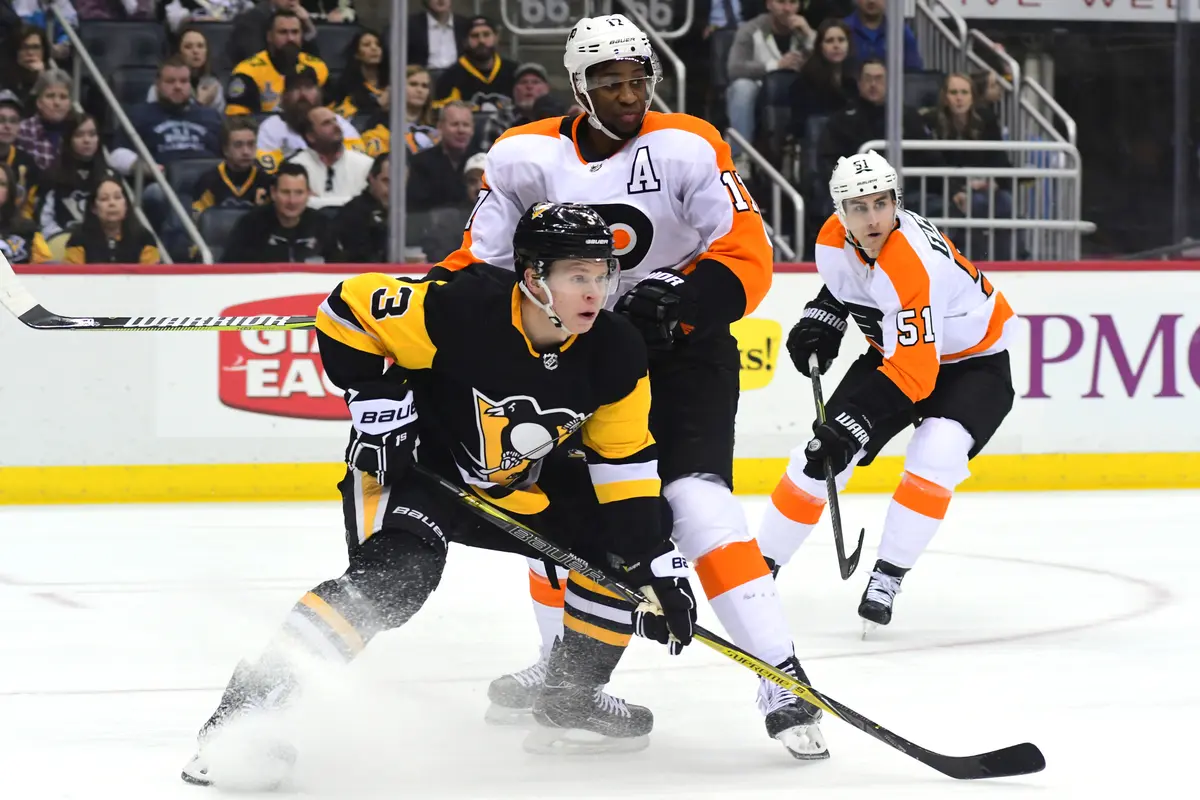
Generational Icons: Comparing the Legacies of Lemieux, Crosby, Clarke, and Lindros
The Battle of Pennsylvania has been defined by the superstars who have worn the sweaters. The contrast in these icons often mirrors the identities of the cities themselves.
Pittsburgh’s Finesse: The Penguins have been defined by transcendent, skilled centers. Mario Lemieux saved the franchise in the 80s, bringing a level of grace and scoring ability that few had ever seen. Sidney Crosby followed in his footsteps, becoming the face of the NHL and a perennial thorn in the side of Philadelphia. Their legacies are built on championships and scoring titles.
Philadelphia’s Grit: The Flyers’ icons represent the "hard-nosed" Philly identity. Bobby Clarke was the toothless, relentless leader of the Bullies who would do anything to win. Later, Eric Lindros brought a combination of massive size and elite skill that revolutionized the "Power Forward" position. While the Flyers' stars were often just as skilled as Pittsburgh’s, their legacies are frequently associated with physical dominance and intimidation.
The Clash of Identities: Broad Street Grit vs. Steel City Skill
The rivalry is often framed as a battle of philosophies. Historically, the Flyers have embraced a "tough to play against" mentality. They prioritize size, aggressive forechecking, and an intimidating presence near the crease. This "Broad Street" identity has made them one of the most penalized but also one of the most respected teams in the league.
Conversely, the Penguins have historically leaned into "Steel City Skill." From the days of Lemieux and Jaromir Jagr to the era of Crosby and Evgeni Malkin, Pittsburgh has focused on speed, power-play efficiency, and offensive creativity. When these two styles clash, it creates a fascinating tactical battle: can the Flyers' physicality disrupt the Penguins' rhythm, or will Pittsburgh’s skill eventually carve through the Flyers' defense?
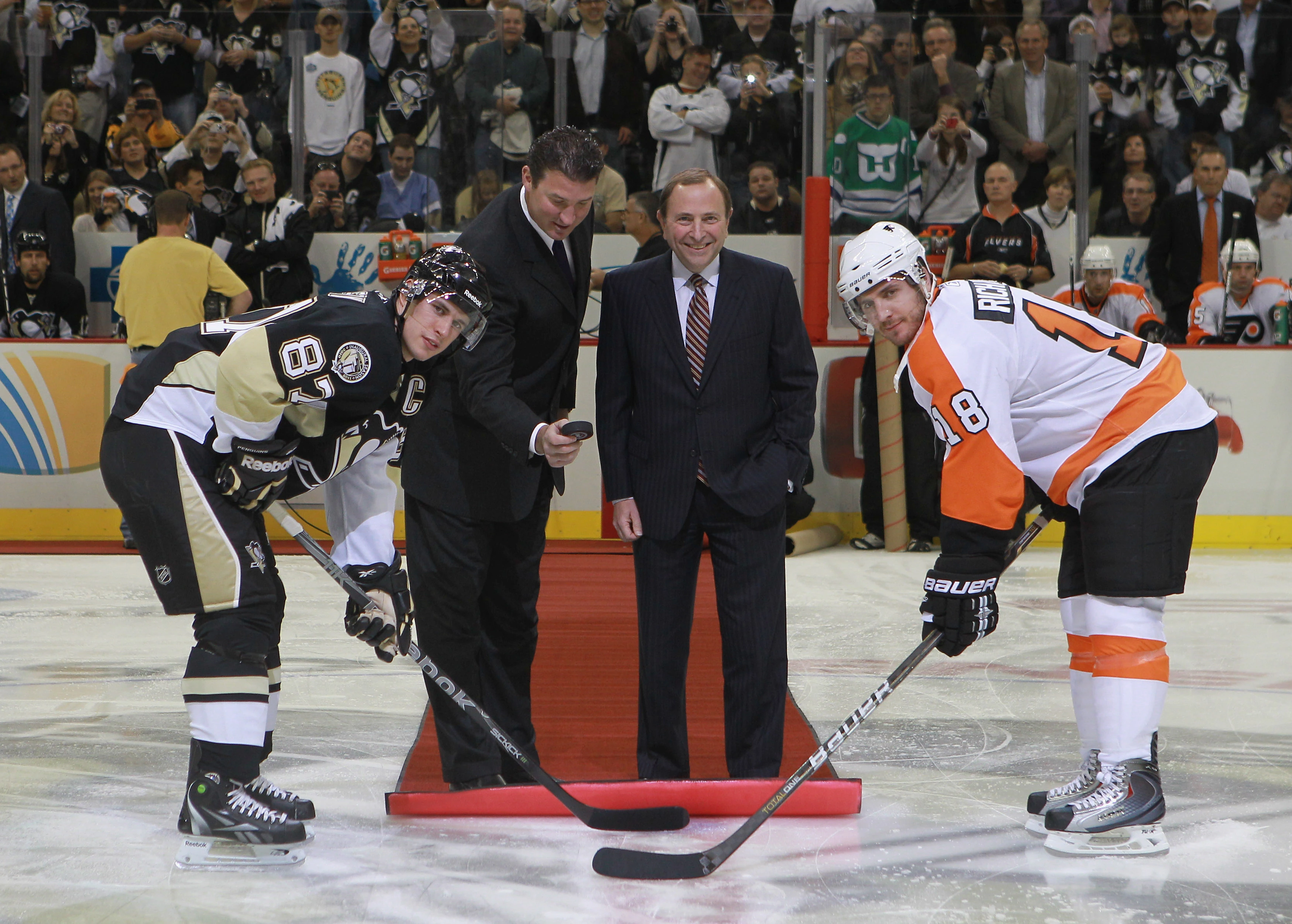
Statistical Dominance: Head-to-Head Records and All-Time Scoring Leaders
In terms of regular-season records, the Flyers held a significant lead for the first 40 years of the rivalry. However, the Penguins have closed the gap significantly during the Crosby era. While the Flyers lead in total regular-season wins, the Penguins hold the edge in the ultimate category: Stanley Cup championships (5 to the Flyers' 2).
Individual scoring in this rivalry is equally impressive. Mario Lemieux and Sidney Crosby both sit at the top of the list for points scored against Philadelphia, while Flyers legends like Bobby Clarke and Brian Propp historically tormented Pittsburgh. Even in the modern era, games between these two teams tend to be high-scoring, with the 3-2 or 4-3 scorelines being common, reflecting the offensive talent usually present on both benches.

Frequently Asked Questions About the Flyers-Penguins Matchup
Who has won more games head-to-head?
Historically, the Philadelphia Flyers hold the lead in total regular-season wins against the Penguins. However, the Penguins have been more successful in the postseason since the 1990s.
What was the "Spectrum Hex"?
The Spectrum Hex refers to a 15-year period (1974–1989) during which the Pittsburgh Penguins were unable to win a single game against the Flyers in Philadelphia.
Which player has the most points in the rivalry?
Mario Lemieux holds the record for the most career points against the Flyers, followed closely by Sidney Crosby. Both players have historically performed at an elite level during the Battle of Pennsylvania.
Why is it called the Battle of Pennsylvania?
The name comes from the fact that both teams are based in Pennsylvania and were founded in the same year (1967). It represents the divide between the eastern (Philadelphia) and western (Pittsburgh) parts of the state.
Conclusion
The Battle of Pennsylvania remains hockey’s premier grudge match because it is more than just a game; it is a clash of cultures and histories. While the names on the jerseys change, the intensity does not. From the era of the Broad Street Bullies to the modern wizardry of Sidney Crosby, the Flyers and Penguins continue to provide the NHL with its most reliable source of drama, physicality, and elite competition. As long as these two teams share the same state, the ice will always be a little hotter when they meet.




Comments 0
Leave a Reply
Your email address will not be published. Required fields are marked *
Be the first to share your thoughts!