
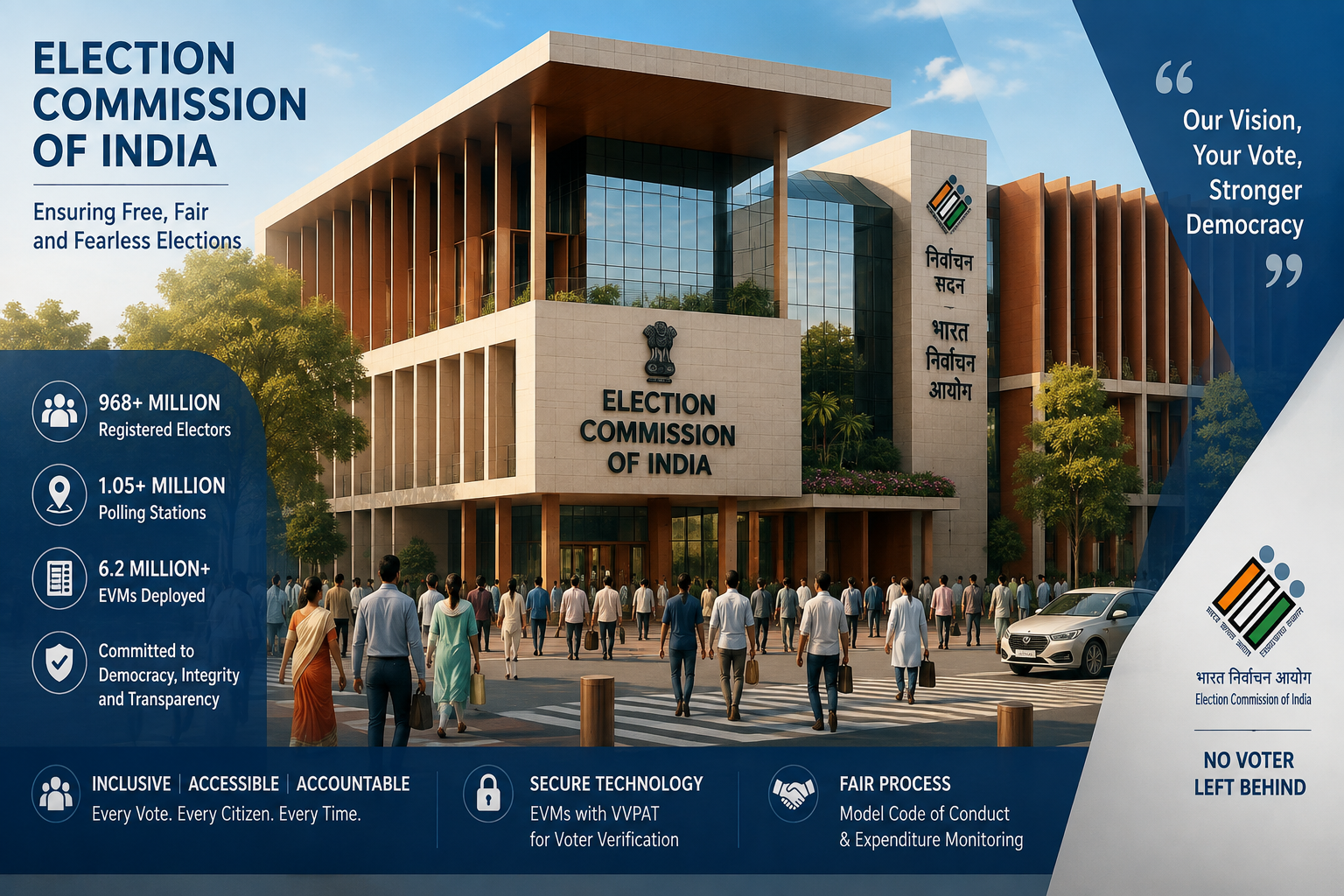
💡 Election Commission of India: Strategic Analysis of Democratic Integrity
A comprehensive strategic analysis of the Election Commission of India, its constitutional mandate, logistical scale, and technological integration in the world's largest democracy.
The Model Code of Conduct (MCC) and Regulatory Oversight
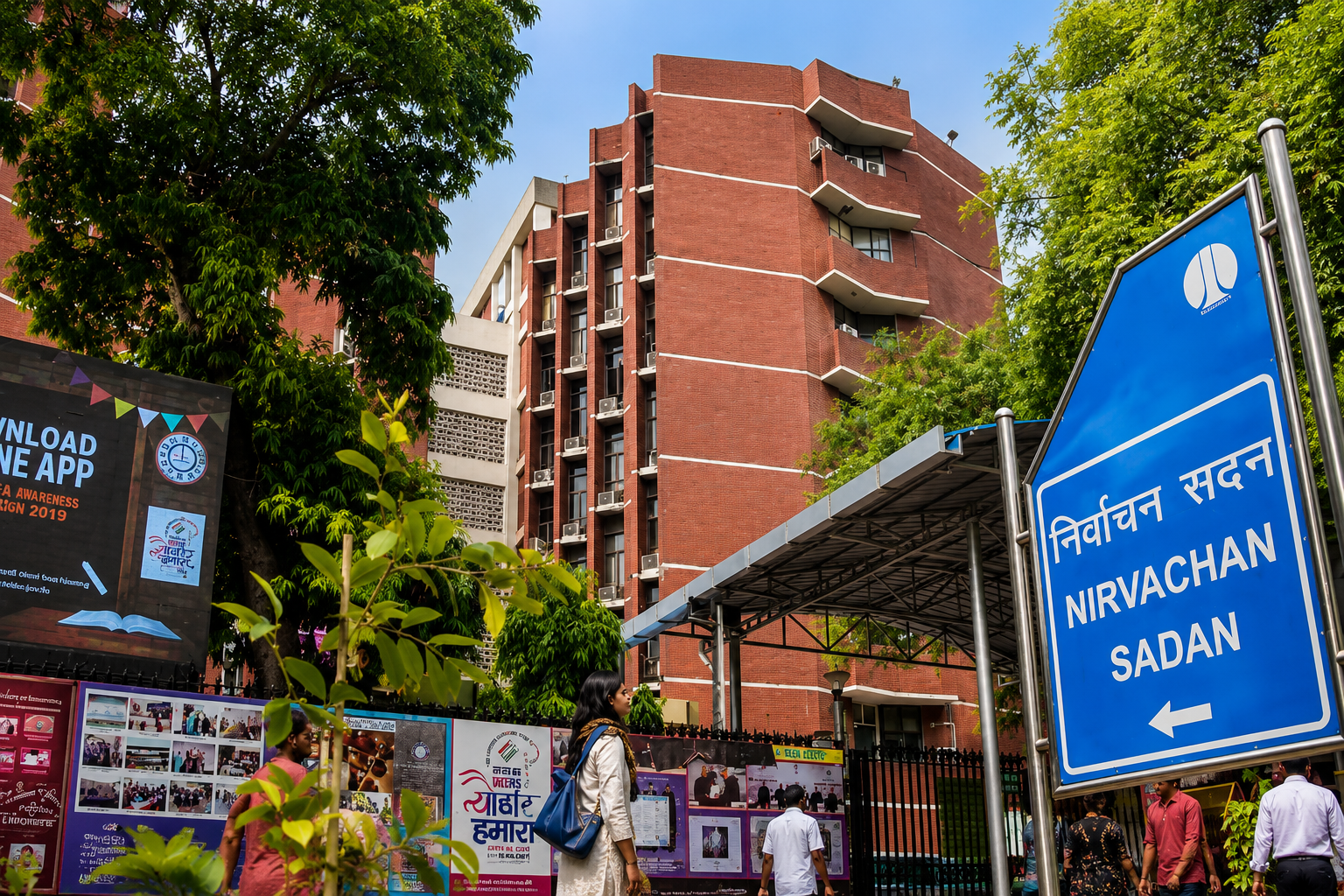
The Model Code of Conduct (MCC) is a set of guidelines issued by the Election Commission of India (ECI) to regulate the conduct of political parties and candidates during elections. Although the MCC is not itself a standalone statute, its provisions operate alongside existing election laws and other legal provisions, while the ECI uses its constitutional and statutory powers to maintain electoral discipline. The MCC addresses areas including election campaigns, speeches, manifestos, polling-day conduct, and the use of official machinery by parties in power. Its broader objective is to help maintain a level playing field and protect the integrity of the electoral process.
The ECI also monitors election expenditure. Candidates are subject to prescribed expenditure limits, while Expenditure Observers and other election officials monitor campaign spending and investigate potential violations. During the 2024 General Election, the ECI reported seizures of cash, liquor, drugs, precious metals, and other inducements worth several thousand crore rupees, highlighting the scale of its efforts to curb the use of illicit inducements during elections.
What This Means For You: The Voter's Perspective
For individual citizens, the ECI's work supports the right to participate in a secure, accessible, and orderly electoral process. Through initiatives such as the Systematic Voters' Education and Electoral Participation (SVEEP) program, the Commission works to improve voter awareness and participation.
The 2019 Lok Sabha election recorded a voter turnout of approximately 67.4%, one of the highest turnout levels recorded in a Lok Sabha election. For voters, the electoral framework provides several important safeguards:
- Accessibility: ECI guidelines generally seek to ensure that voters do not have to travel more than two kilometres to reach their polling station, subject to exceptions in difficult or sparsely populated areas.
- Inclusivity: Special provisions support Persons with Disabilities (PwD) and senior citizens, including accessibility measures and, where applicable, home-voting facilities for eligible voters.
- Accountability: The cVIGIL app allows citizens to report suspected Model Code of Conduct and election-expenditure violations using time-stamped evidence, enabling election authorities to respond rapidly.
Expert Verdict and Future Outlook
The Election Commission of India remains a central institution in India's electoral architecture, but it continues to face significant challenges in an increasingly digital political environment. The spread of deepfakes, AI-generated content, misinformation, and coordinated digital campaigns creates new challenges for maintaining an informed electoral environment.
The appointment and institutional independence of Election Commissioners have also remained subjects of legal and public debate. The Chief Election Commissioner and Other Election Commissioners Act, 2023 established a statutory framework for the appointment process, while questions surrounding institutional independence and transparency continue to receive attention.
Looking ahead, the ECI has explored remote voting mechanisms for domestic migrants, including the proposed Remote Electronic Voting Machine (RVM). However, nationwide implementation of remote voting for domestic migrants has not yet been introduced. The Commission also continues to strengthen electoral-roll management, cybersecurity practices, voter services, and measures addressing misinformation and emerging digital threats.
Frequently Asked Questions
How does the ECI ensure that EVMs cannot be hacked?
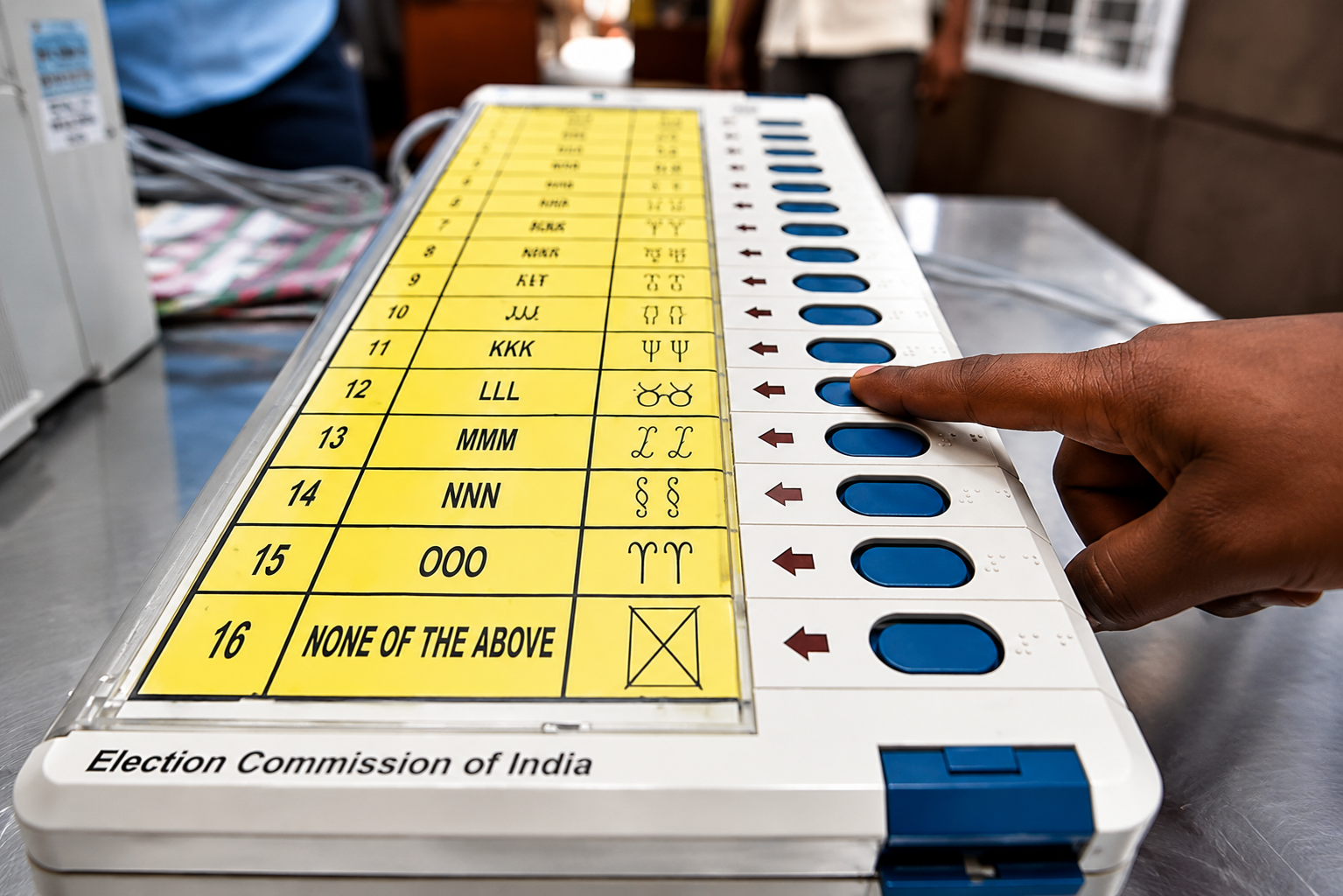
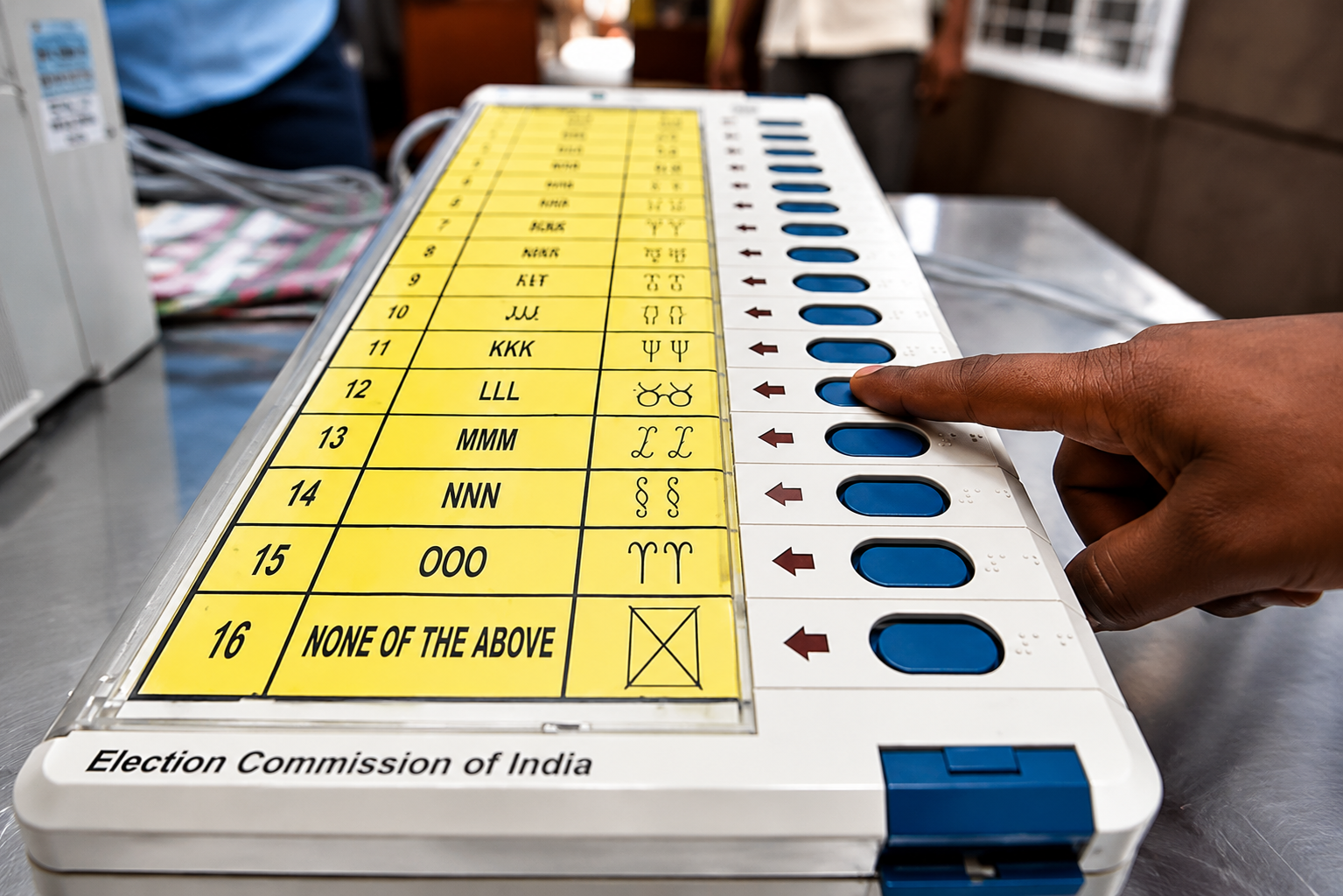
EVMs are non-networked, stand-alone machines. They have no internet or wireless connectivity. The software is burnt into a One-Time Programmable (OTP) chip, meaning it cannot be altered or rewritten after manufacture. Rigorous administrative protocols and physical security further prevent unauthorized access.
What is the role of the Model Code of Conduct?
The Model Code of Conduct ensures a level playing field by preventing the party in power from using government resources for campaigning. It also sets ethical standards for speeches and behavior to maintain public order and communal harmony during the election period.
Can Non-Resident Indians (NRIs) vote in Indian elections?
Yes, NRIs can vote if they are registered as overseas electors. Currently, they must be physically present at their respective polling stations in India to cast their vote, although discussions regarding electronically transmitted postal ballots for NRIs are ongoing.
What is the NOTA option?
None of the Above (NOTA) allows voters to officially register their dissatisfaction with all the candidates in a particular constituency. While NOTA votes are counted, they do not currently affect the outcome of the election; the candidate with the highest number of votes wins regardless of the NOTA count.
How is the Chief Election Commissioner appointed?
The Chief Election Commissioner and Election Commissioners are appointed by the President of India. Following a recent Supreme Court ruling and subsequent legislation, the selection is made based on the recommendation of a committee, ensuring a structured process for these high-level appointments.
Conclusion
The Election Commission of India serves as the fundamental pillar of the world's largest democracy. By balancing constitutional mandates with technological innovation and rigorous logistical planning, it maintains the integrity of the electoral process. As it navigates the complexities of the digital age and shifting political landscapes, its role in upholding the will of nearly a billion people remains a global benchmark for democratic governance.





Comments 0
Leave a Reply
Your email address will not be published. Required fields are marked *
Be the first to share your thoughts!