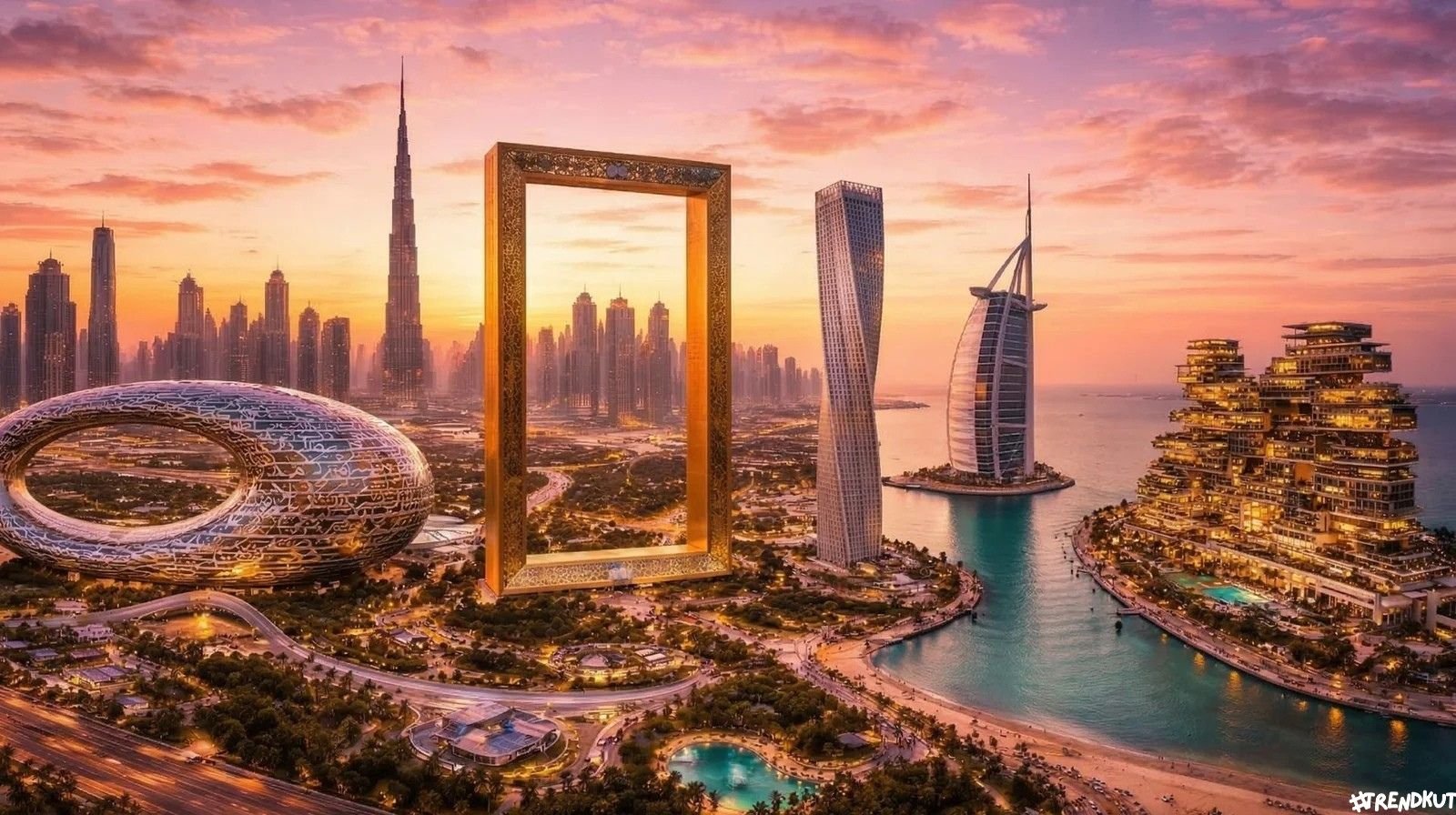
7 Futuristic Buildings That Only Exist in Dubai
Dubai has rapidly developed into one of the world’s most modern cities, known for its innovative architecture and large-scale urban projects.
Many of Dubai’s landmark buildings are designed to combine functionality with modern engineering and architectural creativity.. Many of them feel like something pulled straight from the future.
Walking through the city, you might see a twisting tower, a floating museum, or a hotel shaped like a sail. These structures don’t simply provide space for offices or homes-they represent imagination, engineering, and ambition.
And when you see so many bold designs in one place, it naturally makes you wonder: is Dubai giving us a glimpse of what future cities might look like?
Below are seven well-known architectural landmarks that highlight Dubai’s modern skyline. that help define Dubai’s remarkable skyline.
1. Burj Khalifa
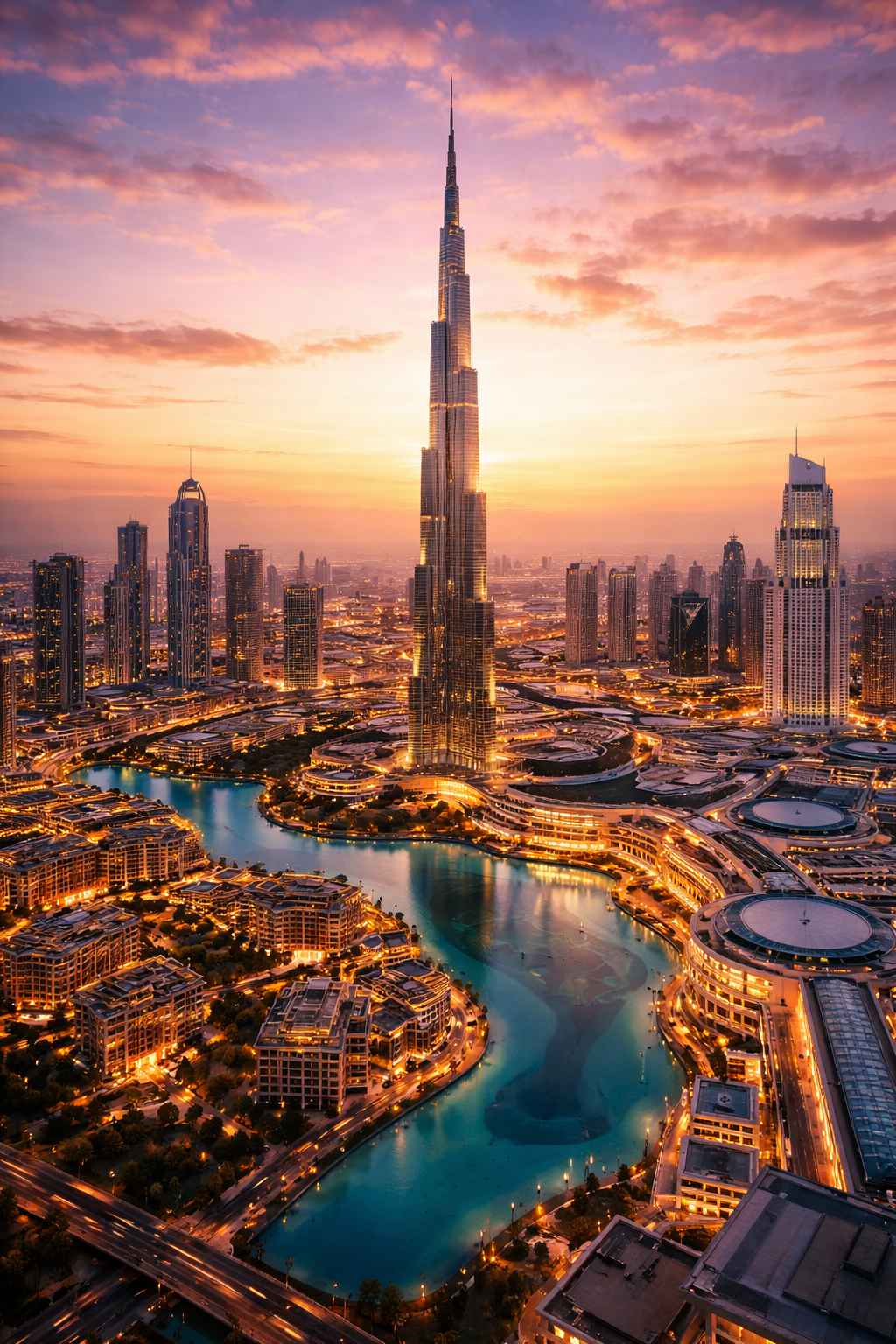
No building represents Dubai’s ambition better than the Burj Khalifa.
Standing over 800 meters tall, the Burj Khalifa is currently the tallest building in the world.it remains the tallest building in the world. Its elegant shape narrows as it climbs toward the sky, creating a sleek silhouette visible from miles away.
The design was inspired by the geometry of a desert flower, blending natural inspiration with modern engineering.
Visitor Experience
Visitors can ride one of the world’s fastest elevators to the observation decks high above the city. From there, the view stretches across Dubai’s skyline, the Arabian Gulf, and even the surrounding desert.
For many travelers, that moment-standing above the city’s clouds-is unforgettable.
The Burj Khalifa has become far more than a skyscraper. It symbolizes Dubai’s determination to achieve what once seemed impossible.
2. Museum of the Future
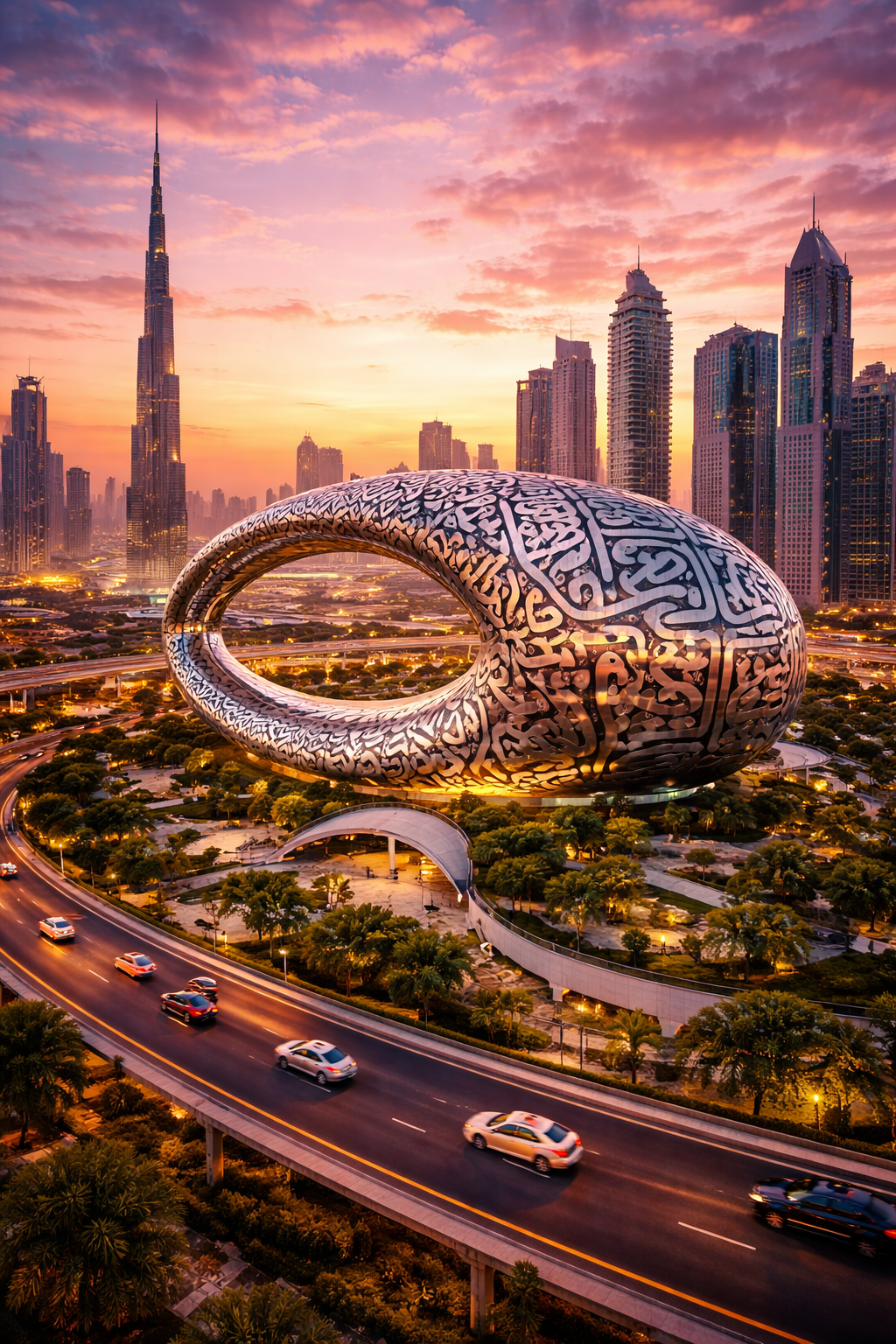
Few buildings anywhere in the world look as futuristic as the Museum of the Future.
The building’s oval shape forms a massive silver ring covered in flowing Arabic calligraphy. From certain angles, it almost appears to float above the ground.
Inside, the museum explores ideas about science, technology, and innovation.
Design Concept
The architecture itself represents the concept of the future. The hollow center symbolizes unknown possibilities that humanity has yet to discover.
Many visitors say the building feels like something out of a science-fiction film.
3. Burj Al Arab
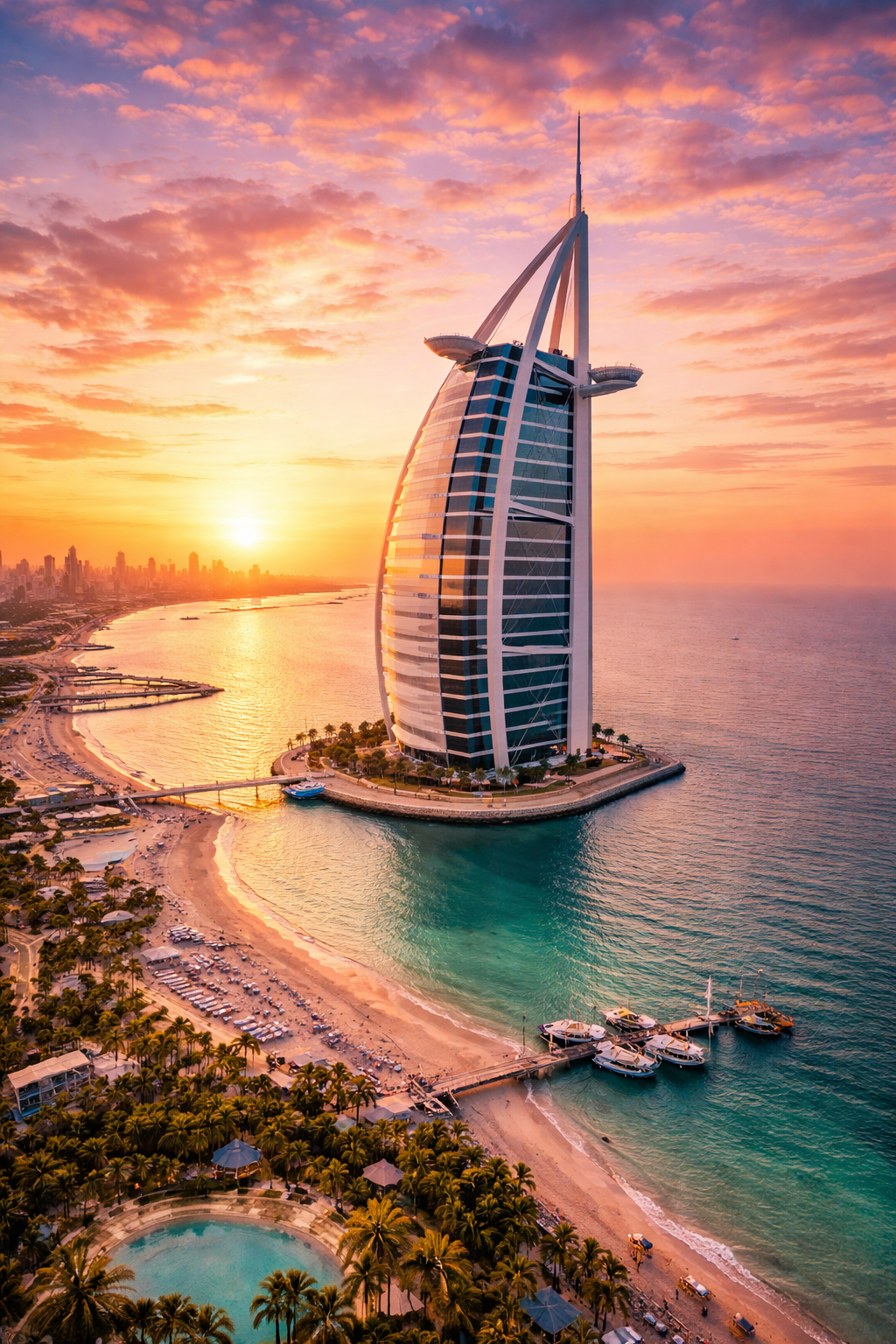
The Burj Al Arab is one of the most recognizable luxury hotels in the world.
Designed to resemble the sail of a traditional Arabian dhow boat, the building rises from its own artificial island along Dubai’s coastline.
Its unique shape has become one of the most photographed structures in the city.
Real-Life Experience
Guests often arrive by luxury car or helicopter, making the experience feel more like entering a private resort than a typical hotel.
Even travelers who don’t stay there often visit nearby beaches just to admire the structure’s dramatic design.
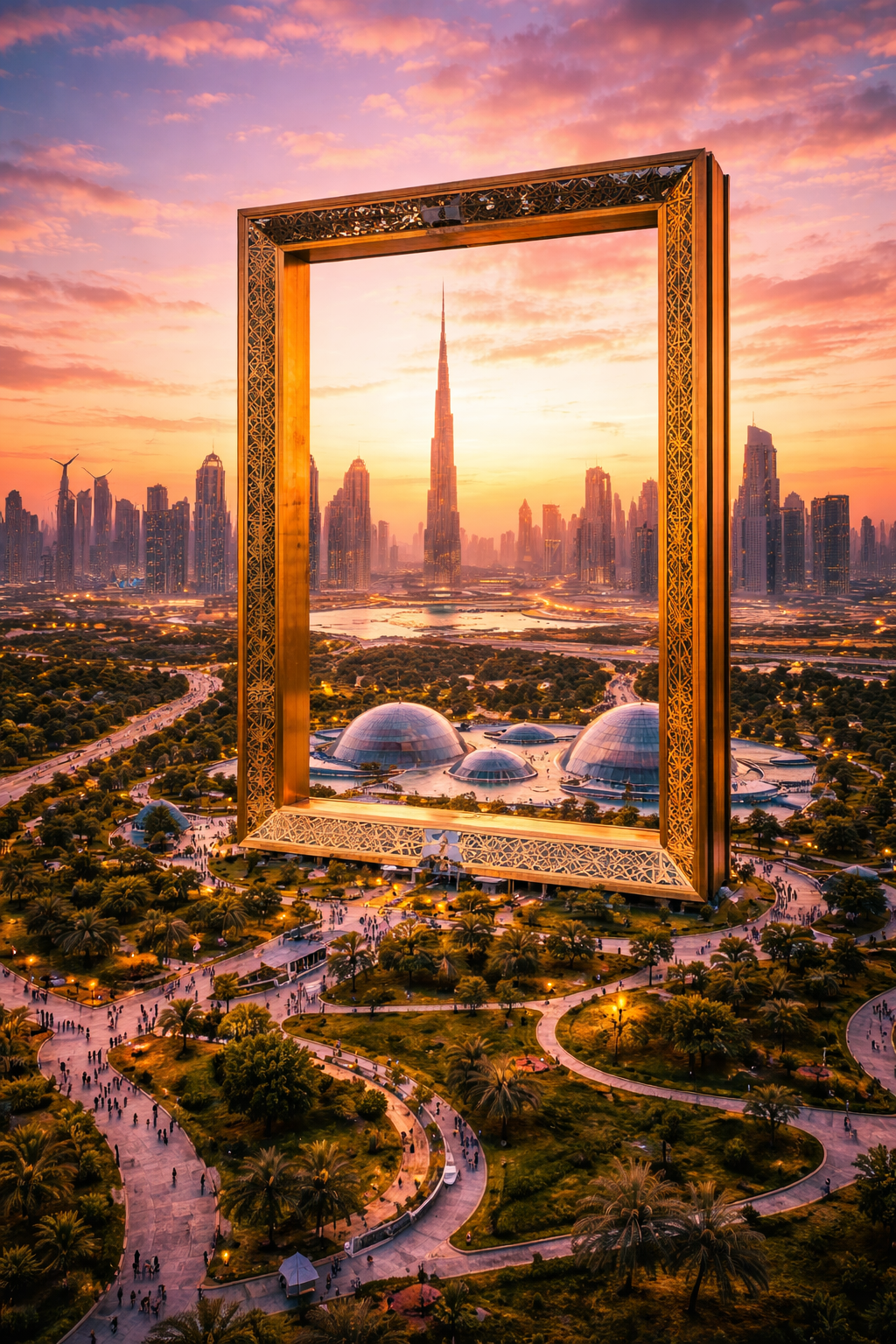
4. Dubai Frame
The Dubai Frame might be one of the most creative architectural ideas in Dubai.
Instead of building another tower, architects designed a giant rectangular frame rising more than 150 meters into the sky.
The concept is surprisingly meaningful.
One side of the frame overlooks historic Dubai. The other side reveals the modern skyline.
Real-Life Moment
Visitors can walk across a glass bridge at the top of the frame while looking down at the ground below. It’s an exciting experience that offers spectacular views of the entire city.
The structure perfectly represents Dubai’s journey from its past to its future.
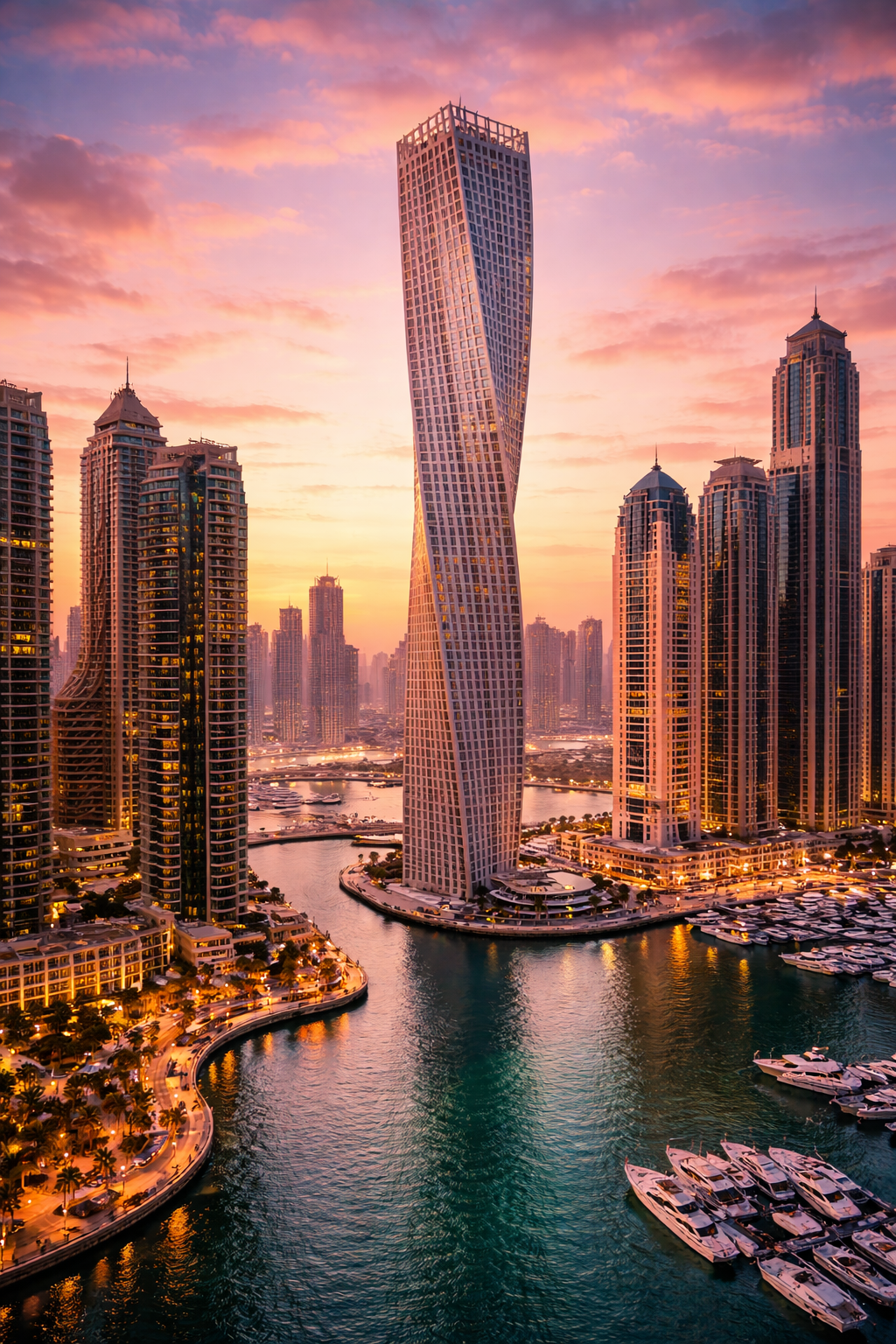
5. Cayan Tower
Among the skyscrapers of Dubai Marina, Cayan Tower immediately stands out.
Unlike most buildings, this tower twists as it rises upward. By the time it reaches the top, the building has rotated almost 90 degrees.
Why It’s Remarkable
Constructing a twisting tower required advanced engineering solutions to maintain balance and structural stability.
Residents living inside the building enjoy unique views depending on the angle of their apartment within the tower.
It’s a striking example of how creativity and engineering can work together.
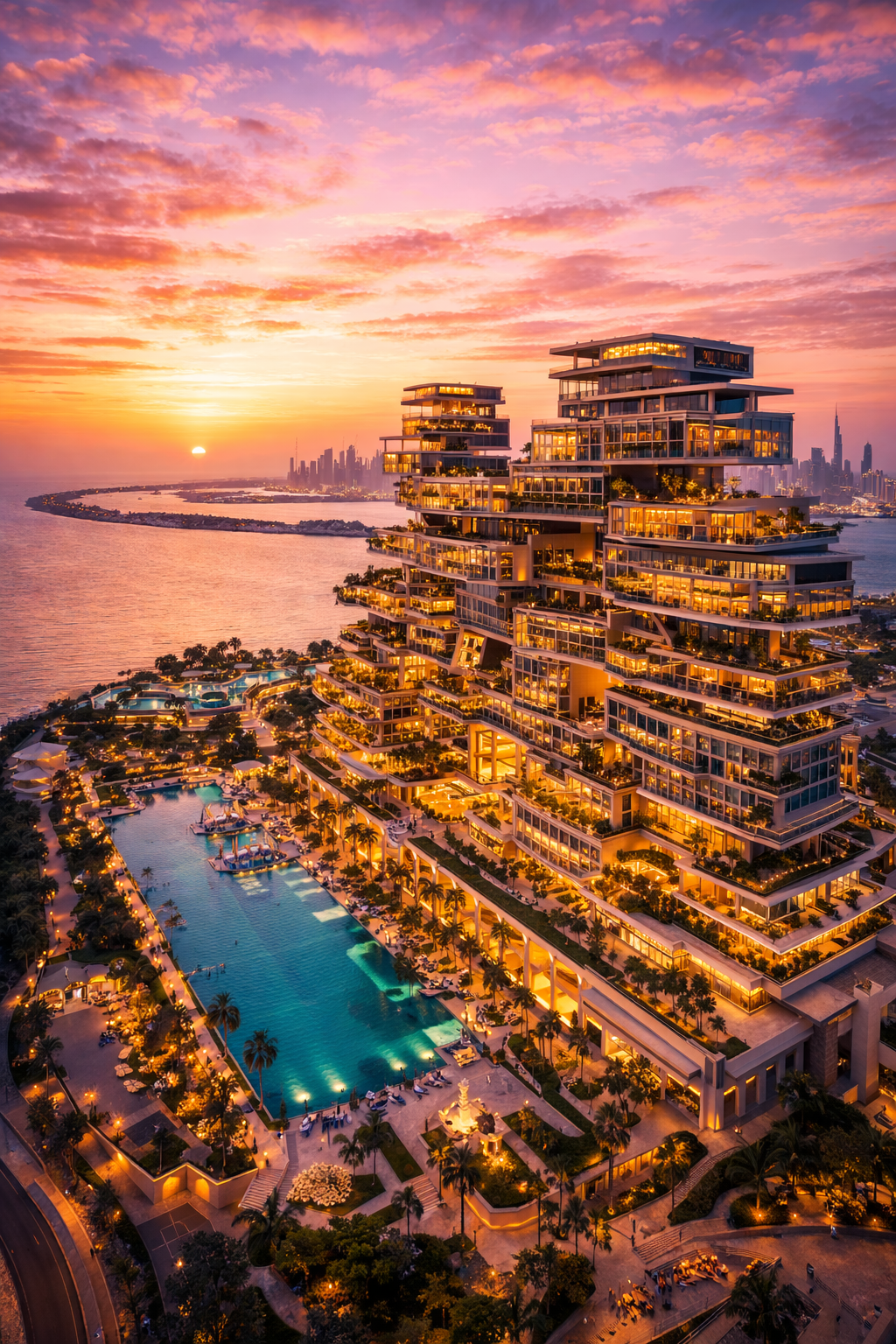
6. Atlantis The Royal
Atlantis The Royal is one of Dubai’s newest architectural landmarks.
Located on Palm Jumeirah, the building features stacked sections that create terraces, sky gardens, and dramatic open spaces.
From a distance, the structure looks like giant blocks arranged in a futuristic pattern.
Real-Life Experience
Some of the resort’s infinity pools are suspended high above the ground, offering breathtaking views of the Arabian Gulf.
The building blends luxury tourism with innovative architecture in a way that feels both imaginative and modern.
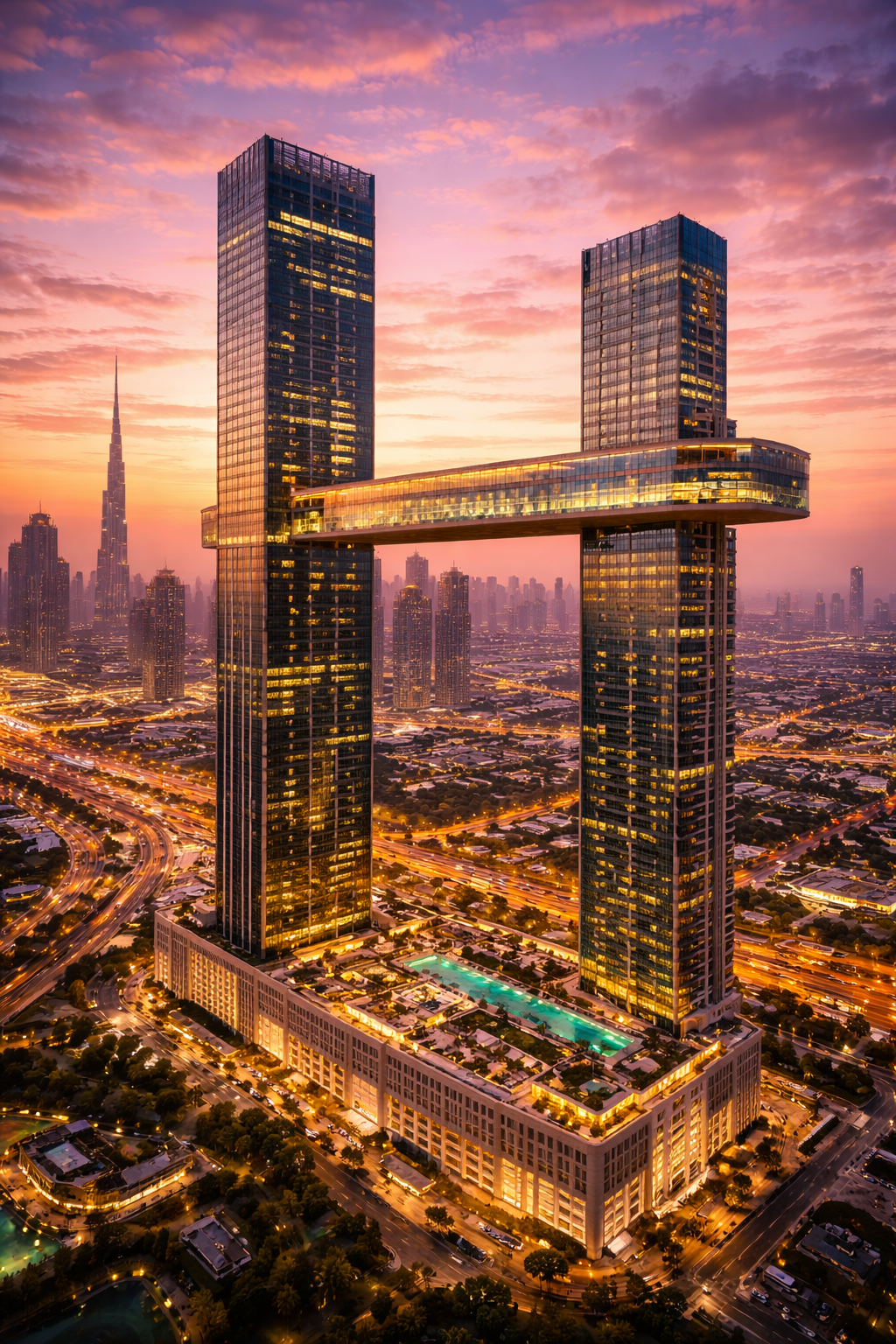
7. One Za’abeel
One Za’abeel is one of Dubai’s most impressive recent architectural achievements.
The development includes two towers connected by a massive horizontal structure known as The Link.
This sky bridge stretches between the towers and appears to float above the city.
Why It Feels Futuristic
Most skyscrapers grow vertically. One Za’abeel challenges that idea by introducing a dramatic horizontal element that seems to defy gravity.
The result is a building that immediately captures attention within Dubai’s skyline.
Factors Behind Dubai’s Modern Architecture Growth
Dubai has become one of the most exciting cities in the world for modern architecture.
Several factors contribute to this.
Visionary Urban Planning
City planners encourage bold architectural ideas that help Dubai stand out globally.
Strong Development Investment
Large-scale construction projects allow architects to experiment with ambitious designs.
Global Collaboration
Architects and engineers from around the world work together on many of Dubai’s landmark buildings.
Together, these factors create an environment where architectural creativity thrives.
Pros and Cons of Futuristic Architecture
Innovative architecture brings many benefits but also presents challenges.
Pros
Tourism attraction
Unique buildings draw millions of visitors every year.
Global recognition
Iconic architecture helps define Dubai’s international identity.
Engineering innovation
Many projects push the boundaries of construction technology.
Cons
High construction costs
Advanced architectural designs often require significant investment.
Maintenance complexity
Unusual structures may require specialized maintenance.
Environmental considerations
Large buildings must address energy efficiency and sustainability.
Expert Perspective
Architecture experts often view Dubai as one of the most experimental urban landscapes in the world. Instead of following traditional design approaches, the city frequently encourages bold and unconventional architecture.
This willingness to experiment has helped Dubai create one of the most recognizable skylines anywhere on the planet. At the same time, many new developments are focusing on sustainability, energy efficiency, and smart building technologies to support long-term urban growth.
Practical Advice for Visitors
If you’re visiting Dubai, exploring these buildings can become one of the highlights of your trip.
Visit Observation Decks
The Burj Khalifa and Dubai Frame offer incredible panoramic views of the city.
Explore Architectural Districts
Areas such as Downtown Dubai and Dubai Marina showcase many of the city’s most iconic structures.
Visit at Night
Dubai’s skyline becomes even more spectacular after sunset when buildings illuminate the city with dramatic lighting.
Frequently Asked Questions
Why does Dubai have so many futuristic buildings?
Dubai encourages bold architectural design as part of its strategy to become a global tourism and innovation hub.
Can visitors enter these buildings?
Many are open to the public, including museums, observation decks, and luxury hotels.
Are new futuristic buildings still being built?
Yes. Dubai continues investing in innovative architectural projects and urban development.
Which building is the most famous in Dubai?
The Burj Khalifa remains the most internationally recognized building in the city.
Why Trust This Information?
The information presented in this article is based on widely recognized architectural landmarks, publicly available project details, and well-documented urban development initiatives connected to Dubai’s skyline. Many of the buildings mentioned are internationally known structures designed by leading architectural firms and engineering teams responsible for major global projects.
Architecture and urban design continue evolving as new technologies and construction methods emerge. For that reason, this article focuses on established landmarks and widely reported developments that represent Dubai’s approach to innovative design and modern urban planning.
The aim is to provide readers with a reliable overview of some of the most distinctive futuristic buildings in Dubai and to help explain how these structures contribute to the city’s global reputation for architectural innovation.
Conclusion
Dubai’s skyline tells a remarkable story of creativity, ambition, and engineering innovation.
From the towering Burj Khalifa to the futuristic Museum of the Future and the twisting Cayan Tower, these buildings demonstrate how architecture can redefine the identity of a city.
Dubai continues to push the limits of design and construction. As new projects rise across the skyline, one thing is clear-the city will keep surprising the world with bold architectural ideas that shape the future of urban landscapes.
Related Media
Image Gallery




Comments 0
Leave a Reply
Your email address will not be published. Required fields are marked *
Be the first to share your thoughts!