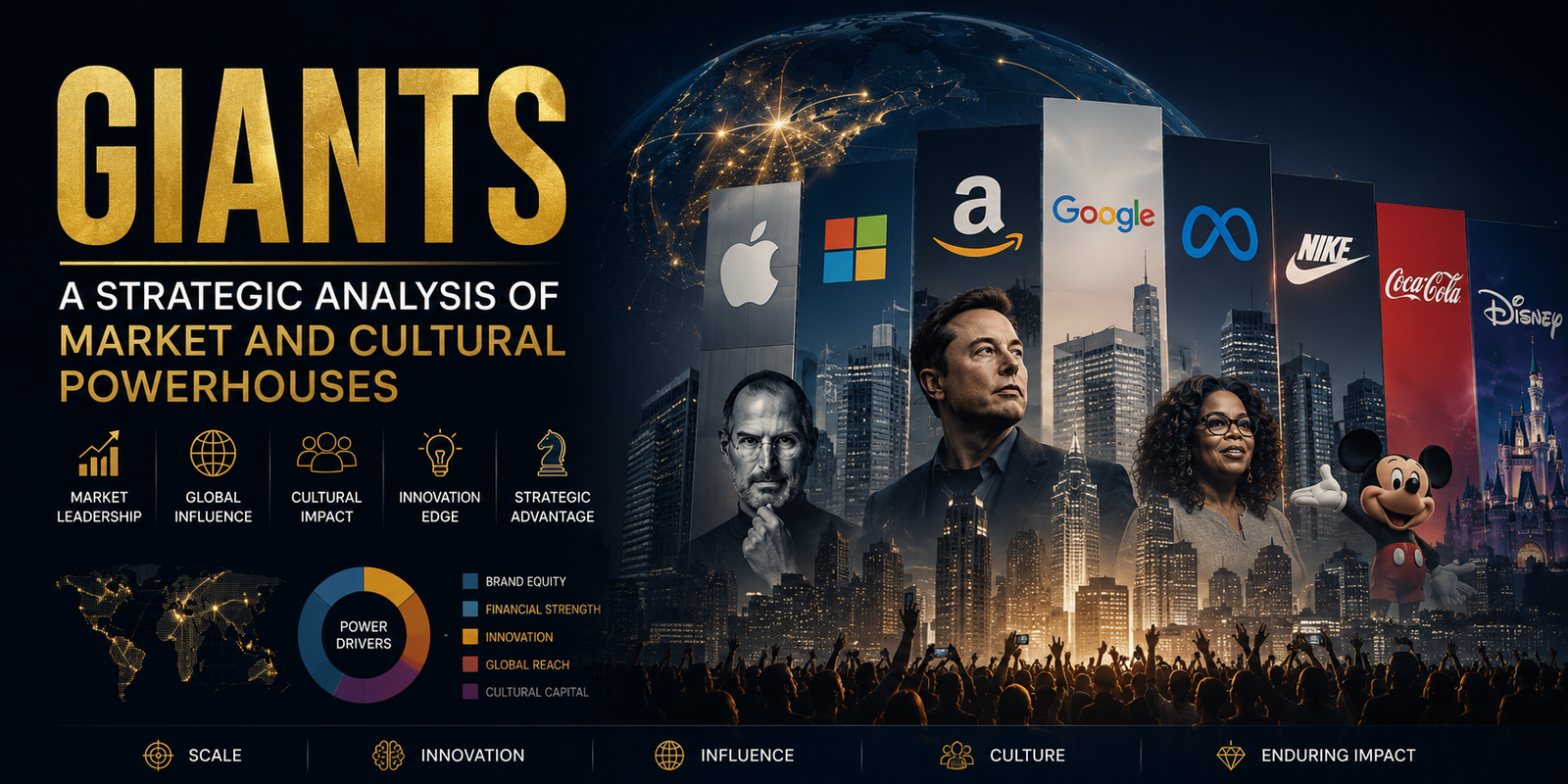
💡 Giants: A Strategic Analysis of Market and Cultural Powerhouses
An authoritative analysis of industry giants across technology, finance, and sports, examining their economic dominance and strategic influence in the global market.
Executive Summary
The concept of giants in the modern era has shifted from physical size to economic and cultural leverage. This analysis explores how dominant entities across various sectors maintain their status through strategic moat-building and capital allocation. Key findings include the concentration of market power within the tech sector, where the top five companies represent approximately 23 percent of the S&P 500 market capitalization. In the realm of finance, global debt markets are controlled by a handful of institutional giants managing trillions in assets. Furthermore, sports franchises like the New York Yankees have evolved into multi-billion dollar media and real estate conglomerates. This report provides a data-driven look at the mechanisms that allow these giants to sustain their dominance amidst regulatory pressure and shifting consumer behaviors.
Introduction
In the historical context, a giant was defined by physical scale. In the contemporary strategic landscape, a giant is defined by its ability to dictate market terms, influence geopolitical outcomes, and command consumer attention. Whether examining a tech titan with a 3 trillion dollar market cap or a sports franchise with a century of brand equity, the underlying principles of dominance remain consistent. These entities operate on a scale that creates significant barriers to entry for competitors, often referred to as an economic moat. Understanding the strategic positioning of these giants is essential for investors, policy makers, and industry analysts who seek to navigate a landscape increasingly defined by consolidation and institutional power.
The Deep Dive: Mechanics of Modern Dominance
Corporate Giants and Market Concentration
The rise of Big Tech has redefined the parameters of corporate size. As of 2024, the collective valuation of the largest technology firms exceeds the GDP of most G7 nations. This dominance is not merely a result of product quality but of ecosystem lock-in. Companies like Microsoft and Apple have created environments where the cost of switching for a consumer or enterprise is prohibitively high. This strategic positioning is further bolstered by massive R&D spending. For instance, the top five tech giants spent a combined 200 billion dollars on research and development in the last fiscal year, a figure that ensures they remain at the forefront of artificial intelligence and cloud computing. This level of investment creates a self-sustaining cycle of innovation and market capture that smaller firms cannot replicate.
In the entertainment sector, the shift from linear media to streaming has allowed certain entities to become global gatekeepers of culture. For example, analyzing Netflix New Releases: A Strategic Analysis of Content Trends reveals how a single platform can influence global viewership habits through data-driven content production. By leveraging massive subscriber datasets, these giants can predict consumer demand with surgical precision, reducing the risk associated with high-budget productions.

Financial Giants and Global Debt Architecture
The global financial system is anchored by institutional giants that manage the flow of capital across borders. These institutions, including major investment banks and asset managers like BlackRock and Vanguard, oversee a combined asset pool exceeding 20 trillion dollars. Their influence extends beyond simple investment; they are the primary architects of global liquidity. A Strategic Analysis of Global Lending and Debt Markets shows that these giants dictate interest rate trends and credit availability, which in turn affects everything from national infrastructure projects to individual mortgages. The systemic importance of these entities has led to the designation of too big to fail, a status that provides a perceived safety net but also invites rigorous regulatory scrutiny.
Sports Giants: Brand Equity and Valuation
In the world of professional sports, the term giant refers to franchises that have successfully transcended their local markets to become global brands. The New York Yankees, for example, are valued at over 7 billion dollars, driven by their lucrative television network and international merchandise sales. When examining the Yankees vs Brewers: A Strategic Analysis of MLB Powerhouses, it becomes clear that the disparity in revenue-generating capabilities creates a tiered system within the league. Giants in sports leverage their historical legacy to secure premium sponsorship deals and stadium naming rights, ensuring a consistent stream of capital that can be reinvested into talent acquisition.

Geopolitical and Strategic Giants
On a global scale, giants are also defined by their control over critical resources and trade routes. The strategic importance of the Strait of Hormuz or the dominance of certain nations in the semiconductor supply chain illustrates how geopolitical giants exercise power. These entities use their scale to negotiate favorable trade agreements and exert diplomatic pressure. The interplay between corporate giants and national interests is increasingly blurred, as seen in the race for AI supremacy, where state-backed initiatives and private sector innovation are deeply intertwined.
Challenges to Dominance
Despite their current status, modern giants face significant headwinds. Antitrust litigation in the United States and the European Union represents a major threat to the business models of tech and retail giants. Regulatory bodies are increasingly focused on data privacy, predatory pricing, and the stifling of competition. Furthermore, the rise of decentralized technologies, such as blockchain and open-source software, offers a potential counter-narrative to the centralized power of traditional giants. History indicates that no entity is immune to disruption; the giants of the early 20th century in steel and rail have long been superseded by the giants of the digital age.

What This Means For You
- For Investors: Large-cap giants often provide stability and dividends but may face slower growth compared to agile mid-cap firms. Diversification remains key to mitigating the risks of regulatory crackdowns on specific sectors.
- For Consumers: While giants offer convenience and integrated ecosystems, they also limit choice. Being aware of data collection practices and ecosystem lock-in allows for more informed purchasing decisions.
- For Professionals: Working for or with an industry giant offers prestige and resources, but career growth may be subject to bureaucratic hurdles. Understanding the strategic goals of these organizations can help in navigating corporate hierarchies.
- For Entrepreneurs: Competing directly with a giant is often a losing strategy. Instead, look for niche gaps in their service or focus on hyper-local markets where a global giant cannot effectively scale.
Expert Verdict / Future Outlook
The future of global giants will be defined by their ability to adapt to the green transition and the integration of generative AI. We expect to see a pivot toward sustainable operations as institutional investors demand better ESG (Environmental, Social, and Governance) performance. Furthermore, the next decade will likely witness the emergence of new giants in the renewable energy and biotechnology sectors. While the current tech and finance titans hold immense power, the acceleration of technological cycles means that the lifespan of a market leader is shorter than ever. Strategic flexibility will be the primary determinant of longevity for the giants of tomorrow.
FAQ
What defines a company as a giant in the modern economy?
A modern giant is typically defined by its market capitalization, its share of the total market in its sector, and its ability to influence industry standards and consumer behavior globally. Generally, a market cap exceeding 500 billion dollars is a common benchmark for a corporate giant.
How do giants impact small businesses?
Giants can have a dual impact. They provide platforms and infrastructure that small businesses use to reach customers, such as Amazon or Google. However, they can also engage in practices that make it difficult for small competitors to survive, such as aggressive pricing or copycat product development.
Are giants always a sign of a healthy economy?
Not necessarily. While they reflect success and efficiency, excessive concentration of power can lead to reduced innovation, higher prices for consumers, and systemic risks if a giant entity were to fail.
Why are sports teams like the Yankees considered giants?
They are considered giants because of their massive financial valuation, global brand recognition, and their ability to generate revenue that far exceeds the average for their industry. This financial power allows them to consistently compete at the highest levels.
What is the biggest threat to modern industry giants?
The primary threats are government regulation and antitrust laws, followed by disruptive technologies that change consumer habits, and shifts in global trade policies that can disrupt supply chains or market access.
Conclusion
The strategic dominance of giants across various sectors is a defining characteristic of the modern global economy. While these entities offer unparalleled efficiency and innovation, their scale presents unique challenges for regulators and competitors. Success in the current landscape requires a deep understanding of how these powerhouses operate and the ability to adapt to the shifts they induce in the market.





Comments 0
Leave a Reply
Your email address will not be published. Required fields are marked *
Be the first to share your thoughts!