
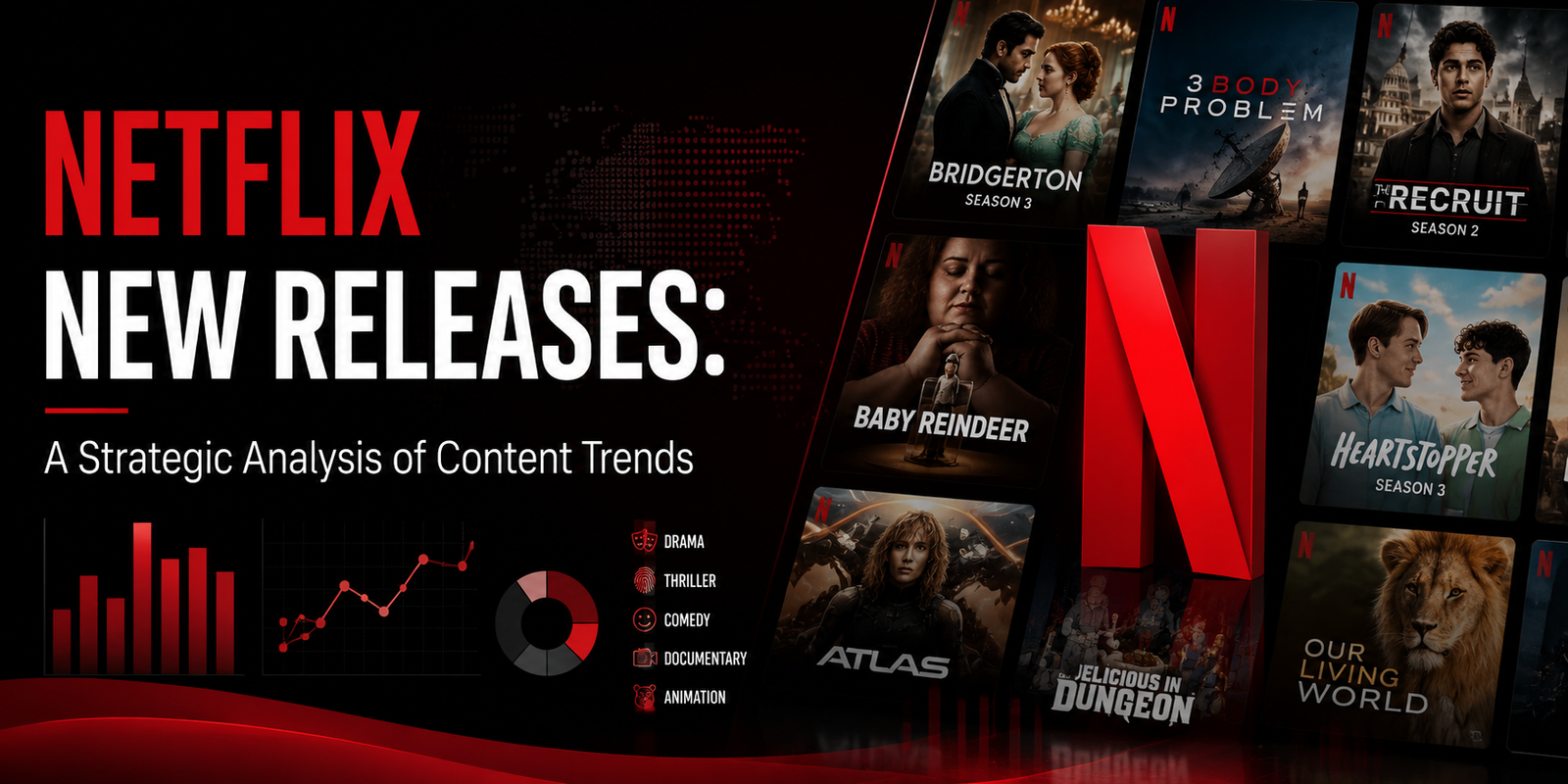
💡 Netflix New Releases: A Strategic Analysis of Content Trends
An authoritative analysis of Netflix's latest content releases, viewership data, and strategic shift toward ad-supported growth and high-engagement programming.
Executive Summary
Netflix continues to dominate the global streaming landscape with a paid subscriber base exceeding 277 million as of mid-2024. The company has shifted its primary success metric from raw subscriber growth to total engagement and revenue optimization. Key findings in this analysis indicate a projected annual content spend of 17 billion dollars, a significant pivot toward ad-supported tiers which now account for over 40 percent of new sign-ups in available markets, and a strategic focus on high-impact intellectual property. This report examines the latest releases through the lens of data-driven performance and market positioning.
Introduction: The Evolution of Streaming Dominance
The streaming industry has transitioned from an era of rapid expansion to one of disciplined monetization. Netflix, as the market leader, is no longer merely competing for attention but is redefining how global audiences consume media. The latest slate of Netflix new releases reflects a sophisticated understanding of viewer psychology and algorithmic precision. By analyzing viewership hours and completion rates, Netflix identifies which genres provide the highest return on investment. This strategy is essential in a climate where capital allocation must be precise, much like the financial frameworks discussed in the Strategic Analysis of Global Lending and Debt Markets.
The Deep Dive: Data-Driven Content Strategy
Netflix’s release strategy for 2024 and 2025 focuses on three primary pillars: franchise expansion, local-language dominance, and live event integration. The company’s move into live sports and events, such as the upcoming NFL Christmas Day games and WWE Raw in 2025, marks a departure from its traditional video-on-demand roots.
1. The Economics of High-Impact Releases
Netflix utilizes a proprietary metric known as Views, calculated by dividing the total hours viewed by the runtime of the content. This provides a more accurate representation of popularity than previous metrics. For instance, high-performing series like Bridgerton Season 3 and Baby Reindeer demonstrated that mid-budget productions can yield massive engagement spikes. The company’s ability to scale these hits globally is a testament to its localized marketing strategies. In regions like South Asia, the content strategy is often influenced by broader socio-economic trends, similar to the dynamics explored in Indian Political Strategy, where understanding local sentiment is key to capturing market share.
2. Global Content and Non-English Growth
Non-English content now accounts for approximately 30 percent of all viewing on the platform. The success of titles from South Korea, Spain, and India proves that cultural specificity does not hinder global appeal. Netflix’s investment in international production hubs allows it to produce high-quality content at a lower cost per hour than traditional Hollywood productions. This global diversification also serves as a hedge against domestic market saturation.
3. Technological Infrastructure and Security
Maintaining a seamless streaming experience for 270 million users requires a robust digital infrastructure. Netflix spends billions on its Open Connect CDN (Content Delivery Network) to reduce latency. However, as the platform expands its reach, it faces increasing risks from digital bad actors. Protecting user data and intellectual property is a top priority, aligning with the broader industry focus on Cybercrime: A Strategic Analysis of Global Digital Threats. Ensuring that the platform remains secure is vital for maintaining the high level of trust that allows for premium subscription pricing.
What This Means For You: The Consumer Perspective
For the average viewer, the strategic shift at Netflix translates into a more curated experience but also a more fragmented one. Here is what you need to know about the current release environment:
- Quality over Quantity: Expect fewer total releases but higher production values in the titles that do debut.
- Ad-Tier Value: The ad-supported plan offers a lower entry price, making premium content accessible to a wider demographic while allowing Netflix to increase its Average Revenue Per User (ARPU).
- Binge-Model Variations: While the binge model remains, Netflix is increasingly splitting popular seasons into two parts to sustain social media conversation and prevent churn.
- Personalization: The recommendation engine is becoming more aggressive in surfacing niche content that matches your specific viewing history.
Expert Verdict and Future Outlook
The strategic trajectory of Netflix suggests a move toward becoming a comprehensive entertainment ecosystem. By integrating live events, mobile gaming, and interactive experiences, Netflix is insulating itself against the cyclical nature of traditional television. Industry analysts expect Netflix to maintain its operating margin of 25 to 27 percent by further optimizing its content mix. The future will likely see a deeper integration of artificial intelligence in both production workflows and user interface customization. As the company navigates the complexities of global regulation and shifting consumer habits, its data-first approach remains its greatest competitive advantage.
Frequently Asked Questions
1. How does Netflix decide which shows to cancel or renew?
Netflix prioritizes the completion rate and the efficiency ratio, which compares the cost of the show to the number of viewers who finished it within the first 28 days. High viewership alone is not enough if the production cost is disproportionately high.
2. Is the ad-supported tier worth the lower price?
Data shows that the ad-supported tier offers a nearly identical content library with approximately 4 to 5 minutes of ads per hour. For budget-conscious consumers, this provides a significant cost saving without sacrificing the core Netflix experience.
3. Why is Netflix moving into live sports and events?
Live events are "uncancelable" and drive immediate, massive engagement. They also provide a premium environment for advertisers, which is crucial for the growth of Netflix’s ad-supported business model.
4. How much does Netflix spend on original content annually?
Netflix has committed to a steady content spend of approximately 17 billion dollars per year. This budget is increasingly focused on high-performing franchises and international productions.
5. How does Netflix handle data privacy for its millions of users?
Netflix employs advanced encryption and rigorous security protocols to protect user data. The company continuously audits its systems to defend against evolving digital threats and unauthorized access.
Conclusion: The Strategic Takeaway
The current state of Netflix new releases reflects a mature company that has moved beyond the growth-at-all-costs phase. By leveraging deep data analytics, global production capabilities, and a diversified revenue model, Netflix has solidified its position as the central hub of modern entertainment. For investors and consumers alike, the focus remains on the platform's ability to balance high-quality storytelling with rigorous financial discipline. As the streaming wars enter a new chapter, Netflix’s strategic agility ensures it remains the benchmark for the entire industry.




Comments 0
Leave a Reply
Your email address will not be published. Required fields are marked *
Be the first to share your thoughts!