💡 The Dominance of Demolition: A Deep Dive into the History and Legacy of WWE’s Most Iconic Powerhouse Tag Team
Explore the legendary career of Demolition, the powerhouse tag team that dominated the WWE in the late 80s with a record-breaking 478-day title reign.
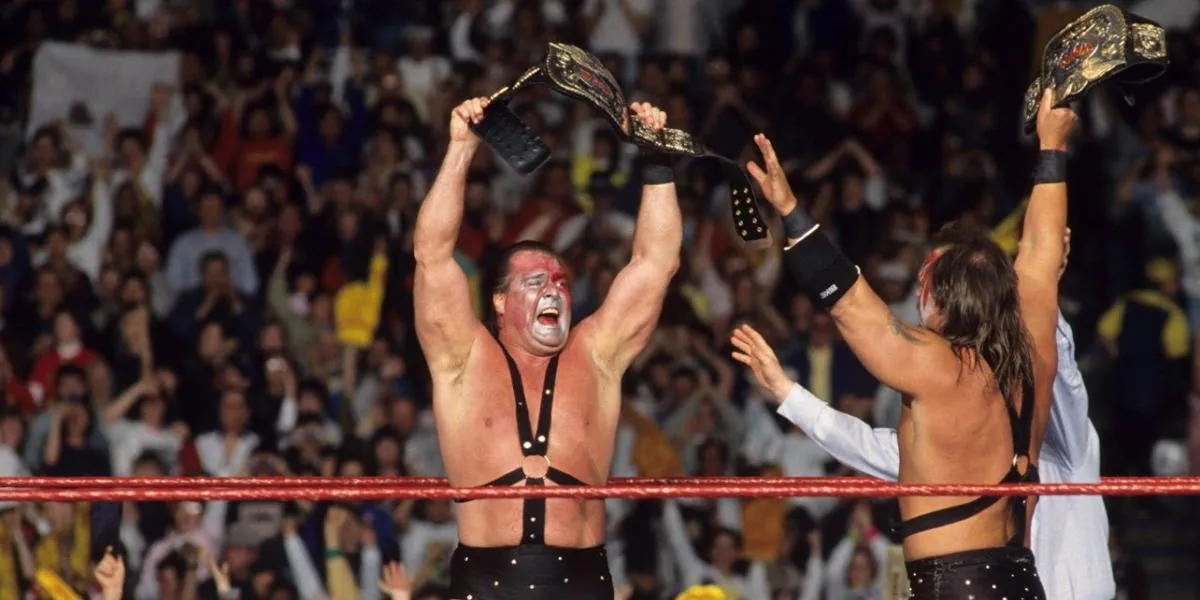
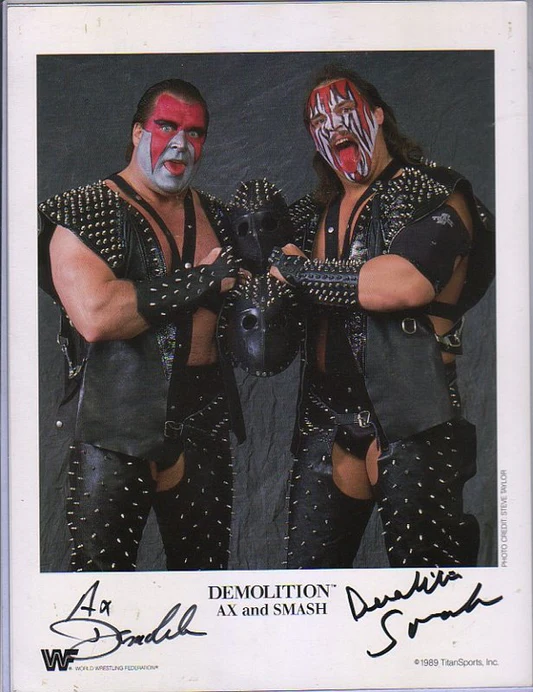
Demolition, consisting of Ax (Bill Eadie) and Smash (Barry Darsow), stands as the most dominant powerhouse tag team in WWE history during the late 1980s and early 1990s. They are best known for holding the World Tag Team Championship for a then-unprecedented 478 consecutive days, a record that remained unbroken for nearly three decades. Characterized by their signature face paint, studded leather gear, and a brutal, heavy-hitting in-ring style, Demolition defined an era where size and strength were the currency of professional wrestling.
The Face Paint and the Power: Why Demolition Defined an Era of Tag Team Wrestling
In the mid-to-late 1980s, tag team wrestling was undergoing a transformation. While many teams focused on high-flying maneuvers or technical precision, Demolition brought a sense of industrial dread to the ring. Their look—heavy leather vests, spiked collars, and hockey-style masks during their entrance—gave them an aura of invincibility. Unlike the colorful, heroic personas of the time, Demolition felt like an unstoppable force of nature.
Their popularity wasn't just about the look; it was about the atmosphere they created. When their heavy, rhythmic theme music hit, fans knew they were about to witness a "demolition" in the literal sense. They bridged the gap between the cartoonish elements of the 80s and the grittier, more physical style that fans began to crave as the decade closed.
Forging the Machines: The Genesis of Ax and Smash in the World Wrestling Federation
Demolition was conceptualized in 1987 as the WWF’s answer to the high-intensity powerhouse teams found in other territories. Bill Eadie, already a veteran known as The Masked Superstar, took on the mantle of Ax. Initially, Smash was played by Randy Colley (Moondog Rex), but fans recognized him too easily. The role was quickly recast with Barry Darsow, who had previously found success as Krusher Khrushchev.
Darsow’s intensity proved to be the missing piece of the puzzle. Managed by the devious Mr. Fuji, the duo was presented as a pair of mindless destruction machines. They didn't cut long, flowery promos; they spoke in short, menacing sentences about decimation and pain, which perfectly complemented their physical presence in the ring.
Three Reigns of Terror: Analyzing Demolition’s Record-Breaking Championship Runs
Demolition’s legacy is inextricably linked to the World Tag Team Championship. They held the titles on three separate occasions, but it was their first reign that made history. Defeating Strike Force at WrestleMania IV in 1988, they embarked on a 478-day journey that saw them turn from hated villains into respected fan favorites.
During these reigns, they fended off every major team in the division, including The British Bulldogs, The Hart Foundation, and The Rockers. Their second reign began after defeating the Brain Busters (Arn Anderson and Tully Blanchard), and their third came at WrestleMania VI in a legendary encounter against the Colossal Connection (Andre the Giant and Haku). This third win cemented them as the first team to ever win the titles three times.
The Evolution of the Team: Introducing Crush and the Implementation of the Freebird Rule
By 1990, the physical toll of years on the road began to affect Bill Eadie (Ax). To keep the team active, the WWF introduced a third member: Crush (Brian Adams). This transition allowed Demolition to utilize the "Freebird Rule," a concept where any two of the three members could defend the tag team titles on any given night.
While Crush brought youth and even more size to the group, the dynamic shifted. The team turned back into villains, aligning themselves with Mr. Fuji once more. While the trio was formidable, many purists felt that the original chemistry between Ax and Smash was the true lightning in a bottle. However, this era allowed the team to stay at the top of the card during a period of significant transition in the wrestling industry.
Technical Brutality: Breaking Down the In-Ring Style That Set Demolition Apart
It is a common misconception that Demolition were merely brawlers. While their strikes were stiff and their power moves impressive, Ax was a seasoned technical wrestler who knew how to control the pace of a match. Their style was built on "isolating and conquering," where they would cut the ring in half and systematically break down an opponent's limb.
Their signature finishing maneuver, the Demolition Device, was a testament to their coordination. One member would hoist the opponent into a backbreaker position while the other would come off the middle or top rope with a flying elbow drop. It was a move that looked—and often was—devastatingly effective.
The End of an Era: The Disbandment and the Transition into the New Generation
The arrival of the Legion of Doom (The Road Warriors) in the WWF in 1990 signaled the beginning of the end for Demolition. For years, fans had debated who the superior powerhouse team was, and when they finally crossed paths, the momentum shifted toward the newcomers. At WrestleMania VII, Demolition competed in their final high-profile match as a duo (Smash and Crush) before the team eventually disbanded.
Ax left the company shortly after, while Smash and Crush transitioned into new personas (Repo Man and a solo Crush, respectively). The departure of the face paint and the leather gear marked the end of one of the most successful runs in tag team history, leaving a void that would take years to fill.
The Lasting Impact of Demolition on Modern Tag Team Dynamics and the Hall of Fame Debate
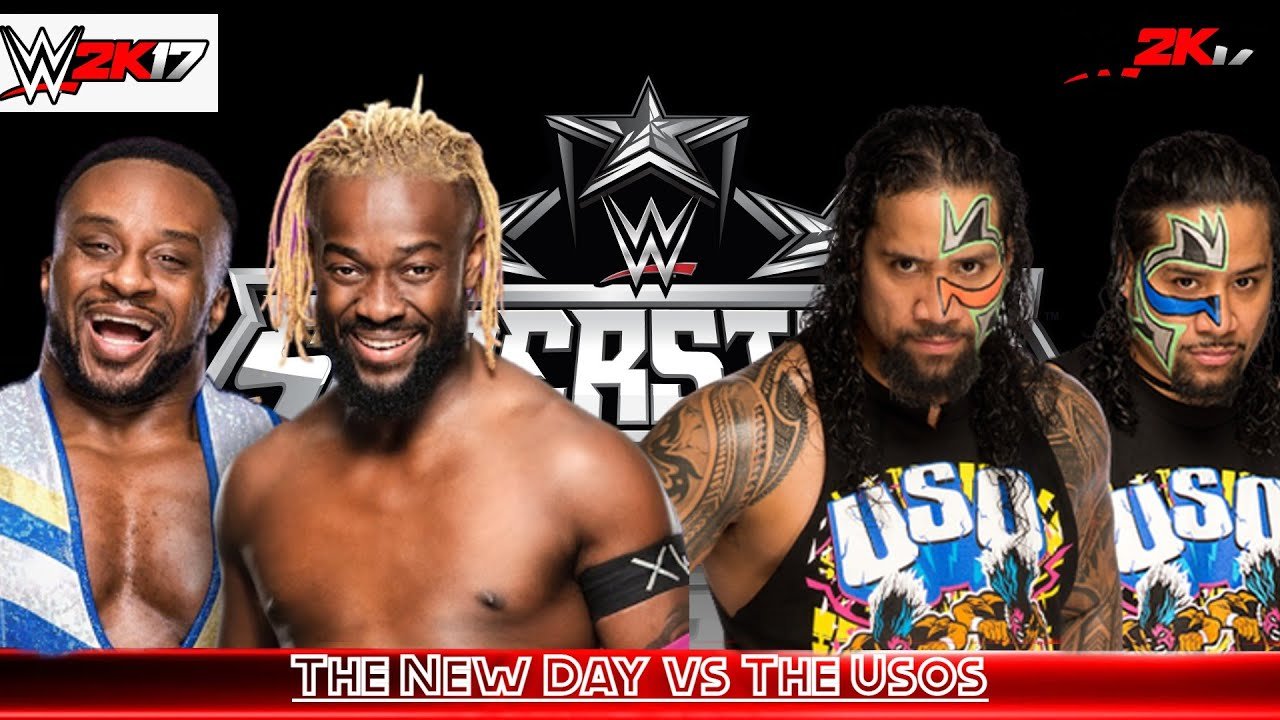
Today, Demolition’s influence can be seen in teams that prioritize physical dominance and a unified aesthetic. Their record of 478 days stood for 28 years until it was finally surpassed by The New Day in 2016. However, many fans point out that Demolition achieved their record during an era with fewer television tapings and a much more grueling travel schedule, making their longevity even more impressive.
Despite their accolades, Demolition’s absence from the WWE Hall of Fame remains a point of contention among fans. While legal disputes and past litigations have complicated their relationship with the company, their statistical dominance and impact on the 80s wrestling boom are undeniable. They remain one of the most requested inductions by the wrestling community.
Frequently Asked Questions About Demolition
- How long was Demolition's longest title reign? Their first reign lasted 478 days, from WrestleMania IV to a television taping in July 1989.
- Who were the original members of Demolition? The most famous lineup featured Ax (Bill Eadie) and Smash (Barry Darsow). Crush (Brian Adams) joined later in 1990.
- Why did Demolition wear face paint? The face paint was designed to give them a menacing, post-apocalyptic look that stood out from other teams and helped hide their previous wrestling identities.
- What was Demolition's finishing move? Their primary finisher was the Demolition Device, a combination of a backbreaker hold and a flying elbow drop.
Conclusion
Walking the aisle one last time, the legacy of Ax, Smash, and Crush is defined by more than just championships. They were the gatekeepers of the tag team division during its most competitive era. While modern teams like The New Day and The Usos have since surpassed their numerical records, the sheer aura of dominance projected by Demolition remains the gold standard for powerhouse teams. Whether they eventually take their place in the Hall of Fame or remain legends of the archives, their impact on the fabric of professional wrestling is permanent.



Comments 0
Leave a Reply
Your email address will not be published. Required fields are marked *
Be the first to share your thoughts!