
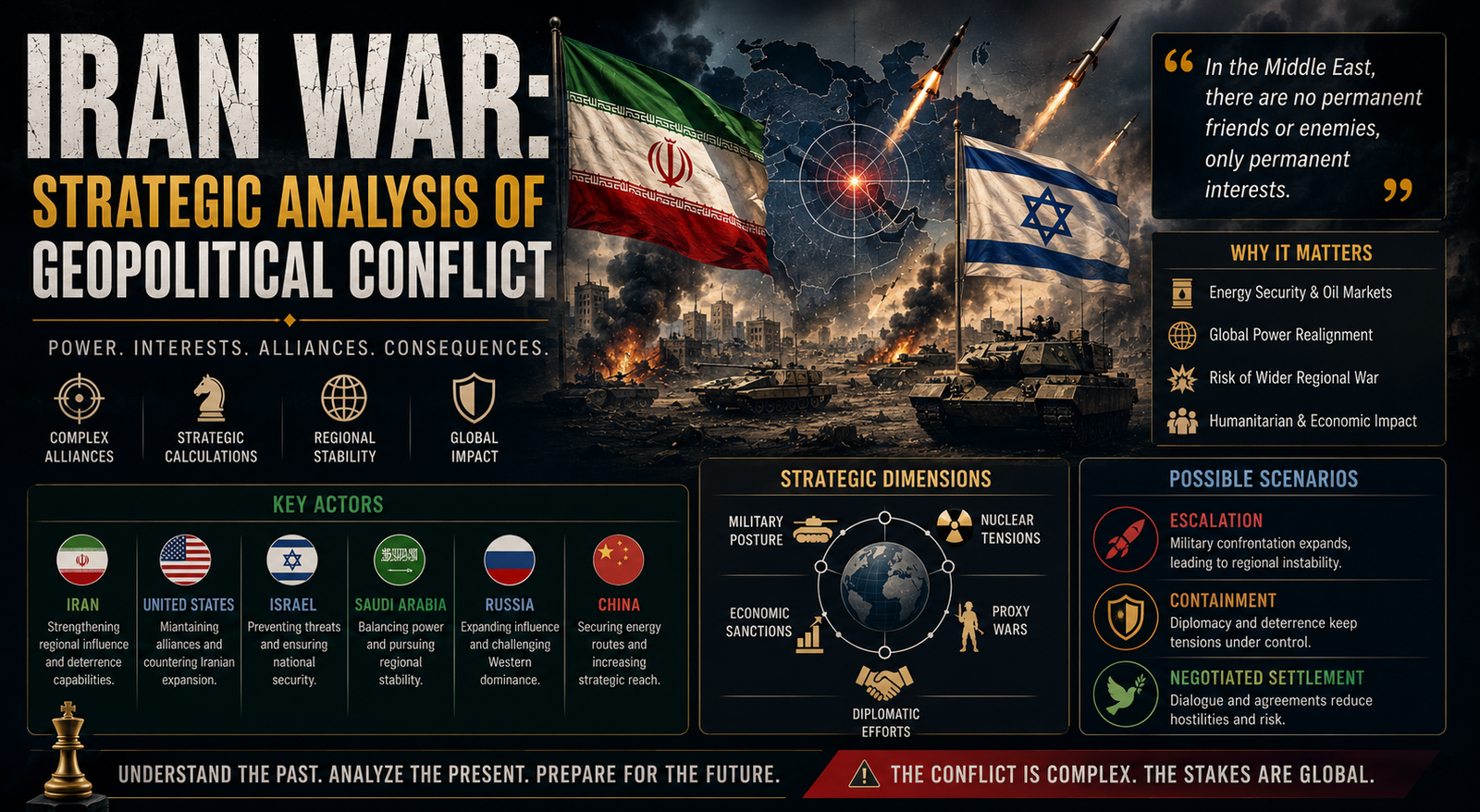
💡 Iran War: Strategic Analysis of Geopolitical Conflict
A comprehensive strategic analysis of the potential for an Iran war, examining military capabilities, economic impacts, and global geopolitical risks.
Executive Summary
The prospect of a full scale Iran war remains one of the most significant risks to global stability. Current data suggests that Iran maintains the largest missile arsenal in the Middle East, with ranges exceeding 2,000 kilometers. Geopolitical analysts highlight that approximately 21 million barrels of oil pass through the Strait of Hormuz daily, representing roughly 21 percent of global petroleum liquids consumption. This strategic analysis examines the shift from shadow warfare to direct kinetic confrontation, the role of regional proxies, and the potential for severe disruption to global energy markets. Key findings indicate that while all parties seek to avoid a total war, the margin for miscalculation has narrowed significantly in 2024 and 2025.
Introduction: The Geopolitical Flashpoint
The tension surrounding Iran is no longer confined to covert operations or cyber attacks. The landscape has shifted toward overt military posturing and direct strikes between regional powers. Understanding the implications of an Iran war requires an objective look at the strategic depth of the Iranian military, the defensive capabilities of its adversaries, and the interconnected nature of the global economy. As investors monitor the Stock Market Today: Strategic Analysis of Global Trends, the shadow of conflict in the Middle East remains a primary driver of volatility in the energy and defense sectors.
THE DEEP DIVE: Military and Strategic Assets
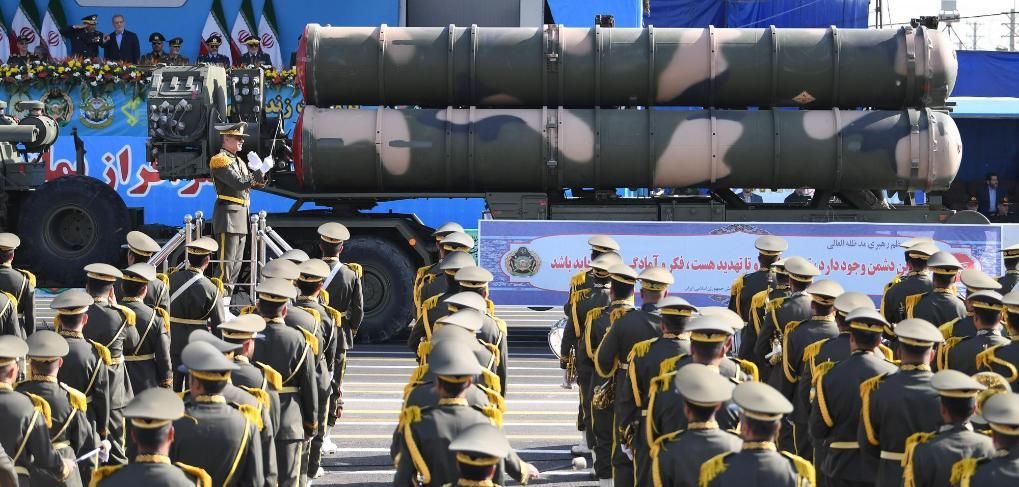
Iran employs a dual military structure consisting of the Islamic Republic of Iran Army and the Islamic Revolutionary Guard Corps (IRGC). This structure provides both conventional defense and unconventional expeditionary capabilities. The IRGC controls the country's ballistic missile program, which is estimated to include thousands of precision guided munitions. The development of the Fattah hypersonic missile and the extensive use of the Shahed series of loitering munitions have altered the regional balance of power.
The strategic concept of the Axis of Resistance allows Iran to project power far beyond its borders. By supporting groups in Lebanon, Yemen, Iraq, and Syria, Iran creates a buffer zone that complicates any direct military intervention. For instance, the Houthi movement in Yemen has demonstrated the ability to disrupt maritime trade in the Red Sea, forcing global shipping companies to reroute vessels around the Cape of Good Hope, adding significant costs and delays to the global supply chain.
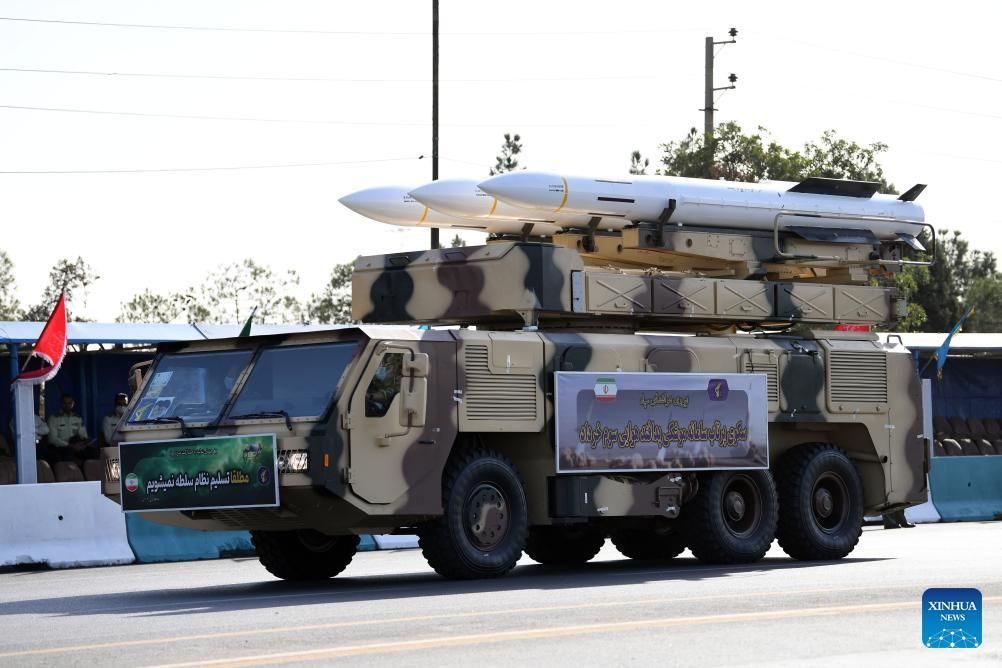
Furthermore, the nuclear dimension remains a critical trigger point. According to the International Atomic Energy Agency (IAEA), Iran has increased its stockpile of uranium enriched to 60 percent purity. While 90 percent is considered weapons grade, the technical jump from 60 to 90 is relatively small. This progression places immense pressure on international diplomatic frameworks and increases the likelihood of preemptive strikes by regional actors concerned about a nuclear-armed Tehran.
Media representation of these conflicts often shapes public perception and policy responses. The way information is disseminated during such crises is a critical component of modern warfare, a concept explored in the Indian Express: Strategic Analysis of Media Influence. Strategic communication is used by all sides to manage domestic expectations and signal intent to international rivals.
Economic Implications and Global Trade
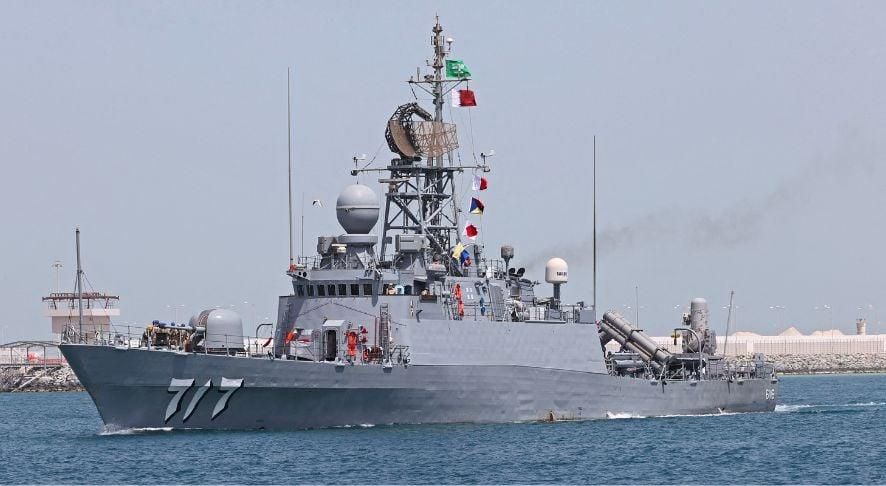
A conflict involving Iran would immediately impact the global energy sector. The Strait of Hormuz is a narrow waterway where any closure or significant harassment of shipping would lead to an immediate spike in Brent Crude prices. Economic models suggest that a total blockage could push oil prices well above 150 dollars per barrel, triggering inflationary pressures across the globe. This would affect everything from manufacturing costs to the price of consumer goods.
- Energy Security: Direct threats to Saudi and Emirati oil infrastructure could lead to long term production outages.
- Insurance and Logistics: Maritime insurance premiums for vessels operating in the Persian Gulf would skyrocket, similar to the spikes seen during the Tanker War of the 1980s.
- Cyber Warfare: Iran has developed sophisticated cyber capabilities, targeting financial institutions and critical infrastructure in the West as a form of asymmetric retaliation.
WHAT THIS MEANS FOR YOU
For the average citizen and business owner, an Iran war is not just a distant geopolitical event. It has direct domestic consequences:
- Increased Energy Costs: Expect higher prices at the gas pump and increased home heating and cooling expenses.
- Supply Chain Disruptions: Electronic goods, automotive parts, and consumer products that rely on stable maritime routes may face delays or price hikes.
- Market Volatility: Retirement accounts and investment portfolios may experience significant fluctuations as the market reacts to uncertainty.
- Cyber Security Awareness: Increased state-sponsored cyber activity means that individuals and businesses should prioritize digital security and remain vigilant against phishing and infrastructure attacks.
Understanding these risks is essential for long term planning. Just as governments use Weather Warning Systems: Strategic Analysis and Global Impact to prepare for natural disasters, individuals must develop a baseline understanding of geopolitical risks to protect their financial and personal security.
Expert Verdict / Future Outlook
The most likely scenario for the next 12 to 24 months is a continuation of the Gray Zone conflict. This involves actions that fall below the threshold of open war but are more aggressive than standard diplomacy. However, the risk of accidental escalation is at its highest point in decades. Experts agree that a diplomatic resolution regarding the nuclear file is the only sustainable path to long term stability, yet the domestic political climates in both Washington and Tehran make such a deal difficult to reach.
The international community must also consider the role of Russia and China. Iran has strengthened its ties with Moscow through the provision of military hardware, while China remains the primary purchaser of Iranian oil. This alignment creates a complex web of interests that could turn a regional conflict into a broader global confrontation.
FAQ
Is a war with Iran inevitable?
No conflict is inevitable. While tensions are high, all major stakeholders recognize that a full scale war would be catastrophic for the global economy. Diplomacy and deterrence remain the primary tools used to prevent total escalation.
How would an Iran war affect the US economy?
The primary impact would be felt through energy prices. Even though the US is a major oil producer, oil is a globally traded commodity. A spike in global prices would raise domestic costs and potentially slow economic growth.
What are Iran's primary military strengths?
Iran's strengths lie in its asymmetric capabilities: a massive missile and drone inventory, the ability to close the Strait of Hormuz, and a network of regional proxies that can strike targets across the Middle East.
How does the nuclear program factor into the risk of war?
The nuclear program is seen as a red line for Israel and the United States. If Iran reaches the threshold of being able to produce a nuclear weapon, the probability of a preemptive military strike increases significantly.
Can sanctions prevent a war?
Sanctions are designed to pressure Iran into diplomatic concessions by limiting its economic resources. While they have significantly impacted the Iranian economy, they have not yet resulted in a total cessation of the nuclear program or regional proxy support.
Conclusion: Strategic Takeaway
The strategic landscape of a potential Iran war is defined by high stakes and narrow margins. For global observers, the key is to monitor the intersection of energy security, regional proxy activity, and nuclear milestones. While the cost of conflict is prohibitively high, the ideological and strategic drivers of the involved parties continue to push the region toward the brink. Preparedness, both at the state and individual level, remains the most effective hedge against the uncertainty of this enduring geopolitical crisis.




Comments 0
Leave a Reply
Your email address will not be published. Required fields are marked *
Be the first to share your thoughts!