
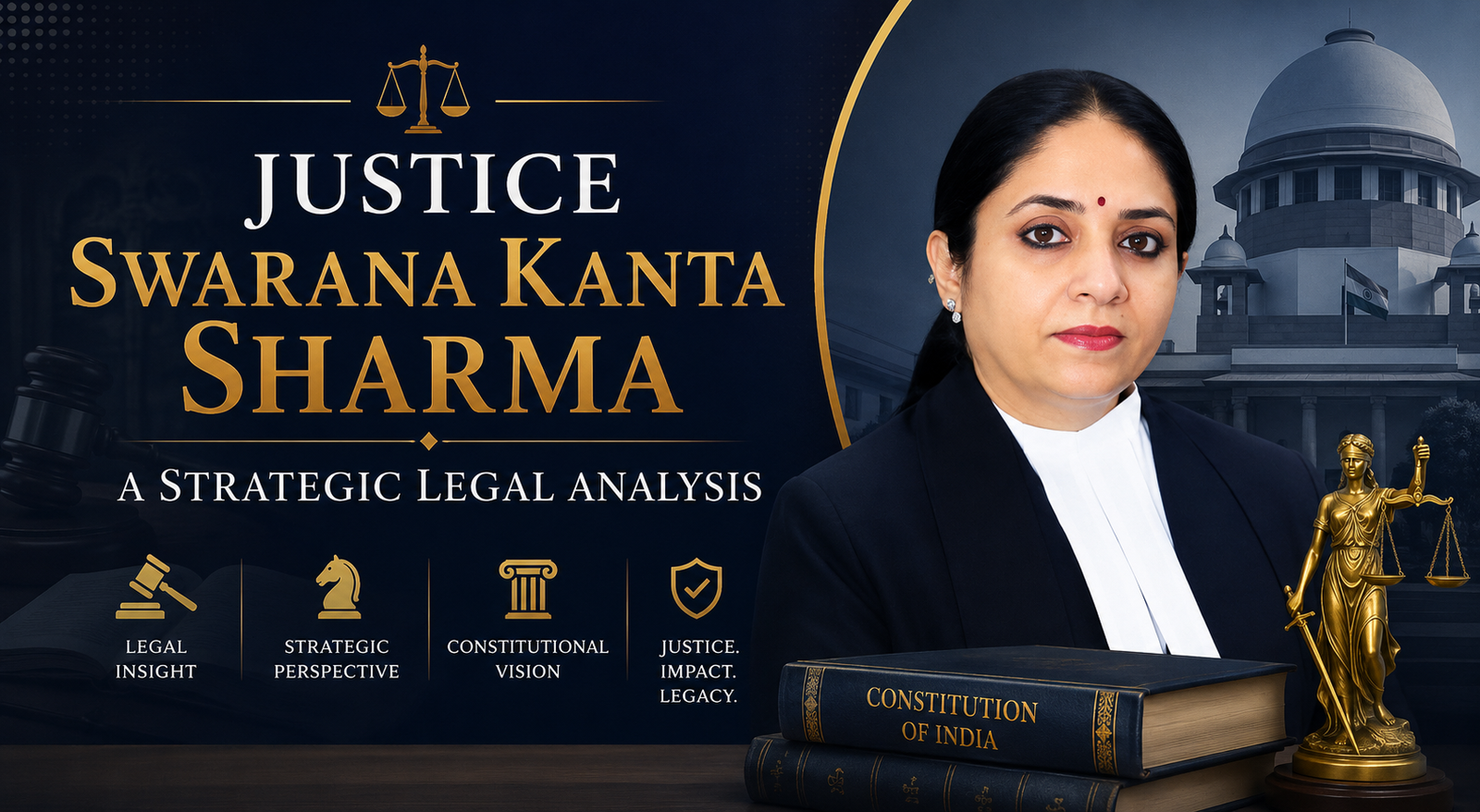
💡 Justice Swarana Kanta Sharma: A Strategic Legal Analysis
An authoritative review of Justice Swarana Kanta Sharma’s judicial career, landmark rulings, and her impact on the Delhi High Court’s legal landscape.
Executive Summary
Justice Swarana Kanta Sharma represents a significant era of the Delhi High Court, characterized by a transition from the trial courts to the highest levels of the state judiciary. Appointed as a permanent judge in May 2022, her tenure has been marked by high-profile criminal cases, administrative law reviews, and a staunch focus on procedural integrity. Data from the National Judicial Data Grid (NJDG) indicates that the Delhi High Court manages one of the highest caseloads in India, with over 38,000 cases disposed of in 2023 alone. Within this framework, Justice Sharma’s rulings on digital evidence, gender-based violence, and political accountability have set new benchmarks for judicial conduct. This analysis examines her judicial philosophy, the statistical context of her bench, and the broader implications of her judgments on Indian governance and civil liberties.
Introduction
The role of a High Court judge in India extends beyond mere dispute resolution; it involves the interpretation of the Constitution in a manner that balances individual rights against state interests. Justice Swarana Kanta Sharma’s elevation to the Delhi High Court came at a time when the judiciary was grappling with complex issues ranging from digital privacy to high-stakes political litigation. Having served extensively in the Delhi Higher Judicial Service (DHJS), her perspective is grounded in the practicalities of trial-level justice, which she has successfully integrated into her High Court mandates. To understand her influence, one must look at how her decisions align with ECI Result Analysis: Strategic Impact on Governance and the evolving nature of the Indian state. Her presence on the bench reinforces the importance of judicial continuity and the specialized knowledge required to navigate the intricacies of the Delhi legal ecosystem.

The Deep Dive: Judicial Career and Core Philosophy
Justice Swarana Kanta Sharma’s journey to the High Court is a testament to the rigorous standards of the Delhi Higher Judicial Service. Before her elevation, she served as a District and Sessions Judge, where she managed diverse portfolios including criminal law and family disputes. This foundational experience is evident in her judicial style, which prioritizes a meticulous examination of the trial court record. In 2022, when she was sworn in alongside other distinguished colleagues, the Delhi High Court’s sanctioned strength was 60 judges, yet it operated with significant vacancies. Her appointment was a strategic move to address the mounting backlog of cases in the national capital.
One of the defining features of her tenure is her approach to criminal jurisprudence. In the Indian legal system, the principle of bail is often weighed against the severity of the offense and the potential for witness tampering. Justice Sharma has consistently emphasized that while personal liberty is paramount, it cannot supersede the integrity of a criminal investigation, especially in cases involving economic offenses or public corruption. This stance was particularly visible in her handling of the Delhi Excise Policy cases, where she maintained that the court’s primary duty is to examine the legality of an arrest rather than the political timing of the action.

Landmark Rulings and Legal Precedents
Justice Sharma has presided over several cases that have had a lasting impact on how law is practiced in Delhi. Her rulings often touch upon the intersection of technology and law. As part of India's Strategic Evolution: Economic & Digital Analysis, the judiciary has had to adapt to new forms of evidence. Justice Sharma has been vocal about the need for law enforcement agencies to follow strict protocols when seizing digital devices, ensuring that the right to privacy is not unnecessarily compromised during investigations.
- The Arvind Kejriwal Case: Perhaps her most publicized ruling involved the challenge to the arrest of the Delhi Chief Minister. Justice Sharma’s 103-page judgment clarified that the law must be applied equally to all citizens, regardless of their political stature. She noted that the court is concerned with constitutional morality and legal procedure rather than political rhetoric.
- Gender-Sensitive Jurisprudence: She has authored several judgments regarding the Protection of Children from Sexual Offences (POCSO) Act and the Indian Penal Code sections related to sexual assault. Her rulings emphasize the need for a survivor-centric approach while maintaining the presumption of innocence until proven guilty.
- Administrative Accountability: Justice Sharma has frequently pulled up municipal authorities and government departments for administrative lapses, emphasizing that the right to a functional city is a derivative of the right to life under Article 21.
Statistics from the 2023-2024 judicial calendar show that her bench has been among the most active in terms of daily cause lists, often hearing over 50 matters a day. This volume of work requires a strategic approach to case management, a skill she honed during her years in the district courts. Her ability to synthesize complex facts into clear legal directives has made her a respected figure among the bar and the bench alike.
What This Means For You
For the average citizen and legal practitioner, the rulings of Justice Swarana Kanta Sharma provide a roadmap for navigating the complexities of the Delhi High Court. Her emphasis on procedural compliance means that litigants must ensure their documentation and evidence are beyond reproach. For those following the political landscape, her judgments serve as a reminder that the judiciary remains an independent arbiter, unaffected by external pressures. Understanding her judicial philosophy helps in predicting legal trends in the capital, particularly regarding how the court views the balance of power between the Lieutenant Governor and the elected government of Delhi.

Expert Verdict and Future Outlook
Industry experts and legal scholars view Justice Swarana Kanta Sharma as a stabilizing force in the Delhi High Court. Her transition from the trial court bench brings a practical lens to the High Court’s appellate and original jurisdiction. Looking forward, her influence is expected to grow as she takes on more constitutional bench matters. The future of the Delhi High Court will likely see a greater emphasis on the digitization of records and the use of artificial intelligence in legal research, areas where Justice Sharma has shown a keen interest. Her commitment to upholding the rule of law while ensuring social justice remains the cornerstone of her judicial identity.
FAQ: Authoritative Insights
- What is the background of Justice Swarana Kanta Sharma? She was a senior member of the Delhi Higher Judicial Service and served as a District and Sessions Judge before being elevated to the Delhi High Court in 2022.
- How has she influenced the Delhi Excise Policy case? She delivered a landmark judgment upholding the legality of the arrest of key political figures, emphasizing that the court focuses on legal evidence and statutory provisions rather than political context.
- What is her stance on digital privacy? Justice Sharma has advocated for strict adherence to the law during the seizure of digital evidence, ensuring that the investigative powers of the state do not infringe upon the fundamental right to privacy.
- How does her trial court experience benefit the High Court? Her deep understanding of trial procedures allows her to identify procedural lapses in lower court records, leading to more robust and legally sound appellate judgments.
- What are the key themes in her judgments? Her work frequently focuses on procedural integrity, gender justice, administrative accountability, and the equal application of the law to all citizens.
Conclusion
Justice Swarana Kanta Sharma stands as a pivotal figure in the contemporary Indian judiciary. Her career trajectory from the district courts to the High Court bench exemplifies the meritocratic path within the judicial system. By balancing the rigors of criminal law with a progressive outlook on civil liberties, she has contributed significantly to the legal jurisprudence of the national capital. As the Delhi High Court continues to navigate a high volume of complex litigation, her focus on clarity, procedure, and constitutional morality will remain essential for the delivery of justice in a rapidly changing society.





Comments 0
Leave a Reply
Your email address will not be published. Required fields are marked *
Be the first to share your thoughts!