💡 The Definitive Guide to the NBA Rookie of the Year: History, Voting Criteria, and Legacy
A comprehensive guide to the NBA Rookie of the Year award, covering its history, the Wilt Chamberlain Trophy, voting rules, and the legends who won it.
The NBA Rookie of the Year (ROY) is an annual award presented to the most outstanding first-year player in the National Basketball Association. Established during the 1952-53 season, the award serves as the ultimate validation for a player's transition into professional basketball. Winners are presented with the Wilt Chamberlain Trophy, named after the legendary center who remains one of only two players in history to win both Rookie of the Year and Most Valuable Player in the same season.
The Prestige of the Wilt Chamberlain Trophy
For decades, the Rookie of the Year trophy was a standard design, but in 2022, the NBA rebranded its end-of-season honors to celebrate the icons of the game. The trophy now bears the name of Wilt Chamberlain, a fitting tribute to a man whose 1959-60 debut season saw him average an unthinkable 37.6 points and 27.0 rebounds per game. Holding this trophy signifies that a player hasn't just arrived in the league; they have dominated it from day one.
The award is more than just a personal milestone. It often acts as a financial catalyst, triggering contract incentives and elevating a player’s brand value globally. For franchises, seeing their draft pick hoist the Wilt Chamberlain Trophy is a sign that their rebuilding process is on the right track.
The Evolution of the NBA Rookie of the Year Award Since 1952
The award has mirrored the evolution of basketball itself. In the early years, the honor was dominated by traditional post players like Don Meineke (the first winner) and Willis Reed. As the league expanded and the three-point line was introduced, the archetype of the winning rookie shifted toward versatile wings and playmaking guards.
In the modern era, the award has become increasingly international. Players like Pau Gasol (Spain), Luka Dončić (Slovenia), and Victor Wembanyama (France) have demonstrated that the path to NBA stardom often begins in professional leagues overseas. This global shift has raised the level of competition, as many rookies now enter the NBA with years of professional experience against grown men.
Decoding the Selection Process: Who Votes and How the Points Are Tallied
The winner of the Rookie of the Year award is decided by a panel of 100 sportswriters and broadcasters from across the United States and Canada. To ensure transparency, the NBA began releasing the individual ballots of every voter several years ago.
The voting follows a weighted point system:
- First-place vote: 5 points
- Second-place vote: 3 points
- Third-place vote: 1 point
The player with the highest total point count wins the award, regardless of the number of first-place votes. While rare, this system allows for a closely contested race where consistency across all ballots can outweigh a polarizing frontrunner.
Eligibility Requirements: Defining What Qualifies as a 'Rookie'
Defining a "rookie" has occasionally sparked debate within the NBA community. To be eligible, a player must be in their first season of active play in the NBA. However, this does not necessarily mean the year they were drafted. If a player misses their entire first season due to injury—such as Blake Griffin or Ben Simmons—they are considered a rookie during the season they actually make their on-court debut.
A critical modern update to eligibility is the 65-game rule. Under the current Collective Bargaining Agreement (CBA), a player must appear in at least 65 games (and play at least 20 minutes in most of those games) to be eligible for major end-of-season awards, including Rookie of the Year. This rule was implemented to curb "load management" and ensure that the winner has provided a significant body of work over the 82-game schedule.
Statistical Benchmarks: Production Needed to Secure the Honor
While there is no official stat line required to win, history shows that voters prioritize high-volume production. Most winners average at least 15 to 20 points per game. For guards, assist numbers are crucial, while big men are judged heavily on rebounds and blocked shots.
The "20-5-5" club—averaging 20 points, 5 rebounds, and 5 assists per game—is often considered the gold standard for a rookie season. This feat has only been achieved by a handful of legends, including Oscar Robertson, Michael Jordan, LeBron James, Tyreke Evans, and Luka Dončić. Achieving these numbers almost guarantees the award, as it demonstrates a complete, all-around impact on the game.
The Impact of Team Success vs. Individual Brilliance
Unlike the MVP award, which almost exclusively goes to a player on a top-seeded team, the Rookie of the Year award is more lenient regarding team record. Because the highest-drafted rookies typically go to the weakest teams, voters focus more on individual brilliance and how much a player improves their team's outlook.
However, if two players have similar statistics, the tie-breaker in the minds of many voters is often "winning impact." If a rookie's contributions lead to a surprising playoff berth or a significant jump in the standings—as seen with players like Ja Morant or Damian Lillard—it provides a compelling narrative that often seals the vote.
Unanimous Victors and Historic Debuts: The Most Dominant Seasons
Winning the award is an achievement; winning it unanimously is a statement. Throughout history, only a few players have convinced every single voter to put them in the first-place slot. Notable unanimous winners include:
- Ralph Sampson (1984): A 7'4" marvel who changed the expectations for big men.
- David Robinson (1990): "The Admiral" dominated after a two-year stint in the Navy.
- Blake Griffin (2011): A human highlight reel who sat out his true first year with an injury.
- Damian Lillard (2013): Showed veteran-level poise from day one in Portland.
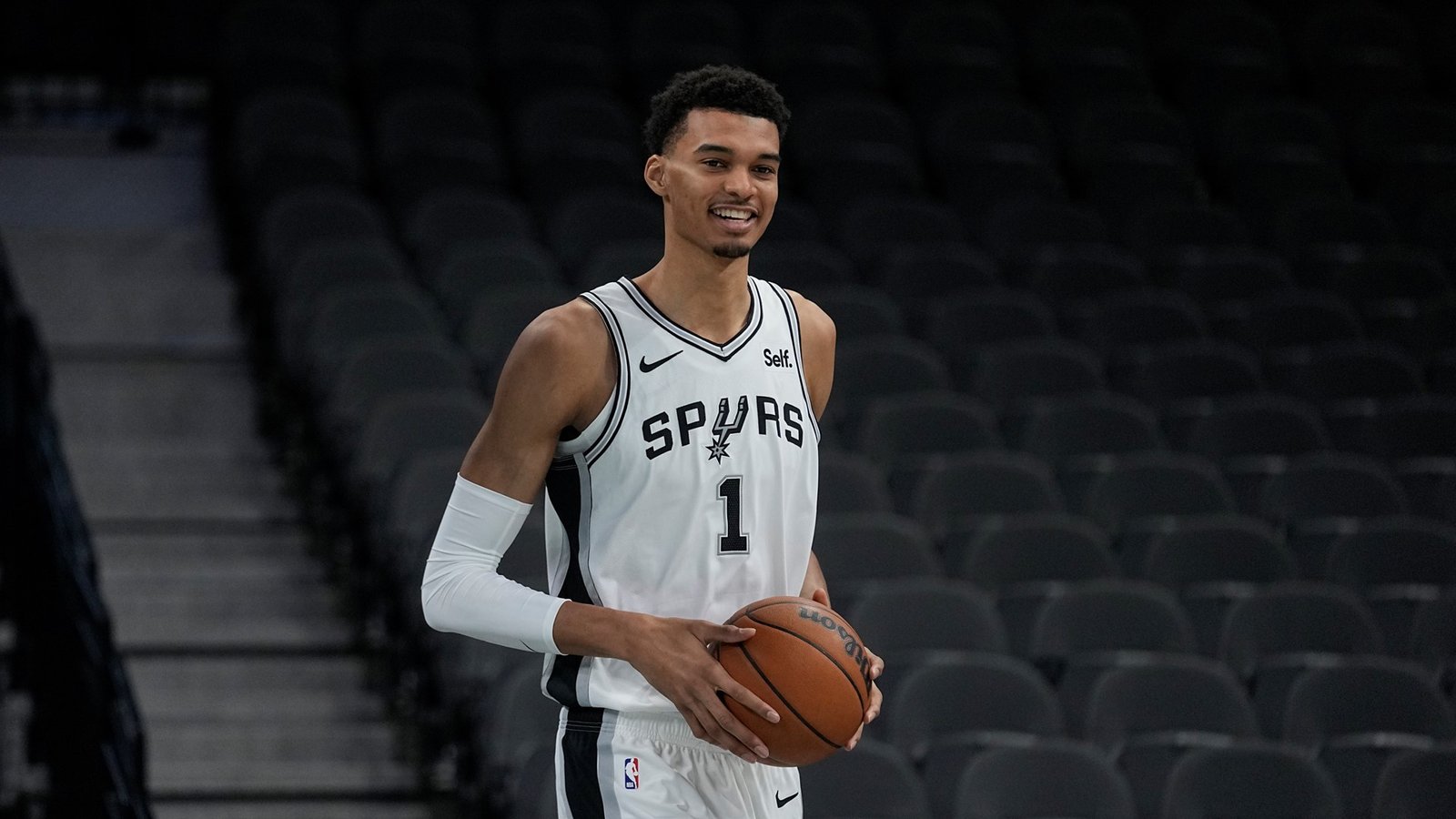
- Victor Wembanyama (2024): Lived up to the immense hype with historic defensive and offensive splits.

The 'Sophomore Slump' and Beyond: Does Winning ROY Predict Success?
Winning Rookie of the Year is a strong indicator of a Hall of Fame trajectory, but it is not a guarantee. The majority of winners go on to become multi-time All-Stars. However, some players experience a "sophomore slump" where the league adjusts to their style, and their production plateaus. Injuries can also derail a promising start, as seen in the cases of players like Brandon Roy or Tyreke Evans, who struggled to replicate their rookie success later in their careers.
Statistically, over 60% of Rookie of the Year winners have eventually been inducted into the Naismith Memorial Basketball Hall of Fame, making it one of the most reliable forecasts for long-term greatness in professional sports.
Frequently Asked Questions About the NBA Rookie of the Year Award
Can an international player win Rookie of the Year?
Yes. International players are fully eligible. In fact, many recent winners, including Luka Dončić and Victor Wembanyama, played professionally in Europe before entering the NBA.
What happens if there is a tie in voting?
If two players finish with the exact same number of points, they are named Co-Rookies of the Year. This has happened three times in NBA history: 1970-71 (Geoff Petrie and Dave Cowens), 1994-95 (Jason Kidd and Grant Hill), and 1999-00 (Elton Brand and Steve Francis).
Is there an age limit for the award?
There is no upper age limit. As long as it is the player's first season of active play in the NBA, they are eligible. For example, Arvydas Sabonis finished second in ROY voting in 1996 when he was 31 years old.
Can a second-round pick win Rookie of the Year?
While rare, it is possible. Woody Sauldsberry (1958) and Malcolm Brogdon (2017) are the only players in the common draft era to win the award despite not being first-round picks.
Conclusion
The NBA Rookie of the Year award remains the league’s most exciting forecast, offering a glimpse into the future of the sport. From the dominance of Wilt Chamberlain to the modern versatility of players like Victor Wembanyama, the award celebrates those who can handle the immense pressure of the professional stage from the moment they step onto the hardwood. While individual stats often lead the conversation, the true legacy of a Rookie of the Year winner is measured by how they use that early momentum to build a Hall of Fame career.



Comments 0
Leave a Reply
Your email address will not be published. Required fields are marked *
Be the first to share your thoughts!