
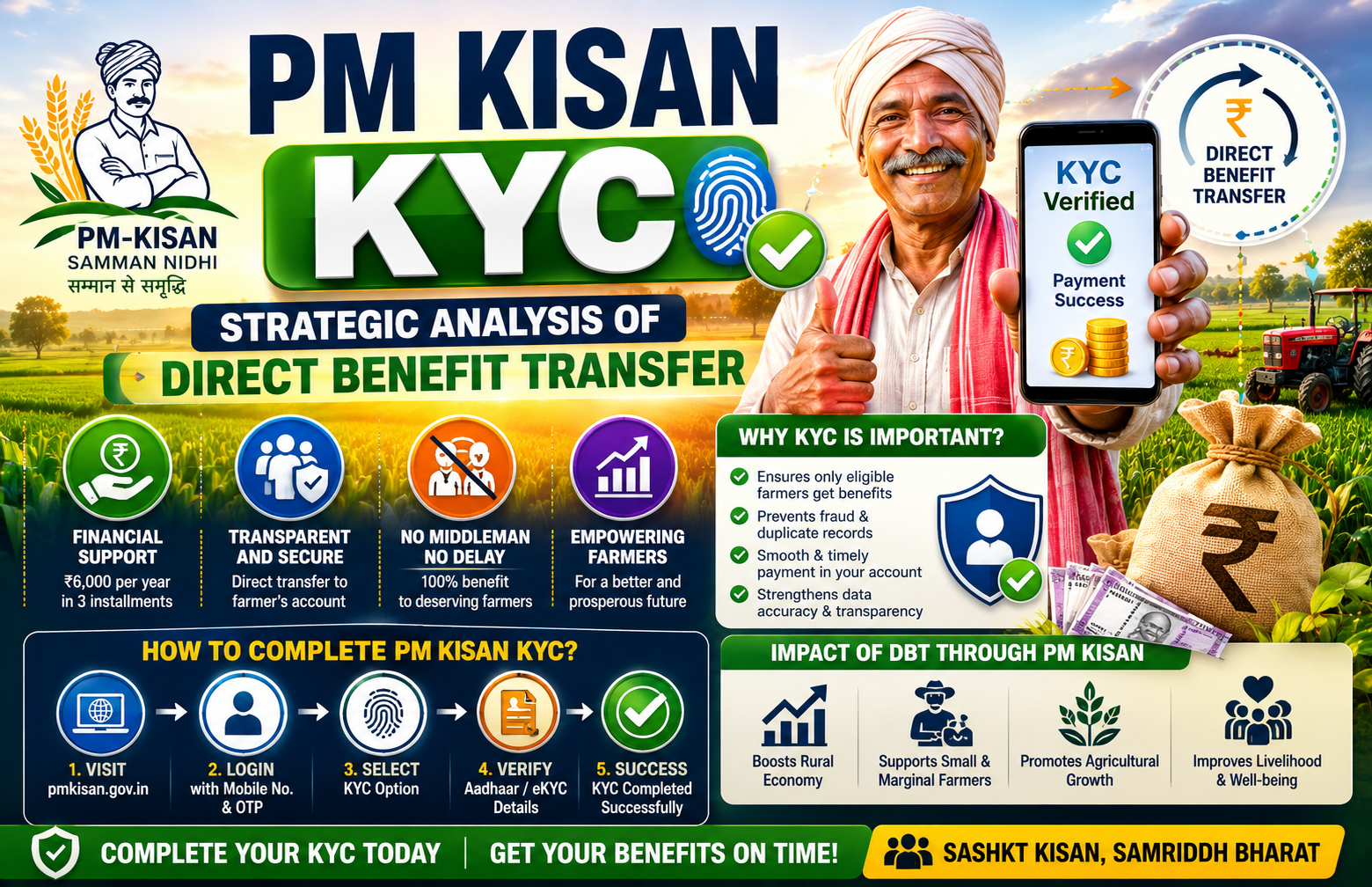
💡 PM Kisan KYC: Strategic Analysis of Direct Benefit Transfer
A comprehensive expert guide on PM Kisan KYC, detailing mandatory e-KYC processes, Aadhaar authentication, and the strategic impact of Direct Benefit Transfer on Indian agriculture.
Executive Summary
The Pradhan Mantri Kisan Samman Nidhi (PM-KISAN) scheme represents one of the largest Direct Benefit Transfer (DBT) initiatives globally. As of late 2024, the Indian government has disbursed over 3.24 lakh crore rupees to more than 11 crore farmers. A critical component of this success is the PM Kisan KYC (Know Your Customer) framework. This mandatory verification process has become the cornerstone of fiscal discipline within the scheme, effectively identifying and removing millions of ineligible beneficiaries. Statistics from the Ministry of Agriculture indicate that rigorous KYC protocols have helped streamline the distribution of the 17th and 18th installments, ensuring that the annual 6,000 rupee subsidy reaches the intended landholding farmers. This analysis examines the technical infrastructure, the verification modalities, and the socio-economic implications of the e-KYC mandate.
Introduction
The digital transformation of rural India is no longer a peripheral goal but a central pillar of national policy. The PM Kisan KYC process is a prime example of how biometric and demographic data can be leveraged to create a leak-proof financial ecosystem. Launched in 2019, the PM-KISAN scheme provides financial support to all landholding farmer families in three equal installments. However, the scale of the project necessitated a robust verification mechanism to prevent systemic leakages. Much like the shifts seen in Stock Market Today: Strategic Analysis of Global Trends, where transparency and data integrity drive value, the PM Kisan portal utilizes e-KYC to maintain the integrity of the agricultural credit system. This article provides a strategic breakdown of the KYC requirements, the technology behind face authentication, and the steps required to ensure uninterrupted benefit flow.
The Deep Dive: Technical Framework and Verification Modalities
The PM Kisan KYC ecosystem is built upon the India Stack, primarily utilizing Aadhaar-based authentication. The government has introduced three distinct methods for completing the e-KYC, each designed to cater to different levels of digital literacy among the rural population.
1. OTP-Based e-KYC
This is the most accessible method for farmers with Aadhaar-linked mobile numbers. By visiting the official PM-Kisan portal, beneficiaries can trigger a One-Time Password (OTP) to verify their identity. This method accounts for a significant portion of the successful verifications due to its low cost and high speed. It mirrors the digital efficiency required in modern logistics and risk management, similar to the precision discussed in our analysis of Weather Warning Systems: Strategic Analysis and Global Impact.
2. Biometric Authentication via CSC
For farmers who do not have a mobile number linked to their Aadhaar or reside in areas with poor connectivity, the Common Service Centres (CSCs) provide a critical bridge. Here, beneficiaries use fingerprint or iris scans to complete their KYC. There are over 5 lakh CSCs across India, making this a vital physical touchpoint for the scheme's execution.
3. AI-Driven Face Authentication
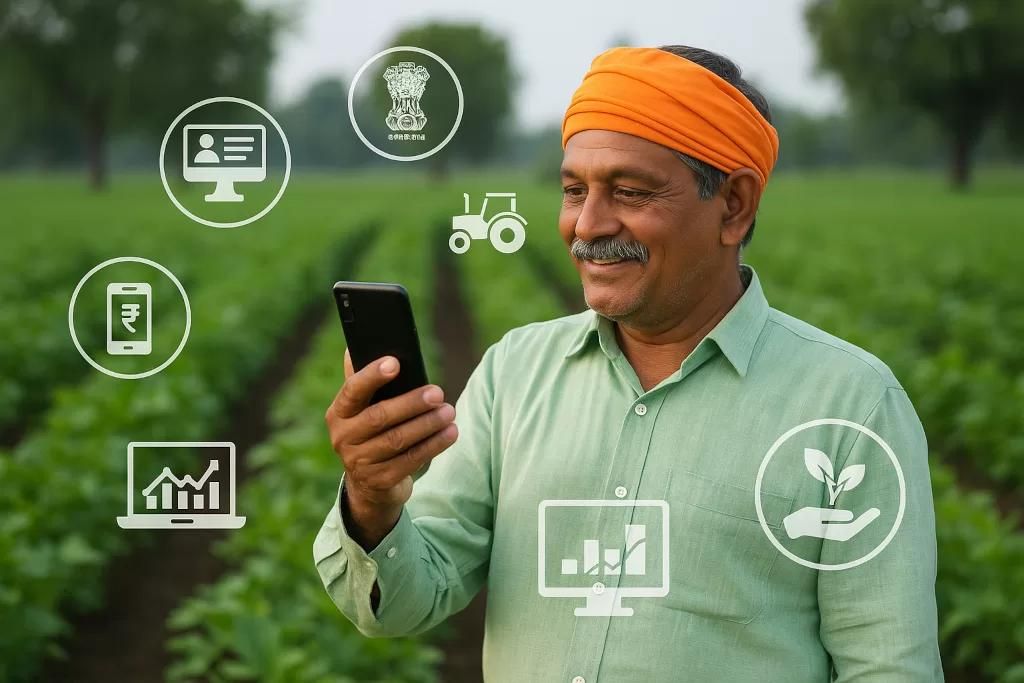
In a significant technological leap, the PM-Kisan mobile app now features face authentication. Developed by the National Informatics Centre (NIC) in collaboration with the Ministry of Electronics and Information Technology (MeitY), this feature uses computer vision and artificial intelligence to verify the farmer's identity. This eliminates the need for OTPs or physical visits to service centers, representing a shift toward more sophisticated corporate governance in public service delivery, a concept also explored in our review of Byju's Strategy and Corporate Governance: A Strategic Analysis.
Strategic Impact on Fiscal Leakage
The implementation of mandatory KYC has had a measurable impact on the government's fiscal health. By cross-referencing land records with Aadhaar and income tax data, the government identified approximately 2 million ineligible beneficiaries in previous cycles. This data-driven approach ensures that the subsidy is not diverted to non-farmers or high-income individuals who do not meet the scheme's criteria. The use of the Public Financial Management System (PFMS) ensures that once the KYC is verified, the funds are transferred directly to the Aadhaar-seeded bank accounts, bypassing intermediaries and reducing the potential for corruption.
What This Means For You: Actionable Steps for Beneficiaries
For the individual farmer or the family managing agricultural land, staying compliant with the KYC norms is essential for financial stability. Failure to complete the e-KYC can lead to the suspension of payments, as seen during the transition between the 16th and 17th installments.
- Check Status: Beneficiaries should regularly visit the PM-Kisan portal and use the 'Know Your Status' feature to ensure their e-KYC is marked as 'Success'.
- Aadhaar Seeding: Ensure that your bank account is linked with your Aadhaar number. The system uses Aadhaar-based payment bridges, so simple account numbers are no longer sufficient.
- Land Record Integration: Verify that your land records are correctly updated in the state database, as the PM-Kisan portal periodically syncs with state-level revenue records.
- Mobile App Adoption: For the easiest experience, download the PM-Kisan mobile app to perform self-verification using the face authentication feature.

Expert Verdict and Future Outlook
The PM Kisan KYC initiative is a benchmark for global social security programs. By integrating biometric identity with land ownership and financial records, India has created a model that many developing nations are looking to replicate. Looking forward, we expect the integration of satellite imagery and IoT-based crop monitoring to further refine the beneficiary list. This would allow the government to provide targeted relief during localized weather events or pest infestations. The transition from a simple cash transfer to a sophisticated, data-informed agricultural support system is well underway. The strategic focus will likely shift from mere identification to behavioral analysis, helping the government encourage sustainable farming practices through tiered incentives.
Frequently Asked Questions
1. Is PM Kisan KYC mandatory for every installment?
Yes, e-KYC is a mandatory requirement for all registered beneficiaries to receive their installments. If the KYC is not updated, the system will automatically hold the payment until the verification is completed.
2. What should I do if the OTP is not received on my mobile?
If you do not receive an OTP, ensure your mobile number is correctly linked to your Aadhaar card in the UIDAI database. If the issue persists, you must visit a Common Service Centre (CSC) for biometric authentication.
3. Can I complete the KYC process for someone else?
Using the PM-Kisan mobile app, a single user can assist up to 100 other farmers in completing their face authentication KYC. This is a strategic feature designed to help elderly farmers or those without smartphones.
4. How do I know if my e-KYC is successful?
You can check your status on the official PM-Kisan website under the 'Farmers Corner' section. After entering your registration number or Aadhaar number, the 'e-KYC' field will display 'Yes' if it is completed.
5. Is there a fee for completing the PM Kisan KYC?
The OTP-based KYC on the official portal and the face authentication on the mobile app are completely free. However, if you visit a CSC for biometric authentication, a nominal service fee may be charged as per government guidelines.
Conclusion
The PM Kisan KYC process is more than a mere administrative hurdle; it is a sophisticated tool for ensuring equity and efficiency in agricultural subsidies. By embracing digital identity and AI-driven verification, the scheme has set a high standard for direct benefit transfers. For beneficiaries, maintaining an updated KYC status is the only way to ensure the continued receipt of financial aid. As the system evolves, the integration of more granular data will only make the PM-KISAN scheme more resilient and impactful for India's agricultural sector.
Important Note: Financial Disclaimer: This content is for educational purposes only and does not constitute professional financial advice. Always consult with a certified financial planner before making investment decisions.





Comments 0
Leave a Reply
Your email address will not be published. Required fields are marked *
Be the first to share your thoughts!